Loading...
Done
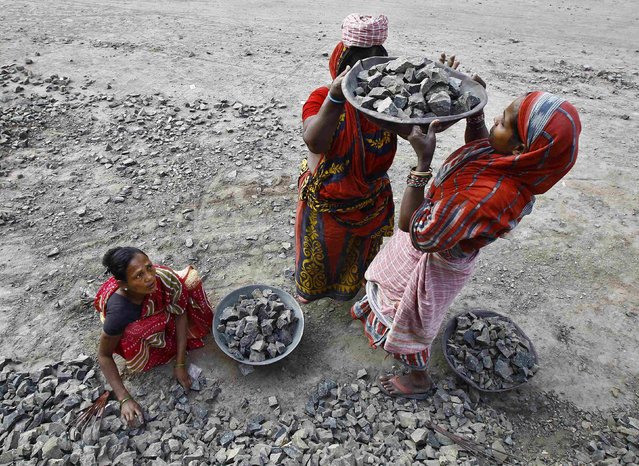
Women labourers work at the construction site of a road in Kolkata January 8, 2015. Across towns and cities in India, it is not uncommon to see women cleaning building sites, carrying bricks and or shoveling gravel - helping construct the infrastructure necessary for the country's economic and social development. (Photo by Rupak De Chowdhuri/Reuters)

Women labourers work at the construction site of a road in Kolkata January 8, 2015. Across towns and cities in India, it is not uncommon to see women cleaning building sites, carrying bricks and or shoveling gravel – helping construct the infrastructure necessary for the country's economic and social development. They help build roads, railway tracks, airports, and offices. They lay pipes for clean water supplies, cables for telecommunications, and dig the drains for sewage systems. But although women make up at least 20 percent of India's 40 million construction workers, they are less recognized than male workers with lower pay and often prone to safety hazards and sexual harassment. They are often unaware of their rights or scared to complain, say activists now trying to campaign for better treatment of women in the construction industry. (Photo by Rupak De Chowdhuri/Reuters)
Details
15 Jan 2015 13:47:00
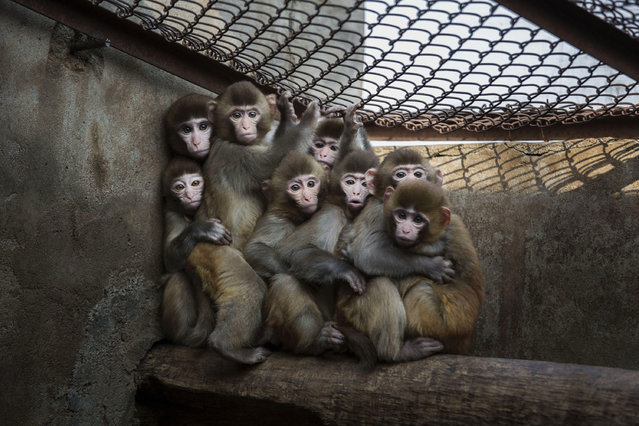
Macaque monkeys crowd together in their cage at a monkey farm on February 3, 2016 in Xinye county, Henan province, China. The area boasts a centuries-long and lucrative history of raising and training monkeys for performance. In Xinye, villagers are seeing an increase in business with the lunar calendar's “Year of the Monkey”. Farmers say most of the monkeys are bred and raised for domestic zoos, circuses, and performing groups, but add that some are also sold for medical research in China and the United States. Despite the popularity of the tradition, critics contend the training methods and conditions constitute animal cruelty. (Photo by Kevin Frayer/Getty Images)

Macaque monkeys crowd together in their cage at a monkey farm on February 3, 2016 in Xinye county, Henan province, China. The area boasts a centuries-long and lucrative history of raising and training monkeys for performance. In Xinye, villagers are seeing an increase in business with the lunar calendar's “Year of the Monkey”. Farmers say most of the monkeys are bred and raised for domestic zoos, circuses, and performing groups, but add that some are also sold for medical research in China and the United States. Despite the popularity of the tradition, critics contend the training methods and conditions constitute animal cruelty. (Photo by Kevin Frayer/Getty Images)
Details
31 Dec 2016 09:56:00
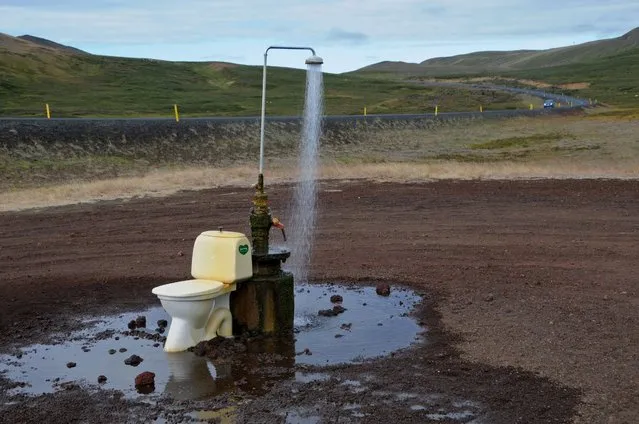
An open-air toilet and a hot spring shower are seen in the middle of nowhere on the road to the Krafla geothermal power station and lava fields, near Reykjahlid and Lake Myvatn in northeastern Iceland, on August 19, 2012. (Photo by Mariana Suarez/AFP Photo)

In 2013, the United Nations General Assembly officially designated November 19 as World Toilet Day, which is coordinated by UN-Water in collaboration with governments and partners. Here: An open-air toilet and a hot spring shower are seen in the middle of nowhere on the road to the Krafla geothermal power station and lava fields, near Reykjahlid and Lake Myvatn in northeastern Iceland, on August 19, 2012. (Photo by Mariana Suarez/AFP Photo)
Details
20 Nov 2017 07:27:00
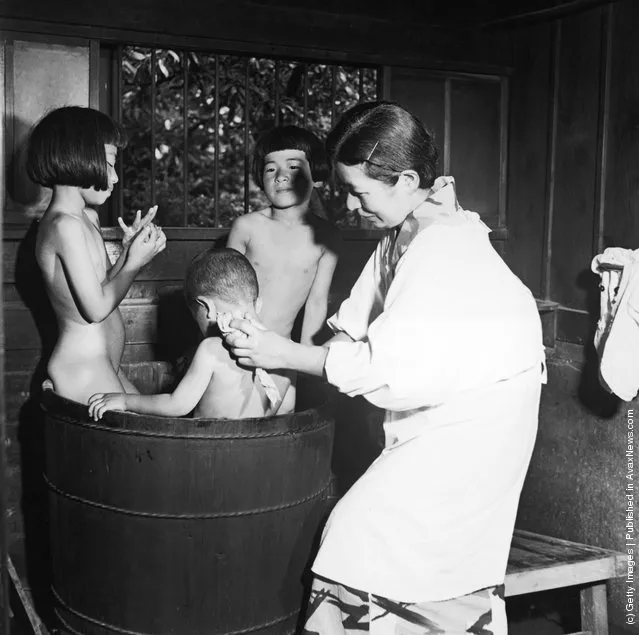
A family of children share a bath in Japan, 1965

A family of children share a bath in Japan, circa 1965. (Photo by Three Lions/Hulton Archive/Getty Images)
Details
09 Aug 2011 11:27:00
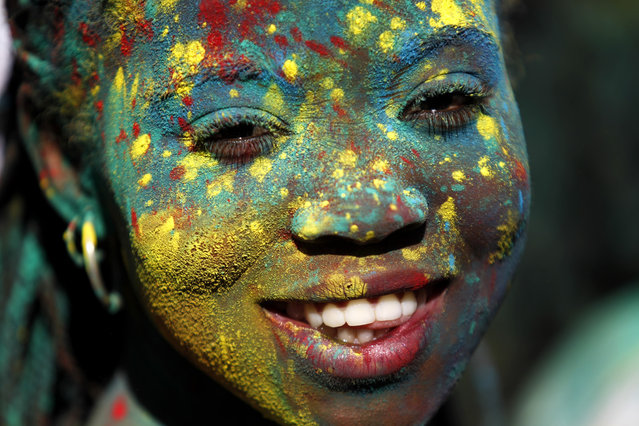
A woman, with her face covered with colored powders, dances during the Holi Festival of Colors in Lisbon, Sunday, September 15 2013. The festival, which is mainly celebrated during the Hindu spring festival Holi in some regions of India and Nepal, has become popular among people in other communities. (Photo by Francisco Seco/AP Photo)

A woman, with her face covered with colored powders, dances during the Holi Festival of Colors in Lisbon, Sunday, September 15 2013. The festival, which is mainly celebrated during the Hindu spring festival Holi in some regions of India and Nepal, has become popular among people in other communities. (Photo by Francisco Seco/AP Photo)
Details
21 Sep 2013 08:02:00


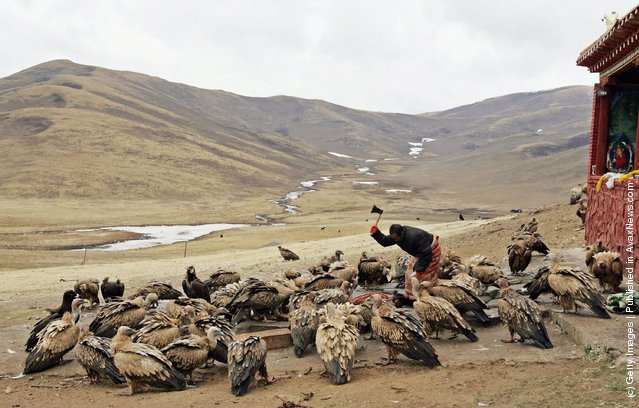
“Sky burial or ritual dissection was once a common funerary practice in Tibet wherein a human corpse is cut in specific locations and placed on a mountaintop, exposing it to the elements or the mahabhuta and animals – especially to birds of prey. The location of the sky burial preparation and place of execution are understood in the Vajrayana traditions as charnel grounds. In Tibet the practice is known as jhator, which literally means, «giving alms to the birds»”. – Wikipedia

Photo: A burial master chops bones of a body to feed vultures during a celestial burial ceremony on April 19, 2006 in Dari County of Guoluo Prefecture, Qinghai Province, northwest China. Celestial burial is a traditional funeral of Tibetan people, which began in the 7th century. (Photo by China Photos/Getty Images)
Details
18 Jun 2011 12:12:00
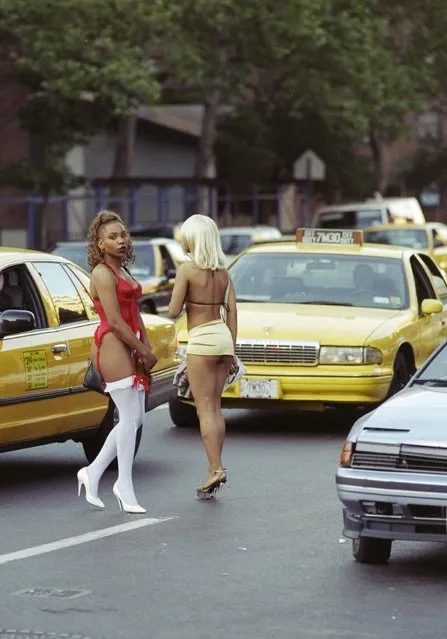
Prostitutes working on 10th Ave in New York, USA on June 29, 1997. (Photo by Jon Naso/NY Daily News Archive via Getty Images)

Prostitutes working on 10th Ave in New York, USA on June 29, 1997. (Photo by Jon Naso/NY Daily News Archive via Getty Images)
Details
22 May 2018 00:05:00
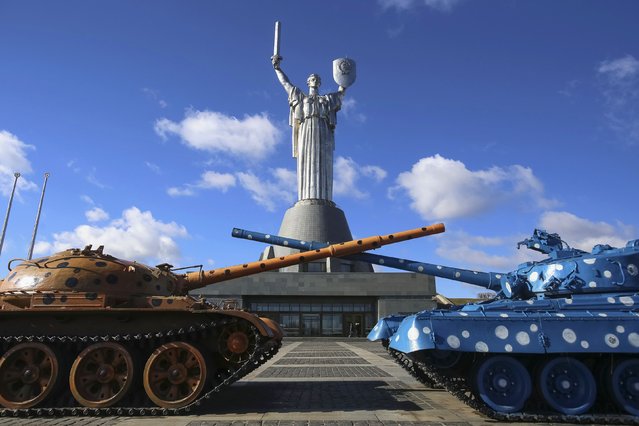
The 100-metre (300-foot), sword-wielding statue of “The Motherland” is seen in the National Museum of the History of the Great Patriotic War in Kiev March 17, 2014. On a blustery day on the banks of the Dnieper, the statue of “The Motherland”, a Soviet hammer and sickle on her shield, towered overhead, a reminder of the common cause Ukrainians and Russians died for side by side in their millions in World War Two and which Russian President Vladimir Putin thinks Ukraine has betrayed by turning to “fascism” and the West. (Photo by Konstantin Grishin/Reuters)

The 100-metre (300-foot), sword-wielding statue of “The Motherland” is seen in the National Museum of the History of the Great Patriotic War in Kiev March 17, 2014. On a blustery day on the banks of the Dnieper, the statue of “The Motherland”, a Soviet hammer and sickle on her shield, towered overhead, a reminder of the common cause Ukrainians and Russians died for side by side in their millions in World War Two and which Russian President Vladimir Putin thinks Ukraine has betrayed by turning to “fascism” and the West. (Photo by Konstantin Grishin/Reuters)
Details
22 Mar 2014 13:47:00