Loading...
Done
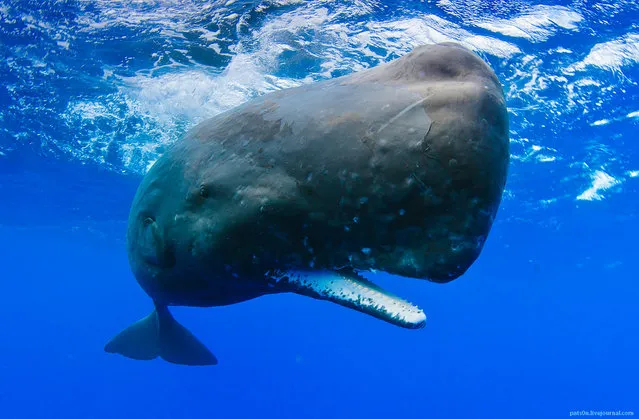
“Sperm whale opening it's huge mouth, Ogasawara Islands, Japan. Sperm whales are the biggest carnivorous animals on the planet. Each teeth in the mouth of adult specimen weights more than 1 kilogram. Interestingly enough that modern marine biologists believe that these teeth despite being fearsome play little role in capturing and eating giant squid – with their main function being mainly ritual aggression between males!”. (Alexander Safonov)

“Sperm whale opening it's huge mouth, Ogasawara Islands, Japan. Sperm whales are the biggest carnivorous animals on the planet. Each teeth in the mouth of adult specimen weights more than 1 kilogram. Interestingly enough that modern marine biologists believe that these teeth despite being fearsome play little role in capturing and eating giant squid – with their main function being mainly ritual aggression between males!”. (Photo by Alexander Safonov)
Details
30 Nov 2012 11:22:00
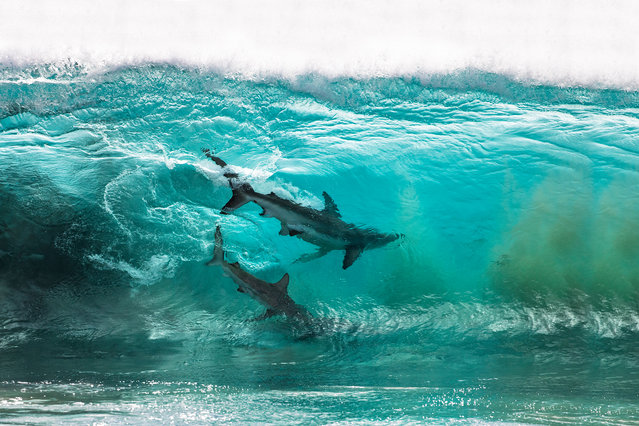
Two copper sharks ride the waves in Red Bluff Beach, Australia on July, 2020. Professional photographer Sean Scott, 43, from Burleigh Heads, Australia, caught the stunning snap. (Photo by Sean Scott/MediaDrumImages/@seanscottphotography)

Two copper sharks ride the waves in Red Bluff Beach, Australia on July, 2020. Professional photographer Sean Scott, 43, from Burleigh Heads, Australia, caught the stunning snap. (Photo by Sean Scott/MediaDrumImages/@seanscottphotography)
Details
26 Jul 2020 00:05:00
Humanoid robot bartender “Carl” interacts with guests at the Robots Bar and Lounge in the eastern German town of Ilmenau, July 26, 2013. “Carl”, developed and built by mechatronics engineer Ben Schaefer who runs a company for humanoid robots, prepares spirits for the mixing of cocktails and is able to interact with customers in small conversations. (Photo by Fabrizio Bensch/Reuters)

Humanoid robot bartender “Carl” interacts with guests at the Robots Bar and Lounge in the eastern German town of Ilmenau, July 26, 2013. “Carl”, developed and built by mechatronics engineer Ben Schaefer who runs a company for humanoid robots, prepares spirits for the mixing of cocktails and is able to interact with customers in small conversations. (Photo by Fabrizio Bensch/Reuters)
Details
22 Oct 2013 09:04:00
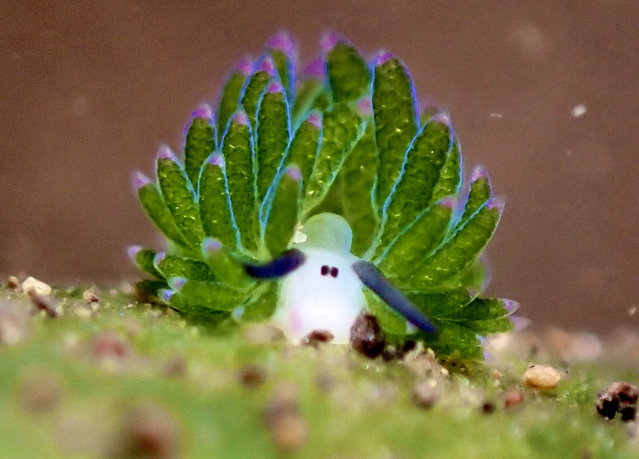
Keen diver Yusuke Fukami fulfilled a personal dream by snapping a cartoon-like Costasiella sea slug while in Bali in the last decade of December 2024. (Photo by Yusuke Fukami/South West News Service)

Keen diver Yusuke Fukami fulfilled a personal dream by snapping a cartoon-like Costasiella sea slug while in Bali in the last decade of December 2024. (Photo by Yusuke Fukami/South West News Service)
Details
01 Jun 2025 03:10:00
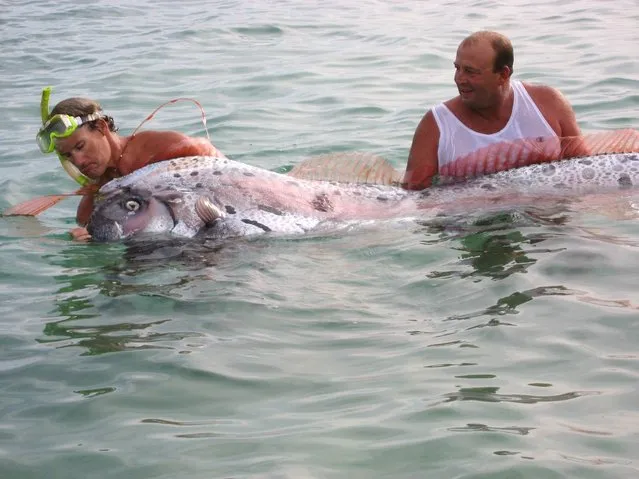
Regalecus Glesne

“The king of herrings or giant oarfish, an oarfish of the family Regalecidae, is the world's longest bony fish. Its total length has been documented to reach 17 m (56 ft), and it can weigh up to 300 kg (661 lb)”. – Wikipedia
Details
23 May 2012 13:38:00
The northern lights, or aurora borealis, illuminate the sky over Flakstad beach on Lofoten Islands in the Arctic Circle on September 5, 2017. (Photo by Jonathan Nackstrand/AFP Photo)

The northern lights, or aurora borealis, illuminate the sky over Flakstad beach on Lofoten Islands in the Arctic Circle on September 5, 2017. (Photo by Jonathan Nackstrand/AFP Photo)
Details
15 Aug 2018 00:01:00
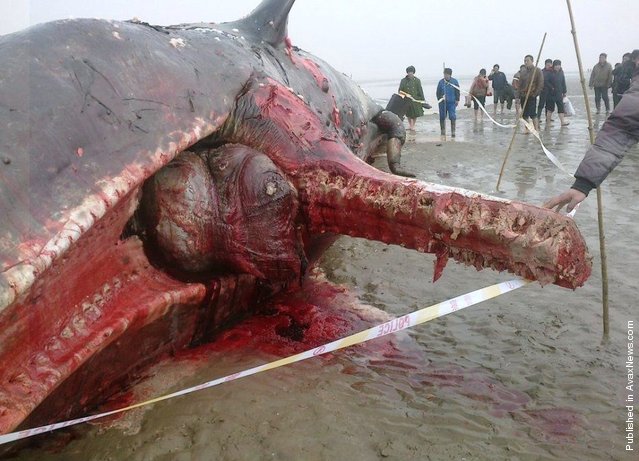
A dead sperm whale is seen on the beach on March 18, 2012 in Yancheng, Jiangsu Province of China

A dead sperm whale is seen on the beach on March 18, 2012 in Yancheng, Jiangsu Province of China. Four giant sperm whales, which were found beached on the beach of Xintan Salt Field on Friday, died on Saturday despite rescue efforts. (Photo by ChinaFotoPress)
Details
19 Mar 2012 12:30:00
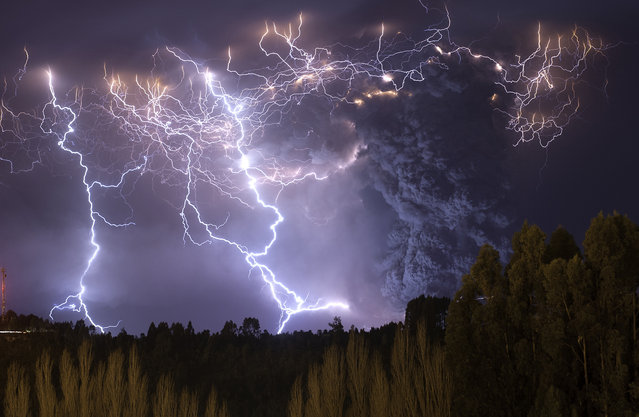
The eruption of Cordon Caulle began on June 4, 2011, located in the Region of Los Rios in Chile. For about 12 months, people and animals became accustomed to living with the daily fall of ash, which also caused problems in the air traffic in South America. The explosions and lightning during first days of the eruption could be seen from hundreds of miles around. This photograph was taken on the second night of eruption from the town of Lago Ranco. (Photo and caption by Francisco Negroni/National Geographic Traveler Photo Contest)

The eruption of Cordon Caulle began on June 4, 2011, located in the Region of Los Rios in Chile. For about 12 months, people and animals became accustomed to living with the daily fall of ash, which also caused problems in the air traffic in South America. The explosions and lightning during first days of the eruption could be seen from hundreds of miles around. This photograph was taken on the second night of eruption from the town of Lago Ranco. (Photo and caption by Francisco Negroni/National Geographic Traveler Photo Contest)

ATTENTION! All pictures are presented in high resolution. To see Hi-Res images – just TWICE click on any picture. In other words, click small picture – opens the BIG picture. Click BIG picture – opens VERY BIG picture.
Details
23 Jun 2013 11:24:00