Loading...
Done
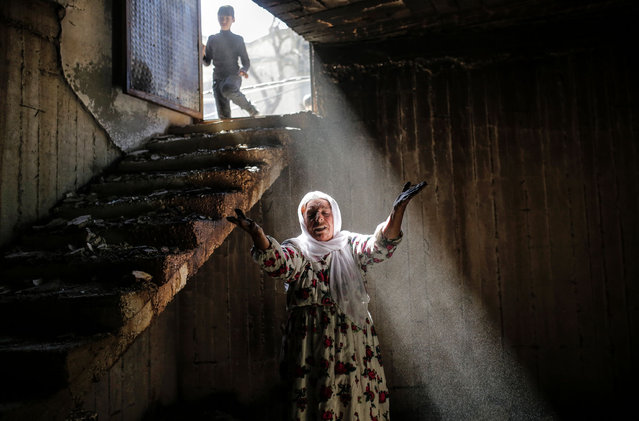
A woman reacts while walking among the ruins of damaged buildings following heavy fighting between government troops and Kurdish fighters, on March 2, 2016 in the southeastern Turkey Kurdish town of Cizre, near the border with Syria and Iraq. Thousands in Turkey's Kurdish-majority town of Cizre started returning to their homes today after authorities partially lifted a curfew in place since December for a controversial military operation to root out separatist rebels. (Photo by Yasin Akgül/AFP Photo)

A woman reacts while walking among the ruins of damaged buildings following heavy fighting between government troops and Kurdish fighters, on March 2, 2016 in the southeastern Turkey Kurdish town of Cizre, near the border with Syria and Iraq. Thousands in Turkey's Kurdish-majority town of Cizre started returning to their homes today after authorities partially lifted a curfew in place since December for a controversial military operation to root out separatist rebels. (Photo by Yasin Akgül/AFP Photo)
Details
03 Mar 2016 11:29:00
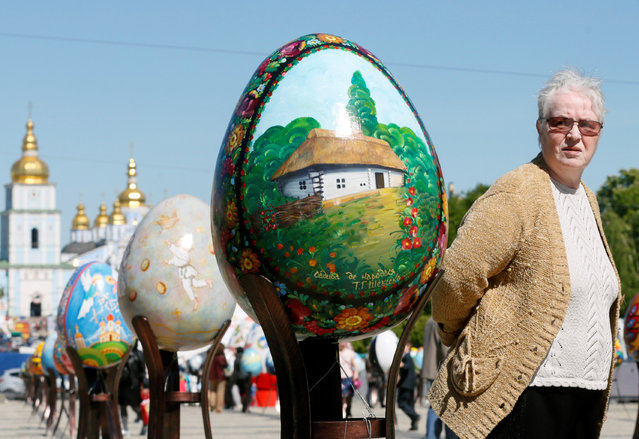
A woman looks at traditional Ukrainian Easter eggs “Pysanka”, installed as part of the upcoming celebrations of Easter, in central Kiev, Ukraine, April 29, 2016. A pysanka is a Ukrainian Easter egg, decorated with traditional Ukrainian folk designs using a wax-resist (batik) method. The word pysanka comes from the verb pysaty, “to write”, as the designs are not painted on, but written with beeswax. Many other eastern European ethnic groups decorate eggs using wax resist for Easter. These include the Belarusians, Bulgarians, Croats, Czechs, Hungarians, Lithuanians, Poles, Romanians, Serbs, Slovaks, Slovenes and Sorbs. (Photo by Valentyn Ogirenko/Reuters)

A woman looks at traditional Ukrainian Easter eggs “Pysanka”, installed as part of the upcoming celebrations of Easter, in central Kiev, Ukraine, April 29, 2016. A pysanka is a Ukrainian Easter egg, decorated with traditional Ukrainian folk designs using a wax-resist (batik) method. The word pysanka comes from the verb pysaty, “to write”, as the designs are not painted on, but written with beeswax. Many other eastern European ethnic groups decorate eggs using wax resist for Easter. These include the Belarusians, Bulgarians, Croats, Czechs, Hungarians, Lithuanians, Poles, Romanians, Serbs, Slovaks, Slovenes and Sorbs. (Photo by Valentyn Ogirenko/Reuters)
Details
30 Apr 2016 09:00:00
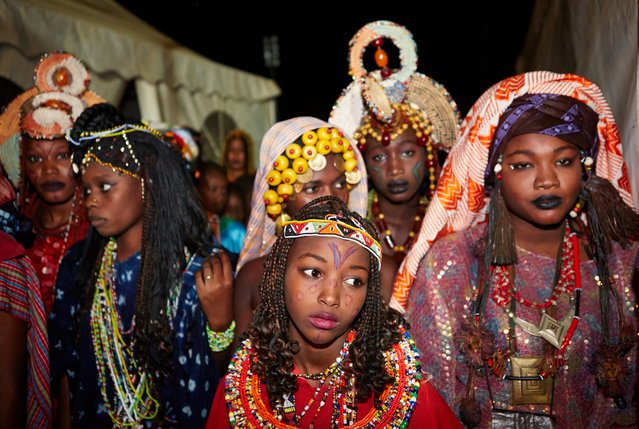
Dancers wait to perform on stage. (Photo by Andy Hall/The Observer)

Photographer Andy Hall joins the thousands of fans from west Africa who have gathered for Baaba Maal's annual Blues du Fleuve festival in Senegal. Here: Dancers wait to perform on stage. (Photo by Andy Hall/The Observer)
Details
04 Jan 2016 08:03:00
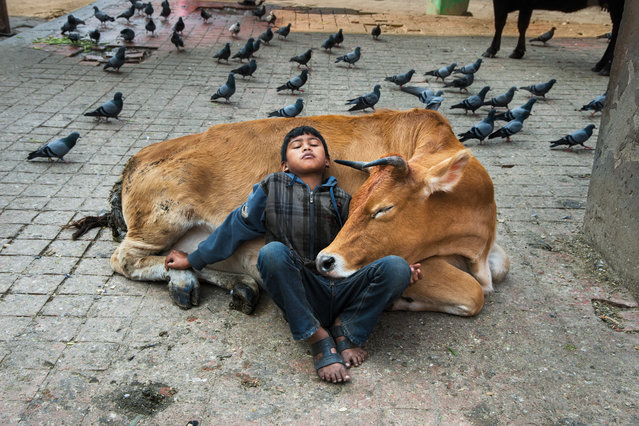
A boy rests against a cow, Kathmandu, Nepal, 2013. “Cows have been designated the national animal in Nepal. They roam freely, and are considered sacred by the 80% of Nepalis who are Hindu”. (Photo by Steve McCurry/The Guardian)

The legendary US photographer’s favourite shots of creatures and how they interact with humans feature in “Animals”, his latest book. Here: A boy rests against a cow, Kathmandu, Nepal, 2013. “Cows have been designated the national animal in Nepal. They roam freely, and are considered sacred by the 80% of Nepalis who are Hindu”. (Photo by Steve McCurry/The Guardian)
Details
07 Nov 2019 00:01:00
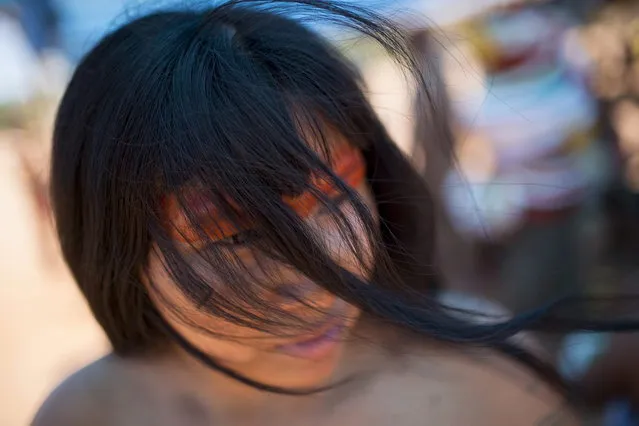
A Waura Indian woman watches the activities of this year's “quarup”, a ritual held over several days to honour in death a person of great importance to them, in Xingu National Park, Mato Grosso State, August 24, 2013. This year the Waura tribe is honouring their late cacique (chief) Atamai, who died in 2012 and helped created the Xingu Park, and his important contribution in facilitating communication between white Brazilians and Indians. (Photo by Ueslei Marcelino/Reuters)

A Waura Indian woman watches the activities of this year's “quarup”, a ritual held over several days to honour in death a person of great importance to them, in Xingu National Park, Mato Grosso State, August 24, 2013. This year the Waura tribe is honouring their late cacique (chief) Atamai, who died in 2012 and helped created the Xingu Park, and his important contribution in facilitating communication between white Brazilians and Indians. (Photo by Ueslei Marcelino/Reuters)
Details
04 Sep 2013 08:48:00
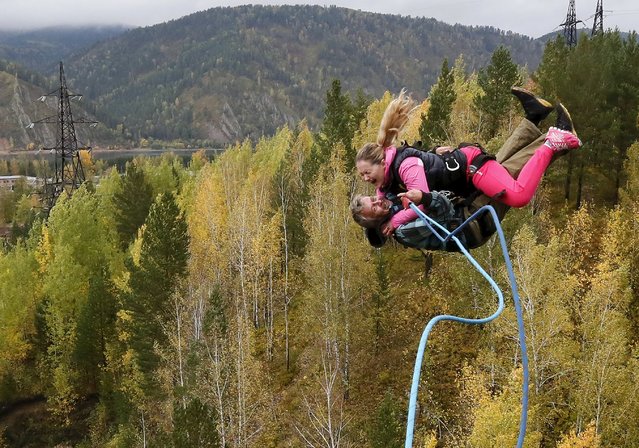
Members of the “Exit Point” amateur rope-jumping group jump from a 44-metre high (144-ft) waterpipe bridge in the Siberian Taiga area outside Krasnoyarsk, September 13, 2015. Rope-jumping, an extreme sport, involves jumping from a high point using an advanced leverage system combining mountaineering and rope safety equipment. (Photo by Ilya Naymushin/Reuters)

Members of the “Exit Point” amateur rope-jumping group jump from a 44-metre high (144-ft) waterpipe bridge in the Siberian Taiga area outside Krasnoyarsk, September 13, 2015. Rope-jumping, an extreme sport, involves jumping from a high point using an advanced leverage system combining mountaineering and rope safety equipment. (Photo by Ilya Naymushin/Reuters)
Details
14 Sep 2015 14:16:00
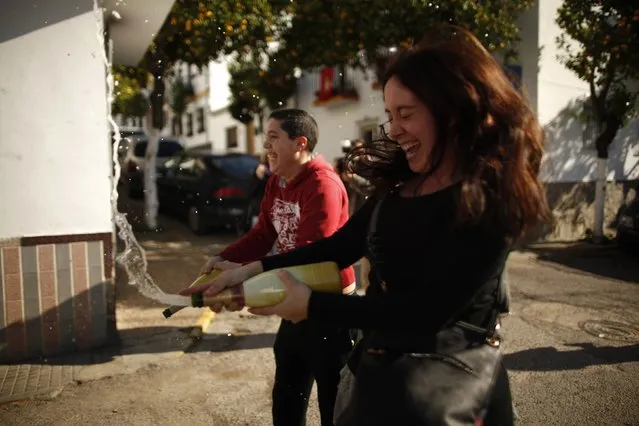
Winners of Spain's Christmas Lottery “El Gordo” celebrate in El Gastor, near Cadiz, December 22, 2014. The total prize money of 2.4 billion euros is split into thousands of cash prizes amongst hundreds of winning numbers. (Photo by Jon Nazca/Reuters)

Winners of Spain's Christmas Lottery “El Gordo” celebrate in El Gastor, near Cadiz, December 22, 2014. The total prize money of 2.4 billion euros is split into thousands of cash prizes amongst hundreds of winning numbers. (Photo by Jon Nazca/Reuters)
Details
23 Dec 2014 13:57:00
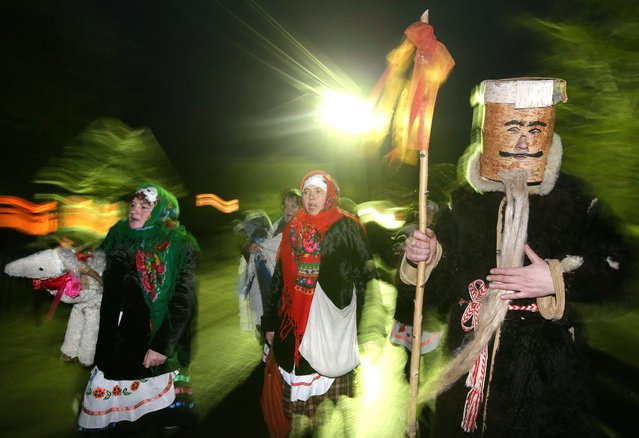
Belarussians in costumes sing songs during the traditional rite of Shchadrets (Schedry vecher or Generous Eve) in the village of Osovo, some 190 km from Minsk, Belarus, 13 January 2015. Shchadrets is a Belarusian folk holiday celebrated on the New Year's Eve in accordance with the Julian calendar (Old New Year). (Photo by Tatyana Zenkovich/EPA)

Belarussians in costumes sing songs during the traditional rite of Shchadrets (Schedry vecher or Generous Eve) in the village of Osovo, some 190 km from Minsk, Belarus, 13 January 2015. Shchadrets is a Belarusian folk holiday celebrated on the New Year's Eve in accordance with the Julian calendar (Old New Year). The holiday is similar to Koliady, when youth in costumes walk from house to house singing holiday songs, performing, and asking for a reward afterwards. (Photo by Tatyana Zenkovich/EPA)
Details
17 Jan 2015 12:21:00