Loading...
Done
Road Trip! (Photo by Thad Lawrence)

Interesting photos which can't be united in a certain series quite often come across to me. Therefore I publish simply a small group of separate pictures – enjoy, if it's interesting to you. Photo: “Road Trip!” (Photo by Thad Lawrence)

Details
05 Oct 2012 09:58:00
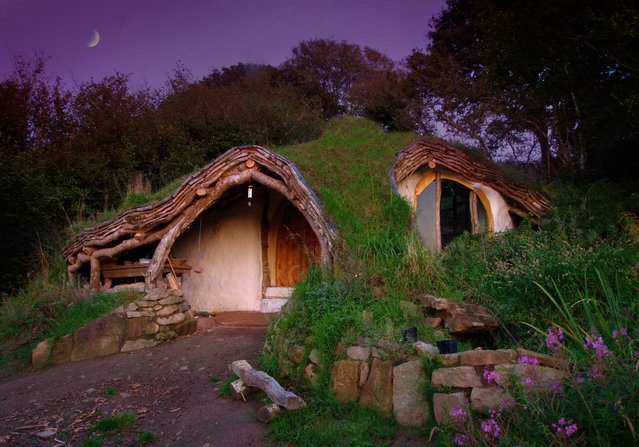
Hobbit house by Simon Dale

You are looking at pictures of a house I built for our family in Wales. It was built by myself and my father in law with help from passers by and visiting friends. 4 months after starting we were moved in and cosy. I estimate 1000-1500 man hours and £3000 put in to this point. Not really so much in house buying terms (roughly £60/sq m excluding labour).
Details
13 Nov 2012 12:48:00
Short circuit

“Throughout those last months photography has grown in me. It has become a part of my life and I wouldn’t have it any other way. Flickr is my small theater, hope you'll enjoy the show”. – ShmilebliK

Photo: Short circuit, 2012 (Photo by ShmilebliK)
Details
07 Jun 2012 10:29:00
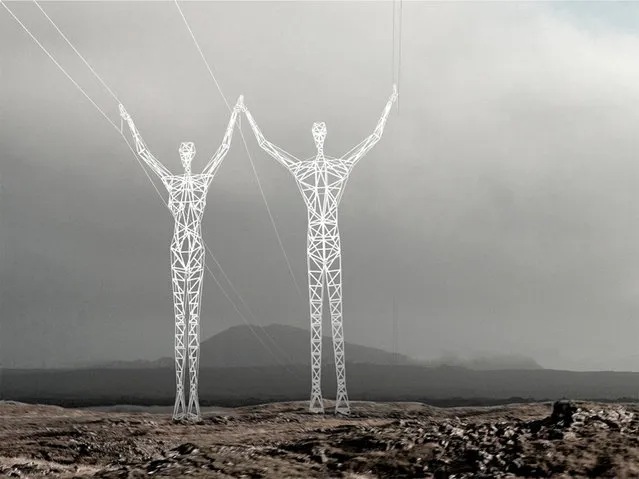
The Land Of Giants By Choi + Shine Architects

Power to the people! Giant transmission tower people that is… We can all agree that transmission towers (that’s an electricity pylon or ironman for you European and Aussie folk) are very necessary yet completely unsightly. These suspension towers dot our landscapes, typically soaring 15-55 meters (49 – 180 ft) high.
Details
07 Jun 2015 09:27:00
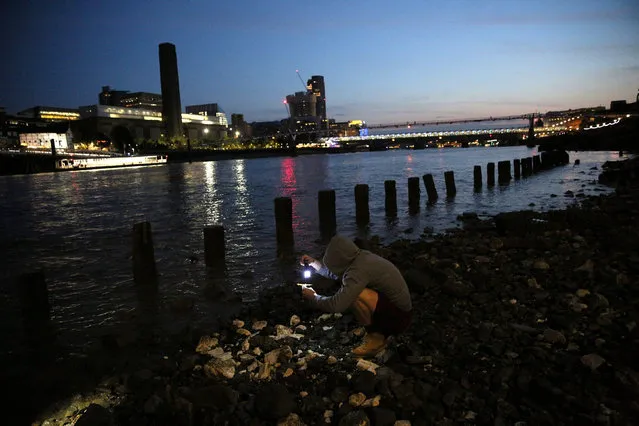
A mudlark uses a torch to look for items on the bank of the River Thames in London, Britain June 06, 2016. Mudlarking is believed to trace its origins to the 18th and 19th century, when scavengers searched the Thames' shores for items to sell. These days, history and archaeology fans are the ones hoping to find old relics such as coins, ceramics, artifacts or everyday items from across centuries. They wait for the low tide and then scour specific areas of exposed shores. "If you're in a field you could be out all day long, with the river you're restricted to about two or three hours," mudlark Nick Stevens said. While many just use the naked eye for their searches, others rely on metal detectors for which a permit from the Port of London Authority is needed. Digging also requires consent. (Photo by Neil Hall/Reuters)

A mudlark uses a torch to look for items on the bank of the River Thames in London, Britain June 06, 2016. Mudlarking is believed to trace its origins to the 18th and 19th century, when scavengers searched the Thames' shores for items to sell. These days, history and archaeology fans are the ones hoping to find old relics such as coins, ceramics, artifacts or everyday items from across centuries. their finds with the Portable Antiquities Scheme. Any item over 300 years old must be recorded. (Photo by Neil Hall/Reuters)
Details
27 Aug 2016 10:43:00
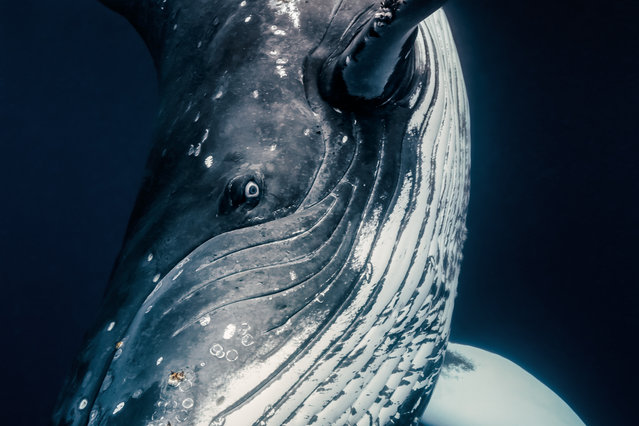
“To look into a whale’s eye is life-changing and humbling. Well, it’s the same with dolphins but they are mostly very fast in the water. A whale’s eye is unexpectedly looking, just like a human eye, kinda checking you out”. (Photo by Rita Kluge/The Guardian)

With the humpback calving season drawing to a close, here’s a look at some of Rita Kluge’s distinctive marine photos from the south Pacific. The Sydney-based photographer fell in love with whales after witnessing southern rights from the New South Wales coastline as they travelled to and from their feeding grounds in the Antarctic. She has since been to Tonga, where humpbacks breed and calf in winter months, to photograph them in the water. (Photo by Rita Kluge/The Guardian)
Details
26 Oct 2016 11:09:00
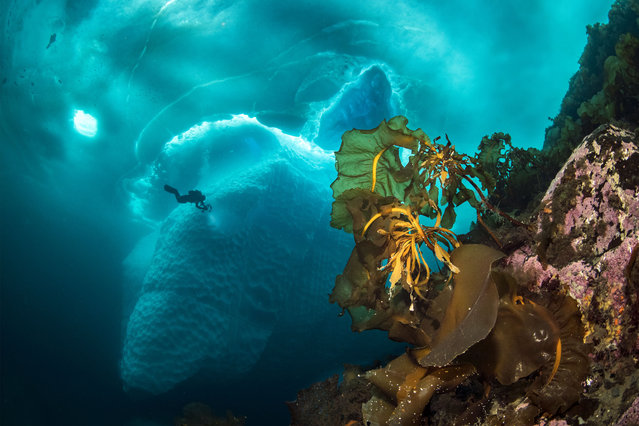
Franco Banfi photographs mesmerising images of divers swimming round the colossal frozen iceberg. (Photo by Franco Banfi/Caters News Agency)

“These incredible shots show the stunning formations of an iceberg beneath the surface of the ocean. Taken in Tasiilaq, Greenland, by Franco Banfi, the underwater photography captures the beauty of these ice mountains beneath the ocean’s surface. In some of the photos, divers are swimming around an iceberg under the frozen water, while other images show some of the weird and wonderful creatures you can encounter in that part of the ocean”. (Photo by Franco Banfi/Caters News Agency)
Details
05 Jul 2018 00:05:00
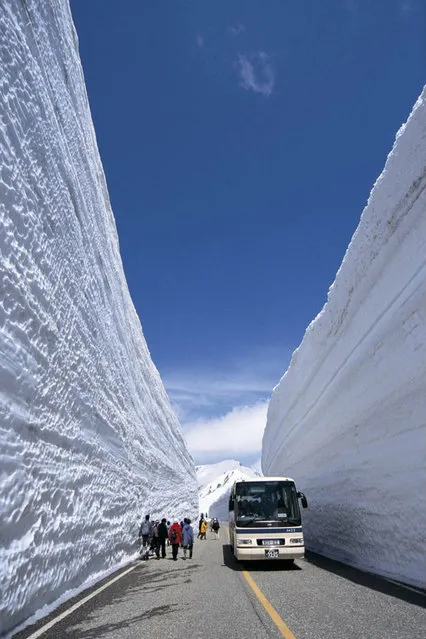
Snow Wall in Japan

The Tateyama Kurobe Alpine Route is an international mountain sightseeing route some 90 kilometers (56 miles) long. The route goes across the 3,000-meter-high North Alpine mountains, the so-called “roof of Japan,” and connects Toyama and Shinano Omachi. You can enjoy the panorama by taking a train, highland bus, trolley bus, cable car, and ropeway. Since the lines opened in June 1971, the Tateyama mountain area has been transformed from an isolated spot into one of the nation’s best sightseeing areas, where a million guests visit every year.
Details
27 Jul 2012 09:28:00