Loading...
Done
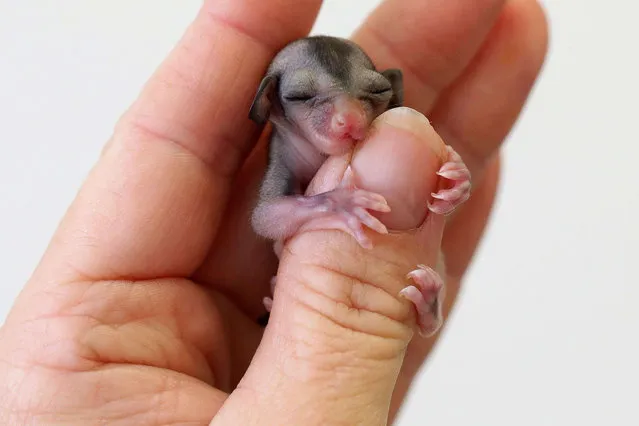
These tiny little sugar gliders are lucky to be alive after surviving a cat attack that killed their mother. (Photo by Adam Head/Newspix/REX Features)

These tiny little sugar gliders are lucky to be alive after surviving a cat attack that killed their mother. Somehow the youngsters, who were just a few days old at the time, and the size of jellybeans, survived and were rushed to the Currumbin Wildlife Hospital in Queensland, Australia. (Photo by Adam Head/Newspix/REX Features)
Details
07 Dec 2014 11:11:00
An ancient oak tree sits in a Shropshire field as the first signs of Spring begin to show across the United Kingdom on February 19, 2014 in Bridgnorth, England. (Photo by Christopher Furlong/Getty Images)

An ancient oak tree sits in a Shropshire field as the first signs of Spring begin to show across the United Kingdom on February 19, 2014 in Bridgnorth, England. (Photo by Christopher Furlong/Getty Images)
Details
24 Feb 2014 10:51:00
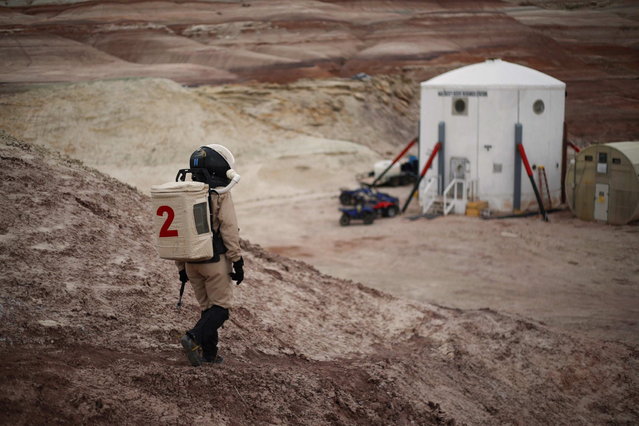
Csilla Orgel, a geologist of Crew 125 EuroMoonMars B mission, makes her way back to the Mars Desert Research Station (MDRS) in the Utah desert March 3, 2013. (Photo by Jim Urquhart/Reuters)

NASA says it could be another 20 years before humans touch down on Mars, but in a sense, the Mars Society has been exploring the red planet for more than a decade – in Utah. Photo: Csilla Orgel, a geologist of Crew 125 EuroMoonMars B mission, makes her way back to the Mars Desert Research Station (MDRS) in the Utah desert March 3, 2013. The MDRS aims to investigate the feasibility of a human exploration of Mars and uses the Utah desert's Mars-like terrain to simulate working conditions on the red planet. Scientists, students and enthusiasts work together developing field tactics and studying the terrain. All outdoor exploration is done wearing simulated spacesuits and carrying air supply packs and crews live together in a small communication base with limited amounts of electricity, food, oxygen and water. Everything needed to survive must be produced, fixed and replaced on site. (Photo by Jim Urquhart/Reuters)
Details
14 Mar 2013 12:11:00
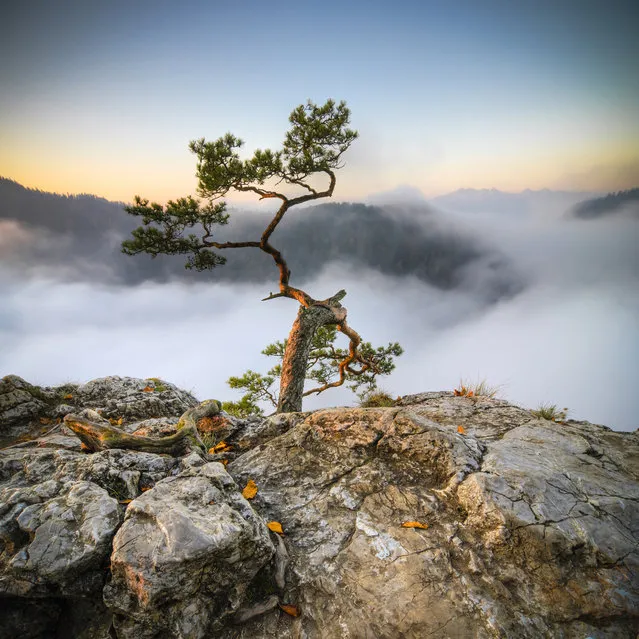
“Sokolica”. Sokolica, Poland. (Photo and caption by Marcin Kęsek/National Geographic Traveler Photo Contest)

“Sokolica”. Sokolica, Poland. (Photo and caption by Marcin Kęsek/National Geographic Traveler Photo Contest)

ATTENTION! All pictures are presented in high resolution. To see Hi-Res images – just TWICE click on any picture. In other words, click small picture – opens the BIG picture. Click BIG picture – opens VERY BIG picture.
Details
25 Jun 2013 09:13:00
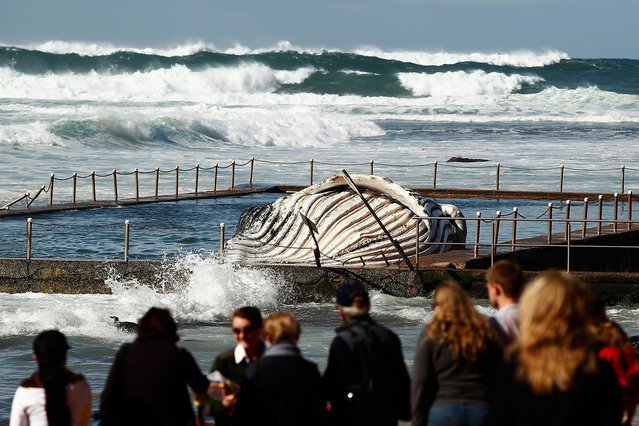
People gather on the beach to see the carcass of a male sub-adult humpback whale that washed up at New Port Beach overnight at Newport Beach overnight on August 1, 2012 in Sydney, Australia.  (Photo by Brendon Thorne)

“The young adult humpback could have a plot waiting for it at a whale graveyard hidden in bushland at Garrigal Garigal National Park”. – Janet Fife-Yeomans via AdelaideNow

Photo: People gather on the beach to see the carcass of a male sub-adult humpback whale that washed up at New Port Beach overnight at Newport Beach overnight on August 1, 2012 in Sydney, Australia. (Photo by Brendon Thorne)
Details
02 Aug 2012 13:16:00


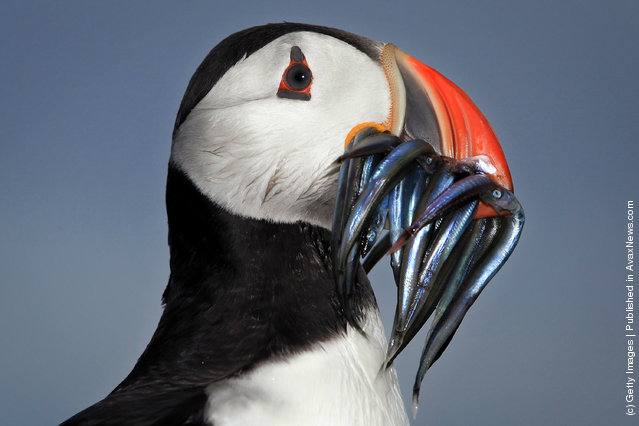
A Puffin returns to it's nest with a beak full of sand eels on June 25, 2011 on Inner Farne, England. The Farne Islands, which are run by the National Trust, are situated two to three miles off the Northumberland coastline. The archipeligo of 16-28 separate islands (depending on the tide) make the summer home to approximately 100,000 pairs of breeding seabirds including around 36,000 Puffins, 32,000 Guillemots and 2,000 pairs of Arctic Terns. The species of birds which nest in internationally important numbers include Shag, Sandwich Tern and Arctic Tern. The coastline around The Farnes are also the breeding ground to one of Europe's largest Grey Seal colonies with around 4,000 adults giving birth to 1500 pups every year. (Photo by Dan Kitwood/Getty Images)

Details
27 Jun 2011 12:58:00


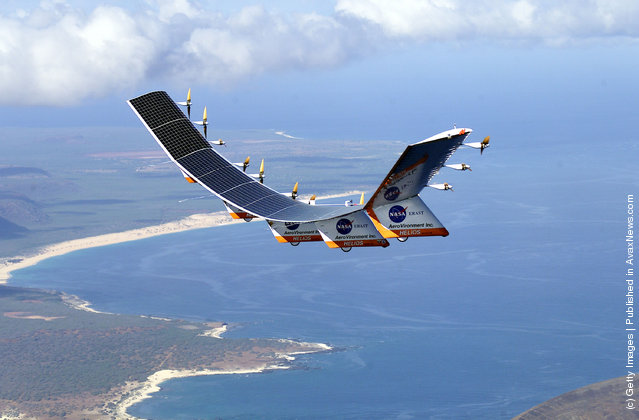
“NASA's Pathfinder, Pathfinder Plus, Centurion and Helios Prototype were an evolutionary series of solar- and fuel-cell-system-powered unmanned aerial vehicles. AeroVironment, Inc. developed the vehicles under NASA's Environmental Research Aircraft and Sensor Technology (ERAST) program. They were built to develop the technologies that would allow long-term, high-altitude aircraft to serve as “atmospheric satellites”, to perform atmospheric research tasks as well as serve as communications platforms”. – Wikipedia

Photo: The solar-electric Helios Prototype flying wing is flies over the Hawaiian islands of Niihau and Lehua during the first solar-powered test flight July 14, 2001 from the U.S. Navy's Pacific Missile Range Facility on Kauai, HI. The 18-hour flight was a functional checkout of the aircraft's systems and performance in preparation for an attempt to reach sustained flight at 100,000 feet altitude later in the summer. (Photo Courtesy of NASA/Getty Images)
Details
14 Jul 2011 09:24:00
Gagarin does not always show up in full-scale astronautics. In this picture he smiles during his summer vacation in Sochi, Russia in 1961 with sunglasses and sunhat in the camera. (Photo by Imago/Eastnews)

Yuri Gagarin does not always show up in full-scale astronautics. In this picture he smiles during his summer vacation in Sochi, Russia in 1961 with sunglasses and sunhat in the camera. (Photo by Imago/Eastnews)
Details
12 Apr 2018 00:03:00