Loading...
Done
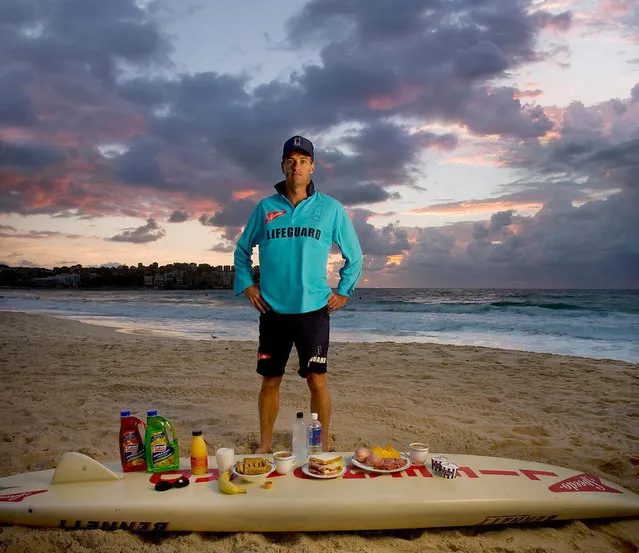
What the World Eats By Peter Menzel And Faith D'Aluisio Part 2

A stunning photographic collection featuring portraits of people from 30 countries and the food they eat in one day. In this fascinating study of people and their diets, 80 profiles are organized by the total number of calories each person puts away in a day. Featuring a Japanese sumo wrestler, a Massai herdswoman, world-renowned Spanish chef Ferran Adria, an American competitive eater, and more, these compulsively readable personal stories also include demographic particulars, including age, activity level, height, and weight. Essays from Harvard primatologist Richard Wrangham, journalist Michael Pollan, and others discuss the implications of our modern diets for our health and for the planet. This compelling blend of photography and investigative reportage expands our understanding of the complex relationships among individuals, culture, and food.
Details
02 May 2014 09:20:00
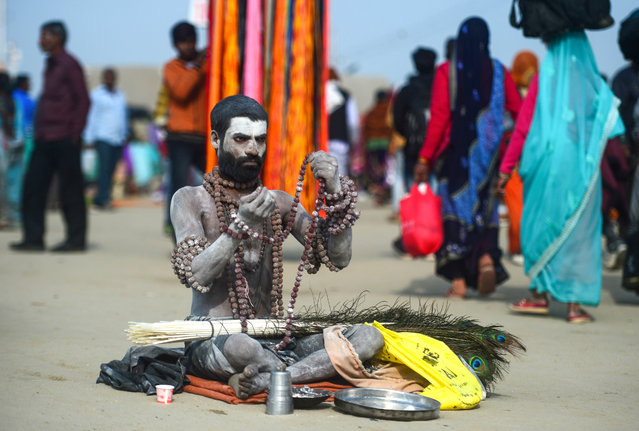
An Indian sadhu (Hindu holy man) sits on the banks of Sangam – the confluence of the Ganges, Yamuna and mythical Saraswati rivers – on the auspicious bathing day of 'Maghi Purnima' during the Kumbh Mela festival in Allahabad on February 19, 2019. Millions of Hindu pilgrims took the plunge in holy rivers on the most auspicious bathing days of the Kumbh Mela festival, led by naked, ash-smeared holy men and accompanied by chants from Hindu holy texts. (Photo by Sanjay Kanojia/AFP Photo)

An Indian sadhu (Hindu holy man) sits on the banks of Sangam – the confluence of the Ganges, Yamuna and mythical Saraswati rivers – on the auspicious bathing day of 'Maghi Purnima' during the Kumbh Mela festival in Allahabad on February 19, 2019. Millions of Hindu pilgrims took the plunge in holy rivers on the most auspicious bathing days of the Kumbh Mela festival, led by naked, ash-smeared holy men and accompanied by chants from Hindu holy texts. (Photo by Sanjay Kanojia/AFP Photo)
Details
16 Mar 2019 00:05:00
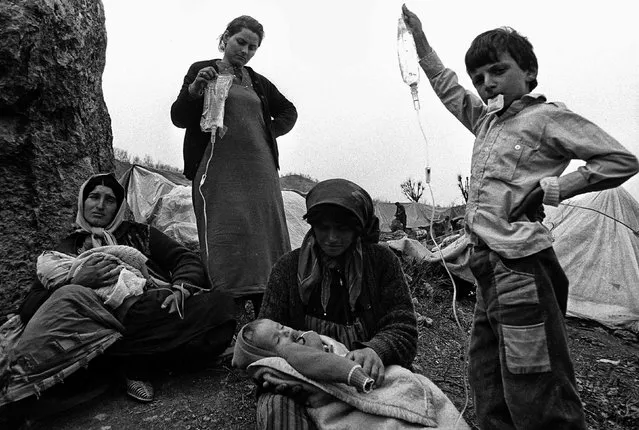
Iraqi Kurdish refugees wait with children in Cukurca refugee camp in Turkey April 8, 1991. Reuters photographers have chronicled Kurdish refugee crises over the years. In 1991 Srdjan Zivulovic documented refugees in Cukurca who had escaped a military operation by Saddam Hussein's government in Iraq aimed at “Arabising” Kurdish areas in the north. (Photo by Srdjan Zivulovic/Reuters)

Iraqi Kurdish refugees wait with children in Cukurca refugee camp in Turkey April 8, 1991. Reuters photographers have chronicled Kurdish refugee crises over the years. In 1991 Srdjan Zivulovic documented refugees in Cukurca who had escaped a military operation by Saddam Hussein's government in Iraq aimed at “Arabising” Kurdish areas in the north. Hundreds of thousands fled into Turkey and Iran. Images shot in recent months show familiar scenes as crowds of people flee Islamic State militants in Syria. There are as many as 30 million Kurds, spread through Turkey, Iraq, Syria and Iran. Most Kurds are Sunni Muslims, but tend to feel more loyalty to their Kurdishness, rather than their religion. (Photo by Srdjan Zivulovic/Reuters)
Details
14 Nov 2014 14:09:00
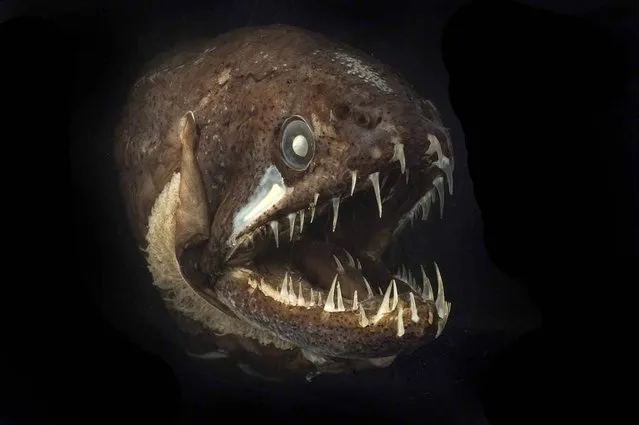
Imagine living in the sea where it is permanently dark, cold, and food is hard to find. For many animals at depth, it may be weeks to months between meals. If you find something to eat, you have to hang on to it

Imagine living in the sea where it is permanently dark, cold, and food is hard to find. For many animals at depth, it may be weeks to months between meals. If you find something to eat, you have to hang on to it. This is why so many deep-sea fishes have lots of big teeth. This dragonfish, spotted off the coast of Australia, even has teeth on its tongue. They would be terrifying animals ... if they weren’t the size of a banana. (Photo by Julian Finn/Museum Victoria)
Details
21 May 2012 12:14:00
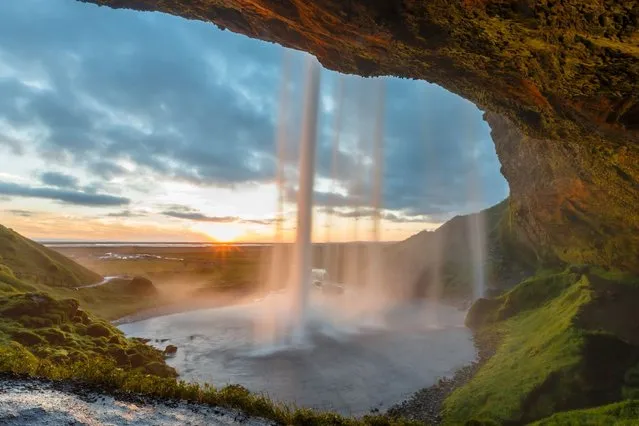
Seljalandsfoss waterfall, located in Iceland. (Photo by HotSpot Media)

Seljalandsfoss waterfall, located in Iceland. Seljalandsfoss is one of the most famous waterfalls of Iceland. This waterfall of the river Seljalandsá drops 60 metres (200 ft) over the cliffs of the former coastline. It's possible to go behind the waterfall. (Photo by HotSpot Media)
Details
16 Apr 2014 12:54:00
A four-legged robot dog called SPOT patrols a park as it undergoes testing to be deployed as a safe distancing ambassador, following the coronavirus disease (COVID-19) outbreak, in Singapore on May 8, 2020. (Photo by Edgar Su/Reuters)

A four-legged robot dog called SPOT patrols a park as it undergoes testing to be deployed as a safe distancing ambassador, following the coronavirus disease (COVID-19) outbreak, in Singapore on May 8, 2020. (Photo by Edgar Su/Reuters)
Details
10 May 2020 00:07:00
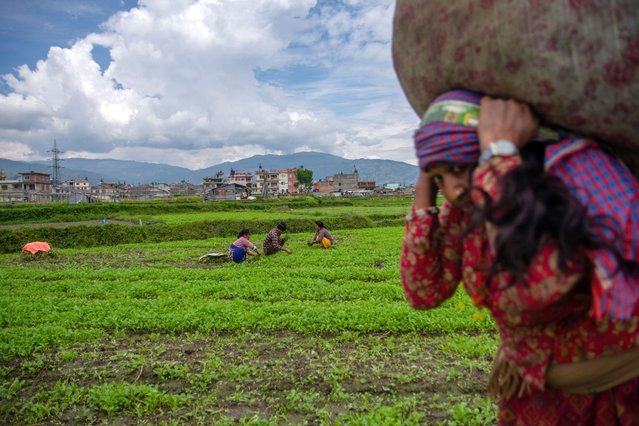
A woman returns home carrying vegetable on her back (foreground) while other farmer works on vegetable field (background) during the 43rd day of the lockdown imposed by the government as a preventive measure against the spread of COVID-19 coronavirus, in Kathmandu, Nepal on Tuesday, May 5, 2020. (Photo by Rojan Shrestha/NurPhoto via Getty Images)

A woman returns home carrying vegetable on her back (foreground) while other farmer works on vegetable field (background) during the 43rd day of the lockdown imposed by the government as a preventive measure against the spread of COVID-19 coronavirus, in Kathmandu, Nepal on Tuesday, May 5, 2020. (Photo by Rojan Shrestha/NurPhoto via Getty Images)
Details
12 May 2020 00:01:00
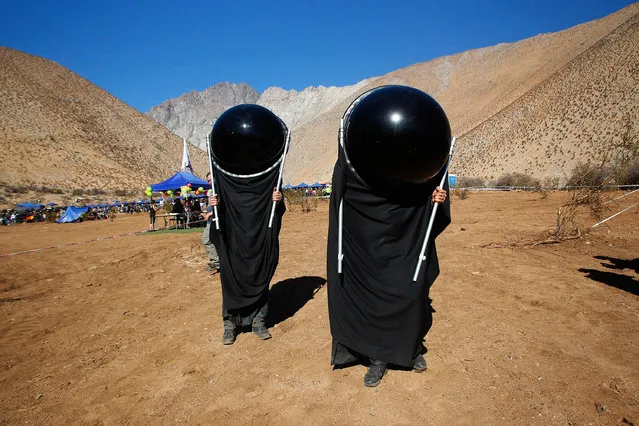
Chileans watch the sky with special suits prior to a total solar eclipse on July 2, 2019 in Paiguano, Chile. Around 25,0000 tourists arrived to Paiguano, a small town of around 1,000 inhabitants in the Elqui Valley, 650 km away Santiago. This is the only Earth's total solar eclipse of 2019 and the first one since 2017. From this point, the sun will fully disappear for around two minutes. It is best visible from a stripe in the South Pacific, Chile and Argentina. (Photo by Marcelo Hernandez/Getty Images)

Chileans watch the sky with special suits prior to a total solar eclipse on July 2, 2019 in Paiguano, Chile. Around 25,0000 tourists arrived to Paiguano, a small town of around 1,000 inhabitants in the Elqui Valley, 650 km away Santiago. This is the only Earth's total solar eclipse of 2019 and the first one since 2017. From this point, the sun will fully disappear for around two minutes. It is best visible from a stripe in the South Pacific, Chile and Argentina. (Photo by Marcelo Hernandez/Getty Images)
Details
04 Jul 2019 00:05:00