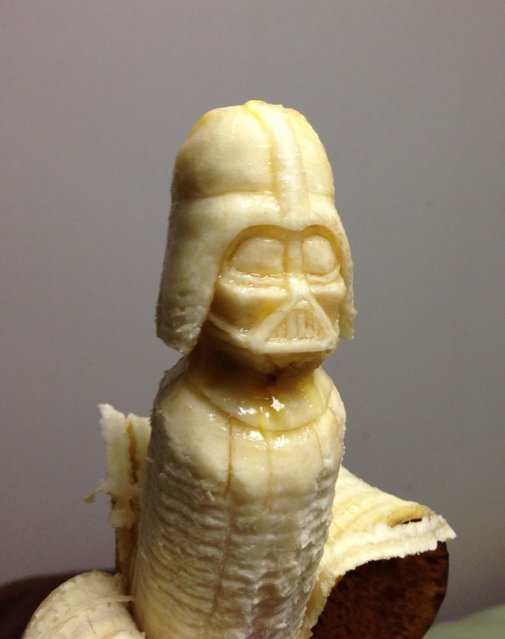
This is the work of Keisuke Yamada, a banana artist Kotaku first profiled in 2011. To make these sculptures, Yamada, an electrician by trade, must work fast, or the banana will start to go bad.
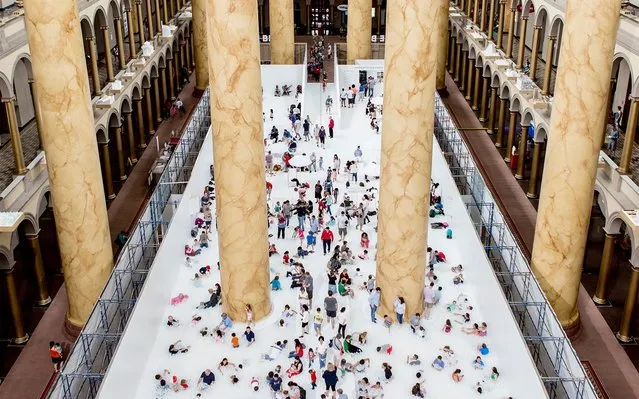
Last weekend, the National Building Museum in Washington, D.C., opened a 10,000 square-foot ball pit to the general public, and everyone cheered that, finally, someone made their childhood dreams come true.
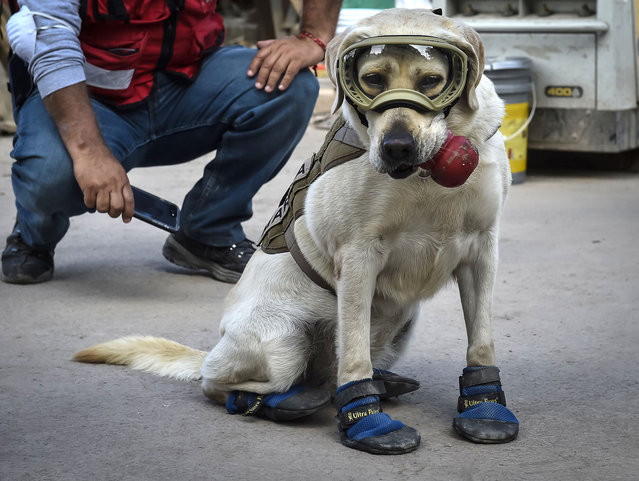
Frida, a rescue dog belonging to the Mexican Navy, with her handler Israel Arauz Salinas, takes a break while participating in the effort to look for people trapped at the Rebsamen school in Mexico City, on September 22, 2017, three days after the devastating earthquake that hit central Mexico. (Photo by Omar Torres/AFP Photo)
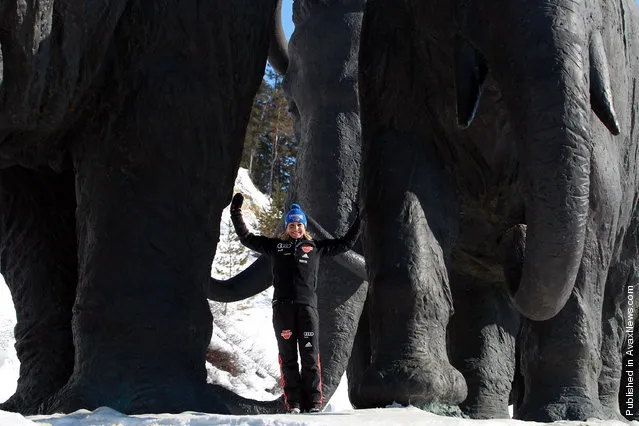
Magdalena Neuner poses in front of mammoth figures during a photocall of the German Biathlon Woman Team at the Archeopark on March 10, 2011 in Khanty-Mansiysk, Russia. On the territory of Archeopark are mammoth sculptural compositions, made of bronze. Mammoths lived in Ugra 70-10 thousand years ago and were members of the Pleistocene, or also called 'the mammoth fauna. The growth figures exceed the natural factor 2-3 times.
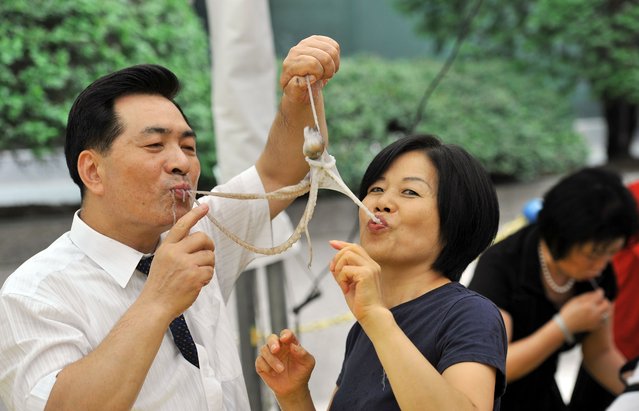
Live octopus is a delicacy in South Korea but is a known choking hazard, since the still-moving suction cups can cause tentacle pieces to stick in a person's throat. A baby octopus is often consumed whole, while larger varieties are cut up and the still-wriggling tentacles eaten with a splash of sesame oil. Photo: A South Korean man and a woman eat a live octopus during an event to promote a local food festival in Seoul on September 12, 2013. (Photo by Jung Yeon-Je/AFP Photo)
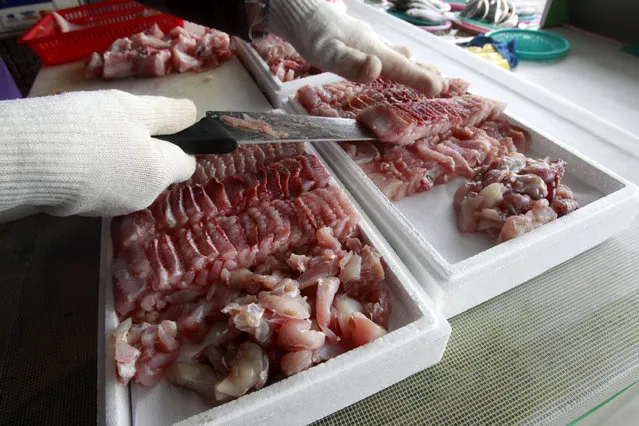
In this February 19, 2014 photo, a skate seller puts slices of skate into styrofoam boxes for shipment to customers around South Korea at a fish market in Mokpo, a port city on the southwestern tip of the Korean Peninsula. The aroma of one of southwestern South Korea's most popular delicacies regularly gets compared to rotting garbage and filthy bathrooms. And that's by fans. The unusual dish is typically made by taking dozens of fresh skate, a cartilage-rich fish that looks like a stingray, stacking them up in a walk-in refrigerator and waiting. Up to a month in some cases. (Photo by Ahn Young-joon/AP Photo)
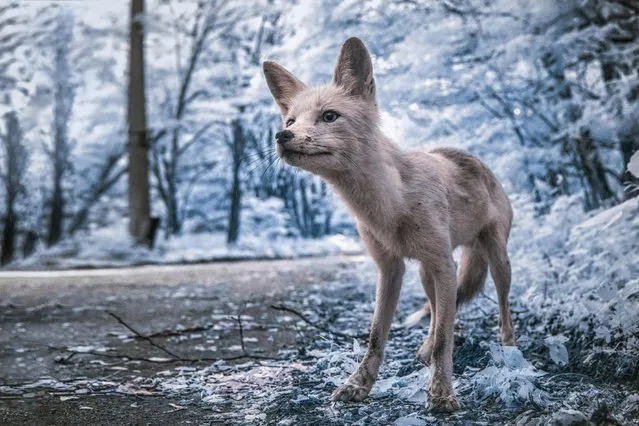
This fascinating photo series looks at the bleak isolation of Chernobyl as never before. Employing infrared filters, photographer Vladimir Mitgutin is able to bring out details of decay – an abandoned bus, a radar system, an amusement park, a doll, a sports hall, a piano – frozen in time. Here: Simon – a friendly fox, who often approaches tourists in the exclusion zone, asking for food. (Photo by Vladimir Mitgutin/Caters News Agency)