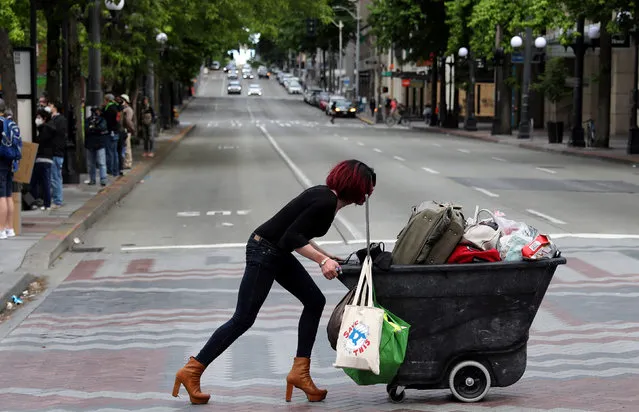
A woman pushes a cart during a protest against racial inequality and call for defunding of Seattle police, in Seattle downtown, Washington, U.S. June 14, 2020. (Photo by Goran Tomasevic/Reuters)
A girl with a ritual garland headdress smiles during a traditional Midsummer Night celebration, in the capital Kyiv, Ukraine, Monday, July 6, 2020. Ukrainian girls believe the ages-old ceremony would help them to find their true love partners, as the pagan Slav festival is still celebrated in Ukraine, as Kyiv has lifted the coronavirus lockdown restrictions. (Photo by Efrem Lukatsky/AP Photo)
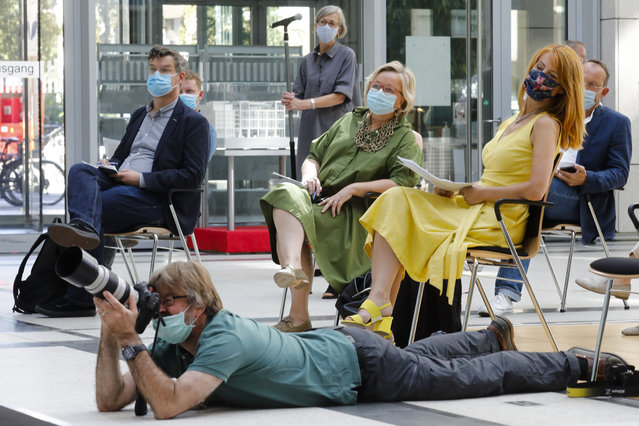
Journalists wear face mask and keep distance as they attend news conference by German Health Minister Jens Spahn about the developing of the coronavirus crisis test strategy in Berlin, Germany, Thursday, August 6, 2020. (Photo by Markus Schreiber/AP Photo)
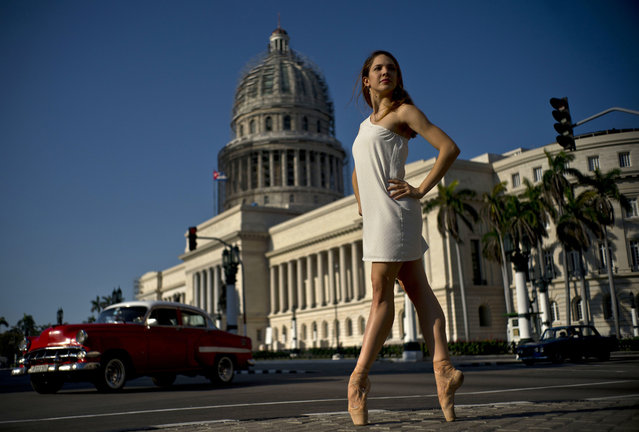
In this April 14, 2018 photo, National Ballet of Cuba dancer Daniela Gomez Perez stands on point as she poses outside the Capitol in Havana, Cuba. Gomez, who says Cubans love dancing, trusts the next generation of leaders will continue such traditions and that art will continue to be the engine of Cuban society. Gomez said she is proud to represent Cuba during a dance trip in May to Washington, Tampa and Chicago, and that the Cuban state has always supported dance. (Photo by Ramon Espinosa/AP Photo)
Artist Le Pustra and organiser Else Edelstahl pose for a picture at Simon Dach Strasse, a street filled with many bars, in Berlin, Germany, August 28, 2016. Else Edelstahl organises the party series “Boheme Sauvage”, in which people dress up in 1920s style, celebrating Berlin nightlife of a past era. (Photo by Hannibal Hanschke/Reuters)
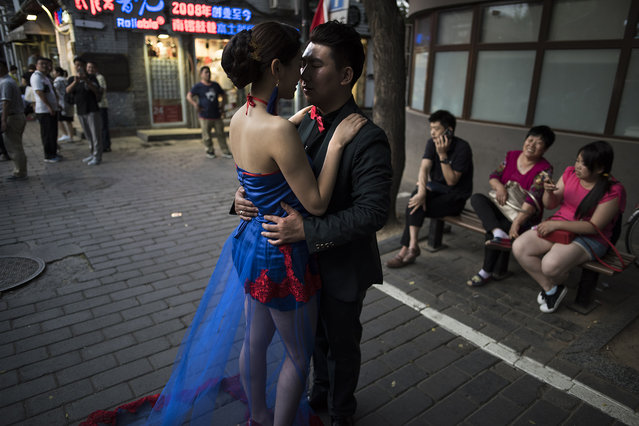
China has recently relaxed its one child policy that was used to control a burgeoning population. A couple has their wedding photo taken in an old quarter of Beijing on May 24, 2016. (Photo by Michael Robinson Chavez/The Washington Post)
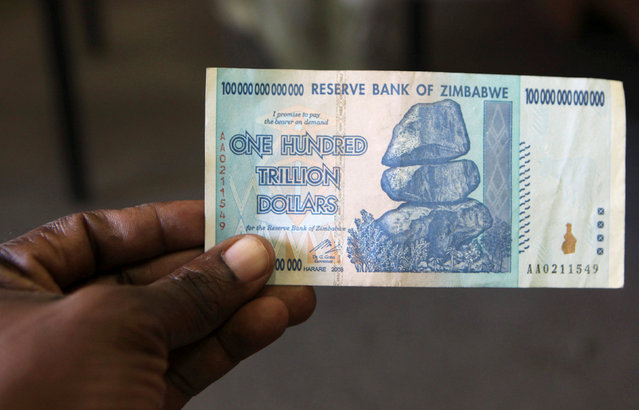
A man holds up for a picture a one hundred trillion Zimbabwean dollars note inside a shop in Harare, Zimbawe, June 12, 2015. Hyperinflation in Zimbabwe was a period of currency instability that began in the late 1990s shortly after the confiscation of private farms from landowners, towards the end of Zimbabwean involvement in the Second Congo War. During the height of inflation from 2008 to 2009, it was difficult to measure Zimbabwe's hyperinflation because the government of Zimbabwe stopped filing official inflation statistics. However, Zimbabwe's peak month of inflation is estimated at 79.6 billion percent in mid-November 2008. (Photo by Philimon Bulawayo/Reuters)