Loading...
Done
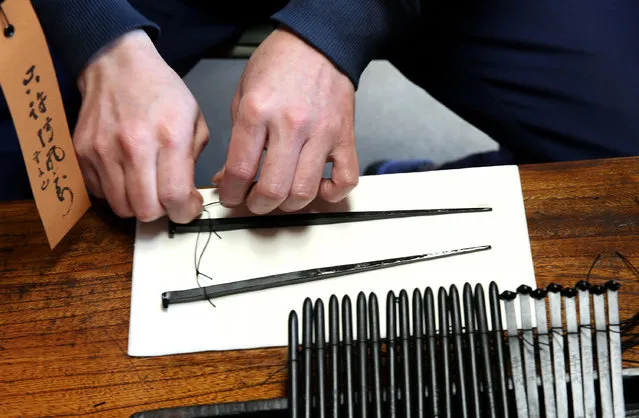
Myouchin Munehisa, 44, as he finishes Hibashi iron bells made of iron on a production line at Myochin Honpo shop on April 25, 2014 in Himeji, Japan. (Photo by Buddhika Weerasinghe/Getty Images)

Myouchin Munehisa, 44, as he finishes Hibashi iron bells made of iron on a production line at Myochin Honpo shop on April 25, 2014 in Himeji, Japan. Myochin family's iron business, started in the Heian period (794-1185) of Japan as an armor and helmet maker, shifted as the needs of people changed in the course of history. (Photo by Buddhika Weerasinghe/Getty Images)
Details
27 Apr 2014 06:29:00
Robot suit "Hybrid Assistive Limb (HAL)" worn by a man developed by University of Tsukuba is seen lifting a 30kg weight during 2005 International Robot Exhibition on November 30, 2005 in Tokyo, Japan. By wearing the power suit, it makes it easier to move and lift heavy things. The Exhibition is on until December 3. (Photo by Koichi Kamoshida)

“A robot suit that can help the elderly or disabled get around was given its global safety certificate in Japan on February 27, 2013, paving the way for its worldwide roll-out”. Photo: Robot suit “Hybrid Assistive Limb (HAL)” worn by a man developed by University of Tsukuba is seen lifting a 30kg weight during 2005 International Robot Exhibition on November 30, 2005 in Tokyo, Japan. By wearing the power suit, it makes it easier to move and lift heavy things. (Photo by Koichi Kamoshida)
Details
11 Mar 2013 11:15:00
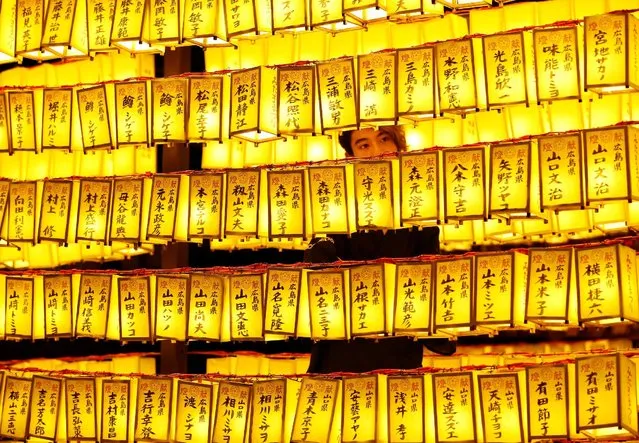
A man stands between thousands of paper lanterns, which were displayed and lit up the precincts of the shrine, where more than 2.4 million war-dead are enshrined, during the Mitama Festival at Yasukuni Shrine in Tokyo, Japan July 13, 2016. “Mitama” is a respectful word that means “the soul of a dead person” in Japanese, and this “Soul Festival” honors just that. The Yasukuni Shrine is dedicated to the honoring of the souls of those who gave their lives to defend Japan, and this festival is an early step towards the Japanese holiday season of Obon, during which Japanese people honor their deceased ancestors. (Photo by Issei Kato/Reuters)

A man stands between thousands of paper lanterns, which were displayed and lit up the precincts of the shrine, where more than 2.4 million war-dead are enshrined, during the Mitama Festival at Yasukuni Shrine in Tokyo, Japan July 13, 2016. “Mitama” is a respectful word that means “the soul of a dead person” in Japanese, and this “Soul Festival” honors just that. (Photo by Issei Kato/Reuters)
Details
14 Jul 2016 09:37:00
Inside the new Digital Art Museum in Tokyo, Japan on June 21, 2018. (Photo by South West News Service)

Inside the new Digital Art Museum in Tokyo, Japan on June 21, 2018. These incredible photos show what it looks like inside a groundbreaking new digital art museum in Japan. A trip to the Mori Building Digital Art Museum: teamLab Borderless in Tokyo, which opened last week, can make you feel like they you are dreaming and aims to fully immerse visitors in the art. Spanning a spacious 10,000 square metres, 520 computers and 470 high-tech projectors create the illusion that the visitor is wandering through rice fields, following shoals of fish or even bouncing on a galaxy of planets. (Photo by South West News Service)
Details
29 Jun 2018 00:01:00


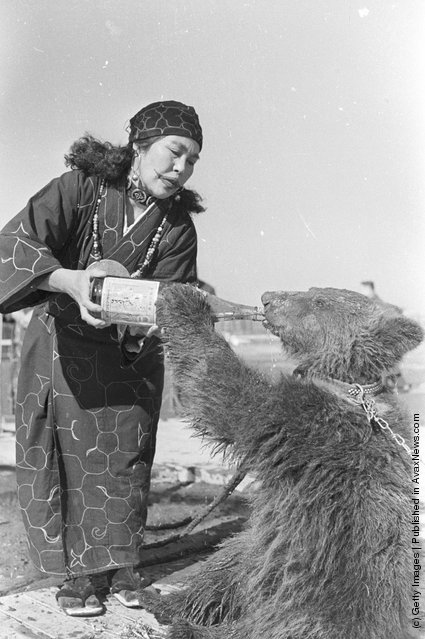
“The Ainu (アイヌ?), also called Aynu, Aino (アイノ), and in historical texts Ezo (蝦夷), are indigenous people or groups in Japan and Russia. Historically they spoke the Ainu language and related varieties and lived in Hokkaidō, the Kuril Islands, and much of Sakhalin. Most of those who identify themselves as Ainu still live in this same region, though the exact number of living Ainu is unknown. This is due to ethnic issues in Japan resulting in those with Ainu backgrounds hiding their identities and confusion over mixed heritages. In Japan, because of intermarriage over many years with Japanese, the concept of a 'pure Ainu' ethnic group is no longer feasible. Official estimates of the population are of around 25,000, while the unofficial number is upwards of 200,000 people”. – Wkipedia

Photo: A captive bear drinking from a large bottle held by an Ainu tribeswoman. (Photo by Evans/Three Lions/Getty Images). Circa 1955
Details
24 Mar 2011 14:01:00


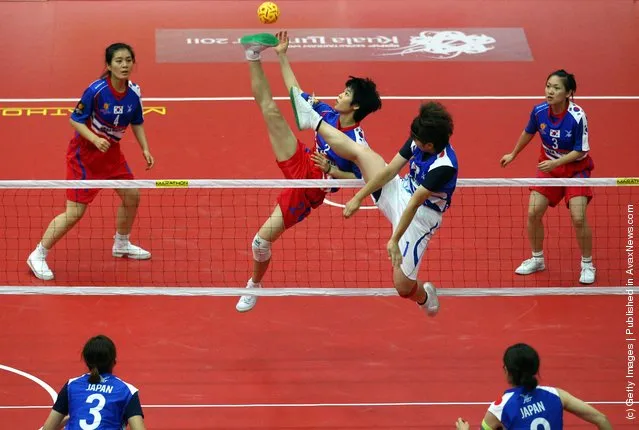
“Sepak takraw or kick volleyball, is a sport native to the Malay-Thai Peninsula. Sepak takraw differs from the similar sport of volleyball in its use of a rattan ball and only allowing players to use their feet, knee, chest and head to touch the ball. It is a popular sport in Indonesia, Malaysia, Thailand, Singapore, Myanmar, Vietnam, Cambodia, Laos, and Philippines”. – Wikipedia

Photo: Hyun Ju Kim of Korea kicks over the net against Yukie Sato of Japan during the round robin match between Korea and Japan during day one of the ISTAF Sepaktakraw World Cup at Titiwangsa Stadium on July 21, 2011 in Kuala Lumpur, Malaysia. (Photo by Ryan Pierse/Getty Images for UFA Sports)
Details
23 Jul 2011 11:45:00
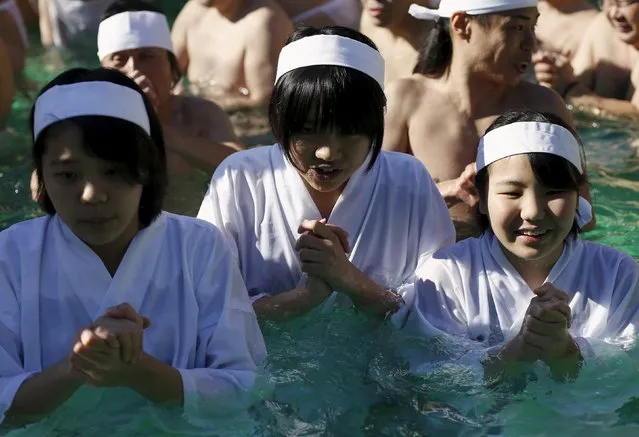
Women wearing "Shiroshozoku" or the traditional white robe pray as they bathe in ice-cold water at the Teppozu Inari shrine in Tokyo, Japan, January 10, 2016. (Photo by Yuya Shino/Reuters)

Women wearing "Shiroshozoku" or the traditional white robe pray as they bathe in ice-cold water at the Teppozu Inari shrine in Tokyo, Japan, January 10, 2016. About 100 participants took part in the Shinto ceremony to purify their souls and wish for good health in the new year. (Photo by Yuya Shino/Reuters)
Details
12 Jan 2016 08:04:00
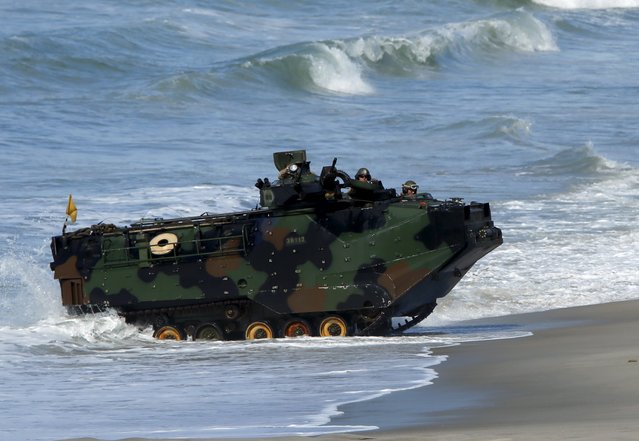
Soldiers from Japan's Ground Self Defense Force come ashore in amphibious assault vehicle as they train alongside U.S. Marines during the bilateral annual Iron Fist military training exercise in Camp Pendleton, California February 26, 2016. (Photo by Mike Blake/Reuters)

Soldiers from Japan's Ground Self Defense Force come ashore in amphibious assault vehicle as they train alongside U.S. Marines during the bilateral annual Iron Fist military training exercise in Camp Pendleton, California February 26, 2016. (Photo by Mike Blake/Reuters)
Details
28 Feb 2016 10:50:00