Loading...
Done
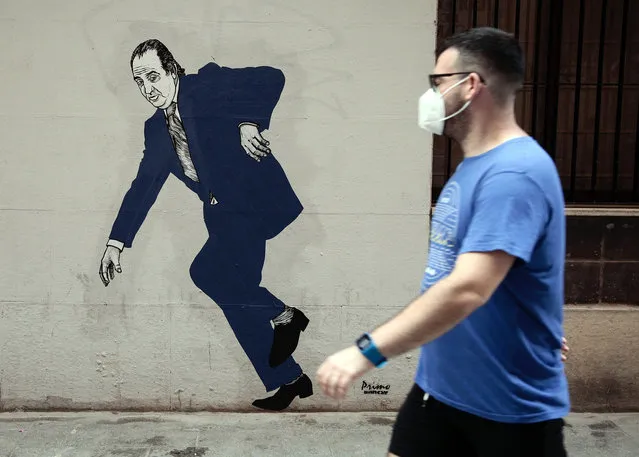
A person walks past graffiti by arstist selfnamed El Primo de Bansky (the cousin of Bansky) of former Spanish King Juan Carlos in Valencia, Spain, 05 August 2020. The Spanish Royal Household has announced that Emeritus King Juan Carlos I has proclaimed his intended decision to move abroad so as to not interfere in the image of the Spanish monarchy due to his alleged implication in a Swiss offshore account investigation. (Photo by Biel Aliño/EPA/EFE)

A person walks past graffiti by arstist selfnamed El Primo de Bansky (the cousin of Bansky) of former Spanish King Juan Carlos in Valencia, Spain, 05 August 2020. The Spanish Royal Household has announced that Emeritus King Juan Carlos I has proclaimed his intended decision to move abroad so as to not interfere in the image of the Spanish monarchy due to his alleged implication in a Swiss offshore account investigation. (Photo by Biel Aliño/EPA/EFE)
Details
07 Aug 2020 00:07:00
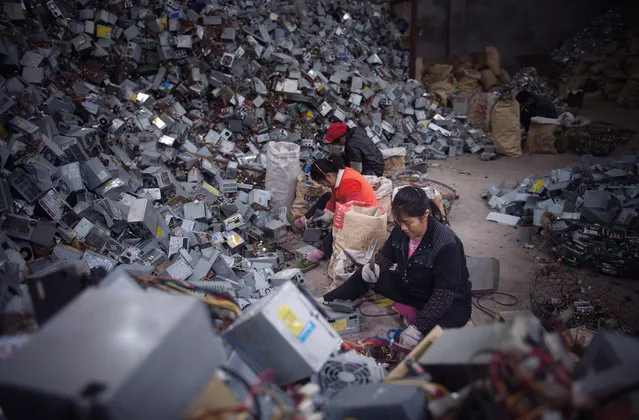
“The sustainable development goals cannot be met unless waste management is addressed as a priority”, says UK waste management charity Waste Aid. “E-waste is one of the fastest growing categories of the 7-10bn tonnes of waste produced globally every year”, adds director Mike Webster. “In our view, decent waste management is a basic right and we want governments around the world take this issue much more seriously – in 2012 only 0.2% of international aid went on improving solid waste management – it’s just not enough”. (Photo by Kai Loeffelbein/laif Agentur)

Sustainable development goal target 12.5 is to reduce waste. But with a planet increasingly dependent on technology, is that even possible? As of today, over 30m tonnes of electronic waste has been thrown out so far this year, according to the World Counts. Most e-waste is sent to landfills in Asia and Africa where it is recycled by hand, exposing the people who do it to environmental hazards. Kai Loeffelbein’s photographs of e-waste recycling in Guiyu, southern China show what happens to discarded computers. (Photo by Kai Loeffelbein/laif Agentur)
Details
19 Oct 2016 12:14:00
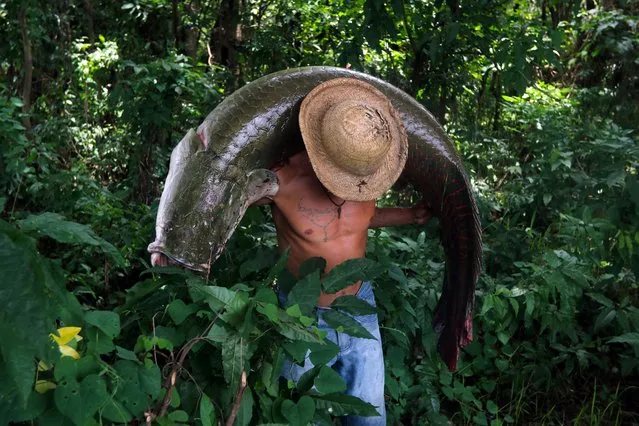
A fisherman carries a large Pirarucu (Arapaima gigas) at the Piagacu-Purus Sustainable Development Reserve in Amazonas state, Brazil, on October 24, 2019. The pirarucu -a giant fish of the Amazon, that had been on the verge of extinction- can measure up to three meters and weigh more than 200 kilos. The soft and tasty white meat fish is nowadays served in renowned restaurants in Rio de Janeiro. (Photo by Ricardo Oliveira/AFP Photo)

A fisherman carries a large Pirarucu (Arapaima gigas) at the Piagacu-Purus Sustainable Development Reserve in Amazonas state, Brazil, on October 24, 2019. The pirarucu -a giant fish of the Amazon, that had been on the verge of extinction- can measure up to three meters and weigh more than 200 kilos. The soft and tasty white meat fish is nowadays served in renowned restaurants in Rio de Janeiro. (Photo by Ricardo Oliveira/AFP Photo)
Details
31 Oct 2019 00:07:00
An ice swimming enthusiast dressed as Neptune takes to the frigid waters of Orankesee lake during the 27th annual "Winter Swimming in Berlin" on January 8, 2011 in Berlin, Germany. A local swimmers' group called the “Berlin Seals” invite ice swimmers from across Germany and abroad to the annual event. Members claim ice swimming is good for the body's blood circulation. (Photo by Sean Gallup)

An ice swimming enthusiast dressed as Neptune takes to the frigid waters of Orankesee lake during the 27th annual "Winter Swimming in Berlin" on January 8, 2011 in Berlin, Germany. A local swimmers' group called the “Berlin Seals” invite ice swimmers from across Germany and abroad to the annual event. Members claim ice swimming is good for the body's blood circulation. (Photo by Sean Gallup)
Details
16 Jun 2015 13:45:00
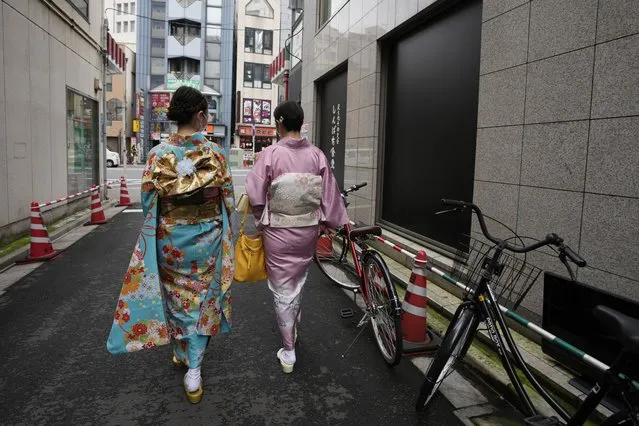
A Japanese woman and her daughter leave Daikichi kimono rental shop Wednesday, June 22, 2022, in Tokyo's Asakusa area famous for sightseeing, before attending their family friend's wedding. Japan is bracing for a return of tourists from abroad, as border controls to curb the spread of coronavirus infections are gradually loosened. Yusuke Otomo, who owns the kimono rental shop, can barely contain his excitement. (Photo by Hiro Komae/AP Photo)

A Japanese woman and her daughter leave Daikichi kimono rental shop Wednesday, June 22, 2022, in Tokyo's Asakusa area famous for sightseeing, before attending their family friend's wedding. Japan is bracing for a return of tourists from abroad, as border controls to curb the spread of coronavirus infections are gradually loosened. Yusuke Otomo, who owns the kimono rental shop, can barely contain his excitement. (Photo by Hiro Komae/AP Photo)
Details
01 Jul 2022 02:29:00
"Temptation", part of an installation from the artist-duo David Burns and Austin Young, appears among the works of 30 artists in the multimedia exhibition "The Value of Food: Sustaining a Green Planet" at the Cathedral of St. John the Divine, Wednesday, October 7, 2015, in New York.  (Photo by Bebeto Matthews/AP Photo)

"Temptation", part of an installation from the artist-duo David Burns and Austin Young, appears among the works of 30 artists in the multimedia exhibition "The Value of Food: Sustaining a Green Planet" at the Cathedral of St. John the Divine, Wednesday, October 7, 2015, in New York. The exhibition, installed in the cathedral's seven chapels and 14 bays, explores food accessibility, sustainability and other food-related issues and runs through April 3, 2016. (Photo by Bebeto Matthews/AP Photo)
Details
16 Oct 2015 08:01:00


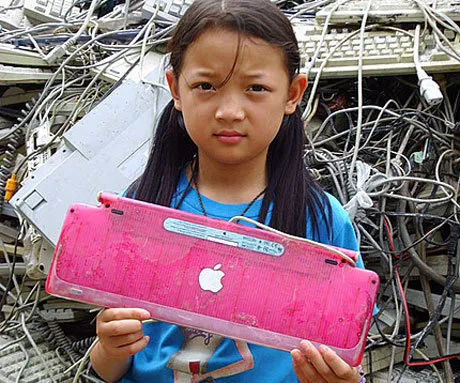
Guiyu, China is known as the “Town of E-waste.” Thousands of its residents depend on processing electronic waste for a living. Guiyu receives its e-waste from China and from abroad, including places like Japan, Europe and America. Under Chinese law, most of the e-waste imported from overseas is illegal.
Details
01 Apr 2013 11:45:00
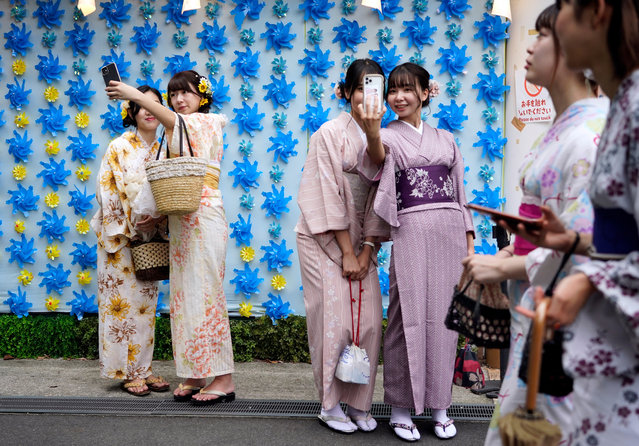
Japanese women wearing “yukata” casual summer kimono take selfies at Asakusa district in Tokyo, Japan, 13 September 2020. Asakusa is one of Tokyo's most-visited areas and is usually crowded with tourists. In Japan, the numbers of visitors from abroad fell by 99.9 percent from a year earlier in July due to the ban for entries of foreign visitors amid the coronavirus pandemic. (Photo by Franck Robichon/EPA/EFE)

Japanese women wearing “yukata” casual summer kimono take selfies at Asakusa district in Tokyo, Japan, 13 September 2020. Asakusa is one of Tokyo's most-visited areas and is usually crowded with tourists. In Japan, the numbers of visitors from abroad fell by 99.9 percent from a year earlier in July due to the ban for entries of foreign visitors amid the coronavirus pandemic. (Photo by Franck Robichon/EPA/EFE)
Details
24 Sep 2020 00:01:00