Loading...
Done
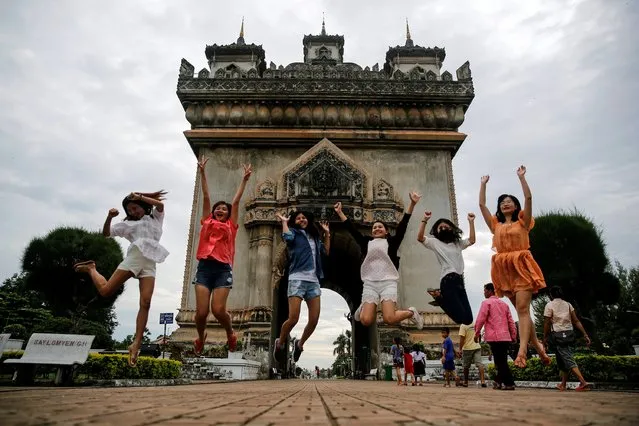
Women jump as they pose for photo in front Patuxay park, ahead of the ASEAN Summit in Vientiane, Laos September 5, 2016. (Photo by Soe Zeya Tun/Reuters)

Women jump as they pose for photo in front Patuxay park, ahead of the ASEAN Summit in Vientiane, Laos September 5, 2016. (Photo by Soe Zeya Tun/Reuters)
Details
07 Sep 2016 10:06:00
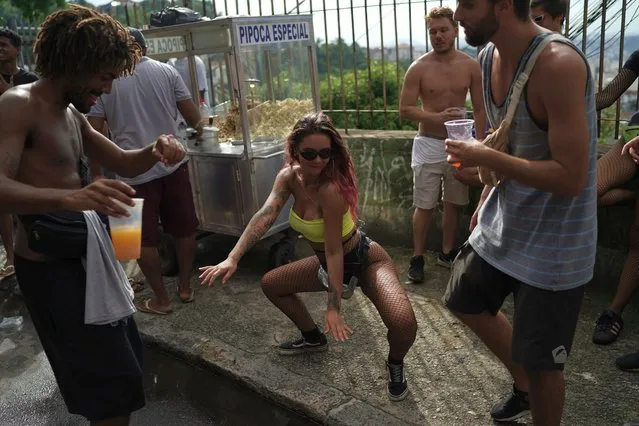
A reveler dances during the Carmelitas street party in Rio de Janeiro, Brazil, Friday, March 1, 2019. Much of the appeal of Rio street parties is the variety of themes and that people can dress up in costumes or not. (Photo by Leo Correa/AP Photo)

A reveler dances during the Carmelitas street party in Rio de Janeiro, Brazil, Friday, March 1, 2019. Much of the appeal of Rio street parties is the variety of themes and that people can dress up in costumes or not. (Photo by Leo Correa/AP Photo)
Details
03 Mar 2019 00:07:00
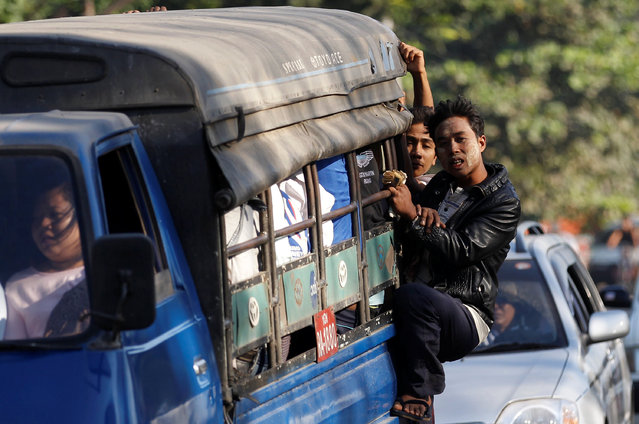
People ride a bus as they travel in Yangon, Myanmar January 14, 2017. Picture taken January 14, 2017. (Photo by Soe Zeya Tun/Reuters)

People ride a bus as they travel in Yangon, Myanmar January 14, 2017. Picture taken January 14, 2017. (Photo by Soe Zeya Tun/Reuters)
Details
11 Apr 2017 09:46:00
A general view of atmosphere at the annual VOLT Festival in Sopron, 208 kms west of Budapest, Hungary on August 16, 2016. (Photo by Rockstar Photographers)

A general view of atmosphere at the annual VOLT Festival in Sopron, 208 kms west of Budapest, Hungary on August 16, 2016. (Photo by Rockstar Photographers)
Details
28 Jul 2017 09:58:00
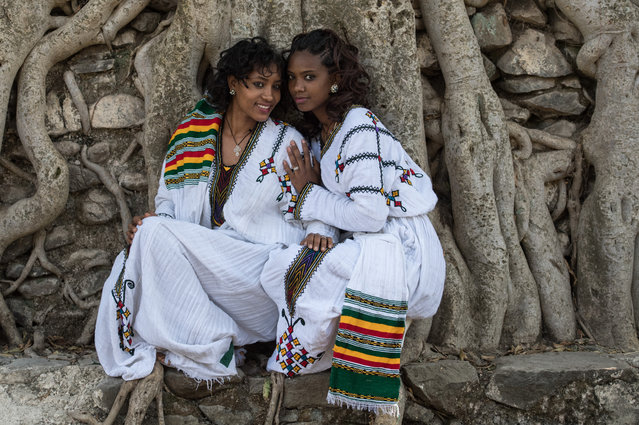
 Women pose for a photograph in traditional Ethiopian dress during the annual Timkat Epiphany celebration on January 19, 2017 in Gondar, Ethiopia. (Photo by Carl Court/Getty Images)

Women pose for a photograph in traditional Ethiopian dress during the annual Timkat Epiphany celebration on January 19, 2017 in Gondar, Ethiopia. Timkat is the Ethiopian Orthodox Christian festival which celebrates the baptism of Jesus in the Jordan river. During the festival, Tabots, or models of the Ark of the Covenant, are taken from churches around Gondar and paraded through the streets to Fasilides Bath. (Photo by Carl Court/Getty Images)
Details
21 Jan 2017 11:29:00
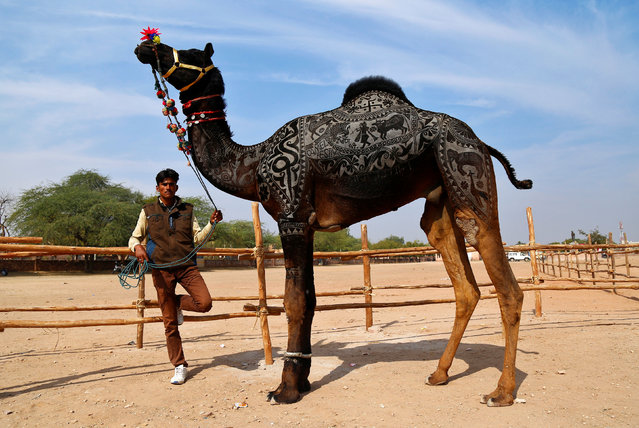
A man waits with his camel to take part in a camel decoration competition at the Nagaur Cattle Fair, where animals like camels, cows, horses, and bulls are brought to be sold or traded, in Nagaur, in the desert state of Rajasthan, India February 2, 2017. (Photo by Himanshu Sharma/Reuters)

A man waits with his camel to take part in a camel decoration competition at the Nagaur Cattle Fair, where animals like camels, cows, horses, and bulls are brought to be sold or traded, in Nagaur, in the desert state of Rajasthan, India February 2, 2017. (Photo by Himanshu Sharma/Reuters)
Details
08 Feb 2017 00:06:00


“Kumbh Mela is a mass Hindu pilgrimage in which Hindus gather at the Ganges river. The normal Kumbh Mela is celebrated every 3 years, the Ardh (half) Kumbh Mela is celebrated every six years at Haridwar and Prayag, the Purna (complete) Kumbh takes place every twelve years, at four places (Prayag (Allahabad), Haridwar, Ujjain, and Nashik). The Maha (great) Kumbh Mela which comes after 12 “Purna Kumbh Melas”, or 144 years, is held at Allahabad.

The last Ardh Kumbh Mela was held over a period of 45 days beginning in January 2007, more than 70 million Hindu pilgrims took part in the Ardh Kumbh Mela at Prayag, and on January 15, the most auspicious day of the festival of Makar Sankranti, more than 5 million participated. The previous Maha Kumbh Mela, held in 2001, was attended by around 60 million people, making it at the time the largest gathering anywhere in the world in recorded history”. – Wikipedia

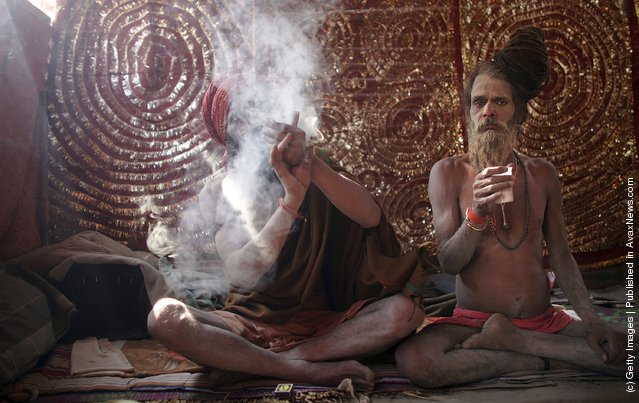
Photo: Sadhus (holy men) smoke at their camp near the ritual site at Sangam, the confluence of the Ganges, Yamuna and mythical Saraswati rivers during the Ardh Kumbh Mela festival (Half Pitcher festival) January 18, 2007 in Allahabad, India. Millions of Hindu pilgrims have flocked to the largest religious gathering in the world which lasts for 45 days in northern India. The festival commemorates the mythical conflict between gods and demons over a pitcher filled with the “nectar of immortality”. Devotees believe that taking a holy dip in the Ganges at this time washes away their sins and paves the path to salvation. (Photo by Mario Tama/Getty Images)
Details
30 Jun 2011 10:27:00
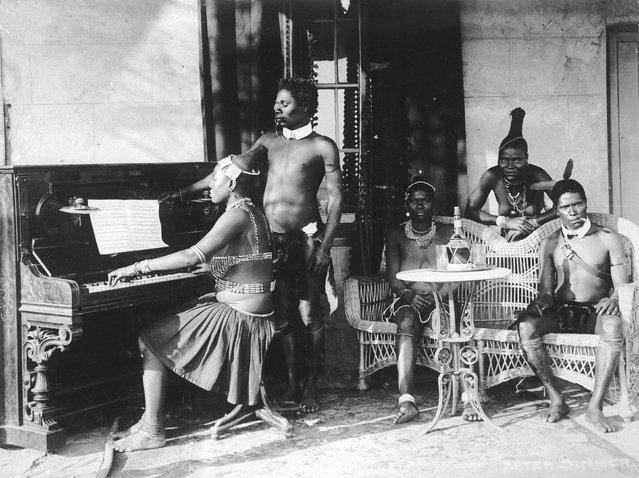
circa 1925:  A Zulu woman playing the piano while a group of others sit and listen.  (Photo by General Photographic Agency/Getty Images)

“The Zulu are the largest South African ethnic group, with an estimated 10–11 million people living mainly in the province of KwaZulu-Natal. Small numbers also live in Zimbabwe, Zambia, and Mozambique. Their language, Zulu, is a Bantu language; more specifically, part of the Nguni subgroup. The Zulu Kingdom played a major role in South African history during the 19th and 20th centuries. Under apartheid, Zulu people were classed as third-class citizens and suffered from state-sanctioned discrimination. They remain today the most numerous ethnic group in South Africa, and now have equal rights along with all other citizens”. – Wikipedia.

Photo: A Zulu woman playing the piano while a group of others sit and listen (to put it briefly, Englishmen scoff over Zulu). South Africa, circa 1925. (Photo by General Photographic Agency)

Details
03 Feb 2014 09:40:00