Loading...
Done
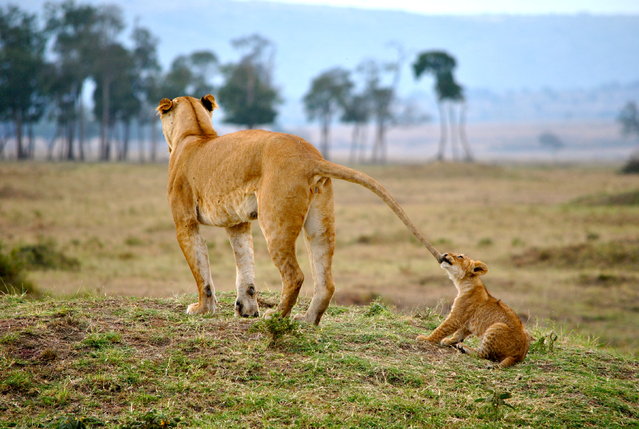
“A Mothers Tail”. A baby cub pulls on his mother's tail to get attention. Photo location: Masai Mara, Kenya. (Photo and caption by Tori Marsh/National Geographic Photo Contest)

“A Mothers Tail”. A baby cub pulls on his mother's tail to get attention. Photo location: Masai Mara, Kenya. (Photo and caption by Tori Marsh/National Geographic Photo Contest)
Details
21 Oct 2014 12:40:00
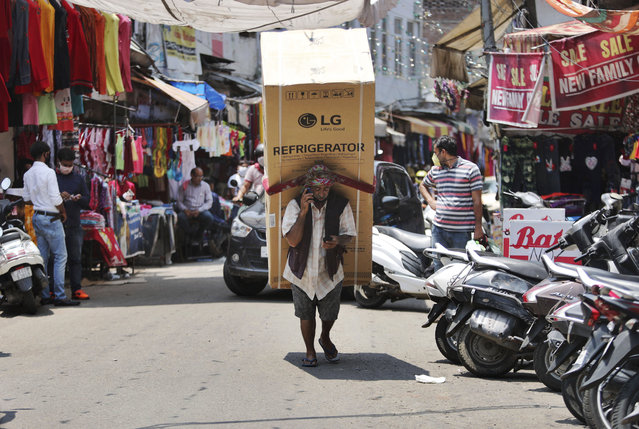
An Indian laborer talks on his mobile phone as he transports a refrigerator on his back at a market in Jammu, India, Sunday, June 7, 2020. India whose coronavirus caseload is fifth highest in the world has partially restored trains and domestic flights and allowed reopening of shops and manufacturing. (Photo by Channi Anand/AP Photo)

An Indian laborer talks on his mobile phone as he transports a refrigerator on his back at a market in Jammu, India, Sunday, June 7, 2020. India whose coronavirus caseload is fifth highest in the world has partially restored trains and domestic flights and allowed reopening of shops and manufacturing. (Photo by Channi Anand/AP Photo)
Details
10 Jun 2020 00:05:00
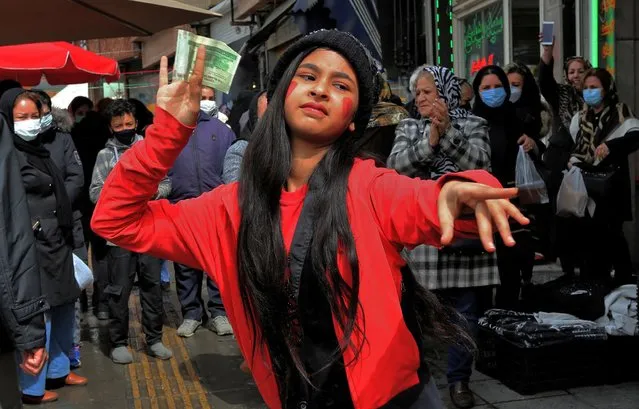
An Iranian girl wearing a costume inspired in the fictional folklore character Hajji Firuz, dances in Tehran on March 17, 2021 as Iranians prepare to celebrate Noruz, the Iranian New Year. Noruz, “new day” in Persian, is the New Year festivity celebrated in Iran as well as in Afghanistan and Kurdish regions in several countries. It begins with the spring equinox and symbolises rebirth. (Photo by Atta Kenare/AFP Photo)

An Iranian girl wearing a costume inspired in the fictional folklore character Hajji Firuz, dances in Tehran on March 17, 2021 as Iranians prepare to celebrate Noruz, the Iranian New Year. Noruz, “new day” in Persian, is the New Year festivity celebrated in Iran as well as in Afghanistan and Kurdish regions in several countries. It begins with the spring equinox and symbolises rebirth. (Photo by Atta Kenare/AFP Photo)
Details
20 Mar 2021 10:35:00
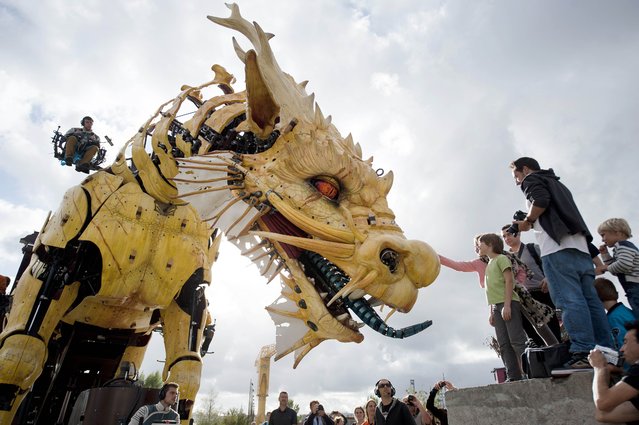
A mechanical horse-dragon made of wood and steel is presented to the public in Nantes, western France on August 26, 2014. This horse-dragon, created by the French artist Francois Delaroziere of “Les Machines de l'île” (The Machines of the Isle), is the hero of the show "Long Ma" which will be presented in Beijing on October 17, 2014 as part of the fiftieth anniversary of the relationship between France and China. (Photo by Jean-Sebastien Evrard/AFP Photo)

A mechanical horse-dragon made of wood and steel is presented to the public in Nantes, western France on August 26, 2014. This horse-dragon, created by the French artist Francois Delaroziere of “Les Machines de l'île” (The Machines of the Isle), is the hero of the show "Long Ma" which will be presented in Beijing on October 17, 2014 as part of the fiftieth anniversary of the relationship between France and China. (Photo by Jean-Sebastien Evrard/AFP Photo)
Details
30 Aug 2014 11:02:00
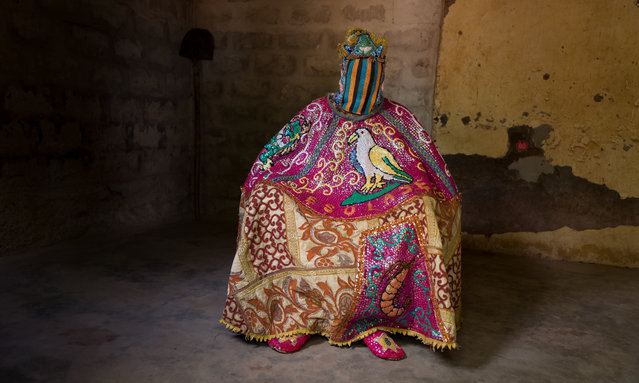
A member of an Egungun masquerade group, his identity obscured under his ornate costume in Ouidah, Benin on March 13, 2019. The exclusively male practitioners, found across Yoruba culture, use dance and spinning in the belief that they will summon the spirits of ancestors. (Photo by Massimo Rumi/Barcroft Images)

A member of an Egungun masquerade group, his identity obscured under his ornate costume in Ouidah, Benin on March 13, 2019. The exclusively male practitioners, found across Yoruba culture, use dance and spinning in the belief that they will summon the spirits of ancestors. (Photo by Massimo Rumi/Barcroft Images)
Details
26 Mar 2019 00:01:00
UFC women's bantamweight champion Holly Holm and Miesha Tate face off during the UFC 196 weigh ins at the MGM Grand Garden Arena in Las Vegas on Friday, March 4, 2016. (Photo by L.E. Baskow/Las Vegas Sun via AP Photo)

UFC women's bantamweight champion Holly Holm and Miesha Tate face off during the UFC 196 weigh ins at the MGM Grand Garden Arena in Las Vegas on Friday, March 4, 2016. (Photo by L.E. Baskow/Las Vegas Sun via AP Photo)
Details
06 Mar 2016 09:58:00
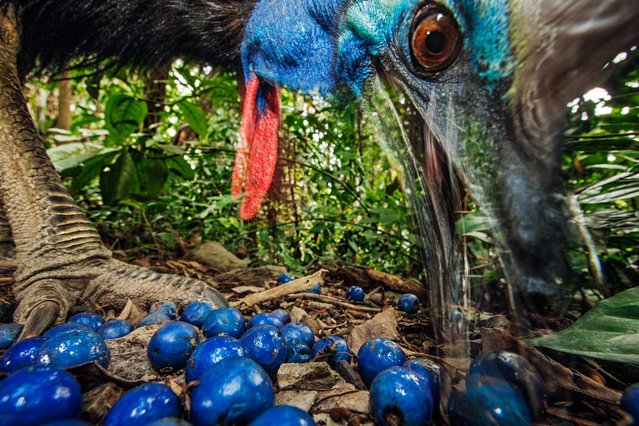
“Cassowaries are large, flightless birds related to emus and (more distantly) to ostriches, rheas, and kiwis”, writes Olivia Judson in the September issue of National Geographic magazine. (Photo by Christian Ziegler/National Geographic)

“Cassowaries are large, flightless birds related to emus and (more distantly) to ostriches, rheas, and kiwis”, writes Olivia Judson in the September issue of National Geographic magazine. How large? People-size: Adult males stand well over five foot five and top 110 pounds. Females are even taller, and can weigh more than 160 pounds. Dangerous when roused, they’re shy and peaceable when left alone. But even birds this big and tough are prey to habitat loss. The dense New Guinea and Australia rain forests where they live have dwindled. Today cassowaries might number 1,500 to 2,000. And because they help shape those same forests – by moving seeds from one place to another – “if they vanish”, Judson writes, “the structure of the forest would gradually change” too. (Photo by Christian Ziegler/National Geographic)
Details
06 Jan 2014 12:21:00
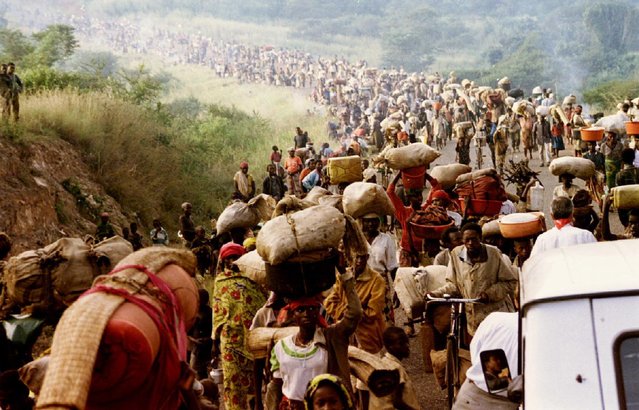
Rwandan refugees cross the Rusumo border to Tanzania from Rwanda carrying their belongings, goats, mattresses and cows, May 30, 1994. The bloodshed that claimed 800,000 Tutsi and moderate Hutu lives began 25 years ago on April 7, 1994, when a plane carrying Rwandan President Juvenal Habyarimana, Burundi President Cyprien Ntaryamira and a French air crew was shot down. (Photo by Jeremiah Kamau/Reuters)

Rwandan refugees cross the Rusumo border to Tanzania from Rwanda carrying their belongings, goats, mattresses and cows, May 30, 1994. The bloodshed that claimed 800,000 Tutsi and moderate Hutu lives began 25 years ago on April 7, 1994, when a plane carrying Rwandan President Juvenal Habyarimana, Burundi President Cyprien Ntaryamira and a French air crew was shot down. (Photo by Jeremiah Kamau/Reuters)
Details
08 Apr 2019 00:03:00