Loading...
Done
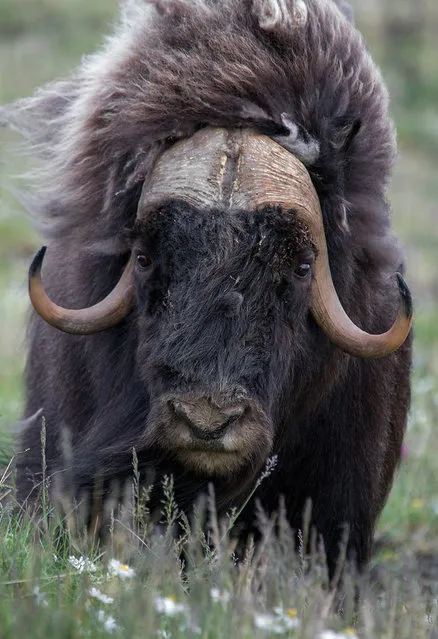
Wild Musk Oxen in Arctic Prairie in Russia

Vitaly Gorshkov, a wildlife photographer, captured these animals in their natural habitat. He says that these animals are so hairy that it is difficult to distinguish the front from the back. The oxen aren’t really afraid of humans that is why it is easy to approach them and take pictures.
Details
25 Apr 2014 12:10:00
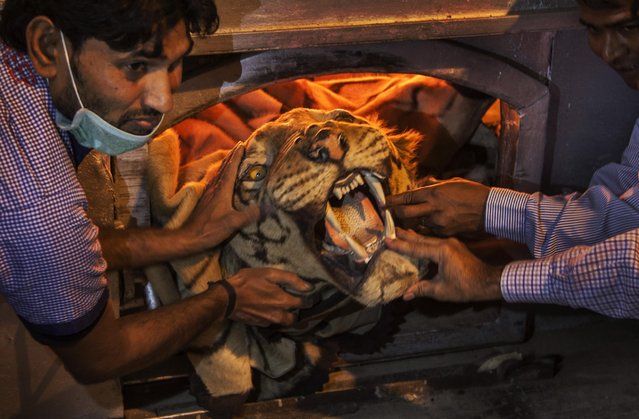
Indian authorities hold a tiger skin as they set fire to a stockpile of illegal wildlife parts at the Delhi Zoo in New Delhi, India, Sunday, November 2, 2014. A stockpile of tiger skins, elephant tusks, rhino horns and other illegal animal parts were burned Sunday in an effort to discourage wildlife smuggling in South Asia. (Photo by Tsering Topgyal/AP Photo)

Indian authorities hold a tiger skin as they set fire to a stockpile of illegal wildlife parts at the Delhi Zoo in New Delhi, India, Sunday, November 2, 2014. A stockpile of tiger skins, elephant tusks, rhino horns and other illegal animal parts were burned Sunday in an effort to discourage wildlife smuggling in South Asia. (Photo by Tsering Topgyal/AP Photo)
Details
03 Nov 2014 12:44:00
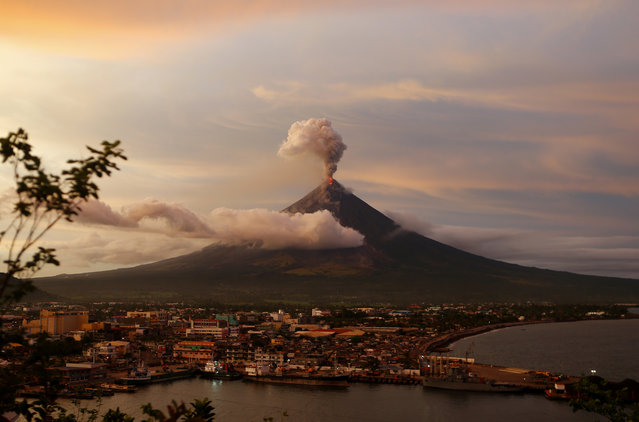
The Mayon volcano continues to erupt as the sun sets behind Legazpi city, Thursday, January 25, 2018 in Albay province, roughly 340 kilometers, (200 miles) southeast of Manila, Philippines. (Photo by Bullit Marquez/AP Photo)

The Mayon volcano continues to erupt as the sun sets behind Legazpi city, Thursday, January 25, 2018 in Albay province, roughly 340 kilometers, (200 miles) southeast of Manila, Philippines. (Photo by Bullit Marquez/AP Photo)
Details
27 Sep 2018 00:03:00
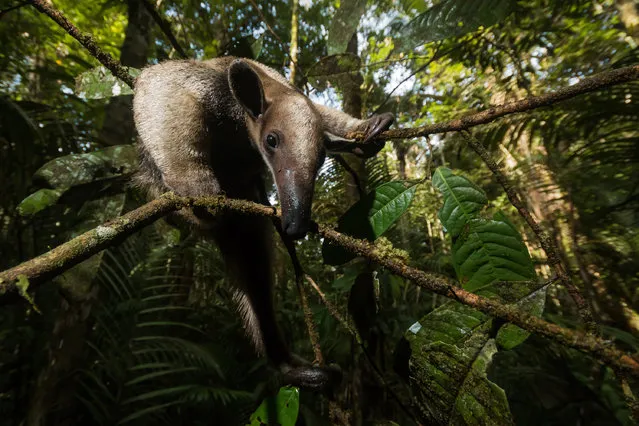
Individuals and populations student winner. Limbing in the Tropics, photographed in Manaus, Brazil. While walking in the Amazon rainforest looking for bat roosts to set up mist nets to capture bats for scientific research, a faint and almost imperceptible noise suddenly caught this photographer’s attention. An anteater was climbing with exceptional ability in a tangled mess of branches and lianas. With an unbelievable calmness, the animal watched the photographer at work and seemed to enjoy being the subject of an impromptu photography session in the most biodiverse ecosystem on Earth. (Photo by Adrià López Baucells/University of Lisbon/British Ecological Society)

Individuals and populations student winner. Limbing in the Tropics, photographed in Manaus, Brazil. While walking in the Amazon rainforest looking for bat roosts to set up mist nets to capture bats for scientific research, a faint and almost imperceptible noise suddenly caught this photographer’s attention. An anteater was climbing with exceptional ability in a tangled mess of branches and lianas. (Photo by Adrià López Baucells/University of Lisbon/British Ecological Society)
Details
05 Dec 2018 00:03:00
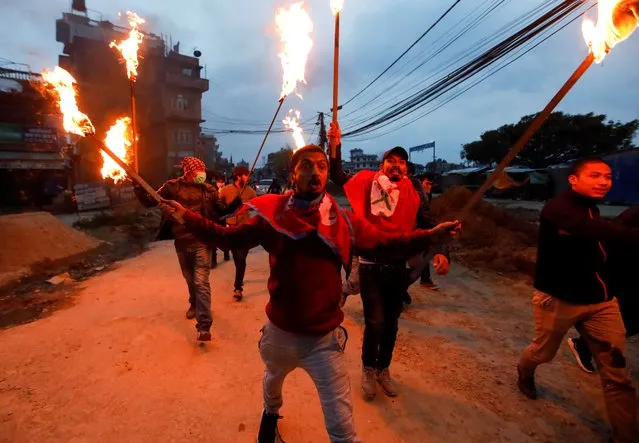
Students with torches protest against the alleged encroachment of Nepal border by India in far west of Nepal, during the 49th day of a lockdown imposed by the government amid concerns about the spread of the coronavirus disease (COVID-19), in Kathmandu, Nepal on May 11, 2020. (Photo by Navesh Chitrakar/Reuters)

Students with torches protest against the alleged encroachment of Nepal border by India in far west of Nepal, during the 49th day of a lockdown imposed by the government amid concerns about the spread of the coronavirus disease (COVID-19), in Kathmandu, Nepal on May 11, 2020. (Photo by Navesh Chitrakar/Reuters)
Details
13 May 2020 00:03:00
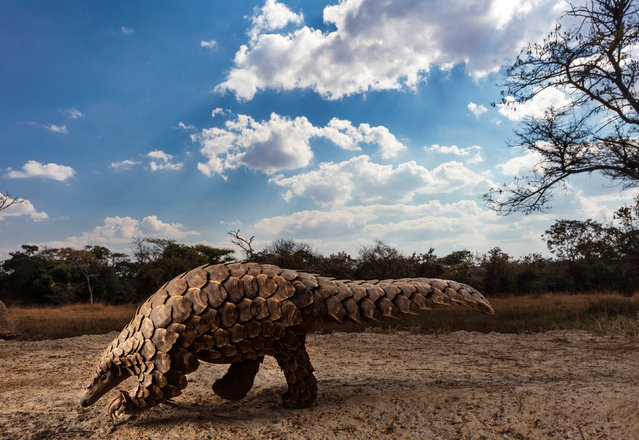
Pangolins in Crisis: Brent Stirton, South Africa; 1st place, Natural world and wildlife. “Pangolins are the world’s most illegally trafficked mammals, with an estimated one million trafficked to Asia in the last 10 years. Their scales are used in traditional Chinese and Vietnamese medicine, and their meat is sold as a high-priced delicacy. As a result, pangolins are listed as critically endangered and anyone who trades or consumes them is breaking the law. This body of work exposes the trade, while exploring aspects of illegality and celebrating the people who are trying to save these animals”. (Photo by Brent Stirton/Sony World Photography Awards 2020)

Pangolins in Crisis: Brent Stirton, South Africa; 1st place, Natural world and wildlife. “Pangolins are the world’s most illegally trafficked mammals, with an estimated one million trafficked to Asia in the last 10 years. Their scales are used in traditional Chinese and Vietnamese medicine, and their meat is sold as a high-priced delicacy. As a result, pangolins are listed as critically endangered and anyone who trades or consumes them is breaking the law. This body of work exposes the trade, while exploring aspects of illegality and celebrating the people who are trying to save these animals”. (Photo by Brent Stirton/Sony World Photography Awards 2020)
Details
11 Jun 2020 00:05:00
Joseph Fons holding a Pride Flag, runs in front of the U.S. Supreme Court building after the court ruled that a federal law banning workplace discrimination also covers sexual orientation, in Washington, D.C., U.S., June 15, 2020. (Photo by Tom Brenner/Reuters)

Joseph Fons holding a Pride Flag, runs in front of the U.S. Supreme Court building after the court ruled that a federal law banning workplace discrimination also covers sexual orientation, in Washington, D.C., U.S., June 15, 2020. (Photo by Tom Brenner/Reuters)
Details
22 Jun 2020 00:01:00
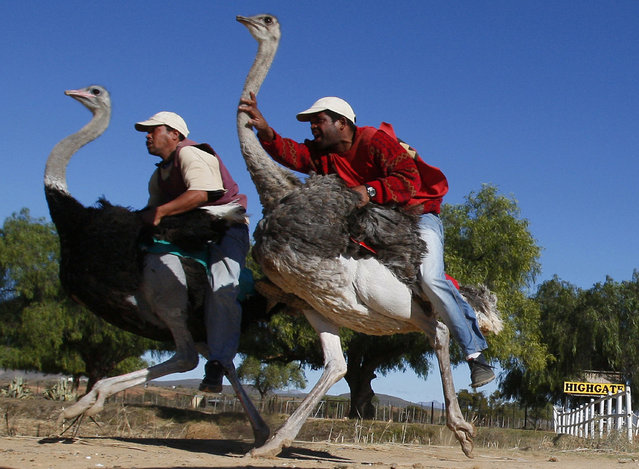
In this Sunday, June 27, 2010 file photo two men compete in an ostrich race at Highgate ostrich farm in Oudtshoorn, South Africa. Clambering onto an ostrich for a ride used to be popular among tourists in a South African town of  Oudtshoorn known of  as the  “ostrich capital of the world”. Not so much anymore. Two major ostrich farms in Oudtshoorn have stopped offering ostrich rides to tourists, responding to concerns about the birds’ welfare. A third farm is sticking with the feature, saying it is regulated and that ostriches do not experience discomfort.. The Highgate farm, however, continues to offer ostrich rides. (Photo by Shuji Kajiyama/AP Photo)

In this Sunday, June 27, 2010 file photo two men compete in an ostrich race at Highgate ostrich farm in Oudtshoorn, South Africa. Clambering onto an ostrich for a ride used to be popular among tourists in a South African town of Oudtshoorn known of as the “ostrich capital of the world”. Not so much anymore. Two major ostrich farms in Oudtshoorn have stopped offering ostrich rides to tourists, responding to concerns about the birds’ welfare. A third farm is sticking with the feature, saying it is regulated and that ostriches do not experience discomfort. The Highgate farm, however, continues to offer ostrich rides. (Photo by Shuji Kajiyama/AP Photo)
Details
20 Jun 2017 07:23:00