Loading...
Done
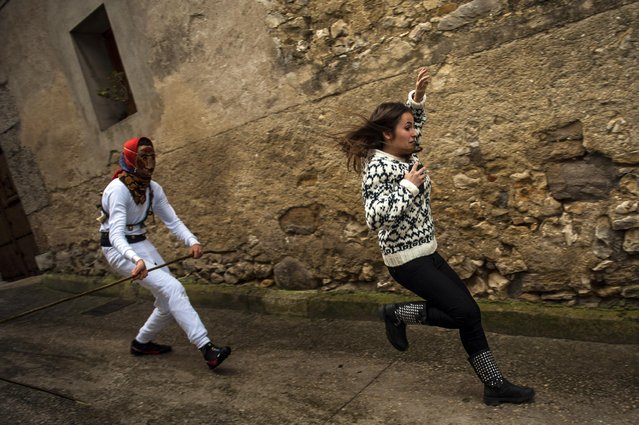
In this photo taken on Sunday, February 15, 2015 a girl runs away from a “Mamuxarro” during the carnival, in the small town of Unanu, northern Spain. While Rio de Janeiro may boast the world’s most famous carnival, the festive period of masquerades and wild and colorful costumes that precedes the Christian religious season of Lent is also a permanent and popular fixture for celebration in Spain and Portugal, with each country having its own strange and unique way of doing it. (Photo by Alvaro Barrientos/AP Photo)

In this photo taken on Sunday, February 15, 2015 a girl runs away from a “Mamuxarro” during the carnival, in the small town of Unanu, northern Spain. In the northern Spanish ancient village of Unamu, people dress up as “Mamuxarro”, folkloric figures in white with a red sash and a metal mask to cover their faces as they pursue townsfolk with sticks. According to custom, their “victims” (usually young women) must kneel and kiss the mamuxarro’s knee after he makes the sign of the cross on their forehead. (Photo by Alvaro Barrientos/AP Photo)
Details
22 Feb 2015 10:51:00
The Art Of Clean Up By Ursus Wehrli

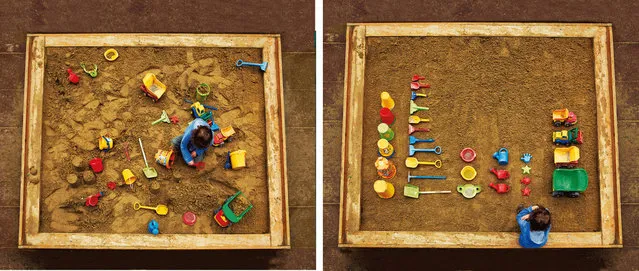
Are you one of those people who like to keep everything in order? If you do, you’re going to love the project The Art of Clean Up, created by Ursus Wehrli. This guy will perfectly organize the most unusual of places! Do you hate how unorganized the parking lots are, or how your haphazardly your grandma hangs the laundry to dry in the sun? Welcome to the perfect world where everything is in its rightful place. Every little detail is kept in check; every color is placed where it belongs, just like you love it. Did you ever think that your Christmas tree is not orderly enough? Well, Ursus will take it apart and put it in near little piles. (Photo by Ursus Wehrli)
Details
15 Dec 2014 11:09:00
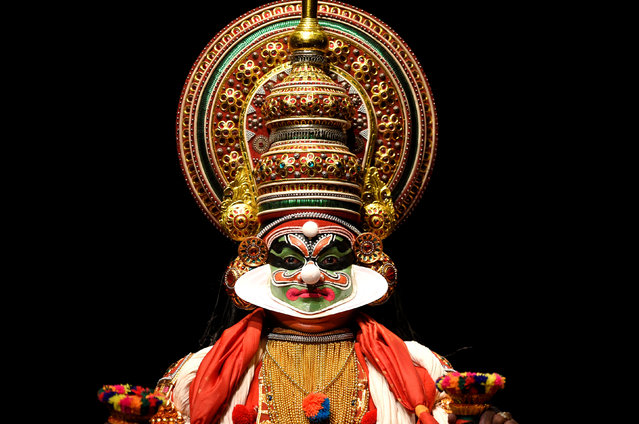
A member of the Indian company Margi Kathakali theatre performs during “Kijote Kathakali”, a Kathakali recital based on the Spanish classic “Don Quixote”, at the Niemeyer Center in Aviles, northern Spain, July 29, 2016. The performance and text captured the essence of the novel while sticking to the format of Kathakali. Kathakali is one of the major forms of classical Indian dance. It is another “story play” genre of art, but one distinguished by its elaborately colorful make-up, costumes and face masks wearing actor-dancers, who have traditionally been all males. (Photo by Eloy Alonso/Reuters)

A member of the Indian company Margi Kathakali theatre performs during “Kijote Kathakali”, a Kathakali recital based on the Spanish classic “Don Quixote”, at the Niemeyer Center in Aviles, northern Spain, July 29, 2016. The performance and text captured the essence of the novel while sticking to the format of Kathakali. Kathakali is one of the major forms of classical Indian dance. (Photo by Eloy Alonso/Reuters)
Details
31 Jul 2016 11:02:00
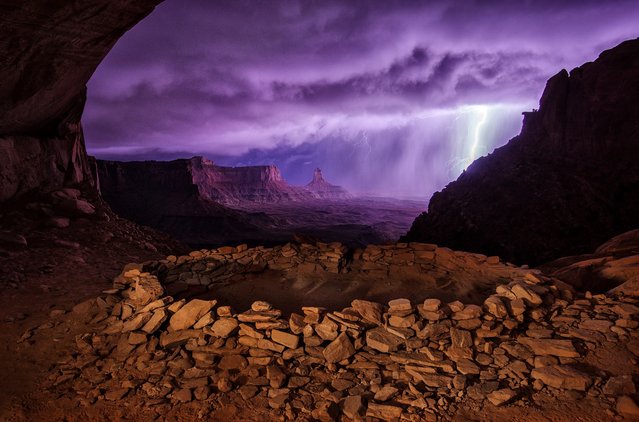
Second Place Winner: “Thunderstorm at False Kiva”. I hiked out to these ruins at night hoping to photograph them with the Milky Way, but instead a thunderstorm rolled through, creating this dramatic image. – Max Seigal. (Photo and caption by Max Seigal/National Geographic Traveler Photo Contest)

Second Place Winner: “Thunderstorm at False Kiva”. I hiked out to these ruins at night hoping to photograph them with the Milky Way, but instead a thunderstorm rolled through, creating this dramatic image. – Max Seigal. National Geographic Traveler Director of Photography Dan Westergren, one of this year's judges, shares his thoughts on the second place winner: “This photo combines two different scenes into one: the small kiva in a cliff dwelling and the grand vista of Canyonlands National Park across the valley. I really like the two different color palettes – warm inside and purple outside. This two-for-one scene was caused by the lightning storm outside the dwelling, which lit up the landscape like it was a huge electronic flash. Looking at this picture I can imagine what a wonderful sight it must have been for the ancient people who lived here. It doesn't seem too amazing now in our modern world, but might have been mind-blowing for the prehistoric residents”. Location: Utah. (Photo and caption by Max Seigal/National Geographic Traveler Photo Contest)
Details
02 Aug 2013 06:16:00
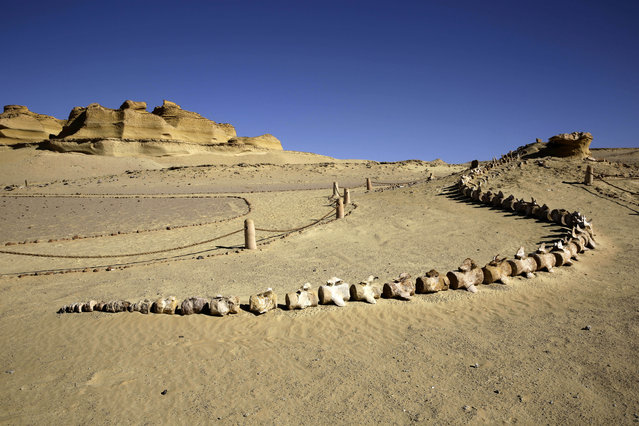
Fossilized whale bones are on display  outside the Wati El Hitan Fossils and Climate Change Museum, a UNESCO natural World Heritage site, on the opening day, in the Fayoum oasis, Egypt, Thursday, January 14, 2016. Egypt has cut the ribbon on the Middle East's first fossil museum housing the world's largest intact skeleton of a "walking whale" in an attempt to attract much-needed tourists driven off by recent militant attacks. The construction of the much-hyped Fossils and Climate Change Museum was covered a 2 billion euros (2. 17 billion dollars) grant from Italy, according to Italian Ambassador Maurizio Massari. (Photo by Thomas Hartwell/AP Photo)

Fossilized whale bones are on display outside the Wati El Hitan Fossils and Climate Change Museum, a UNESCO natural World Heritage site, on the opening day, in the Fayoum oasis, Egypt, Thursday, January 14, 2016. Egypt has cut the ribbon on the Middle East's first fossil museum housing the world's largest intact skeleton of a "walking whale" in an attempt to attract much-needed tourists driven off by recent militant attacks. The construction of the much-hyped Fossils and Climate Change Museum was covered a 2 billion euros (2. 17 billion dollars) grant from Italy, according to Italian Ambassador Maurizio Massari. Its centerpiece is an intact, 37-million-year-old and 20-meter-long skeleton of a legged form of whale that testifies to how modern-day whales evolved from land mammals. The sand-colored, dome-shaped museum is barely discernible in the breathtaking desert landscape that stretches all around. (Photo by Thomas Hartwell/AP Photo)
Details
16 Jan 2016 08:06:00
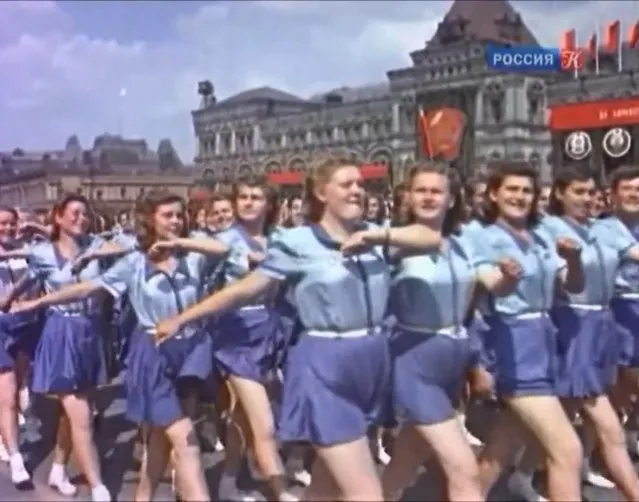
Russia – Back in the USSR

Russia – Back in the USSR. No comment.


Details
03 Sep 2014 15:40:00
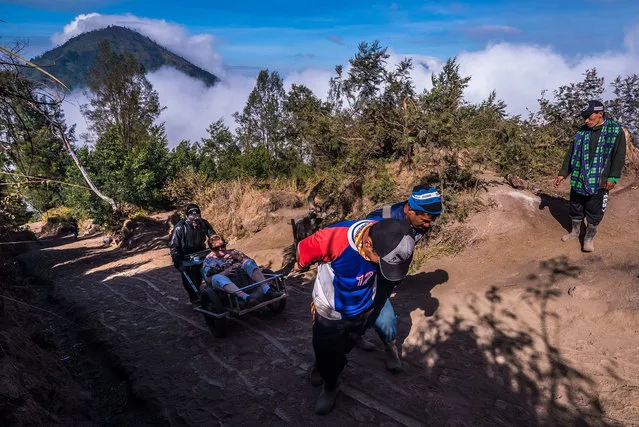
Miners pulling up lazy tourists to the rim of Kawah Ijen (Ijen Volcano), East Java, Indonesia on September 21, 2017. They will earn as much as they would bring down a load of sulfur. Nomadic Explorer, Cultural Lifestyle Photographer Claudio Sieber captured striking images of miners working at Ijen volcanic range in East Java, Indonesia. The sulphur miners risk their lives daily as they climb the active volcano carrying heavy loads, which they sell to sugar refineries. Shortly after midnight curious tourists are flocking in hundreds through the gate of Ijen's foothills to be right on time, driven by the images others took before them. Kawah Ijen is the one of the world's largest acidic volcanic crater lake; famous for its turquoise color as well as the unreal atmosphere it offers during darkness. A dusty path zigzags 3 kilometers up to the crater rim. This doesn't mean anything challenging; in particular, special sights have to be deserved anyway. The irritating smell of sulfur announces the near of the crater's existence. Arriving on the crater's rim the reward for the torture becomes visible. Blue fire darts its tongues through the fumes of sulfur dioxide. Somehow, the spectacle isn't as romantic as expected, since it is also the rough working space of approx. 150 sulfur miners who start their shift at 1 am. Lately, harvesting the abundance of devil's gold received international attention. This did obviously not really improve a miner's lifestyle; neither did it contribute to a better wage. (Photo by Claudio Sieber/Barcroft Images)

Miners pulling up lazy tourists to the rim of Kawah Ijen (Ijen Volcano), East Java, Indonesia on September 21, 2017. They will earn as much as they would bring down a load of sulfur. Nomadic Explorer, Cultural Lifestyle Photographer Claudio Sieber captured striking images of miners working at Ijen volcanic range in East Java, Indonesia. The sulphur miners risk their lives daily as they climb the active volcano carrying heavy loads, which they sell to sugar refineries. (Photo by Claudio Sieber/Barcroft Images)
Details
02 Oct 2017 08:31:00


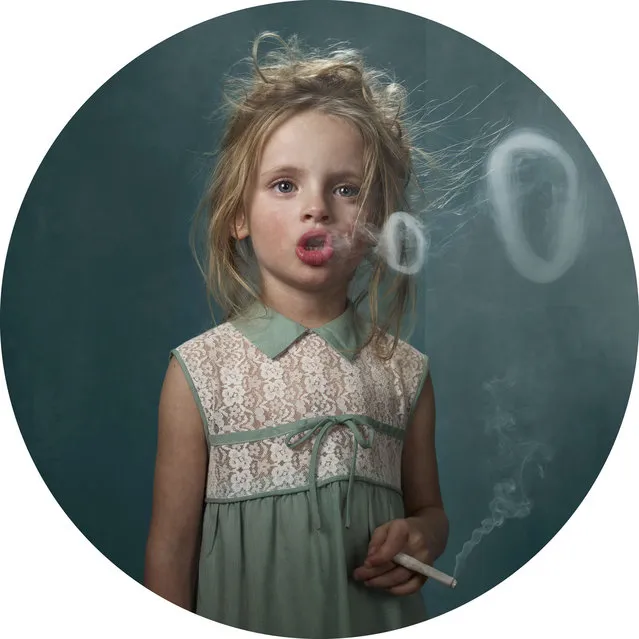
A YouTube video of a chainsmoking Indonesian toddler inspired me to create this series, "Smoking Kids". The video highlighted the cultural differences between the east and west, and questioned notions of smoking being a mainly adult activity. Adult smokers are the societal norm, so I wanted to isolate the viewer's focus upon the issue of smoking itself. I felt that children smoking would have a surreal impact upon the viewer and compel them to truly see the acts of smoking rather than making assumptions about the person doing the act. ... ~Frieke Janssen
Details
07 Aug 2012 01:56:00