Loading...
Done
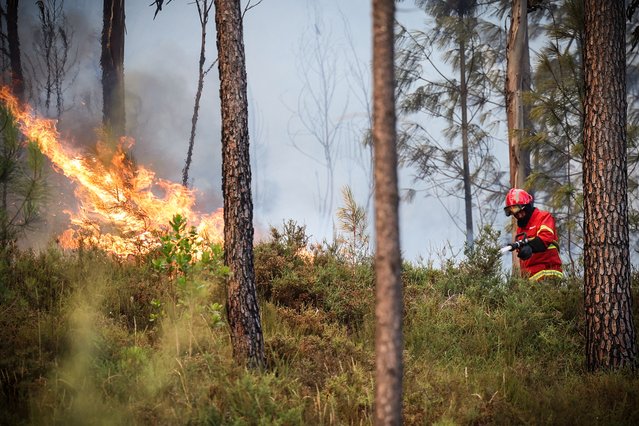
A firefighter is seen next to flames while working to extinguish a wildfire burning in Gondomar, northern Portugal on July 29, 2025. Almost 2,000 firefighters battled on July 29, 2025 to contain forest blazes across Portugal that have led to almost the whole country being put on high alert for fires. Ten major fires blazed with two in the north and three in the centre of the country causing most concern. (Photo by Carlos Costa/AFP Photo)

A firefighter is seen next to flames while working to extinguish a wildfire burning in Gondomar, northern Portugal on July 29, 2025. Almost 2,000 firefighters battled on July 29, 2025 to contain forest blazes across Portugal that have led to almost the whole country being put on high alert for fires. Ten major fires blazed with two in the north and three in the centre of the country causing most concern. (Photo by Carlos Costa/AFP Photo)
Details
14 Aug 2025 04:26:00
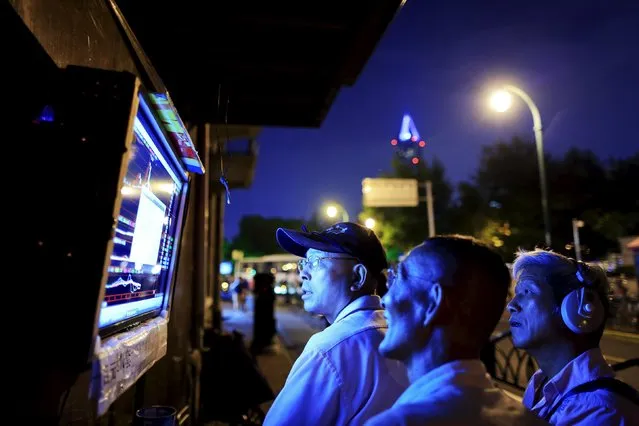
Shen Yuxi (L), introduces analysis software to investors at a “street stock salon” in central Shanghai, China, September 5, 2015. Shen carries a TV screen on his electronic bike to the "salon" every weekends where he sets it up on the wall outside a brokerage house. Shen's been selling analysis software at "the salon" for more than 10 years. (Photo by Aly Song/Reuters)

Some are in it just for the money, others to help buy a meal. Then there are those who trade for fun or to spend time among friends. Millions of investors – pensioners, security guards, high-school students – dominate China's stock markets, conducting about 80 percent of all trades. Retirees gather in brokerage houses dotted around China also to enjoy some company and savour the air conditioning on hot days. Some start as young as 13, trading from home with an eye on future careers in finance. Winning isn't guaranteed. This year, among the most turbulent in China's financial history, its stock markets more than doubled in the six months to May, only to crash amid concerns that growth in the country, which makes everything from cars to steel, is slowing faster than previously thought. (Photo by Aly Song/Reuters)
Details
13 Oct 2015 08:00:00
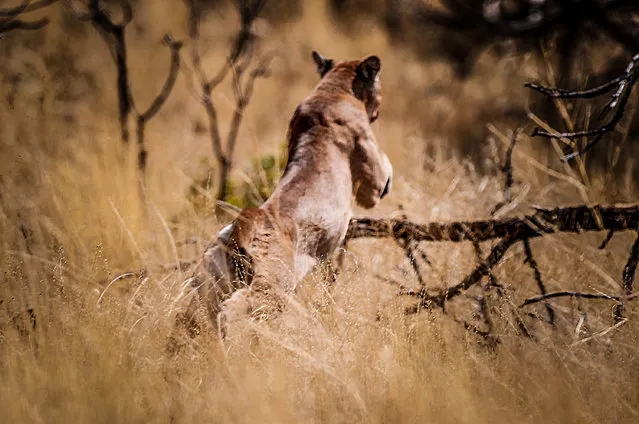
In this Monday, September 22, 2014 photo provided by the Utah Division of Wildlife Resources, a young  cougar is released back into Utah's mountains by the Utah Division of Wildlife Resources in an undisclosed site in central Utah. (Photo by Steve Gray/AP Photo/Utah Division of Wildlife Resources)

In this Monday, September 22, 2014 photo provided by the Utah Division of Wildlife Resources, a young cougar is released back into Utah's mountains by the Utah Division of Wildlife Resources in an undisclosed site in central Utah. State wildlife officials received reports of the cougar roaming Sunday afternoon in a residential area of the city's eastern flank, a few miles from the base of the Wasatch Mountains. Authorities say cougars generally avoid humans but sometimes enter neighborhoods close to their mountain habitats. (Photo by Steve Gray/AP Photo/Utah Division of Wildlife Resources)
Details
27 Sep 2014 12:32:00
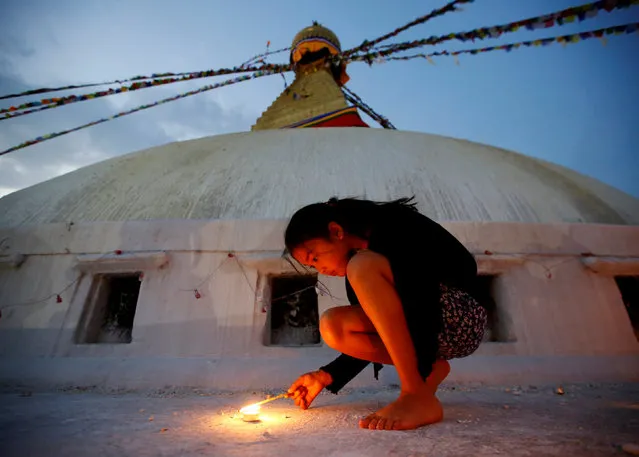
A girl lights a candle as she marks the anniversary of 2015 Nepal earthquake, at Boudhanath stupa in Kathmandu, Nepal April 25, 2017. (Photo by Navesh Chitrakar/Reuters)

A girl lights a candle as she marks the anniversary of 2015 Nepal earthquake, at Boudhanath stupa in Kathmandu, Nepal April 25, 2017. (Photo by Navesh Chitrakar/Reuters)
Details
14 May 2017 08:16:00
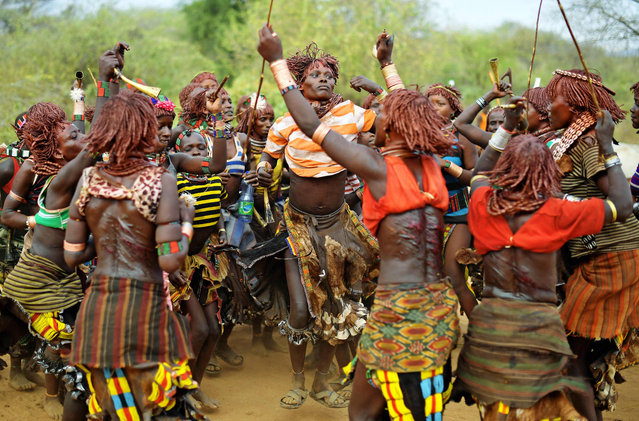
Hamar women dance before a bull jumping ceremony in Ethiopia's southern Omo Valley region near Turmi on September 19, 2016. The Hamar are a Nilotic ethnic group in Ethiopia. The construction of the Gibe III dam, the third largest hydroelectric plant in Africa, and large areas of very “thirsty” cotton and sugar plantations and factories along the Omo river are impacting heavily on the lives of tribes living in the Omo Valley who depend on the river for their survival and way of life. Human rights groups fear for the future of the tribes if they are forced to scatter, give up traditional ways through loss of land or ability to keep cattle as globalisation and development increases. (Photo by Carl De Souza/AFP Photo)

Hamar women dance before a bull jumping ceremony in Ethiopia's southern Omo Valley region near Turmi on September 19, 2016. The Hamar are a Nilotic ethnic group in Ethiopia. The construction of the Gibe III dam, the third largest hydroelectric plant in Africa, and large areas of very “thirsty” cotton and sugar plantations and factories along the Omo river are impacting heavily on the lives of tribes living in the Omo Valley who depend on the river for their survival and way of life. (Photo by Carl De Souza/AFP Photo)
Details
02 Oct 2016 08:45:00
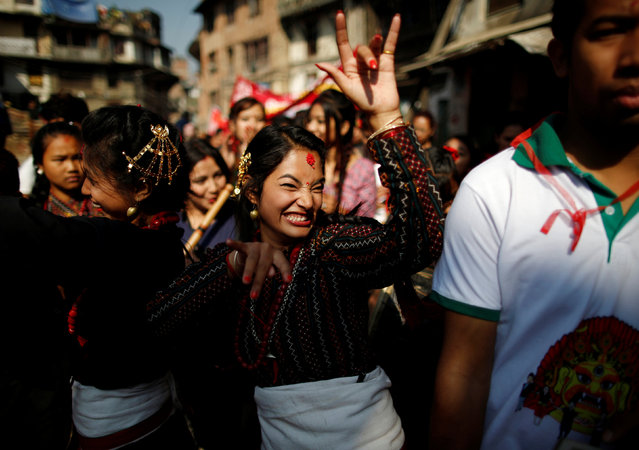
Participants from Newar community in traditional attire, dance during the Newari New Year parade that falls during the Tihar festival, also called Diwali, in Kathmandu, Nepal October 31, 2016. (Photo by Navesh Chitrakar/Reuters)

Participants from Newar community in traditional attire, dance during the Newari New Year parade that falls during the Tihar festival, also called Diwali, in Kathmandu, Nepal October 31, 2016. (Photo by Navesh Chitrakar/Reuters)
Details
26 Nov 2016 10:23:00
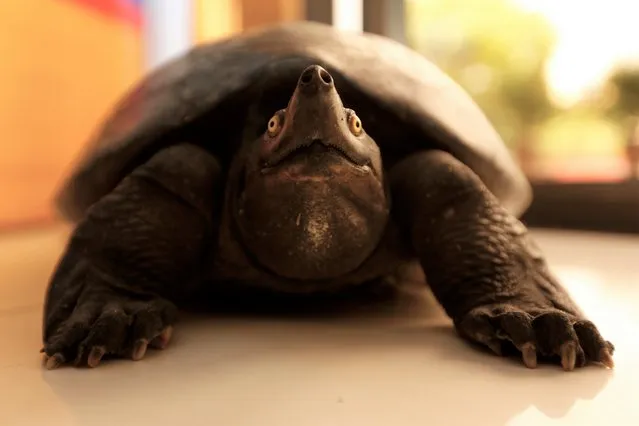
A view of a turtle during an event at the Ministry of Environment in Phnom Penh, Cambodia, 24 June 2020. A Cambodian woman recently bought endangered Royal Turtles from local villagers and gave them to Ministry of Environment. (Photo by Kith Serey/EPA/EFE)

A view of a turtle during an event at the Ministry of Environment in Phnom Penh, Cambodia, 24 June 2020. A Cambodian woman recently bought endangered Royal Turtles from local villagers and gave them to Ministry of Environment. (Photo by Kith Serey/EPA/EFE)
Details
28 Jun 2020 00:01:00
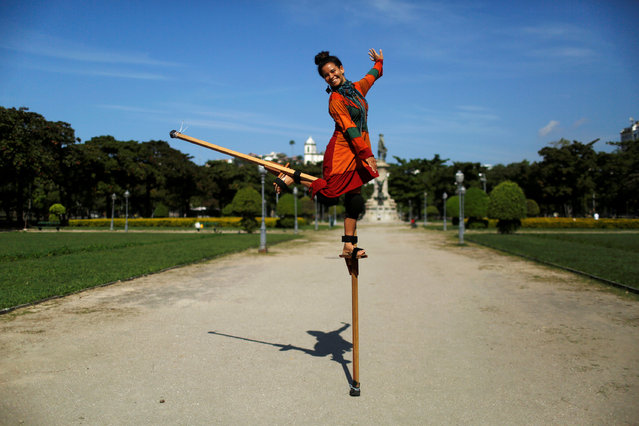
Raquel Poti, a 32-year-old street artist, poses at a park in Rio de Janeiro, Brazil, June 25, 2016. Raquel thinks the Olympics promotes a lifestyle that combines sports, culture and education. She is concerned about the large investment for the event while the population needs improvements in basic services. (Photo by Pilar Olivares/Reuters)

Just a week before Rio de Janeiro hosts South America's first Olympics, city residents expressed mixed feelings about the cost and security of the Games, while holding out hope they will bring joy to a nation facing economic and political crises. The conflicted thoughts mirror a recent survey by the Datafolha polling group showing that half of Brazilians were opposed to holding the Games, while 63 percent think the costs of hosting the event will outweigh benefits. (Photo by Pilar Olivares/Reuters)
Details
03 Aug 2016 11:51:00