Loading...
Done
Mariam Emad from Parkour Egypt “PKE” practices her parkour skills around buildings on the outskirts of Cairo, Egypt on July 20, 2018. A group of Egyptian women gather at an abandoned park in a Cairo suburb once a week, climbing walls and jumping around in the strenuous physical discipline known as Parkour, while also challenging the country's conservative social norms. (Photo by Amr Abdallah Dalsh/Reuters)

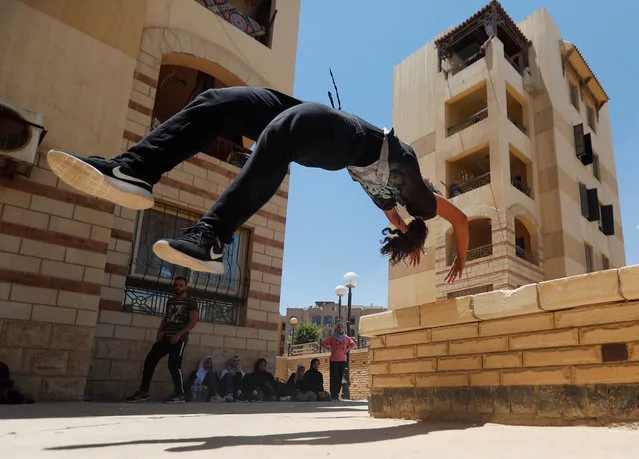
Mariam Emad from Parkour Egypt “PKE” practices her parkour skills around buildings on the outskirts of Cairo, Egypt on July 20, 2018. A group of Egyptian women gather at an abandoned park in a Cairo suburb once a week, climbing walls and jumping around in the strenuous physical discipline known as Parkour, while also challenging the country's conservative social norms. (Photo by Amr Abdallah Dalsh/Reuters)
Details
25 Jul 2018 00:01:00
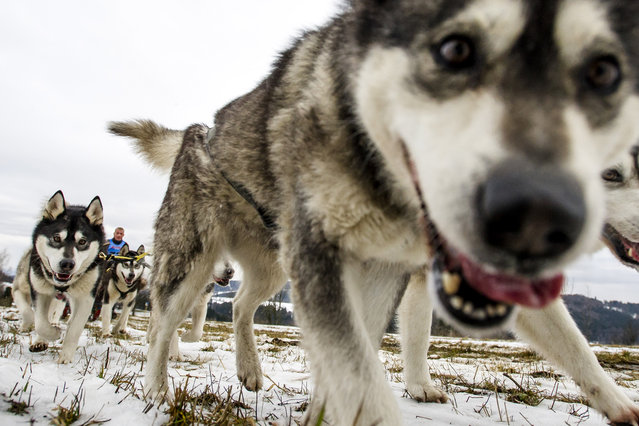
Mushers and theirs dog teams during the Sedivackuv long race, Orlicke Mountains, Czech Republic on January 28, 2016. (Photo by David Tanecek/CTK via ZUMA Press)

Mushers and theirs dog teams during the Sedivackuv long race, Orlicke Mountains, Czech Republic on January 28, 2016. The 240 Km (150 miles) race is a multi-day event, but was canceled today, two days early, because of poor snow conditions in the region. (Photo by David Tanecek/CTK via ZUMA Press)
Details
31 Jan 2016 09:34:00
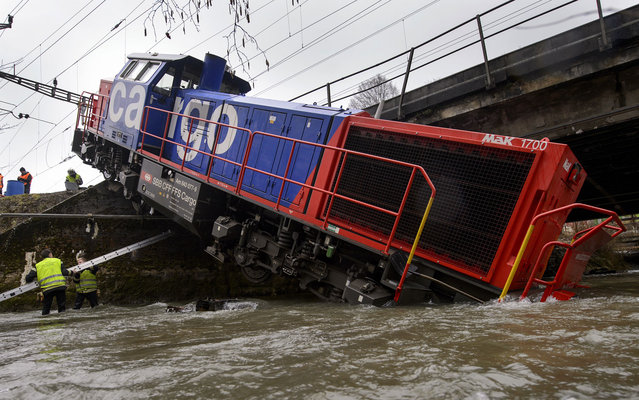
A diesel locomotive has ended up in the river Venoge on March 8, 2013 near Penthalaz, Western Switzerland. The freight locomotive derailed near Cossonez railway station with its driver slightly injured. (Photo by Fabrice Coffrini/AFP Photo)

A diesel locomotive has ended up in the river Venoge on March 8, 2013 near Penthalaz, Western Switzerland. The freight locomotive derailed near Cossonez railway station with its driver slightly injured. (Photo by Fabrice Coffrini/AFP Photo)
Details
09 Mar 2013 12:26:00
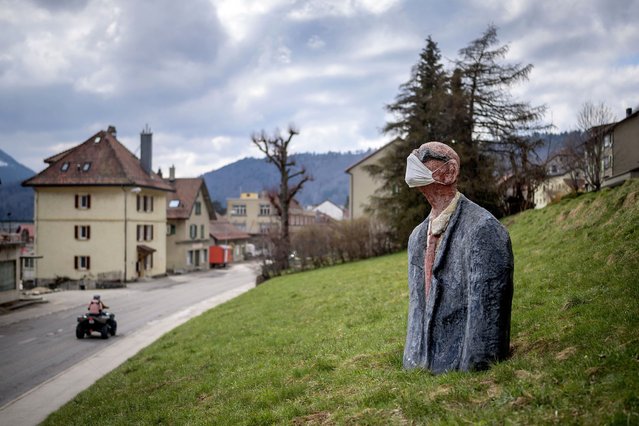
A picture taken on April 18, 2020 in Sainte-Croix shows a scultpure representing a man wearing a facemask as a preventive measure against the Covid-19 coronavirus in a field. (Photo by Fabrice Coffrini/AFP Photo)

A picture taken on April 18, 2020 in Sainte-Croix shows a scultpure representing a man wearing a facemask as a preventive measure against the Covid-19 coronavirus in a field. (Photo by Fabrice Coffrini/AFP Photo)
Details
02 May 2021 08:21:00
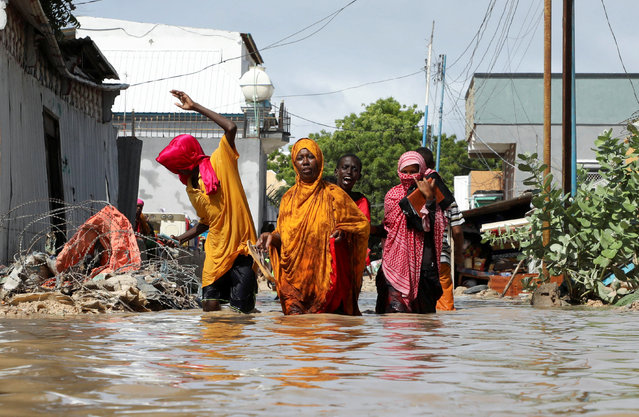
A Somali family wades through flood waters, as they flee after overnight rains destroyed their home, in Wadajir district of Mogadishu, Somalia on May 10, 2025. (Photo by Feisal Omar/Reuters)

A Somali family wades through flood waters, as they flee after overnight rains destroyed their home, in Wadajir district of Mogadishu, Somalia on May 10, 2025. (Photo by Feisal Omar/Reuters)
Details
11 Jun 2025 03:41:00
A masked reveller parades through the streets on the first day of the carnival season in Lucerne, Switzerland, 12 February 2015. In the background the well known Kappellbruecke bridge. (Photo by Alexandra Wey/EPA)

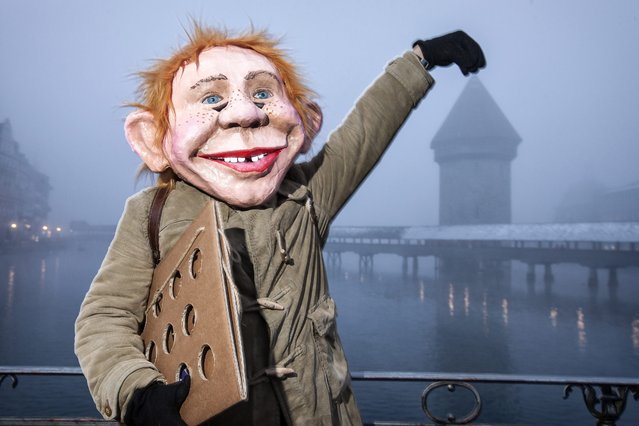
A masked reveller parades through the streets on the first day of the carnival season in Lucerne, Switzerland, 12 February 2015. In the background the well known Kappellbruecke bridge. (Photo by Alexandra Wey/EPA)
Details
14 Feb 2015 13:24:00
Dancers at the Windmill Theatre in London, practice a routine wearing gas masks and hard-hats with their costumes, 1940. (Photo by Hulton Archive/Getty Images)

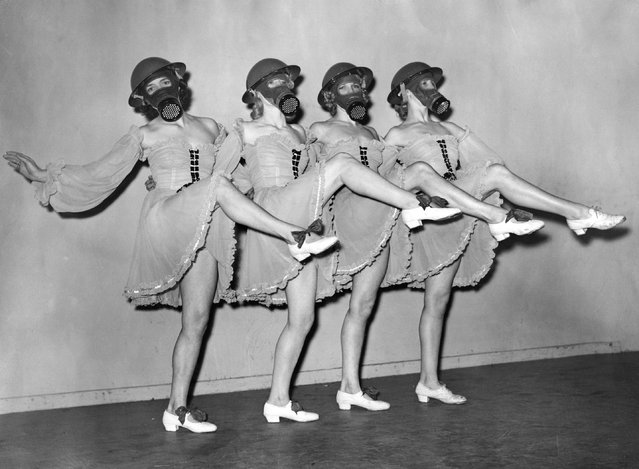
Dancers at the Windmill Theatre in London, England practice a routine wearing gas masks and hard-hats with their costumes, 1940. (Photo by Hulton Archive/Getty Images)
Details
29 Jan 2018 06:59:00
Plaster cast moulds of victims of the Mount Vesuvius eruption lie on a display table in a laboratory at Pompeii October 13, 2015. An expert team made up of archaeologists, radiologists, orthodontists and anthropologists began on September 2015 to use CAT scan technology (computerised axial tomography) to peer inside the plaster cast moulds of Pompeii's victims, in a study that has added more detail to previous findings. (Photo by Alessandro Bianchi/Reuters)

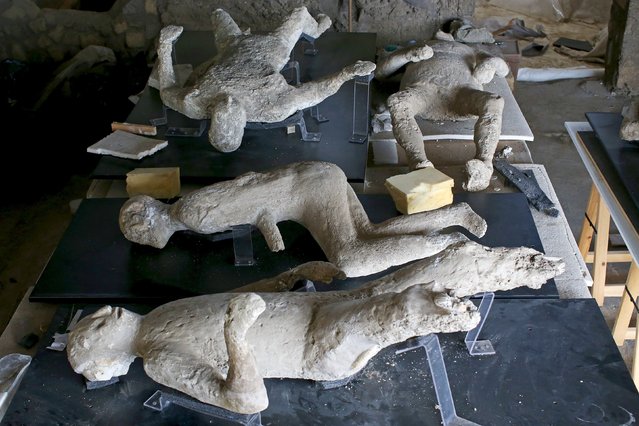
Plaster cast moulds of victims of the Mount Vesuvius eruption lie on a display table in a laboratory at Pompeii October 13, 2015. An expert team made up of archaeologists, radiologists, orthodontists and anthropologists began on September 2015 to use CAT scan technology (computerised axial tomography) to peer inside the plaster cast moulds of Pompeii's victims, in a study that has added more detail to previous findings. A 16-layer scan had to be used in order to penetrate the hardened plaster but the results showed up impressive skeletal remains and near perfect teeth. (Photo by Alessandro Bianchi/Reuters)
Details
22 Oct 2015 08:02:00