Loading...
Done
Ryan Randall plays the bagpipes outside a polling station in Edinburgh, Scotland September 18, 2014. Polling in the referendum on Scottish independence began on Thursday morning, as Scotland votes whether or not to end the 307-year-old union with the rest of the United Kingdom. (Photo by Paul Hackett/Reuters)

Ryan Randall plays the bagpipes outside a polling station in Edinburgh, Scotland September 18, 2014. Polling in the referendum on Scottish independence began on Thursday morning, as Scotland votes whether or not to end the 307-year-old union with the rest of the United Kingdom. (Photo by Paul Hackett/Reuters)
Details
20 Sep 2014 10:20:00
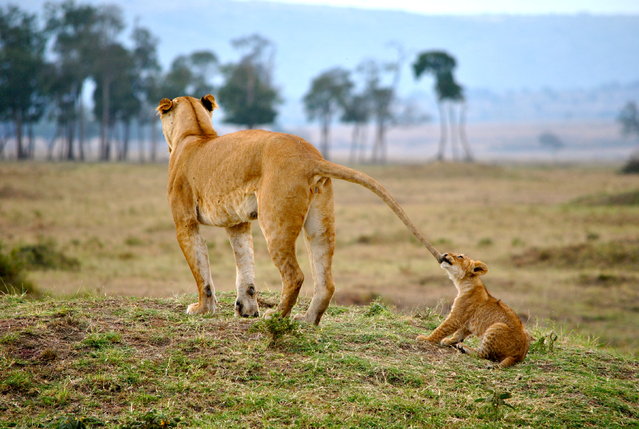
“A Mothers Tail”. A baby cub pulls on his mother's tail to get attention. Photo location: Masai Mara, Kenya. (Photo and caption by Tori Marsh/National Geographic Photo Contest)

“A Mothers Tail”. A baby cub pulls on his mother's tail to get attention. Photo location: Masai Mara, Kenya. (Photo and caption by Tori Marsh/National Geographic Photo Contest)
Details
21 Oct 2014 12:40:00
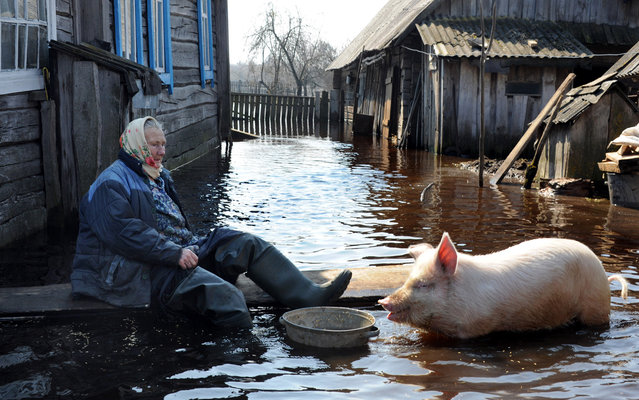
A woman feeds a pig in her yard during spring flood in the Belarus village of Snyadin near Pripyat river, some 300 km south of Minsk, on April 16, 2013. (Photo by Viktor Drachev/AFP Photo)

A woman feeds a pig in her yard during spring flood in the Belarus village of Snyadin near Pripyat river, some 300 km south of Minsk, on April 16, 2013. (Photo by Viktor Drachev/AFP Photo)
Details
20 Apr 2013 12:12:00
A demonstrator is detained during May Day rallies in Santiago May 1, 2013. (Photo by Ivan Alvarado/Reuters)

A demonstrator is detained during May Day rallies in Santiago May 1, 2013. (Photo by Ivan Alvarado/Reuters)
Details
03 May 2013 07:59:00
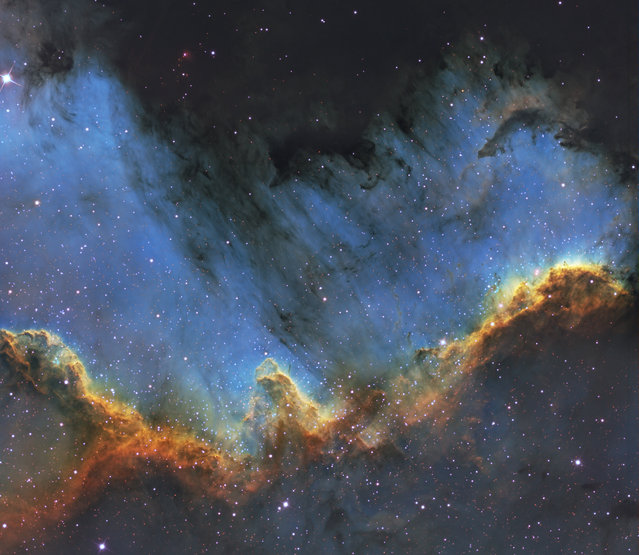
The Cygnus Wall is in the southern  area of NGC7000 also known as the North America Nebula. It is approximately 1800 light years from Earth, and is in the constellation Cygnus. The Wall is an energized shock front and contains the most concentrated star formations in the nebula. The size of the North America Nebula is about 4 full moons. (Bill Snyder)

Amateur astronomer Bill Snyder has been involved with astrophotography since 2007. Photo: The Cygnus Wall is in the southern area of NGC7000 also known as the North America Nebula. It is approximately 1800 light years from Earth, and is in the constellation Cygnus. The Wall is an energized shock front and contains the most concentrated star formations in the nebula. The size of the North America Nebula is about 4 full moons. (Photo and caption by Bill Snyder)
Details
30 Oct 2013 09:15:00
A boy holds his mother's leg as he cries in front of their damaged house after a strong 6.6 magnitude earthquake at Longmen village, Lushan county in Ya'an, Sichuan province. (Photo by Jason Lee/Reuters)

A boy holds his mother's leg as he cries in front of their damaged house after a strong 6.6 magnitude earthquake at Longmen village, Lushan county in Ya'an, Sichuan province. (Photo by Jason Lee/Reuters)
Details
02 Jan 2014 11:56:00
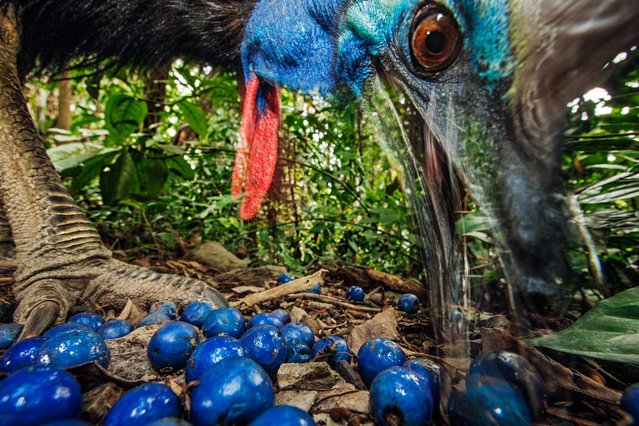
“Cassowaries are large, flightless birds related to emus and (more distantly) to ostriches, rheas, and kiwis”, writes Olivia Judson in the September issue of National Geographic magazine. (Photo by Christian Ziegler/National Geographic)

“Cassowaries are large, flightless birds related to emus and (more distantly) to ostriches, rheas, and kiwis”, writes Olivia Judson in the September issue of National Geographic magazine. How large? People-size: Adult males stand well over five foot five and top 110 pounds. Females are even taller, and can weigh more than 160 pounds. Dangerous when roused, they’re shy and peaceable when left alone. But even birds this big and tough are prey to habitat loss. The dense New Guinea and Australia rain forests where they live have dwindled. Today cassowaries might number 1,500 to 2,000. And because they help shape those same forests – by moving seeds from one place to another – “if they vanish”, Judson writes, “the structure of the forest would gradually change” too. (Photo by Christian Ziegler/National Geographic)

Details
06 Jan 2014 12:21:00
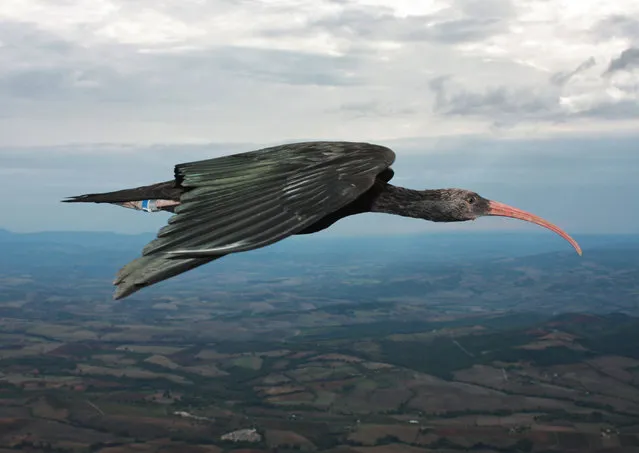
In this undated photo made available by journal Nature on January 15, 2014, a northern bald ibis (Geronticus eremita) flies in Tuscany, Italy. A new study released Wednesday, January 15, 2014 says the birds choreograph the flapping of their wings, getting a boost from an updraft of air in the wake of the flapping wings by flying behind the first bird and off to the side. When a flock of birds take advantage of these aerodynamics, they form a V. (Photo by Markus Unsöld/AP Photo)

In this undated photo made available by journal Nature on January 15, 2014, a northern bald ibis (Geronticus eremita) flies in Tuscany, Italy. A new study released Wednesday, January 15, 2014 says the birds choreograph the flapping of their wings, getting a boost from an updraft of air in the wake of the flapping wings by flying behind the first bird and off to the side. When a flock of birds take advantage of these aerodynamics, they form a V. (Photo by Markus Unsöld/AP Photo)
Details
18 Jan 2014 13:54:00