Loading...
Done
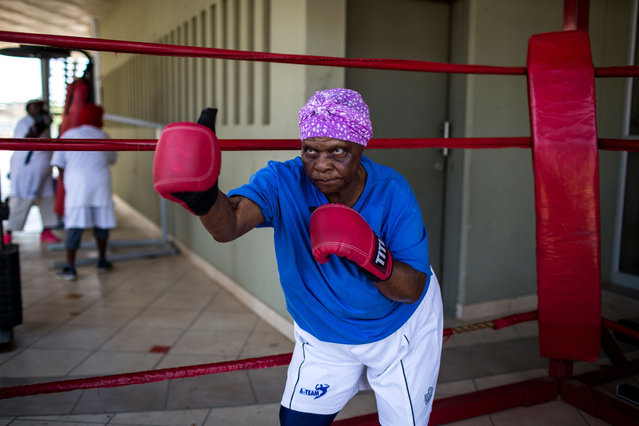
79 year old Constance Ngubane spars in the ring as she takes part in a “Boxing Gogos” (Grannies) training session hosted by the A Team Gym in Cosmo City in Johannesburg on September 19, 2017. (Photo by Gulshan Khan/AFP Photo)

79 year old Constance Ngubane spars in the ring as she takes part in a “Boxing Gogos” (Grannies) training session hosted by the A Team Gym in Cosmo City in Johannesburg on September 19, 2017. The grandmothers, many of whom are over 70 have been training with coach Claude Maphosa and claim that they no longer suffer from the ailments they had before, and are stronger than ever. The grannies travel from all over Cosmo City for the twice weekly sessions. Coach Maphosa is in the process of planning events in other areas for grannies who have been inspired by the story, to join in. (Photo by Gulshan Khan/AFP Photo)
Details
21 Sep 2017 08:52:00
A diver swims near sculptures during the inauguration of the underwater museum in Ayia Napa, Cyprus, 01 August 2021. At the new Ayia Napa Underwater Sculpture Museum (MUSAN), located in the Pernera area of Ayia Napa, visitors, both swimmers with mask and flippers and divers, will be able to tour around an underwater forest, the first of its kind in the world. The whole project is inspired by British acclaimed sculptor Jason deCaires Taylor, a representatives of the eco-art movement who is behind the world's first underwater sculpture park – the Molinere Underwater Sculpture Park in Grenada. (Photo by Jason Decaires Taylor/EPA/EFE)

A diver swims near sculptures during the inauguration of the underwater museum in Ayia Napa, Cyprus, 01 August 2021. At the new Ayia Napa Underwater Sculpture Museum (MUSAN), located in the Pernera area of Ayia Napa, visitors, both swimmers with mask and flippers and divers, will be able to tour around an underwater forest, the first of its kind in the world. (Photo by Jason Decaires Taylor/EPA/EFE)
Details
12 Dec 2021 05:45:00
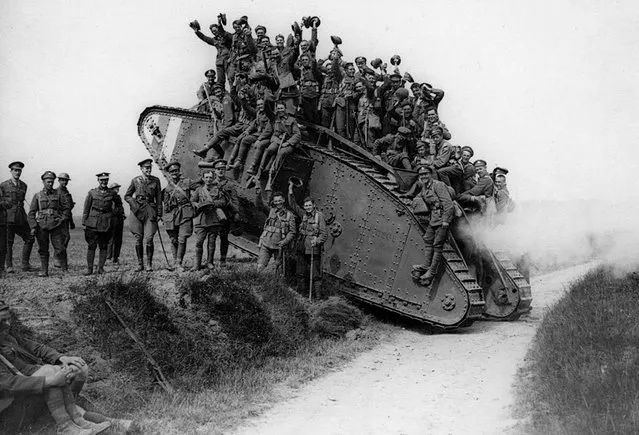
These black-and-white photos are taken from the new book “Armoured Warfare in the First World War 1916 – 1918” by Anthony Tucker-Jones and published by Pen & Sword Military. “Interestingly the British, French and Germans took completely different approaches with varying results”. The British military produced “Little Willie” in Autumn 1915 weighing 18 tonnes, which had a crew of two plus four gunners. “Inspired by a tracked artillery tractor “Little Willie” was referred to as a water tank – hence the name tank – to ensure secrecy”, said Anthony. “This led to the strange looking Mark I with its peculiar rhomboid shape, designed to cross trenches with guns in sponsons on either side. The Germans saw the tank as unchivalrous and were slow to grasp its utility. They favoured the Stormtrooper (specialist soldiers used to infiltrate enemy trenches) and artillery, not the tank”, said Anthony. “However, they didn’t hesitate to make use of captured British tanks. Although the tank helped secure victory and German soldiers dubbed it “Germany’s Downfall” the country was ultimately brought to its knees by the Allies blockade”. Here: British troops hitch a ride on a Mark IV after the massed tank fleet spearheading attack at Cambrai on November 20, 1917. (Photo by Anthony Tucker-Jones/Mediadrumworld.com)

These black-and-white photos are taken from the new book “Armoured Warfare in the First World War 1916 – 1918” by Anthony Tucker-Jones and published by Pen & Sword Military. Here: British troops hitch a ride on a Mark IV after the massed tank fleet spearheading attack at Cambrai on November 20, 1917. (Photo by Anthony Tucker-Jones/Mediadrumworld.com)
Details
23 Feb 2017 00:02:00
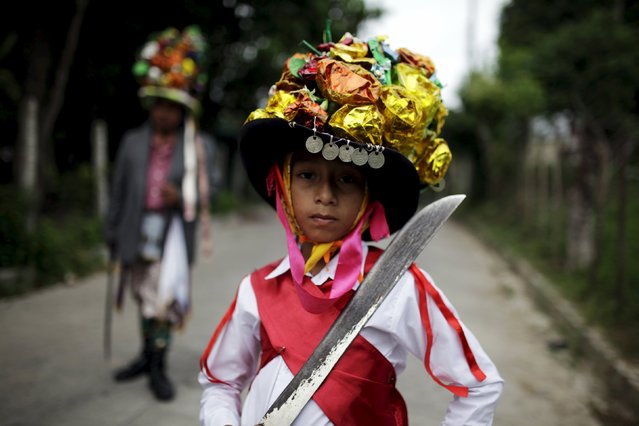
A participant in the traditional dance of Los Historiantes poses for a picture prior to performing in the festivity held in the honour of Saint James, in Santiago Nonualco July 22, 2015. The traditional dance was brought to Latin America by the Spanish, and participants each dramatise an episode of the battles between the Christians and the Moors that took place on the Iberian Peninsula about eight centuries ago, according to the dancers. (Photo by Jose Cabezas/Reuters)

A participant in the traditional dance of Los Historiantes poses for a picture prior to performing in the festivity held in the honour of Saint James, in Santiago Nonualco July 22, 2015. The traditional dance was brought to Latin America by the Spanish, and participants each dramatise an episode of the battles between the Christians and the Moors that took place on the Iberian Peninsula about eight centuries ago, according to the dancers. (Photo by Jose Cabezas/Reuters)
Details
24 Jul 2015 11:56:00
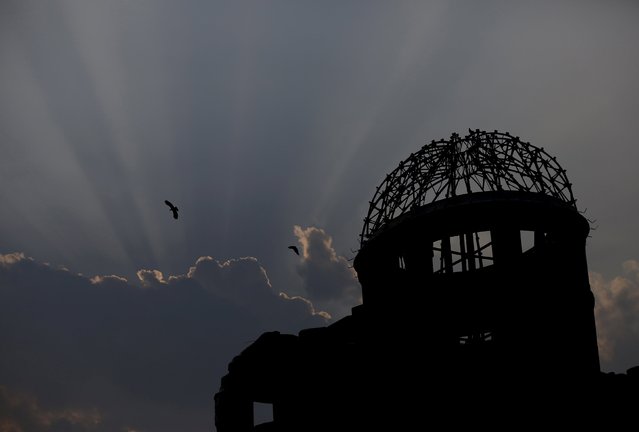
Birds fly over the Atomic Bomb Dome in Hiroshima, western Japan July 29, 2015. On August 6, 1945, the U.S. dropped the atomic bomb on Hiroshima, killing about 140,000 by the end of the year in a city of 350,000 residents, in the world's first nuclear attack. (Photo by Issei Kato/Reuters)

Birds fly over the Atomic Bomb Dome in Hiroshima, western Japan July 29, 2015. On August 6, 1945, the U.S. dropped the atomic bomb on Hiroshima, killing about 140,000 by the end of the year in a city of 350,000 residents, in the world's first nuclear attack. Three days later, a second atomic bomb was dropped on Nagasaki. Influenced by the shadows scorched into outdoor surfaces by the heat of the blasts 70 years ago, Reuters photographer Issei Kato pays homage to survivors, residents and historic buildings in both cities in a personal project that captures the shadows of today. (Photo by Issei Kato/Reuters)
Details
04 Aug 2015 12:01:00
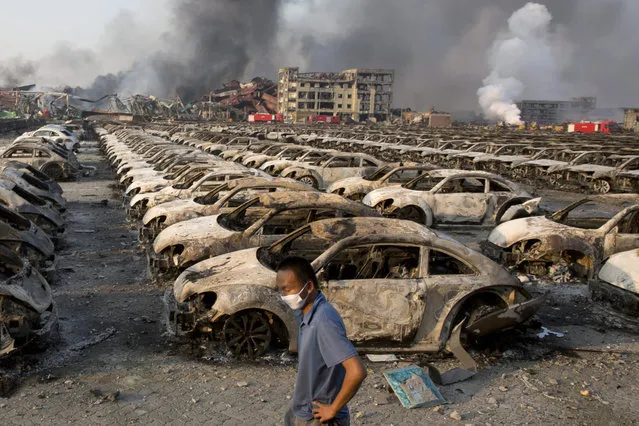
In this photo taken Thursday, August 13, 2015, a man walks past the charred remains of new cars at a parking lot near the site of an explosion at a warehouse in northeastern China's Tianjin municipality. Rescuers have pulled a survivor from an industrial zone about 32 hours after it was devastated by huge blasts in China's Tianjin port. Meanwhile, authorities are moving gingerly forward in dealing with a fire still smoldering amid potentially dangerous chemicals. (Photo by Ng Han Guan/AP Photo)

In this photo taken Thursday, August 13, 2015, a man walks past the charred remains of new cars at a parking lot near the site of an explosion at a warehouse in northeastern China's Tianjin municipality. Rescuers have pulled a survivor from an industrial zone about 32 hours after it was devastated by huge blasts in China's Tianjin port. Meanwhile, authorities are moving gingerly forward in dealing with a fire still smoldering amid potentially dangerous chemicals. (Photo by Ng Han Guan/AP Photo)
Details
14 Aug 2015 13:44:00
A topless woman walks through Bryant Park following the protest march called the GoTopless Day Parade Sunday, August 23, 2015, in New York. The parade took to the streets to counter critics who are complaining about topless tip-seekers in Times Square. Appearing bare-breasted is legal in New York. But Mayor Bill de Blasio and police Commissioner Bill Bratton say the body-painted women in the square who take photos with tourists are a nuisance. (Photo by Kevin Hagen/AP Photo)

A topless woman walks through Bryant Park following the protest march called the GoTopless Day Parade Sunday, August 23, 2015, in New York. The parade took to the streets to counter critics who are complaining about topless tip-seekers in Times Square. Appearing bare-breasted is legal in New York. But Mayor Bill de Blasio and police Commissioner Bill Bratton say the body-painted women in the square who take photos with tourists are a nuisance. (Photo by Kevin Hagen/AP Photo)
Details
24 Aug 2015 13:53:00
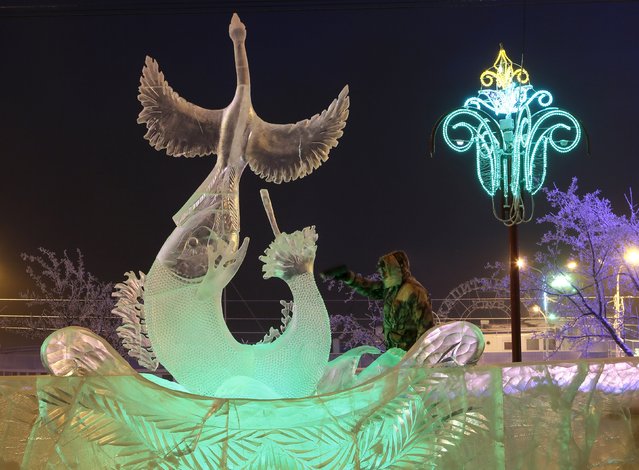
Mikhail Vasilenko, a participant from the Siberian town of Nizhny Tagil, works on an ice sculpture called “The Predator”, on the last day of the annual international festival of snow and ice sculptures “The Magical Ice of Siberia”, with the air temperature at about minus 28 degrees Celsius (minus 18.4 degrees Fahrenheit), in Krasnoyarsk, Russia, January 17, 2016. (Photo by Ilya Naymushin/Reuters)

Mikhail Vasilenko, a participant from the Siberian town of Nizhny Tagil, works on an ice sculpture called “The Predator”, on the last day of the annual international festival of snow and ice sculptures “The Magical Ice of Siberia”, with the air temperature at about minus 28 degrees Celsius (minus 18.4 degrees Fahrenheit), in Krasnoyarsk, Russia, January 17, 2016. (Photo by Ilya Naymushin/Reuters)
Details
19 Jan 2016 08:00:00