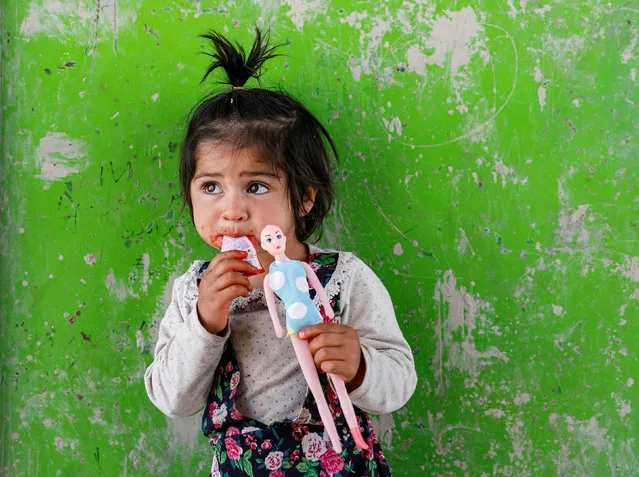
An internally displaced Afghan girl plays outside her shelter, amid the spread of the coronavirus disease (COVID-19), in Kabul, Afghanistan on May 7, 2020. (Photo by Mohammad Ismail/Reuters)
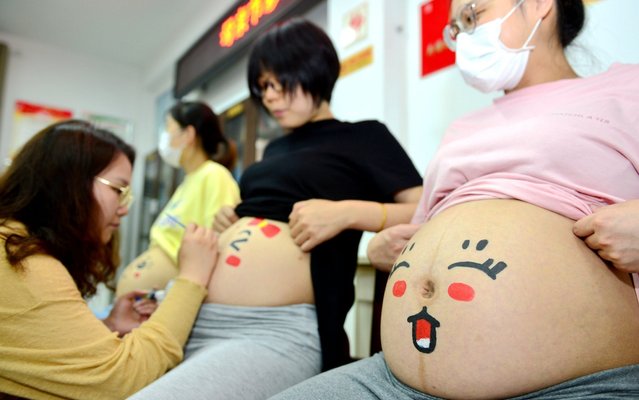
Mothers-to-be show their belly paintings in Hefei, east China's Anhui province on May 8, 2020. (Photo by Rex Features/Shutterstock/China Stringer Network)
Competitors drive their homemade vehicle without an engine during the Red Bull Soapbox Race in Almaty, Kazakhstan on September 11, 2022. (Photo by Pavel Mikheyev/Reuters)
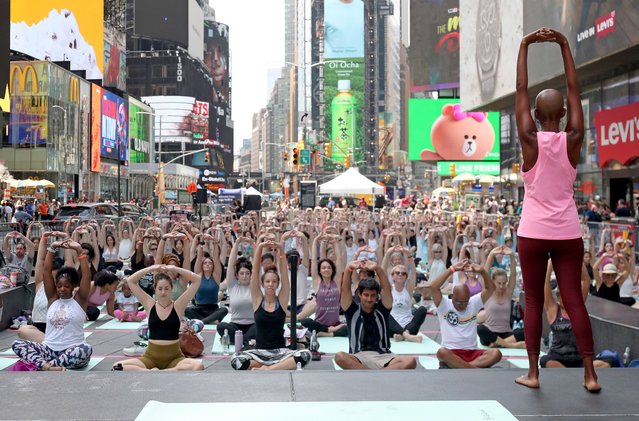
Yoga practitioners participate in yoga classes inside Times Square on the day of the summer solstice in New York City on June 20, 2024. The annual all-day outdoor yoga event, which is in its 22nd year, features classes from sun up to sun down in one of the busiest intersections of the world. (Photo by Andrew Schwartz/Splash News and Pictures)
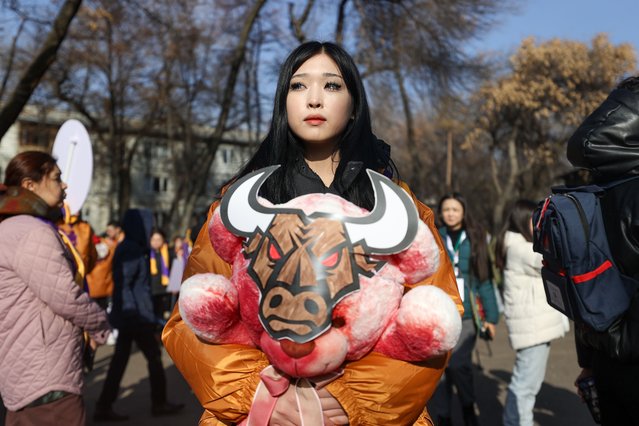
A woman clutches a teddy bear covered in red paint to symbolize blood during a government-approved, anti-violence rally held in the Kazakh city of Almaty on November 26, 2023. Organized by the New People youth movement, roughly 300 people took part. The rally was dubbed “Say No To The Animal World”, with organizers likening violent people to animals. (Photo by Petr Trotsenko/Radio Free Europe/Radio Liberty)
A participant runs in high-heels as she competes in the Stiletto Run in Bucharest June 14, 2014. The annual 50 metres race requires participants to wear high-heels that are at least 7cm tall. (Photo by Bogdan Cristel/Reuters)
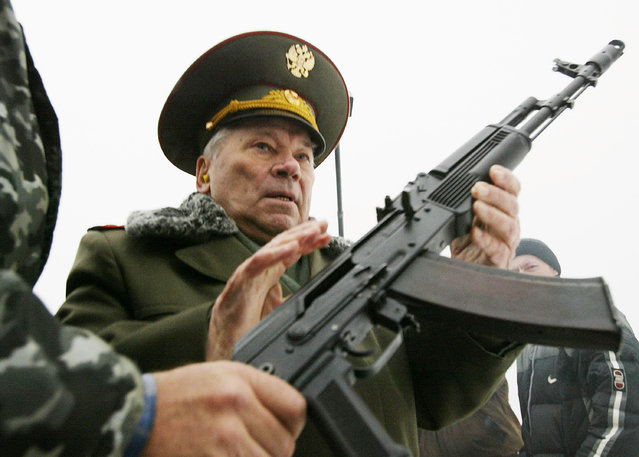
Mikhail Kalashnikov, the father of the world's most popular assault rifle, is handed an AK-74 November 23, 2002 in Izhevsk,1000 East km. from Moscow. November 23 marked the 55th anniversary of the release of the first Kalashnikov gun. According to the Moscow-based Center for Analysis of Strategic and Technologies some 70 million to 100 million Kalashnikovs have been built worldwide since 1947, compared about 7 million to Kalashnikov's Western rival the M-16 assault rifles. (Photo by Oleg Nikishin/Getty Images)
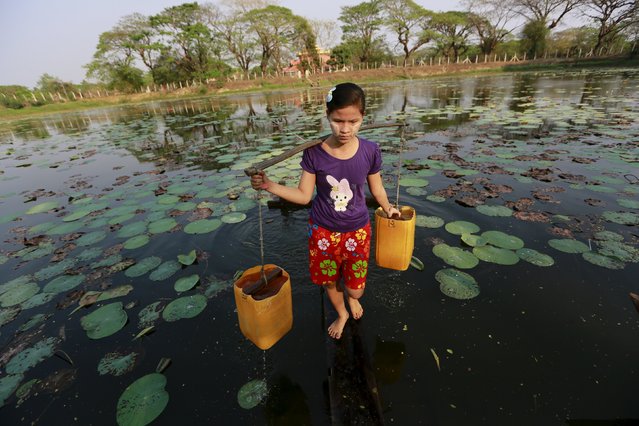
A girl collects drinking water at Dala river outside Yangon, Myanmar March 3, 2016. Some 650 million people, or one in 10 of the world's population, have no access to safe water, putting them at risk of infectious diseases and premature death. Dirty water and poor sanitation can cause severe diarrhoeal diseases in children, killing 900 under-five a day across the world, according to United Nations estimates. (Photo by Soe Zeya Tun/Reuters)