Loading...
Done
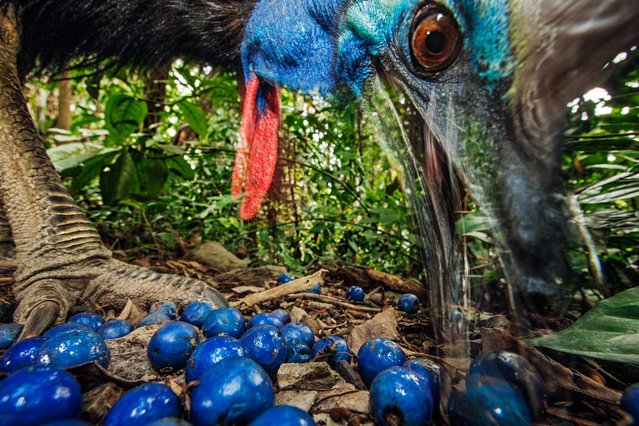
“Cassowaries are large, flightless birds related to emus and (more distantly) to ostriches, rheas, and kiwis”, writes Olivia Judson in the September issue of National Geographic magazine. (Photo by Christian Ziegler/National Geographic)

“Cassowaries are large, flightless birds related to emus and (more distantly) to ostriches, rheas, and kiwis”, writes Olivia Judson in the September issue of National Geographic magazine. How large? People-size: Adult males stand well over five foot five and top 110 pounds. Females are even taller, and can weigh more than 160 pounds. Dangerous when roused, they’re shy and peaceable when left alone. But even birds this big and tough are prey to habitat loss. The dense New Guinea and Australia rain forests where they live have dwindled. Today cassowaries might number 1,500 to 2,000. And because they help shape those same forests – by moving seeds from one place to another – “if they vanish”, Judson writes, “the structure of the forest would gradually change” too. (Photo by Christian Ziegler/National Geographic)
Details
06 Jan 2014 12:21:00
People wearing costumes walk during Halloween in Sierra Madre, California, U.S., October 31, 2017. (Photo by Mario Anzuoni/Reuters)

People wearing costumes walk during Halloween in Sierra Madre, California, U.S., October 31, 2017. (Photo by Mario Anzuoni/Reuters)
Details
02 Nov 2017 08:58:00
Lightning at Perch Rock Lighthouse in Merseyside, North West England on August 10, 2020. (Photo by Bav Media/The Sun)

Lightning strikes above Perch Rock Lighthouse in Merseyside, North West England on August 10, 2020. (Photo by Bav Media/The Sun)
Details
11 Dec 2020 00:03:00
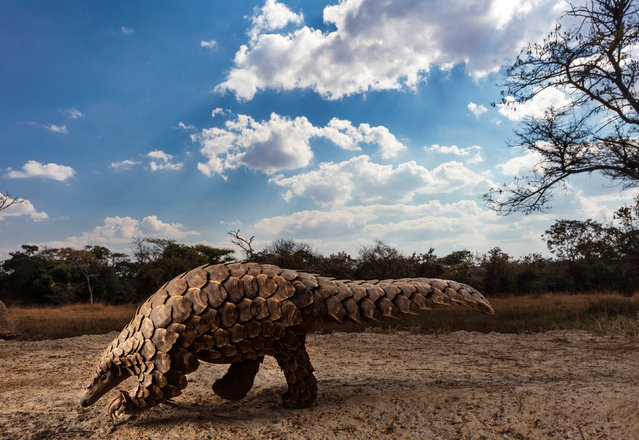
Pangolins in Crisis: Brent Stirton, South Africa; 1st place, Natural world and wildlife. “Pangolins are the world’s most illegally trafficked mammals, with an estimated one million trafficked to Asia in the last 10 years. Their scales are used in traditional Chinese and Vietnamese medicine, and their meat is sold as a high-priced delicacy. As a result, pangolins are listed as critically endangered and anyone who trades or consumes them is breaking the law. This body of work exposes the trade, while exploring aspects of illegality and celebrating the people who are trying to save these animals”. (Photo by Brent Stirton/Sony World Photography Awards 2020)

Pangolins in Crisis: Brent Stirton, South Africa; 1st place, Natural world and wildlife. “Pangolins are the world’s most illegally trafficked mammals, with an estimated one million trafficked to Asia in the last 10 years. Their scales are used in traditional Chinese and Vietnamese medicine, and their meat is sold as a high-priced delicacy. As a result, pangolins are listed as critically endangered and anyone who trades or consumes them is breaking the law. This body of work exposes the trade, while exploring aspects of illegality and celebrating the people who are trying to save these animals”. (Photo by Brent Stirton/Sony World Photography Awards 2020)
Details
11 Jun 2020 00:05:00
Tourists ride in inflatable boats as they go rafting down a river at Buyun Mountain Scenic Spot on July 10, 2020 in Dalian, Liaoning Province of China. (Photo by Wang Hua/VCG via Getty Images)

Tourists ride in inflatable boats as they go rafting down a river at Buyun Mountain Scenic Spot on July 10, 2020 in Dalian, Liaoning Province of China. (Photo by Wang Hua/VCG via Getty Images)
Details
25 Jul 2020 00:01:00
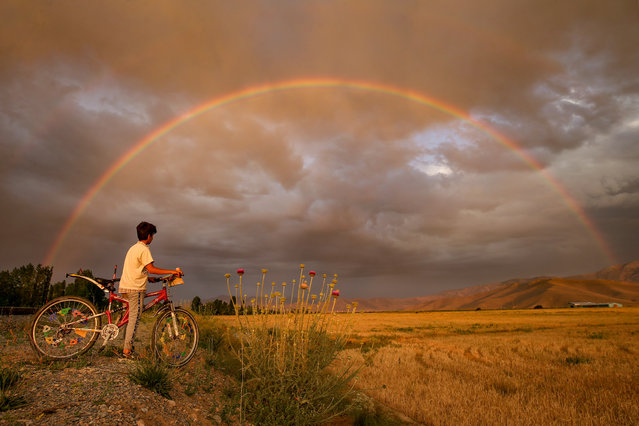
A boy with his bike is seen as rainbow appears after a rainfall in Edremit district of Van province in Turkey on July 08, 2020. (Photo by Ozkan Bilgin/Anadolu Agency via Getty Images)

A boy with his bike is seen as rainbow appears after a rainfall in Edremit district of Van province in Turkey on July 08, 2020. (Photo by Ozkan Bilgin/Anadolu Agency via Getty Images)
Details
28 Jul 2020 00:05:00
The Invasion. A quiet street in Macau. Modernization around is quickly changing the city, as documented by Paul Tsui. (Photo by Paul Tsui/National Geographic Travel Photographer of the Year Contest)

The Invasion. A quiet street in Macau. Modernization around is quickly changing the city, as documented by Paul Tsui. (Photo by Paul Tsui/National Geographic Travel Photographer of the Year Contest)
Details
30 Jun 2018 00:03:00
The Mayon volcano continues to erupt as the sun sets behind Legazpi city, Thursday, January 25, 2018 in Albay province, roughly 340 kilometers, (200 miles) southeast of Manila, Philippines. (Photo by Bullit Marquez/AP Photo)

The Mayon volcano continues to erupt as the sun sets behind Legazpi city, Thursday, January 25, 2018 in Albay province, roughly 340 kilometers, (200 miles) southeast of Manila, Philippines. (Photo by Bullit Marquez/AP Photo)
Details
27 Sep 2018 00:03:00