Loading...
Done
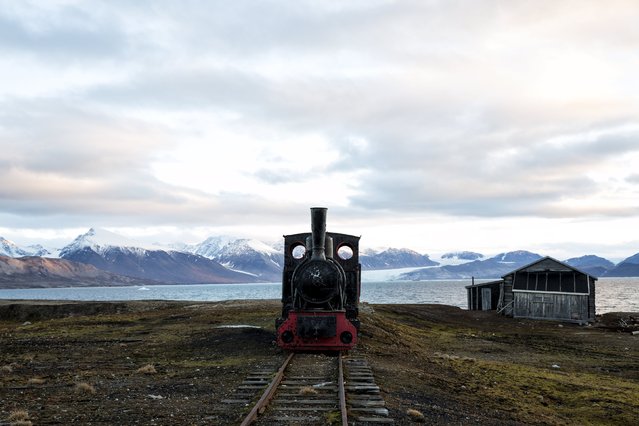
An old locomotive train that was used for transporting coal is preserved as a monument at Ny-Alesund, in Svalbard, Norway, October 11, 2015. (Photo by Anna Filipova/Reuters)

An old locomotive train that was used for transporting coal is preserved as a monument at Ny-Alesund, in Svalbard, Norway, October 11, 2015. A Norwegian chain of islands just 1,200 km (750 miles) from the North Pole is trying to promote new technologies, tourism and scientific research in a shift from high-polluting coal mining that has been a backbone of the remote economy for decades. (Photo by Anna Filipova/Reuters)
Details
29 Jan 2016 13:19:00
Bikini Contest in Daytona Beach, Florida, USA. (Photo by Evan Hurd/Sygma/Sygma via Getty Images)

Bikini Contest in Daytona Beach, Florida, USA. (Photo by Evan Hurd/Sygma/Sygma via Getty Images)
Details
27 Mar 2017 08:42:00
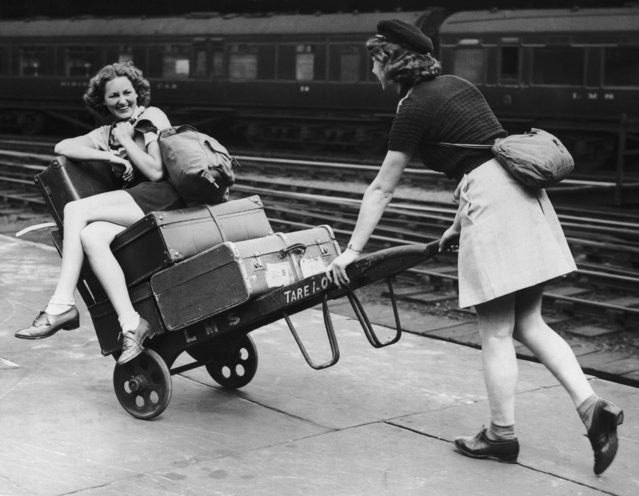
Two holidaymakers amuse themselves with a porter's trolley whilst waiting for their train at Euston Station, London, 5th August 1939. (Photo by A. J. O'Brien/Fox Photos/Getty Images)

Two holidaymakers amuse themselves with a porter's trolley whilst waiting for their train at Euston Station, London, 5th August 1939. (Photo by A. J. O'Brien/Fox Photos/Getty Images)
Details
17 Apr 2017 07:48:00
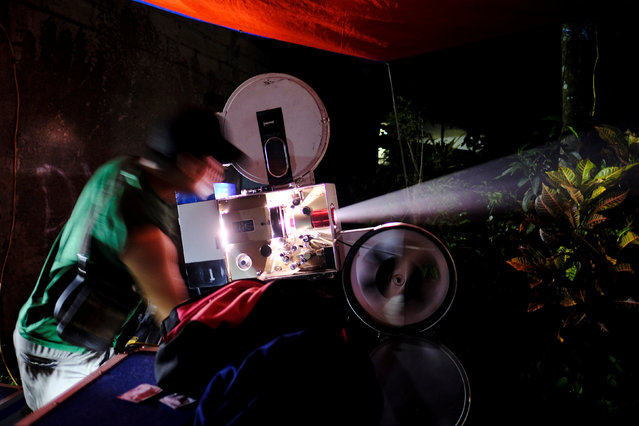
An operator adjusts a film projector during a wedding party in Bogor, Indonesia, February 18, 2017. (Photo by Reuters/Beawiharta)

An operator adjusts a film projector during a wedding party in Bogor, Indonesia, February 18, 2017. Indonesian entrepreneur Kamaluddin loves the gritty look of old 35-millimeter film so much that he spends most of his nights screening vintage movies at weddings and parties around Jakarta, the capital. (Photo by Reuters/Beawiharta)
Details
30 May 2017 08:20:00
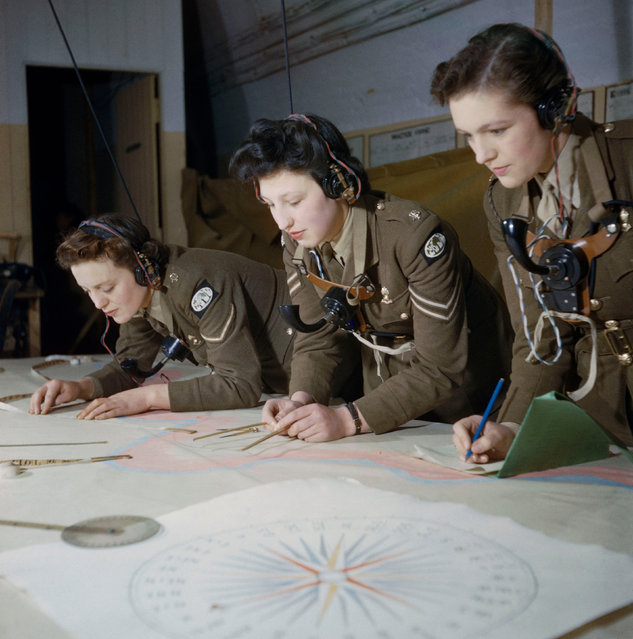
Auxiliary Territorial Service (ATS) plotters at work at Coastal Artillery Headquarters in Dover, December 1942. (Photo by Ted Dearberg/IWM/PA Wire)

Auxiliary Territorial Service (ATS) plotters at work at Coastal Artillery Headquarters in Dover, December 1942. The Auxiliary Territorial Service was the women's branch of the British Army during the Second World War. It was formed on 9 September 1938, initially as a women's voluntary service, and existed until 1 February 1949, when it was merged into the Women's Royal Army Corps. The ATS had its roots in the Women's Auxiliary Army Corps (WAAC), which was formed in 1917 as a voluntary service. During the First World War its members served in a number of jobs including clerks, cooks, telephonists and waitresses. The WAAC was disbanded after four years in 1921. (Photo by Ted Dearberg/IWM/PA Wire)
Details
13 Jul 2017 07:52:00
Models present Victoria Secret Fantasy Bras priced at $2 million each during a media preview of the Singapore JewelFest in Singapore October 8, 2015. (Photo by Edgar Su/Reuters)

Models present Victoria Secret Fantasy Bras priced at $2 million each during a media preview of the Singapore JewelFest in Singapore October 8, 2015. The festival which is in its 13th year, sees over 42 Asian designers participating and over $300 million worth of jewels for sale. It opens from October 9 to 18. (Photo by Edgar Su/Reuters)
Details
10 Oct 2015 08:07:00
An Airbus A380 aircraft prepares to land at Mumbai airport in this May 8, 2007 file photo. Sentiment at some of Asia's biggest firms deteriorated again in the fourth quarter, falling to a four-year low under the weight of concerns about slowing growth in China, the region's biggest economy, a Thomson Reuters/INSEAD survey showed. (Photo by Arko Datta/Reuters)

An Airbus A380 aircraft prepares to land at Mumbai airport in this May 8, 2007 file photo. Sentiment at some of Asia's biggest firms deteriorated again in the fourth quarter, falling to a four-year low under the weight of concerns about slowing growth in China, the region's biggest economy, a Thomson Reuters/INSEAD survey showed. (Photo by Arko Datta/Reuters)
Details
27 Dec 2015 08:03:00
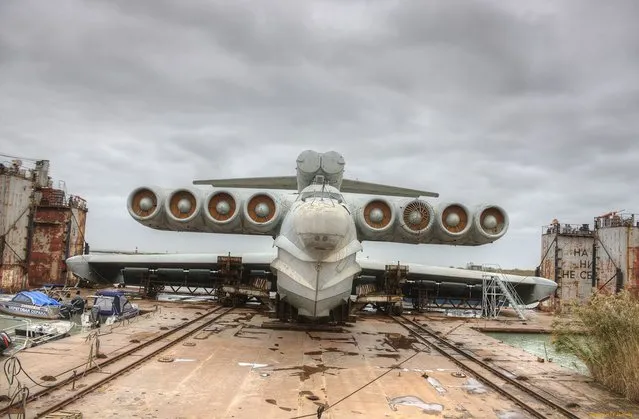
The Lun-class Ekranoplane was used by the Soviet Navy starting in 1987, and wasn't retired until the late 1990s, after the Soviet Union's fall. (Igor113)

“The Lun-class ekranoplan (NATO reporting name Duck) was a ground effect vehicle (GEV) designed by Rostislav Evgenievich Alexeev and used by the Soviet and Russian navies from 1987 until sometime in the late 1990s. It “flew” using the lift generated by the ground effect of its large wings when close to the surface of the water – about four metres or less. Although they might look similar and/or have related technical characteristics, ekranoplans like the Lun are not aircraft, seaplanes, hovercraft, or hydrofoils – ground effect is a separate technology altogether. The International Maritime Organization classifies these vehicles as maritime ships. The name Lun comes from the Russian for harrier”. – Wikipedia (Photo by Igor113)
Details
08 Aug 2014 10:51:00