Loading...
Done
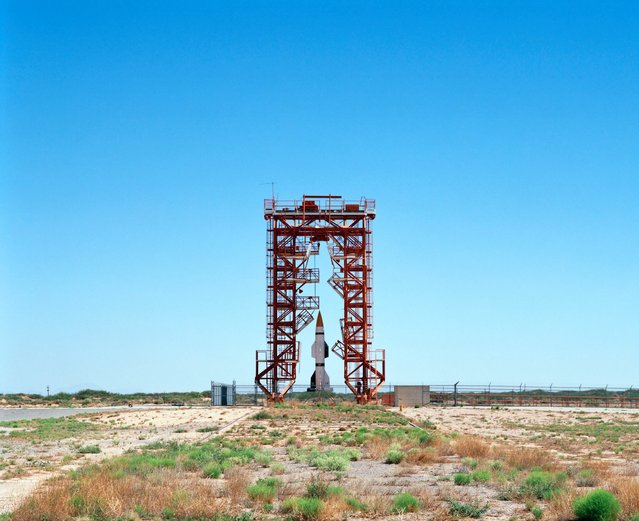
Launch Pad and Gantry with Hermes A-1 Rocket – V2 Launch Complex 33, White Sands missile range, New Mexico in 2006. (Photo by Roland Miller)

Roland Miller is on a mission to document the deserted sites of America’s space race. He has photographed launch pads, bunkhouses and research facilities across the country, some of which no longer exist or are closed to the public on secure military bases. His book, “Abandoned in Place”, is published by the University of New Mexico Press in March. Here: Launch Pad and Gantry with Hermes A-1 Rocket – V2 Launch Complex 33, White Sands missile range, New Mexico in 2006. (Photo by Roland Miller)
Details
25 Feb 2016 11:38:00
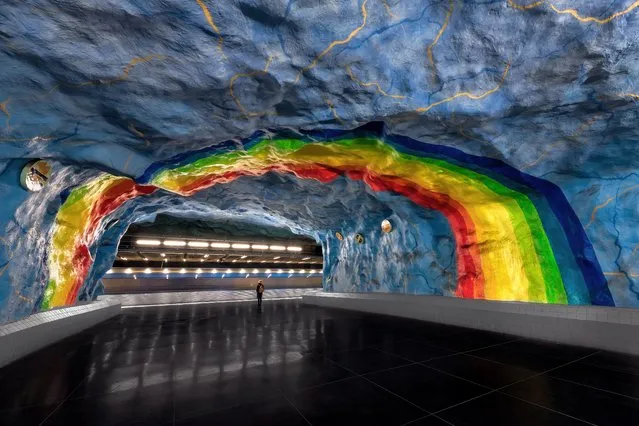
A rainbow arcs over a girl on the platform of Stadion station. (Photo by Conor MacNeill/The Observer)

Beneath the Swedish capital lies an intricate web of underground train lines. More than 90 of the 100 stations in the 110km tunnel system, sometimes referred to as “the world’s longest art gallery”, have been decorated with paintings, installations, mosaics and sculptures by 150 artists since the 1950s. After spending a couple of weeks exploring arctic Norway and Sweden, London-based travel photographer Conor MacNeill headed underground to capture images of the metro stations. Here: A rainbow arcs over a girl on the platform of Stadion station. (Photo by Conor MacNeill/The Observer)
Details
05 Jun 2016 13:21:00
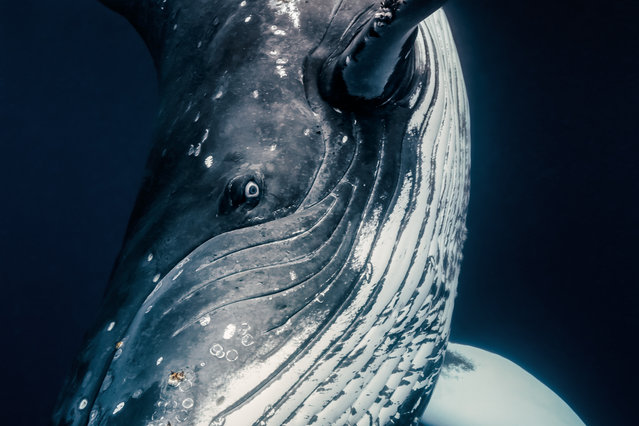
“To look into a whale’s eye is life-changing and humbling. Well, it’s the same with dolphins but they are mostly very fast in the water. A whale’s eye is unexpectedly looking, just like a human eye, kinda checking you out”. (Photo by Rita Kluge/The Guardian)

With the humpback calving season drawing to a close, here’s a look at some of Rita Kluge’s distinctive marine photos from the south Pacific. The Sydney-based photographer fell in love with whales after witnessing southern rights from the New South Wales coastline as they travelled to and from their feeding grounds in the Antarctic. She has since been to Tonga, where humpbacks breed and calf in winter months, to photograph them in the water. (Photo by Rita Kluge/The Guardian)
Details
26 Oct 2016 11:09:00
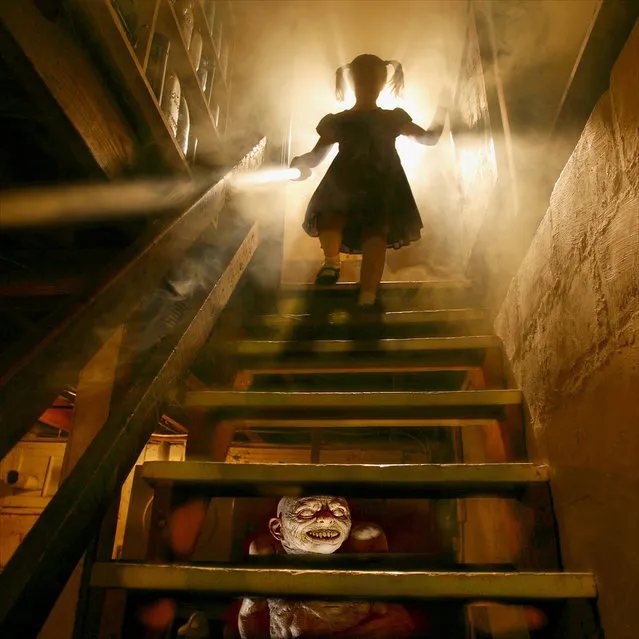
“Basement”. (Photo by Joshua Hoffine/The Washington Post)

Joshua Hoffine, based in Kansas City, Mo., and a self-proclaimed “Horror Photographer”, is interested in the psychology of fear. In his project “After Dark, My Sweet”, Hoffine’s surreal and staged images render these fears visible with the “visual grammar of a child”. Through elaborate sets, costumes, makeup and fog machines, Hoffine’s children act out these terrifying scenes in front of his camera. Here: “Basement”. (Photo by Joshua Hoffine/The Washington Post)
Details
29 Oct 2016 11:47:00
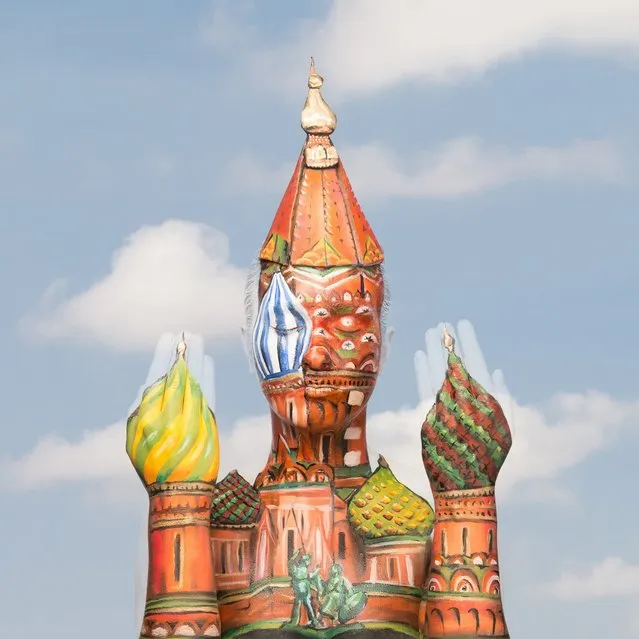
Body Painter By Emma Fay

There is something frightening and at the same time appealing in the living sculptures of 27-year-old British artist Emma Fay. Body art in conjunction with the flexibility of acrobats and fantasy of the artist using water-based paints, a brush and sponge, is transformed into a beautiful work of art. It is not immediately possible to make out the human body in the picture. First you look at the landscape and suddenly begin to distinguish someone’s arm, or neck. Or you look into the eyes of an amazing bull, and it turns out that it is perfectly folded back. Lovely people, temples are and wonderful people-insects are.
Details
10 Jan 2016 08:02:00
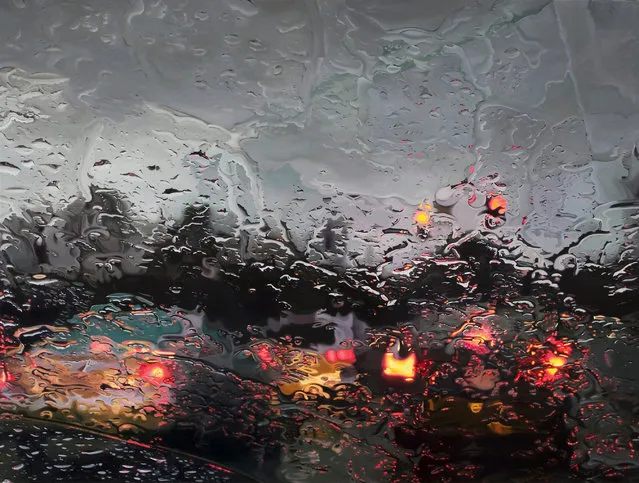
“Complete Stop”. (Painting by Gregory Thielker)

When he's driving, New York-based painter Gregory Thielker takes in the views that change from moment to moment: the road, the sky, other cars. “Inside the car it's easy to forget the outside temperature, humidity, the noise of the road”, he says. “But something happens when rain interrupts the view: the lens through which we are seeing is revealed. Water both obscures and highlights the landscape”. Gregory Thielker's exhibition “Between here and now” will be at Castor Gallery in lower Manhattan from early March. Here: “Complete Stop”. (Painting by Gregory Thielker)
Details
18 Jan 2016 08:02:00
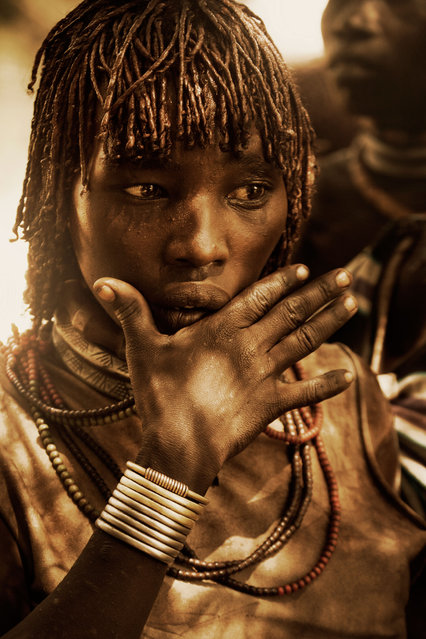
The Hamar people traditionally use red ocher clay to braid the hair of their women. (Photo by Diego Arroyo)

During his time in Ethiopia, New York-based art director and photographer Diego Arroyo spent time with the Hamar, Mursi, Dassanech, and Arbore Tribes. They, along with several others tribes, make up the 200,000 people situated in Africa’s Great Rift Valley. The people of the Omo Valley are still primarily herders and farmers, living an isolated and simple life. While they have yet to be truly touched by globalization, they could soon disappear. Their way of life is being threatened by a massive hydroelectric dam. (Photo by Diego Arroyo)
Details
13 Aug 2014 10:00:00
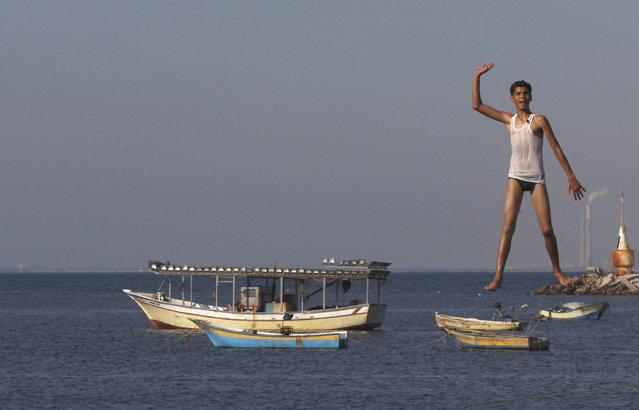
A Palestinian youth jumps into the Mediterranean sea on the beach at the port of Gaza City, Gaza, Monday, August 27, 2012. (Photo by Hatem Moussa/AP Photo)

“Hatem Moussa joined The Associated Press as a photojournalist in 1998. Since then, the Gaza City-based Moussa has covered repeated rounds of Israeli-Palestinian fighting in Gaza, including the wars of 2008-9, 2012 and 2014”. – Associated Press. Photo: A Palestinian youth jumps into the Mediterranean sea on the beach at the port of Gaza City, Gaza, Monday, August 27, 2012. (Photo by Hatem Moussa/AP Photo)
Details
19 Aug 2014 10:20:00