Loading...
Done
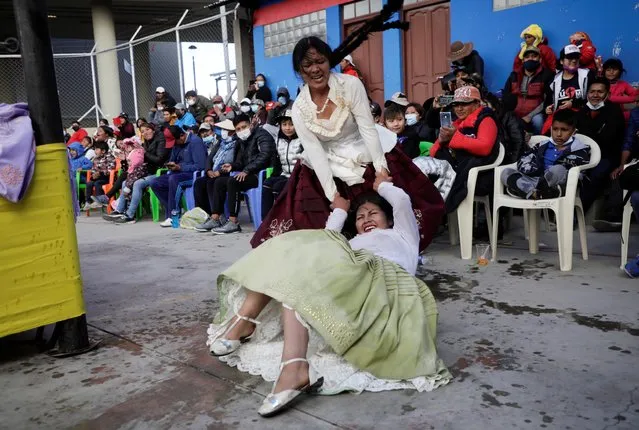
Barbara Quisbert and Susana La Bonita, cholitas wrestlers, fight during their return to the ring after the coronavirus disease (COVID-19) restrictions, in El Alto outskirts of La Paz, November 29, 2020. (Photo by David Mercado/Reuters)

The Fighting Cholitas are a group of female wrestlers who perform in El Alto, Bolivia. Tickets to the exhibitions cost $1. Like the general population of El Alto, which consists almost entirely of Aymara and Quechua residents, the Cholitas are indigenous. They wear braided hair, bowler hats and multilayered skirts in the ring. Here: Barbara Quisbert and Susana La Bonita, cholitas wrestlers, fight during their return to the ring after the coronavirus disease (COVID-19) restrictions, in El Alto outskirts of La Paz, November 29, 2020. (Photo by David Mercado/Reuters)
Details
12 Dec 2020 00:03:00
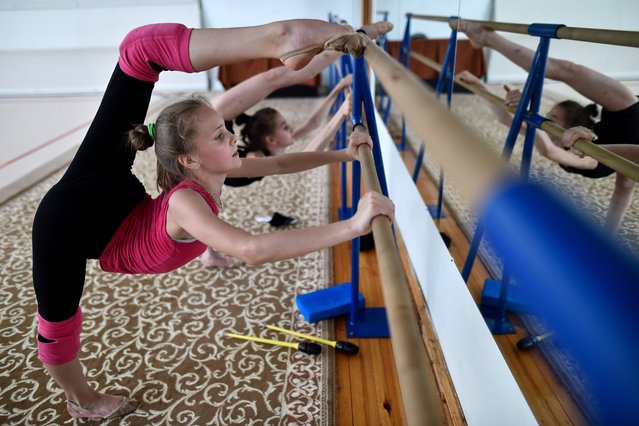
Young girls attend a training session in MGFSO Olympic reserve school in Moscow on May 30, 2016. (Photo by Kirill Kudryavtsev/AFP Photo)

Young girls attend a training session in MGFSO Olympic reserve school in Moscow on May 30, 2016. (Photo by Kirill Kudryavtsev/AFP Photo)
Details
05 Jun 2016 13:29:00
Women wait for customers at the fish harbour in Kasimedu Fish market, Chennai, India, on June 26, 2024. (Photo by Riya Mariyam R./Reuters)

Women wait for customers at the fish harbour in Kasimedu Fish market, Chennai, India, on June 26, 2024. (Photo by Riya Mariyam R./Reuters)
Details
06 Nov 2024 03:43:00
Women take a photo in the late afternoon sun during the Coachella Valley Music and Arts Festival on April 17, 2017 in Indio, California. (Photo by Carlo Allegri/Reuters)

Women take a photo in the late afternoon sun during the Coachella Valley Music and Arts Festival on April 17, 2017 in Indio, California. (Photo by Carlo Allegri/Reuters)
Details
19 Apr 2017 08:50:00
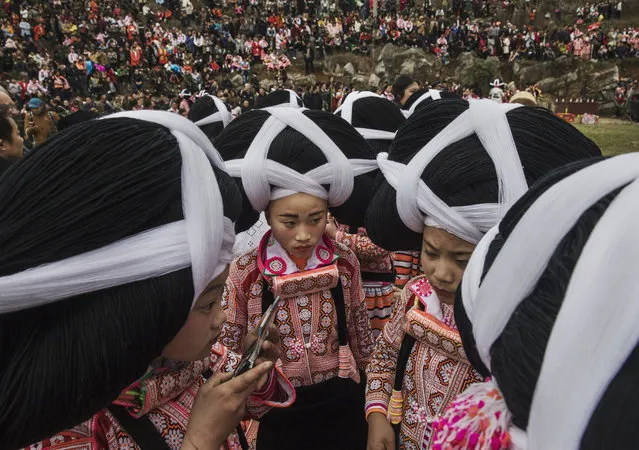
Girls of the Long Horn Miao ethnic minority group wear headdresses as they prepare gather for Tiaohua or Flower Festival as part of the Lunar New Year on February 6, 2017 in Longga village, Guizhou province, southern China. The Long Horn Miao are recognized for their declining practice of wrapping a blend of linen, wool, and the hair of their ancestors around animal horns or a wooden clip to make headdresses. Many young women say they now wear the headdresses only for special occasions and festivals, as the ornaments, which are attached by the horns to their real hair, have proved impractical for modern daily life in a fast changing world. China officially recognizes 56 different ethnic minorities, and statistics show over 7 million Chinese identifying themselves as Miao. But the small Long Horn Miao community counts only around 5000 people living in 12 villages, whose age-old traditions, language, and culture are fading. It is increasingly difficult in a modernizing China, as young people are drawn from remote rural villages to opportunities in bigger cities amongst wide-scale urbanization. Farming and labour remain the mainstays of life for the Long Horn Miao, leaving the area relatively poor in comparison with many parts of China. The government has invested significant amounts into local infrastructure and the tourism industry to try to bolster the local economy. (Photo by Kevin Frayer/Getty Images)

Girls of the Long Horn Miao ethnic minority group wear headdresses as they prepare gather for Tiaohua or Flower Festival as part of the Lunar New Year on February 6, 2017 in Longga village, Guizhou province, southern China. (Photo by Kevin Frayer/Getty Images)
Details
13 Feb 2017 00:01:00
Artist Joe Hill poses on his 3D artwork, from the “Joe and Max” project as part of an advertising campaign, during its presentation at a park in Moscow, Russia, July 4, 2015. (Photo by Sergei Karpukhin/Reuters)

Artist Joe Hill poses on his 3D artwork, from the “Joe and Max” project as part of an advertising campaign, during its presentation at a park in Moscow, Russia, July 4, 2015. (Photo by Sergei Karpukhin/Reuters)
Details
05 Jul 2015 11:12:00
Four-year-old Eve Hill enjoys the wet weather in York, northeast England on August 2, 2023. (Photo by James Glossop/The Times)

Four-year-old Eve Hill enjoys the wet weather in York, northeast England on August 2, 2023. (Photo by James Glossop/The Times)
Details
11 Sep 2023 03:35:00
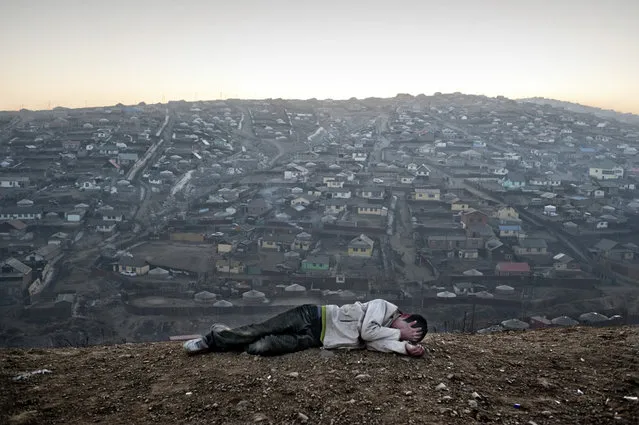
Asia, Mongolia, March 27, 2011. A view of Ulaan Baator over the shoulder of a slumbering drunk. Alcoholism is a huge problem in the city, home to almost half of Mongolia's people. The capital's population has doubled in the past two years, expanding outward in a haphazard sprawl, and many inhabitants live in slums known as the “Gher District”. (Photo by Alessandro Grassani)

“Environmental Migrants: The Last Illusion” by photographer Alessandro Grassani, documents the life of people in Kenya, Mongolia and Bangladesh who migrate to escape environmental stresses to the city of their own countries in hopes for a better life. Here: Asia, Mongolia, March 27, 2011. A view of Ulaan Baator over the shoulder of a slumbering drunk. Alcoholism is a huge problem in the city, home to almost half of Mongolia's people. The capital's population has doubled in the past two years. High levels of unemployment and poverty await herders who abandon rural areas and arrive in the city, illiterate and untrained in any skills necessary for urban jobs. (Photo by Alessandro Grassani)
Details
21 Jul 2015 10:10:00