Loading...
Done
Dirndl Flying

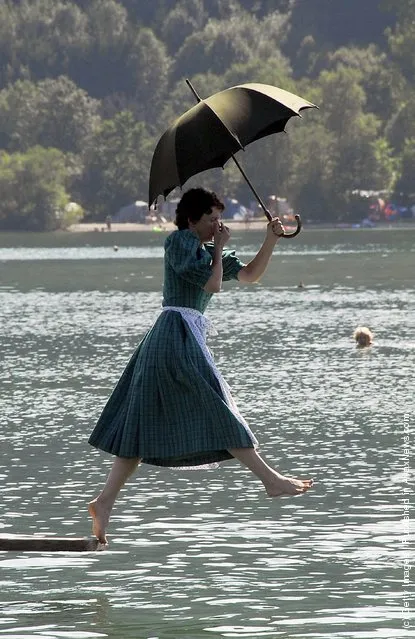
A woman dressed in a dirndl, a kind of traditional Bavarian clothing, jumps into Lake Schlier on July 30, 2006 in Schliersee, Germany. The event called "Dirndlfliegen" ("Dirndl Flying") was sponsored by a local fashion store and a big Austrian Dirndl manufacturer. While these kind of events had been held in Austria before, this was the first of its kind in Germany. 29 women and one man wearing a wig participated in the event that held a new Dirndl as the grand prize. (Photo by Andreas Leder/Getty Images)
Details
08 Sep 2011 14:13:00
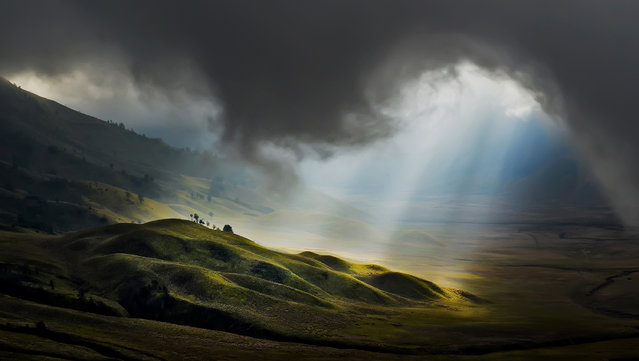
“Light From Heaven”. Taken around Mount Bromo, East Java, Indonesia in the morning. Photo location: East Java, Indonesia. (Photo and caption by Pimpin Nagawan/National Geographic Photo Contest)

“Light From Heaven”. Taken around Mount Bromo, East Java, Indonesia in the morning. Photo location: East Java, Indonesia. (Photo and caption by Pimpin Nagawan/National Geographic Photo Contest)

ATTENTION! All pictures are presented in high resolution. To see Hi-Res images – just TWICE click on any picture. In other words, click small picture – opens the BIG picture. Click BIG picture – opens VERY BIG picture.
Details
29 Nov 2013 12:36:00
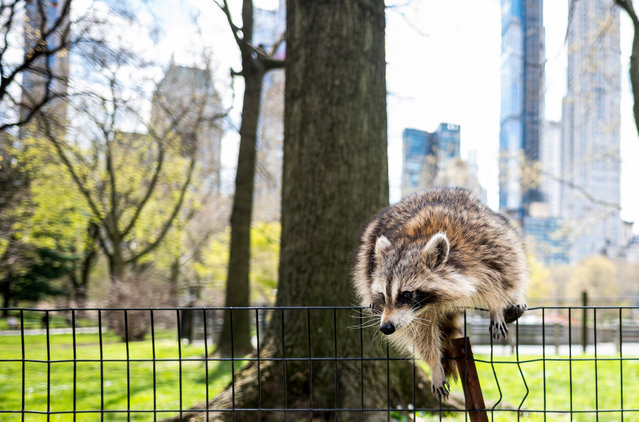
A racoon jumps over a fence in almost deserted Central Park in Manhattan on April 16, 2020 in New York City. Gone are the softball games, horse-drawn carriages and hordes of tourists. In their place, pronounced birdsong, solitary walks and renewed appreciation for Central Park's beauty during New York's coronavirus lockdown. The 843-acre (341-hectare) park – arguably the world's most famous urban green space – normally bustles with human activity as winter turns to spring, but this year due to Covid-19 it's the wildlife that is coming out to play. (Photo by Johannes Eisele/AFP Photo)

A racoon jumps over a fence in almost deserted Central Park in Manhattan on April 16, 2020 in New York City. Gone are the softball games, horse-drawn carriages and hordes of tourists. In their place, pronounced birdsong, solitary walks and renewed appreciation for Central Park's beauty during New York's coronavirus lockdown. The 843-acre (341-hectare) park – arguably the world's most famous urban green space – normally bustles with human activity as winter turns to spring, but this year due to Covid-19 it's the wildlife that is coming out to play. (Photo by Johannes Eisele/AFP Photo)
Details
14 Dec 2025 07:04:00
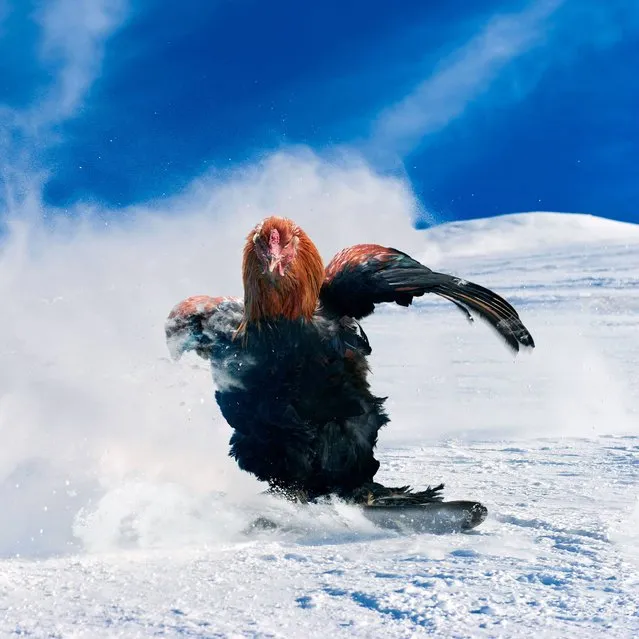
“Nice Pecks” calendar: Snowboarding. (Photo by The happy egg co.)

The happy egg co. has released its annual cockerel pin-up calendar: “Nice Pecks” – with an egg-streme sports edition. Taking inspiration from upcoming sporting events and the world of extreme sports, the 2015 calendar stars 12 rad roosters with a penchant for adrenaline highs in a range of high octane sporting scenarios including jumping off slopes, riding gnarly waves and snowboarding. Here: “Nice Pecks” calendar: Snowboarding. (Photo by The happy egg co.)
Details
09 Dec 2014 09:20:00
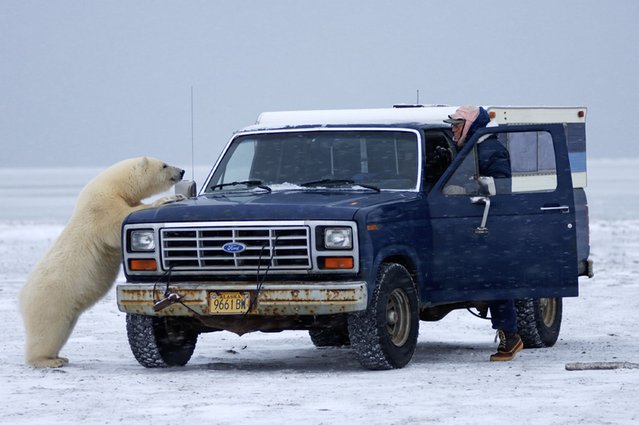
“Awright mate, any chance of a lift to the North Pole?” (Photo by Steven Kazlowski/Barcroft Media)

“This cheeky polar bear tried to hitch a lift off an unsuspecting driver by clambering into the back of his pick-up truck. The curious creature spent about half an hour inspecting the vehicle and its owner before casually trying to climb aboard. However, the truck must not have been up to scratch because the 7ft bear, weighing approximately 300lbs, promptly jumped back out and sauntered off”. – Barcroft Media. Photo: “Awright mate, any chance of a lift to the North Pole?” (Photo by Steven Kazlowski/Barcroft Media)
Details
03 Nov 2013 09:22:00
Photographers: Joel Robison

“Hi! I'm Joel, I live in a valley in British Columbia's Rocky Mountains, as close to the forest as I could possibly be! I love to run, bike, jump, eat and create and I hope that you enjoy my work as much as I enjoy creating it!” – Joel Robison.

Photo: “Under Peaceful Skies”, 2011. (Photo by: Joel Robison; Source: Flickr)
Details
24 May 2012 10:44:00
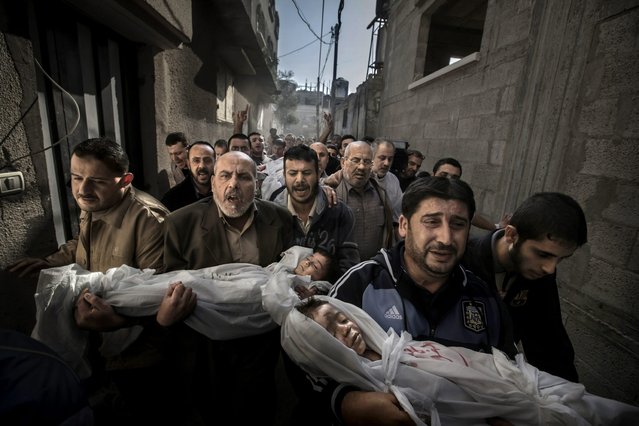
In this photo provided on Friday Feb. 15, 2013 by World Press Photo, the 2013 World Press Photo of the year by Paul Hansen, Sweden, for Dagens Nyheter, shows two-year-old Suhaib Hijazi and her three-year-old brother Muhammad who were killed when their house was destroyed by an Israeli missile strike. (Photo by Paul Hansen/Dagens Nyheter/AP Photo)

Swedish photographer Paul Hansen won the 2012 World Press Photo award Friday for newspaper Dagens Nyheter with a picture of two Palestinian children killed in an Israeli missile strike being carried to their funeral.

Photo: In this photo provided on Friday February 15, 2013 by World Press Photo, the 2013 World Press Photo of the year by Paul Hansen, Sweden, for Dagens Nyheter, shows two-year-old Suhaib Hijazi and her three-year-old brother Muhammad who were killed when their house was destroyed by an Israeli missile strike. Their father, Fouad, was also killed and their mother was put in intensive care. Fouad's brothers carry his children to the mosque for the burial ceremony as his body is carried behind on a stretcher in Gaza City, Palestinian Territories, November 20, 2012. (Photo by Paul Hansen/Dagens Nyheter/AP Photo)
Details
16 Feb 2013 12:17:00
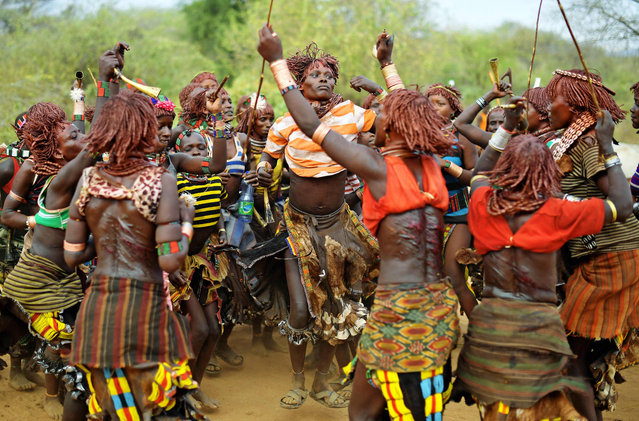
Hamar women dance before a bull jumping ceremony in Ethiopia's southern Omo Valley region near Turmi on September 19, 2016. The Hamar are a Nilotic ethnic group in Ethiopia. The construction of the Gibe III dam, the third largest hydroelectric plant in Africa, and large areas of very “thirsty” cotton and sugar plantations and factories along the Omo river are impacting heavily on the lives of tribes living in the Omo Valley who depend on the river for their survival and way of life. Human rights groups fear for the future of the tribes if they are forced to scatter, give up traditional ways through loss of land or ability to keep cattle as globalisation and development increases. (Photo by Carl De Souza/AFP Photo)

Hamar women dance before a bull jumping ceremony in Ethiopia's southern Omo Valley region near Turmi on September 19, 2016. The Hamar are a Nilotic ethnic group in Ethiopia. The construction of the Gibe III dam, the third largest hydroelectric plant in Africa, and large areas of very “thirsty” cotton and sugar plantations and factories along the Omo river are impacting heavily on the lives of tribes living in the Omo Valley who depend on the river for their survival and way of life. (Photo by Carl De Souza/AFP Photo)
Details
02 Oct 2016 08:45:00