Loading...
Done
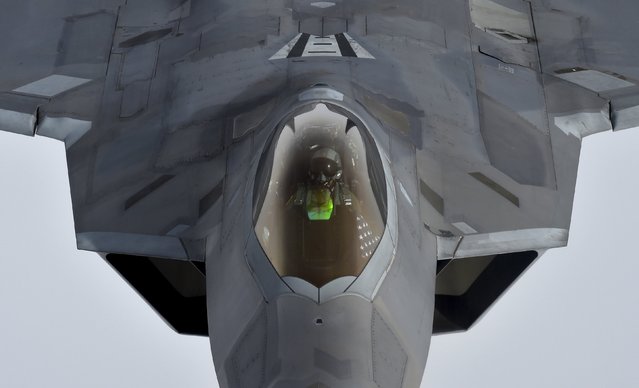
A pilot looks up from a U.S. F-22 Raptor fighter as it prepares to refuel in mid-air with a KC-135 refuelling plane over European airspace during a flight to Britain from Mihail Kogalniceanu air base in Romania April 25, 2016. (Photo by Toby Melville/Reuters)

A pilot looks up from a U.S. F-22 Raptor fighter as it prepares to refuel in mid-air with a KC-135 refuelling plane over European airspace during a flight to Britain from Mihail Kogalniceanu air base in Romania April 25, 2016. (Photo by Toby Melville/Reuters)
Details
26 Apr 2016 11:43:00
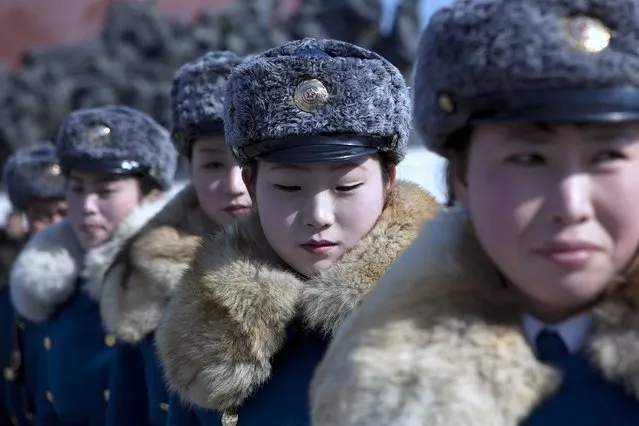
Female North Korean traffic police officers gather in front of bronze statues of the late leaders Kim Il Sung and Kim Jong Il to pay their respects in Pyongyang, North Korea on Saturday, February 16, 2013. North Koreans turned out to commemorate what would have been the 71th birthday of Kim Jong Il who died on December 17, 2011. (Photo by David Guttenfelder/AP Photo)

Female North Korean traffic police officers gather in front of bronze statues of the late leaders Kim Il Sung and Kim Jong Il to pay their respects in Pyongyang, North Korea on Saturday, February 16, 2013. North Koreans turned out to commemorate what would have been the 71th birthday of Kim Jong Il who died on December 17, 2011. (Photo by David Guttenfelder/AP Photo)
Details
31 Mar 2013 13:25:00
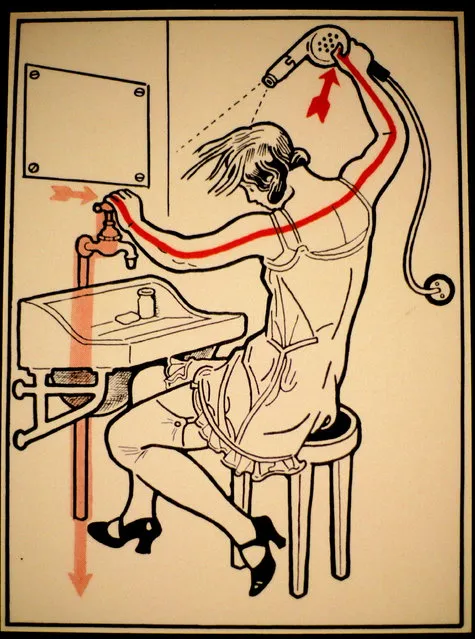
The book “Elektroschutz in 132 Bildern” (Electrical Protection in 132 Pictures) was published in Vienna in the early 1900s by a Viennese physician named Stefan Jellinek (1878-1968, a founder of the Electro-Pathological Museum). The pictures are nice and direct and unambiguous; they teach, graphically, that the surest way to kill yourself with electricity is to form a complete path from source (usually the bright red arrow) to ground (the screened back, pink arrow). Arrowheads provide the path for current flow. (Photo by The Vienna Technical Museum)

The book “Elektroschutz in 132 Bildern” (Electrical Protection in 132 Pictures) was published in Vienna in the early 1900s by a Viennese physician named Stefan Jellinek (1878-1968, a founder of the Electro-Pathological Museum). The pictures are nice and direct and unambiguous; they teach, graphically, that the surest way to kill yourself with electricity is to form a complete path from source (usually the bright red arrow) to ground (the screened back, pink arrow). Arrowheads provide the path for current flow. (Photo by The Vienna Technical Museum)
Details
11 Aug 2014 11:10:00
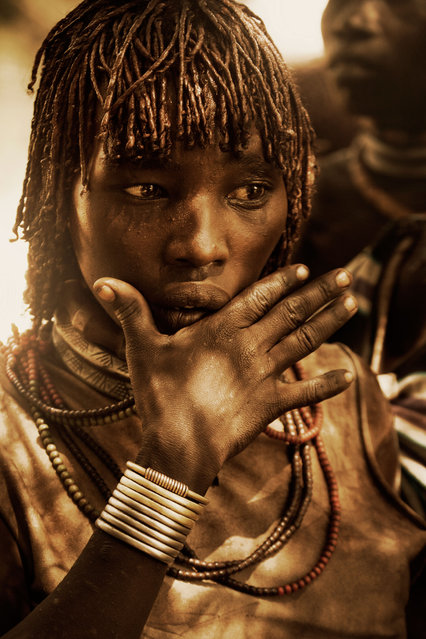
The Hamar people traditionally use red ocher clay to braid the hair of their women. (Photo by Diego Arroyo)

During his time in Ethiopia, New York-based art director and photographer Diego Arroyo spent time with the Hamar, Mursi, Dassanech, and Arbore Tribes. They, along with several others tribes, make up the 200,000 people situated in Africa’s Great Rift Valley. The people of the Omo Valley are still primarily herders and farmers, living an isolated and simple life. While they have yet to be truly touched by globalization, they could soon disappear. Their way of life is being threatened by a massive hydroelectric dam. (Photo by Diego Arroyo)
Details
13 Aug 2014 10:00:00
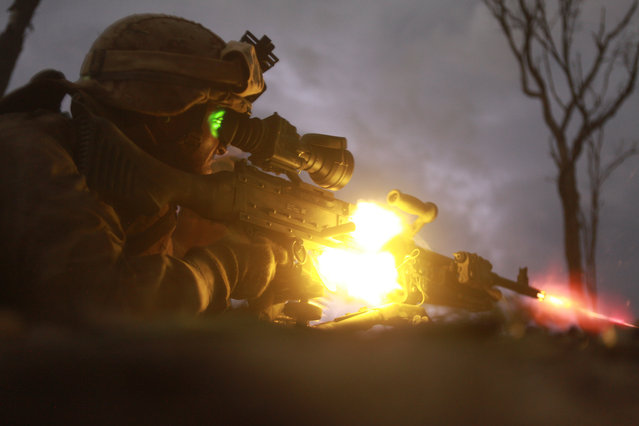
Pfc. Sebastian Rodriguez, machine gunner, Weapons Platoon, Lima Company, 3rd Battalion, 3rd Marine Regiment, Marine Rotational Force – Darwin, fires an M240 machine gun during a night squad-attack exercise, here, May 22, 2013. (Photo by Sgt. Sarah Fiocco/U.S. Marines)

Pfc. Sebastian Rodriguez, machine gunner, Weapons Platoon, Lima Company, 3rd Battalion, 3rd Marine Regiment, Marine Rotational Force – Darwin, fires an M240 machine gun during a night squad-attack exercise, here, May 22, 2013. (Photo by Sgt. Sarah Fiocco/U.S. Marines)
Details
17 Aug 2014 08:48:00
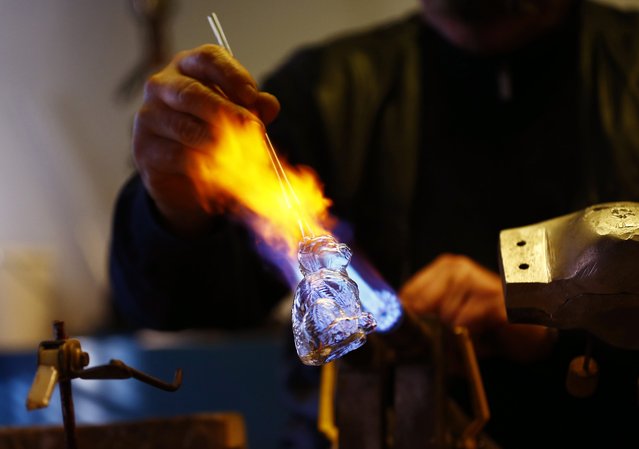
A worker heats a glass cat-shape ornament at the Silverado manufacture of hand-blown Christmas ornaments in town of Jozefow outside Warsaw December 2, 2014. (Photo by Kacper Pempel/Reuters)

A worker heats a glass cat-shape ornament at the Silverado manufacture of hand-blown Christmas ornaments in town of Jozefow outside Warsaw December 2, 2014. (Photo by Kacper Pempel/Reuters)
Details
04 Dec 2014 11:55:00
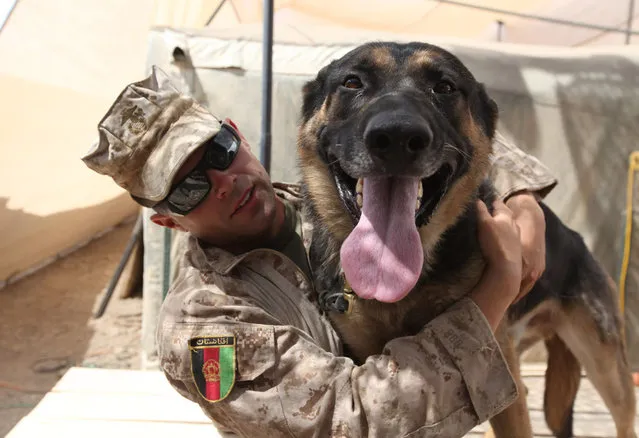
Afghanistan: Dogs of War Part 1

Throughout the course of the long war in Afghanistan, Coalition troops have relied on thousands of military working dogs to help keep them safe, and make their jobs easier. The dogs are trained to detect explosives, to find illegal drugs, to search for missing comrades, or target enemy combatants. Not only are they active on the front lines, but behind the lines they serve as therapy dogs, service dogs, and loyal companions. They also share the same risks as the ground troops, suffering injuries and sometimes death on the battlefields. Gathered here are images of these dogs and their handlers in Afghanistan and back home, from over the past several years, part of the ongoing series here on Afghanistan.
Details
03 Jun 2014 21:02:00
Orin Larsen of Inglis, Manitoba hangs on to the horse Dancing Queen in the Bareback event during the Calgary Stampede rodeo in Calgary, Alberta, July 10, 2015. (Photo by Todd Korol/Reuters)

Orin Larsen of Inglis, Manitoba hangs on to the horse Dancing Queen in the Bareback event during the Calgary Stampede rodeo in Calgary, Alberta, July 10, 2015. (Photo by Todd Korol/Reuters)
Details
12 Jul 2015 13:21:00