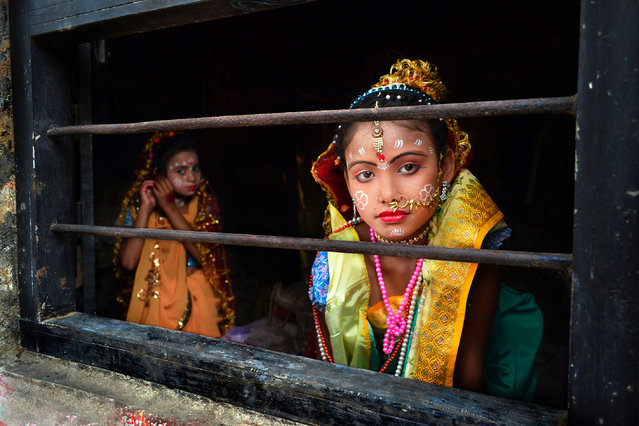
“Festive preparation”. Baghnapara, Bardhaman, West Bengal, India. Two girls prepare for the Gajan festival. They will perform a play based on Indian mythology. (Photo by Krishnasis Ghosh)
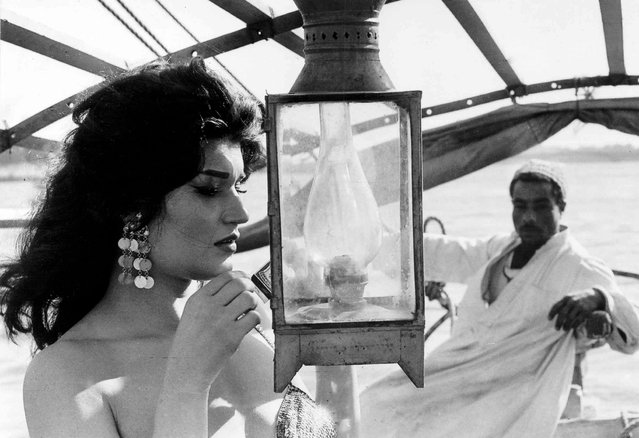
Belly dancer Nagwa Fouad sailing on the river Nile, 1972. Egypt is one of 23 countries represented at the Dubai Photo Exhibition, showing off photography that dates to the 1920s. Dubai Photo Exhibition is in various venues of Dubai’s design district from 16-19 March. (Photo by Farouk Ibrahim)
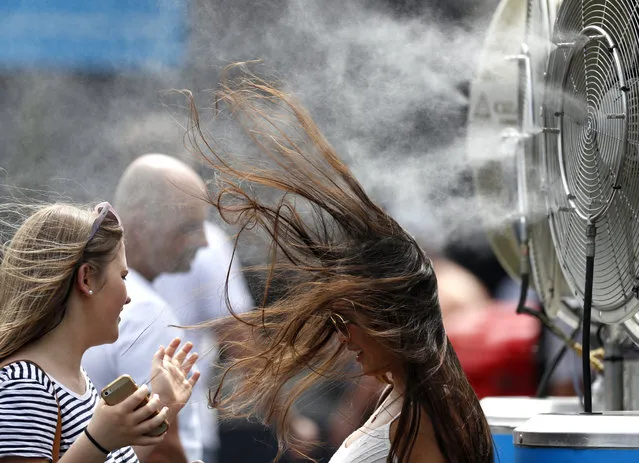
A spectator cools herself at a water spraying fan at the Australian Open tennis championships in Melbourne, Australia, Tuesday, January 17, 2017. (Photo by Kin Cheung/AP Photo)
This picture taken on February 16, 2017 in Fangshan village in China's coastal province Fujians, shows a villager performing the “eating flowers” ritual. Villagers in eastern China have a unique way of washing away the taint of evil spirits – by bathing in a shower of scorching sparks. (Photo by Johannes Eisele/AFP Photo)
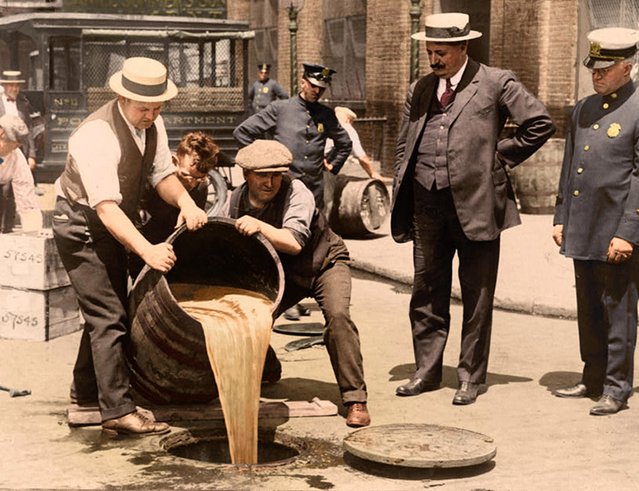
New York City Deputy Police Commissioner John A. Leach, right, watching agents pour liquor into sewer following a raid during the height of prohibition, circa 1921. (Photo by Tom Marshall/Mediadrumworld)
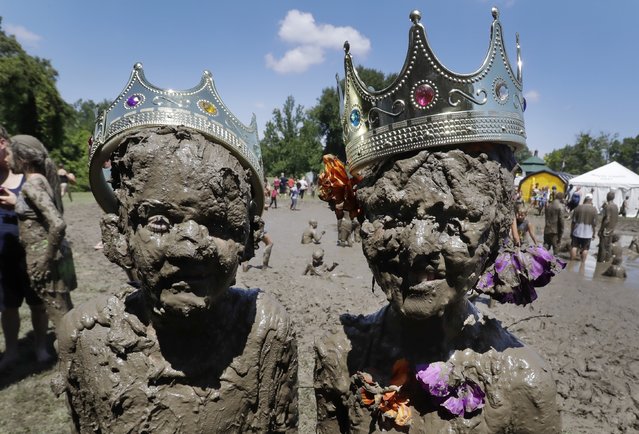
Aiden Haas, left, and Lilli Alcala pose after being crowned Mud King and Mud Queen at the 29th annual Mud Day, Tuesday, July 12, 2016 in Westland, Mich. The event, open to children 12 and younger, was at the Hines Park-Nankin Mills Area west of Detroit. Children 12 and younger were able to slosh around in the pit while participating in mud limbo, wheelbarrow races and other free activities. (Photo by Carlos Osorio/AP Photo)
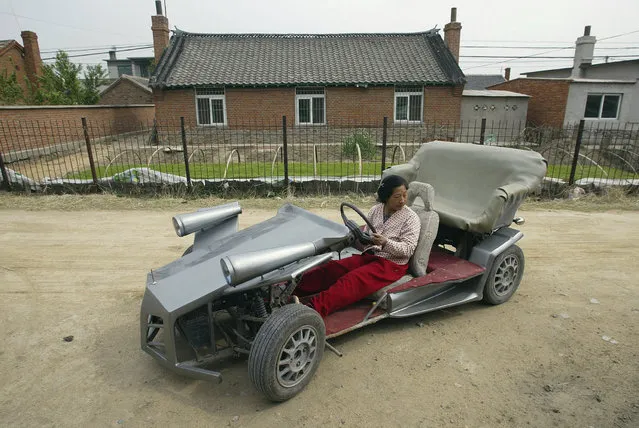
Zhang Jinduo's wife tries on a self-made racing car on the outskirts of Shenyang, Liaoning province May 10, 2008. Zhang, the 53-year-old local farmer made the racing car with the help of his son who is a car mechanic. The car is equipped with a rear-mounted motorcycle engine and can achieve 60-80 km per hour, according to local media. (Photo by Reuters/Stringer)
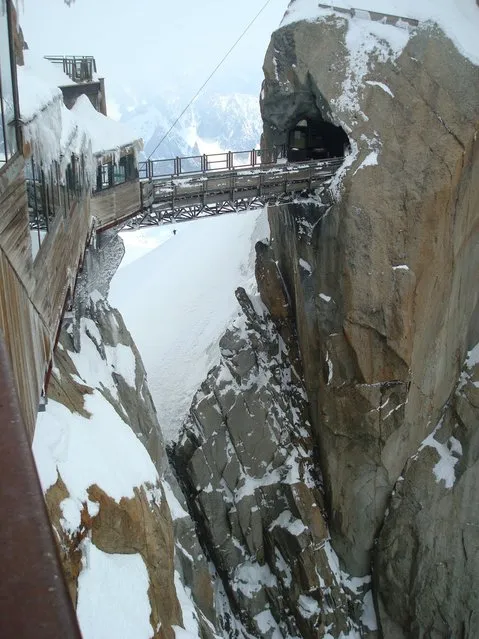
The name “Aiguille du Midi” translates literally as “Needle of the Noon” or “Needle of the South”. It gets its name from its tapered form and from its position when viewed from Chamonix: it approximately indicates noon when the sun passes over its summit.