Loading...
Done
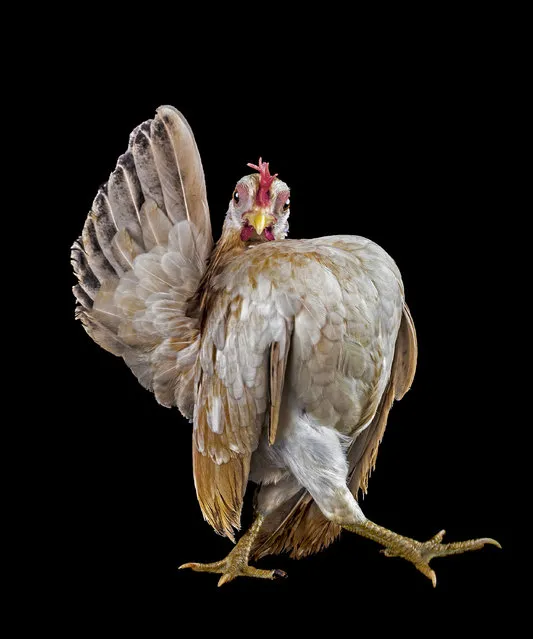
Ornamental chicken breeding clubs have emerged in Indonesia, Thailand, North America and even European countries such as the UK and France. Malaysia is however the epicenter of this cultural phenomenon. (Photo by Ernest Goh/2013 Sony World Photography Awards)

Ornamental chicken breeding clubs have emerged in Indonesia, Thailand, North America and even European countries such as the UK and France. Malaysia is however the epicenter of this cultural phenomenon. These chickens are prized for their build, size, behavior and showmanship by their owners and competitions or beauty contests as they are often described are held almost every week in at least one village in Malaysia. Judges sit around a square table inspecting each chicken for a few minutes trying to determine a champion specimen in its own weight class based on its stance, temperament and physical assets like wings, tails and comb. The walk or strut by an ornamental chicken in a beauty contest, much like a runway model, constitutes a large part of the scoring system. (Photo by Ernest Goh/2013 Sony World Photography Awards)
Details
28 Apr 2013 08:32:00
Special forces officers stand guard during a government-organised event marking Chechen language day in the centre of the Chechen capital Grozny April 25, 2013. (Photo by Maxim Shemetov/Reuters)

“What did I know about Chechnya before last week? For someone who grew up in the 1990s the very word Chechnya meant a string of grainy images on TV showing people in battered camouflage outfits, shooting at each other amid destruction and ruin. Fear, wahhabis, Shamil Basayev, terrorism, mountains: these were the words that used to spring to my mind when someone mentioned Chechnya”. – Maxim Shemetov. Photo: Special forces officers stand guard during a government-organised event marking Chechen language day in the centre of the Chechen capital Grozny April 25, 2013. (Photo by Maxim Shemetov/Reuters)
Details
14 May 2013 12:02:00
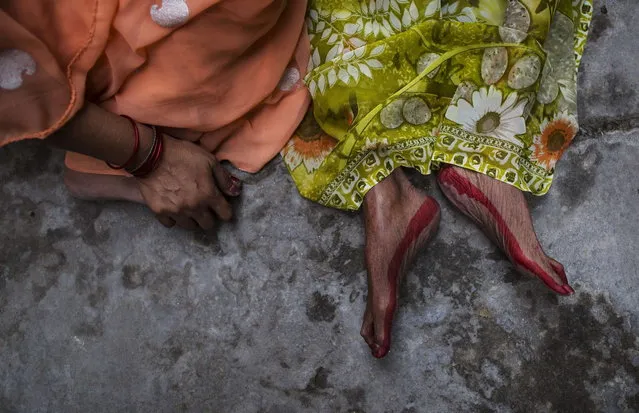
A relative (L) of Champa Devi, 88, sits next to her body, minutes after her death at Mukti Bhavan (Salvation House) at Varanasi, in the northern Indian state of Uttar Pradesh, June 21, 2014. (Photo by Danish Siddiqui/Reuters)

A relative (L) of Champa Devi, 88, sits next to her body, minutes after her death at Mukti Bhavan (Salvation House) at Varanasi, in the northern Indian state of Uttar Pradesh, June 21, 2014. The city of Varanasi, on the banks of the River Ganges, is widely considered Hinduism's holiest city and many Hindus believe that dying there and having their remains scattered in the Ganges allows their soul to escape a cycle of death and rebirth, attaining “moksha” or salvation. “Mukti Bhavan” or “Salvation House”, is a charity-run hostel that caters for people who wish to come to Varanasi to die. Guests can normally stay up to two weeks after which, if they haven't yet passed away, they are gently asked to leave. (Photo by Danish Siddiqui/Reuters)
Details
24 Jul 2014 12:32:00
The Ivanpah Solar Electric Generating System is seen in an aerial view on February 20, 2014 in the Mojave Desert in California near Primm, Nevada. (Photo by Ethan Miller/Getty Images)

The Ivanpah Solar Electric Generating System is seen in an aerial view on February 20, 2014 in the Mojave Desert in California near Primm, Nevada. The largest solar thermal power-tower system in the world, owned by NRG Energy, Google and BrightSource Energy, opened last week in the Ivanpah Dry Lake and uses 347,000 computer-controlled mirrors to focus sunlight onto boilers on top of three 459-foot towers, where water is heated to produce steam to power turbines providing power to more than 140,000 California homes. (Photo by Ethan Miller/Getty Images)
Details
14 Apr 2014 11:01:00
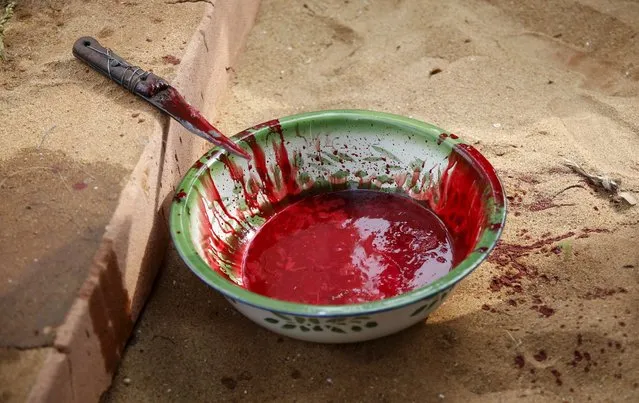
A knife is seen beside a bowl containing blood after a ram was killed as a sacrifice in front of a shrine at the annual voodoo festival in Ouidah, Benin, January 10, 2016. (Photo by Akintunde Akinleye/Reuters)

A knife is seen beside a bowl containing blood after a ram was killed as a sacrifice in front of a shrine at the annual voodoo festival in Ouidah, Benin, January 10, 2016. In Ouidah, a small town and former slave port in the West African country of Benin, the annual voodoo festival gathers visitors from far and wide. It's a week that brings together priests and dignitaries, rich and poor, locals and visitors from as far afield as the Caribbean and France. The festival commemorates the estimated 60 million people who lost their homelands and their freedom during the African slave trade. (Photo by Akintunde Akinleye/Reuters)
Details
23 Jan 2016 12:55:00
Heads of love dolls are seen on the shelf on March 9, 2017 in Tokyo, Japan. Japan's oldest and largest “love doll” maker Orient Industry, has been producing silicone love dolls since 1977, and has seen there is a trend for intimate relationships with silicone dolls in Japan. The Orient Industry's factory produces approximately 500 life size hand-made per year, and one doll, costs up to 600,000JPY (approx. 6,000 USD), takes four to five weeks to be finished. Originally, the company was marketing love dolls for disabled people, and the company continues to support the community by providing discounts and consulting their sexual urges. (Photo by Taro Karibe/Getty Images)

Heads of love dolls are seen on the shelf on March 9, 2017 in Tokyo, Japan. Japan's oldest and largest “love doll” maker Orient Industry, has been producing silicone love dolls since 1977, and has seen there is a trend for intimate relationships with silicone dolls in Japan. (Photo by Taro Karibe/Getty Images)
Details
18 Mar 2017 10:32:00
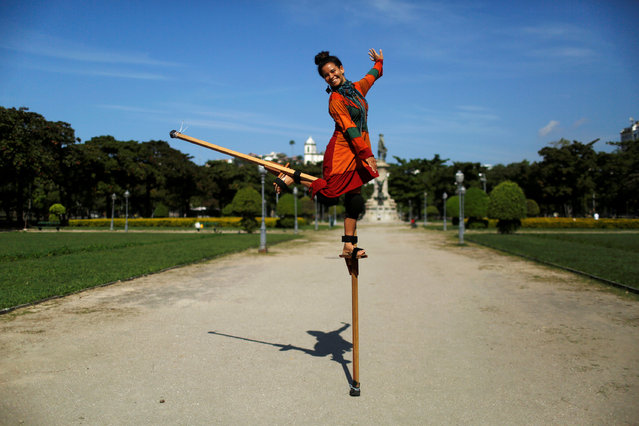
Raquel Poti, a 32-year-old street artist, poses at a park in Rio de Janeiro, Brazil, June 25, 2016. Raquel thinks the Olympics promotes a lifestyle that combines sports, culture and education. She is concerned about the large investment for the event while the population needs improvements in basic services. (Photo by Pilar Olivares/Reuters)

Just a week before Rio de Janeiro hosts South America's first Olympics, city residents expressed mixed feelings about the cost and security of the Games, while holding out hope they will bring joy to a nation facing economic and political crises. The conflicted thoughts mirror a recent survey by the Datafolha polling group showing that half of Brazilians were opposed to holding the Games, while 63 percent think the costs of hosting the event will outweigh benefits. (Photo by Pilar Olivares/Reuters)
Details
03 Aug 2016 11:51:00
Tridacna Gigas, or Giant Clams

“The giant clam, Tridacna gigas (known as pā’ua in Cook Islands Māori), is the largest living bivalve mollusc. T. gigas is one of the most endangered clam species. It was mentioned as early as 1825 in scientific reports. One of a number of large clam species native to the shallow coral reefs of the South Pacific and Indian oceans, they can weigh more than 200 kilograms (440 lb) measure as much as 120 cm (47 in) across, and have an average lifespan in the wild of 100 years or more”. – Wikipedia

Photo: Tridacna Gigas, or Giant Clams spew water as a traditional fisherman passes by a small sanctuary on January 23, 2004 near Bolinao in the Northern Philippines. The clams, prime builders for coral reefs and providing shelter for spawning fish and other marine life, are exposed by low tides in the sanctuary. Overfishing and pollution throughout the country are not only threatening food security, but are also starting to choke one of the few working clam sanctuaries in the world. (Photo by David Greedy/Getty Images)
Details
01 Oct 2011 13:10:00