Loading...
Done
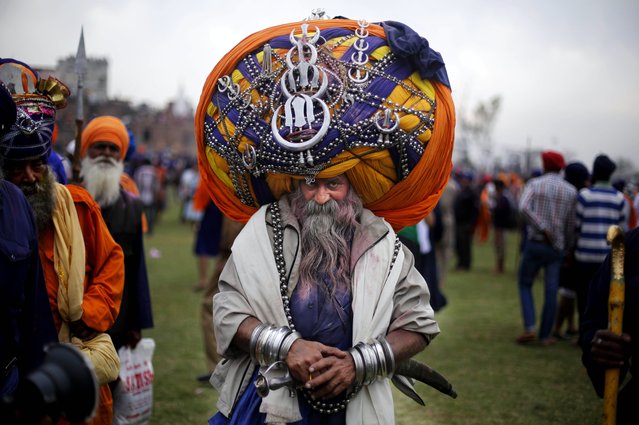
A Sikh warrior, wearing a huge turban attends the annual fair of “Hola Mohalla” in Anandpur Sahib, in the northern Indian state of Punjab, Monday, March 17, 2014. Believers from various parts of northern India collect at the religious fair to celebrate the festival of Holi in a tradition set by the tenth Sikh guru Guru Gobind Singh in the seventeenth century. Nihangs, or Sikh warriors, display their martial skills and attire during the fair, believed to be maintained in the exact tradition as set by the Guru. (Photo by Altaf Qadri/AP Photo)

A Sikh warrior, wearing a huge turban attends the annual fair of “Hola Mohalla” in Anandpur Sahib, in the northern Indian state of Punjab, Monday, March 17, 2014. Believers from various parts of northern India collect at the religious fair to celebrate the festival of Holi in a tradition set by the tenth Sikh guru Guru Gobind Singh in the seventeenth century. Nihangs, or Sikh warriors, display their martial skills and attire during the fair, believed to be maintained in the exact tradition as set by the Guru. (Photo by Altaf Qadri/AP Photo)
Details
22 Mar 2014 13:31:00
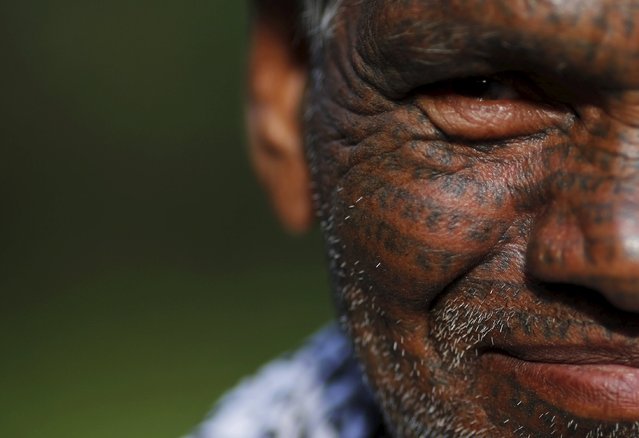
Tiharu Ram, 70, a follower of Ramnami Samaj, who has tattooed the name of the Hindu god Ram on his face, poses for a picture outside his house in the village of Chandlidi, in the eastern state of Chhattisgarh, India, November 16, 2015. (Photo by Adnan Abidi/Reuters)

Tiharu Ram, 70, a follower of Ramnami Samaj, who has tattooed the name of the Hindu god Ram on his face, poses for a picture outside his house in the village of Chandlidi, in the eastern state of Chhattisgarh, India, November 16, 2015. Denied entry to temples and forced to use separate wells, low-caste Hindus in the eastern state of Chhattisgarh first tattooed their bodies and faces more than 100 years ago as an act of defiance and devotion. (Photo by Adnan Abidi/Reuters)
Details
14 Jan 2016 08:05:00
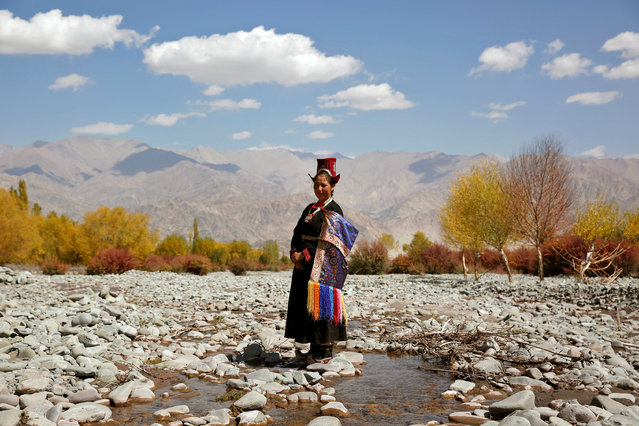
Tsewang Dolma, 33, a farmer and housewife poses for a photograph in Matho, a village nestled high in the Indian Himalayas, India September 29, 2016. When asked how living in the world's fastest growing major economy had affected life, Dolma replied: “Our culture is spoiled now. We don't wear our traditional dress”. (Photo by Cathal McNaughton/Reuters)

Tsewang Dolma, 33, a farmer and housewife poses for a photograph in Matho, a village nestled high in the Indian Himalayas, India September 29, 2016. When asked how living in the world's fastest growing major economy had affected life, Dolma replied: “Our culture is spoiled now. We don't wear our traditional dress”. (Photo by Cathal McNaughton/Reuters)
Details
13 Oct 2016 11:32:00
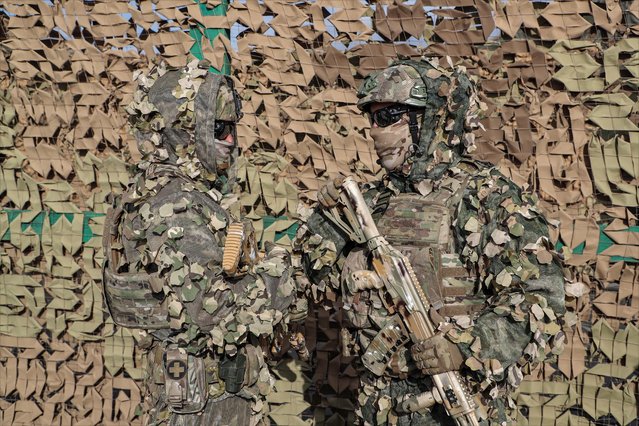
Russian servicemen display military camouflage equipments during the joint military anti-terrorist command and staff exercise of the armed forces of the Shanghai Cooperation Organization member states Peace Mission-2021 at the Donguz training ground in the Orenburg region, Russia, 23 September 2021. More than 3.4 thousand servicemen from Russia, India, China, Pakistan, Tajikistan, Uzbekistan, Kazakhstan, Kyrgyzstan and more than 600 units of weapons, military and special equipment are involved in the exercise Peace Mission-2021. (Photo by Maxim Shipenkov/EPA/EFE)

Russian servicemen display military camouflage equipments during the joint military anti-terrorist command and staff exercise of the armed forces of the Shanghai Cooperation Organization member states Peace Mission-2021 at the Donguz training ground in the Orenburg region, Russia, 23 September 2021. More than 3.4 thousand servicemen from Russia, India, China, Pakistan, Tajikistan, Uzbekistan, Kazakhstan, Kyrgyzstan and more than 600 units of weapons, military and special equipment are involved in the exercise Peace Mission-2021. (Photo by Maxim Shipenkov/EPA/EFE)
Details
03 Oct 2021 03:31:00
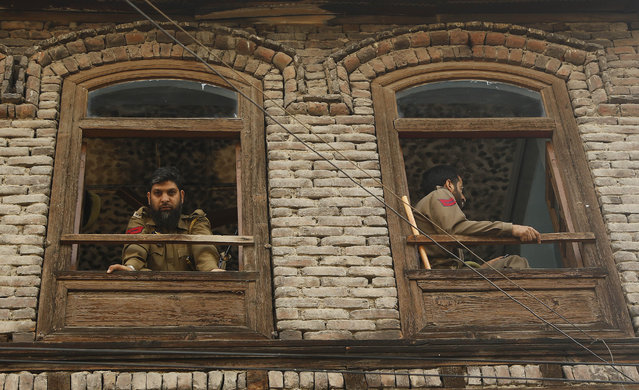
Indian policemen keep guard from the window of a residential house during curfew in Srinagar, Indian controlled Kashmir, Wednesday, July 13, 2016. Curfew imposed in the disputed Himalayan region continues for the fifth consecutive day to suppress anti-India violence following the Friday killing of Burhan Wani, chief of operations of Hizbul Mujahideen, Kashmir's largest rebel group. (Photo by Mukhtar Khan/AP Photo)

Indian policemen keep guard from the window of a residential house during curfew in Srinagar, Indian controlled Kashmir, Wednesday, July 13, 2016. Curfew imposed in the disputed Himalayan region continues for the fifth consecutive day to suppress anti-India violence following the Friday killing of Burhan Wani, chief of operations of Hizbul Mujahideen, Kashmir's largest rebel group. (Photo by Mukhtar Khan/AP Photo)
Details
14 Jul 2016 09:44:00
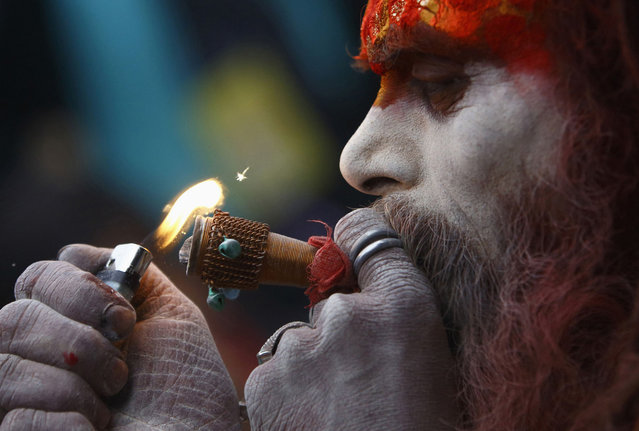
A Hindu holy man, or sadhu, smokes marijuana on a chillum (pipe) at the premises of Pashupatinath Temple during the Shivaratri festival in Kathmandu February 27, 2014. Hindu holy men from Nepal and India come to this temple to take part in the Shivaratri festival. Celebrated by Hindu devotees all over the world, Shivaratri is dedicated to Lord Shiva, and holy men mark the occasion by praying, smoking marijuana or smearing their bodies with ashes. (Photo by Navesh Chitrakar/Reuters)

A Hindu holy man, or sadhu, smokes marijuana on a chillum (pipe) at the premises of Pashupatinath Temple during the Shivaratri festival in Kathmandu February 27, 2014. Hindu holy men from Nepal and India come to this temple to take part in the Shivaratri festival. Celebrated by Hindu devotees all over the world, Shivaratri is dedicated to Lord Shiva, and holy men mark the occasion by praying, smoking marijuana or smearing their bodies with ashes. (Photo by Navesh Chitrakar/Reuters)
Details
27 Feb 2014 08:40:00


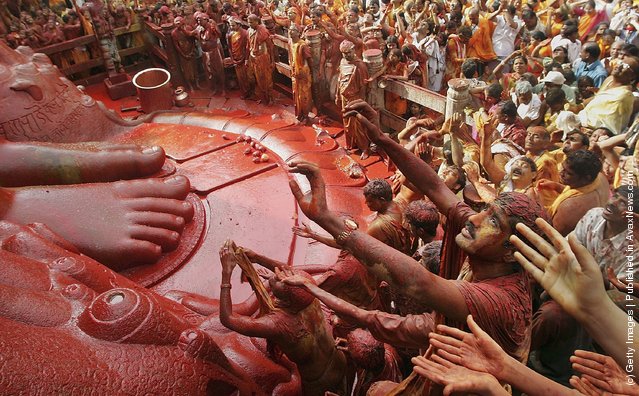
“The Mahamasthakabhisheka (or Mahamasthak Abhishek) is an important Jain festival held once every twelve years in the town of Shravanabelagola in Karnataka state, India. The festival is held in veneration of an immense 18 meter high statue of the Bhagwan (or Saint) Gomateshwara Bahubali. The anointing last took place in February 2006, and the next ceremony will occur in 2018”. – Wikipedia

Photo: A Jain Sadhu (2nd L) and devotees gather and pray at the feet of the monolithic statue of Jain sage Gomateswara during preparations for the Mahamastak Abhisheka ceremony February 7, 2006 in Shravanabelagola, India. The Mahamastak Abhisheka ceremony is held just once every twelve years where the statue will be bathed with milk, yogurt, saffron, gold coins and other religious items. The statue is said to be the world's largest monolith. The ceremony officially runs February 8-19. (Photo by Mario Tama/Getty Images)
Details
21 Jun 2011 12:27:00
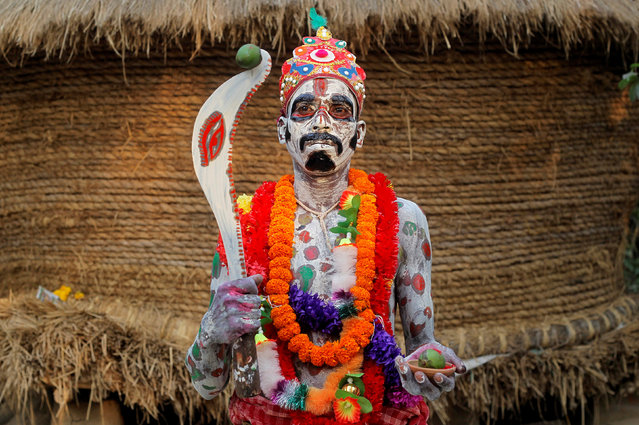
A devotee with his body painted poses as he waits to perform during a ritual as part of the annual Shiva Gajan religious festival at Sona Palasi village, in West Bengal, India, April 11, 2016. Devotees offer sacrifices and perform acts of devotion during the festival in the hopes of winning the favour of Hindu god Shiva and ensuring the fulfillment of their wishes, and also to mark the end of the Bengali calendar year. (Photo by Rupak De Chowdhuri/Reuters)

A devotee with his body painted poses as he waits to perform during a ritual as part of the annual Shiva Gajan religious festival at Sona Palasi village, in West Bengal, India, April 11, 2016. Devotees offer sacrifices and perform acts of devotion during the festival in the hopes of winning the favour of Hindu god Shiva and ensuring the fulfillment of their wishes, and also to mark the end of the Bengali calendar year. (Photo by Rupak De Chowdhuri/Reuters)
Details
13 Apr 2016 09:42:00