Loading...
Done
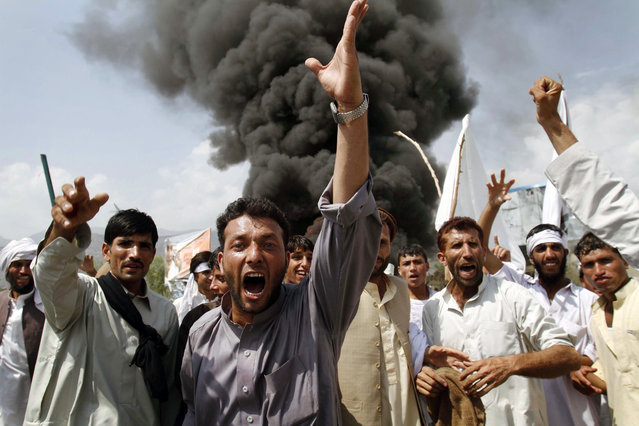
Afghans shout anti-U.S. slogans as they burn tires and block a highway during a protest in reaction to a small American church's plan to burn copies of the Quran, at Jalalabad, east of Kabul, Afghanistan, Friday, September 10, 2010. Religious and political leaders across the Muslim world welcomed a decision by the church to suspend its plans to torch copies of their holy book but some said Friday the damage has already been done. (Photo by Rahmat Gul/AP Photo)

Afghans shout anti-U.S. slogans as they burn tires and block a highway during a protest in reaction to a small American church's plan to burn copies of the Quran, at Jalalabad, east of Kabul, Afghanistan, Friday, September 10, 2010. Religious and political leaders across the Muslim world welcomed a decision by the church to suspend its plans to torch copies of their holy book but some said Friday the damage has already been done. (Photo by Rahmat Gul/AP Photo)
Details
07 Apr 2016 14:52:00
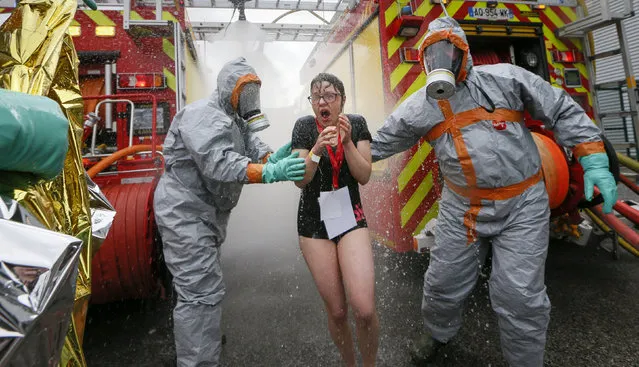
French firemen wearing chemical protective suits take part in a mock chemical attack exercise at the Geoffroy Guichard stadium in Saint-Etienne, France, April 4, 2016 in preparation of security measures for the UEFA 2016 European Championship. (Photo by Robert Pratta/Reuters)

French firemen wearing chemical protective suits take part in a mock chemical attack exercise at the Geoffroy Guichard stadium in Saint-Etienne, France, April 4, 2016 in preparation of security measures for the UEFA 2016 European Championship. (Photo by Robert Pratta/Reuters)
Details
07 Apr 2016 15:33:00
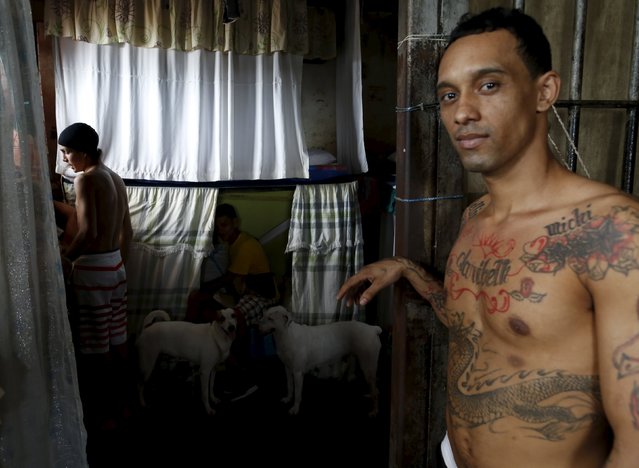
Inmates are seen at the transgender gallery in La Joya prison on the outskirts of Panama City, Panama February 3, 2016. (Photo by Carlos Jasso/Reuters)

Inmates are seen at the transgender gallery in La Joya prison on the outskirts of Panama City, Panama February 3, 2016. Inmates of La Joya prison on the outskirts of Panama City are housed in makeshift cells amid heavy overcrowding, living in grimy conditions and with limited medical attention. Many prisoners in the Central American nation languish for years without being sentenced. (Photo by Carlos Jasso/Reuters)
Details
14 Apr 2016 11:51:00
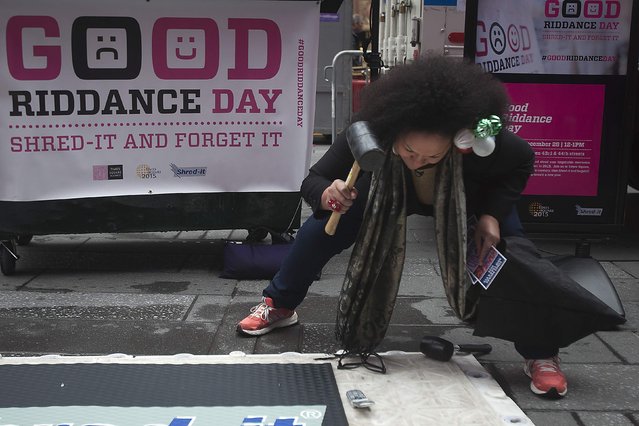
Actress Boquita Almonte smashes an old cell phone on “Good Riddance Day” in Times Square in New York December 28, 2014. Good Riddance Day, inspired by Latin American tradition, encourages people to shred and smash their bad memories from 2014 to start the new year fresh. (Photo by Carlo Allegri/Reuters)

Actress Boquita Almonte smashes an old cell phone on “Good Riddance Day” in Times Square in New York December 28, 2014. Good Riddance Day, inspired by Latin American tradition, encourages people to shred and smash their bad memories from 2014 to start the new year fresh. (Photo by Carlo Allegri/Reuters)
Details
03 Jan 2015 12:27:00
A handout photograph provided by Brian Kubicki of Costa Rican Amphibian Research Center on 26 April 2016 shows a “Crystal frog”, Hyalinobatrachium dianae (H. diane). This frog was discovered by US biologist Brian Kubicki and Costa Ricans Stanley Salazar and Robert Puschendorf in a rainy forest of Costa Rican caribbean after 40 years without notice of any new example of this kind. (Photo by Brian Kubicki/EPA/Costa Rican Amphibian Research Center)

A handout photograph provided by Brian Kubicki of Costa Rican Amphibian Research Center on 26 April 2016 shows a “Crystal frog”, Hyalinobatrachium dianae (H. diane). This frog was discovered by US biologist Brian Kubicki and Costa Ricans Stanley Salazar and Robert Puschendorf in a rainy forest of Costa Rican caribbean after 40 years without notice of any new example of this kind. (Photo by Brian Kubicki/EPA/Costa Rican Amphibian Research Center)
Details
02 May 2015 15:23:00
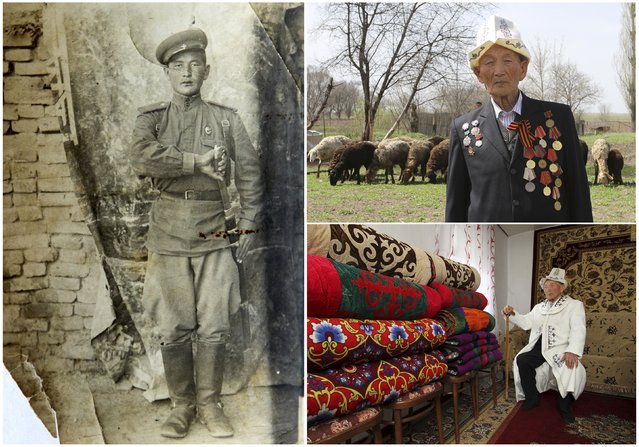
World War Two veteran Abla Begaliyev, 91, is seen in an undated handout picture (L), poses for a picture in Arashan (Top R) and at home in Kyrgyzstan April 14, 2015. Begaliyev served in the border guard cavalry from February 1942 until April 1947. Originally from Kyrgyzstan, he fought on the Ukrainian front and relocated to the border with Afghanistan at the end of World War Two. (Photo by Vladimir Pirogov/Reuters/Family handout (L))

World War Two veteran Abla Begaliyev, 91, is seen in an undated handout picture (L), poses for a picture in Arashan (Top R) and at home in Kyrgyzstan April 14, 2015. Begaliyev served in the border guard cavalry from February 1942 until April 1947. Originally from Kyrgyzstan, he fought on the Ukrainian front and relocated to the border with Afghanistan at the end of World War Two. As the world marks the 70th anniversary of the end of World War Two, Reuters photographers the length and breadth of the former Soviet republics (CCCP) captured portraits of Red Army veterans, mostly now in their 80s and 90s, today and through archive pictures at the time. More than 20 million Soviet citizens were killed in the war. (Photo by Vladimir Pirogov/Reuters/Family handout (L))
Details
08 May 2015 14:22:00
A young girls holds a ballot during the Greek referendum in Athens on July 5, 2015. Greek voters headed to the polls today to vote in a historic, tightly fought referendum on whether to accept worsening austerity in exchange for more bailout funds, in a gamble that could see it crash out of the euro. (Photo by Aris Messinis/AFP Photo)

A young girls holds a ballot during the Greek referendum in Athens on July 5, 2015. Greek voters headed to the polls today to vote in a historic, tightly fought referendum on whether to accept worsening austerity in exchange for more bailout funds, in a gamble that could see it crash out of the euro. (Photo by Aris Messinis/AFP Photo)
Details
06 Jul 2015 10:33:00
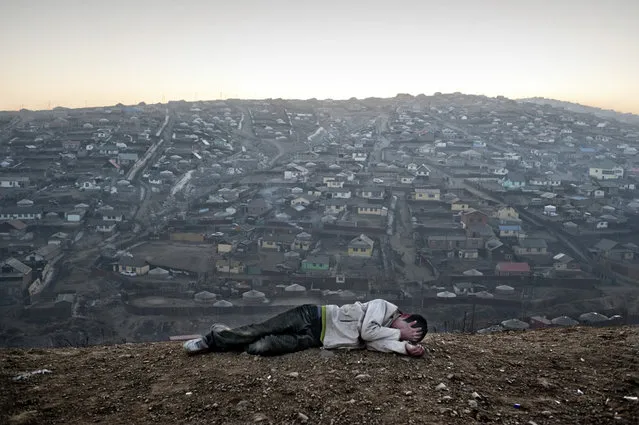
Asia, Mongolia, March 27, 2011. A view of Ulaan Baator over the shoulder of a slumbering drunk. Alcoholism is a huge problem in the city, home to almost half of Mongolia's people. The capital's population has doubled in the past two years, expanding outward in a haphazard sprawl, and many inhabitants live in slums known as the “Gher District”. (Photo by Alessandro Grassani)

“Environmental Migrants: The Last Illusion” by photographer Alessandro Grassani, documents the life of people in Kenya, Mongolia and Bangladesh who migrate to escape environmental stresses to the city of their own countries in hopes for a better life. Here: Asia, Mongolia, March 27, 2011. A view of Ulaan Baator over the shoulder of a slumbering drunk. Alcoholism is a huge problem in the city, home to almost half of Mongolia's people. The capital's population has doubled in the past two years. High levels of unemployment and poverty await herders who abandon rural areas and arrive in the city, illiterate and untrained in any skills necessary for urban jobs. (Photo by Alessandro Grassani)
Details
21 Jul 2015 10:10:00