Loading...
Done
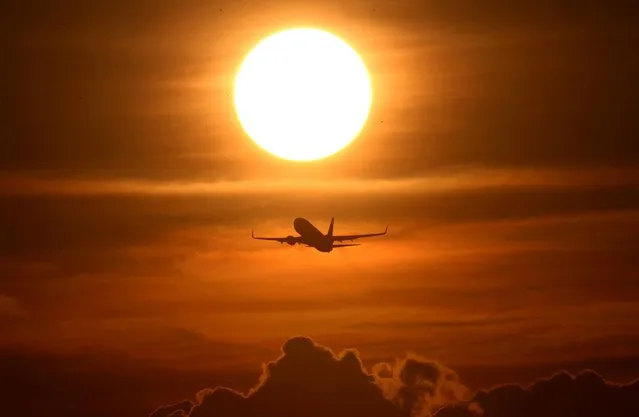
An air plane takes off from the airport as air traffic is effected by the spread of the coronavirus disease (COVID-19) in Frankfurt, Germany, March 16, 2020. (Photo by Kai Pfaffenbach/Reuters)

An air plane takes off from the airport as air traffic is effected by the spread of the coronavirus disease (COVID-19) in Frankfurt, Germany, March 16, 2020. (Photo by Kai Pfaffenbach/Reuters)
Details
02 Apr 2020 00:05:00
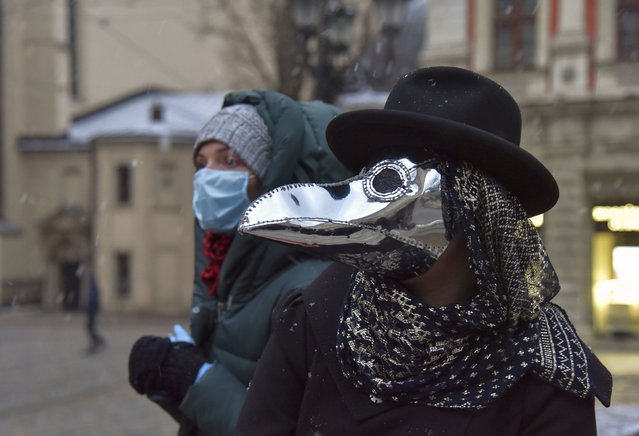
A woman wearing a protective mask is seen behind a girl dressed in a Plague Doctor Mask in Western-Ukrainian city of Lviv, Ukraine, 22 March 2020. Ukrainian Designer Anastasia Markovska sewed protective masks looking like Plague Doctor Masks, the traditional costume of Venice Carnival, for herself and her friends due to the ongoing pandemic of the COVID-19 disease caused by the SARS-CoV-2 coronavirus. In Ukraine had been 47 laboratory-confirmed cases of COVID-19, including three deaths and one recovery as Ukraine's Health Ministry announced. (Photo by Pavlo Palamarchuk/EPA/EFE)

A woman wearing a protective mask is seen behind a girl dressed in a Plague Doctor Mask in Western-Ukrainian city of Lviv, Ukraine, 22 March 2020. Ukrainian Designer Anastasia Markovska sewed protective masks looking like Plague Doctor Masks, the traditional costume of Venice Carnival, for herself and her friends due to the ongoing pandemic of the COVID-19 disease caused by the SARS-CoV-2 coronavirus. In Ukraine had been 47 laboratory-confirmed cases of COVID-19, including three deaths and one recovery as Ukraine's Health Ministry announced. (Photo by Pavlo Palamarchuk/EPA/EFE)
Details
02 May 2020 00:05:00
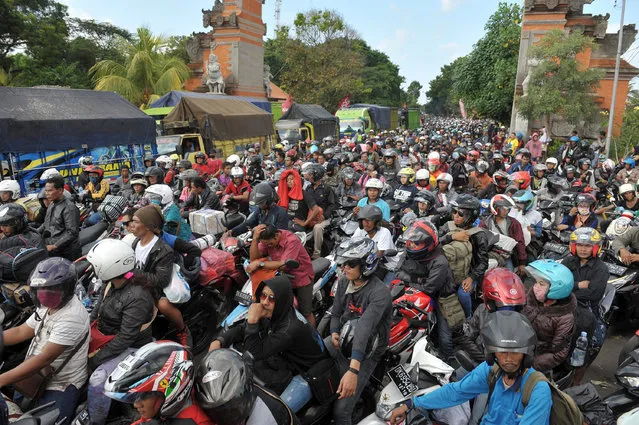
Thousands of travellers heading to their hometowns to celebrate Eid al-Fitr, the Muslim holiday to mark the end of Ramadan, wait in a traffic jam to board a ferry at the entrance to Gilimanuk port on Bali, Indonesia July 3, 2016 in this photo taken by Antara Foto. (Photo by Nyoman Budhiana/Reuters/Antara Foto)

Thousands of travellers heading to their hometowns to celebrate Eid al-Fitr, the Muslim holiday to mark the end of Ramadan, wait in a traffic jam to board a ferry at the entrance to Gilimanuk port on Bali, Indonesia July 3, 2016 in this photo taken by Antara Foto. (Photo by Nyoman Budhiana/Reuters/Antara Foto)
Details
12 Jul 2016 12:18:00
A girl wearing a mask takes part in a procession celebrating the religious holiday of Mawlid al-Nabi, the birthday of Prophet Mohammad, in Benghazi, Libya December 10, 2016. (Photo by Esam Omran Al-Fetori/Reuters)

A girl wearing a mask takes part in a procession celebrating the religious holiday of Mawlid al-Nabi, the birthday of Prophet Mohammad, in Benghazi, Libya December 10, 2016. (Photo by Esam Omran Al-Fetori/Reuters)
Details
12 Dec 2016 10:12:00
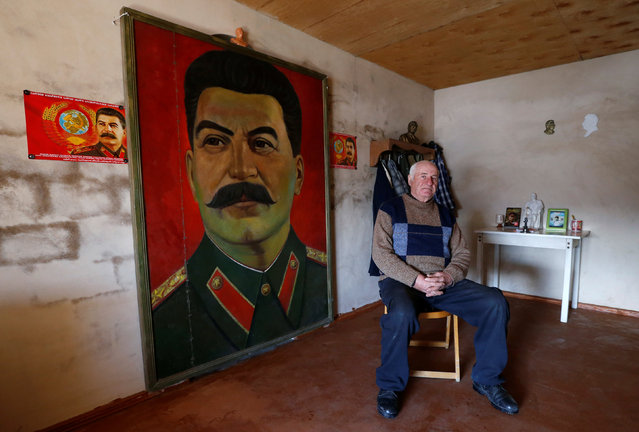
Retired builder Vasili Sidamonidze, 70, poses for a portrait at his home in Gori, Georgia, December 6, 2016. “Unfortunately, Stalin is not popular nowadays. Our people don't respect him. Only we, members of the (Communist) Party, respect him”, Sidamonidze said. “I always try to attend Stalin's birthday anniversaries in Gori. Unfortunately many people don't want to join us even if they live nearby. They look at us from their windows”. Stalin, who was born in Gori in 1878 and died in 1953, is largely reviled today in Georgia, which regained its independence during the 1991 collapse of the Soviet Union. Over the years, his memorials have been dismantled, most recently in 2010 when authorities removed a statue of the dictator from Gori's central square. But Stalin is still revered by a small group of mainly elderly supporters who stress his role in the industrialisation of the Soviet Union and in defeating Nazi Germany in World War Two. Each Dec. 21, a few dozen people mark his birthday by gathering outside a Gori museum dedicated to Stalin, where they make speeches and walk to the square where a 6-meter-high bronze statue of him once stood, calling for it to be reinstated. Opponents say it was a symbol of Moscow's still lingering shadow. In 2008, Russia fought a brief war with Georgia and recognised its breakaway regions of Abkhazia and South Ossetia as independent states. (Photo by David Mdzinarishvili/Reuters)

Retired builder Vasili Sidamonidze, 70, poses for a portrait at his home in Gori, Georgia, December 6, 2016. “Unfortunately, Stalin is not popular nowadays. Our people don't respect him. Only we, members of the (Communist) Party, respect him”, Sidamonidze said. “I always try to attend Stalin's birthday anniversaries in Gori. Unfortunately many people don't want to join us even if they live nearby. They look at us from their windows”. (Photo by David Mdzinarishvili/Reuters)
Details
17 Dec 2016 07:59:00
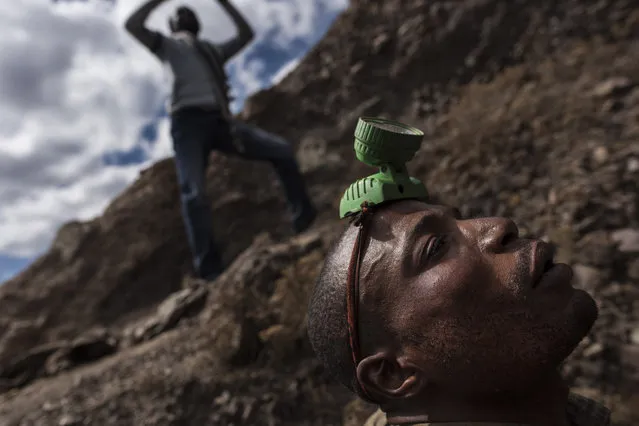
A “creuseur”, or digger, a plastic lantern on his head, readies to enter a copper and cobalt mine in Kawama, Democratic Republic of Congo on June 8, 2016. Cobalt is used in the batteries for electric cars and mobile phones. Working conditions are dangerous, often with no safety equipment or structural support for the tunnels. The diggers say they are paid on average US$2-3/day. (Photo by Michael Robinson Chavez/The Washington Post)

A “creuseur”, or digger, a plastic lantern on his head, readies to enter a copper and cobalt mine in Kawama, Democratic Republic of Congo on June 8, 2016. Cobalt is used in the batteries for electric cars and mobile phones. Working conditions are dangerous, often with no safety equipment or structural support for the tunnels. The diggers say they are paid on average US$2-3/day. (Photo by Michael Robinson Chavez/The Washington Post)
Details
30 Dec 2016 10:29:00
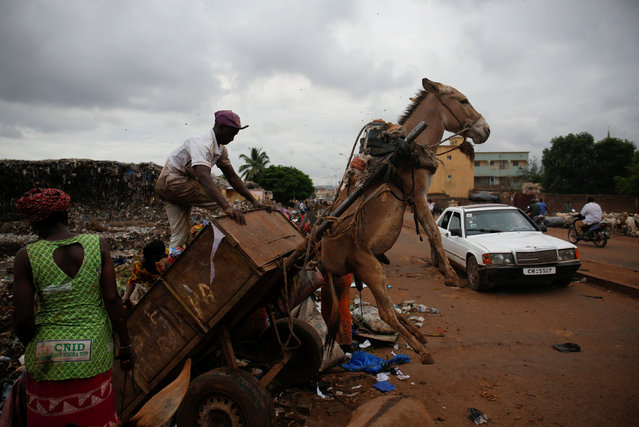
A waste picker unloads garbage at a waste transfer station in Bamako, Mali, August 19, 2018. In the Malian capital of Bamako, donkey carts driven by young men like 19-year-old Arouna Diabate play a vital role battling the fast-growing city's waste problem. Every morning before dawn, Diabate hitches his donkey to a cart and sets off on his rounds, going door-to-door to collect household garbage which he delivers to a local waste transfer station for a monthly salary of around $35. “I won't be picking up trash with a donkey cart for the rest of my life, but for now people appreciate us because we help clean up the homes of Bamako”, Diabate said. (Photo by Luc Gnago/Reuters)

A waste picker unloads garbage at a waste transfer station in Bamako, Mali, August 19, 2018. In the Malian capital of Bamako, donkey carts driven by young men like 19-year-old Arouna Diabate play a vital role battling the fast-growing city's waste problem. Every morning before dawn, Diabate hitches his donkey to a cart and sets off on his rounds, going door-to-door to collect household garbage which he delivers to a local waste transfer station for a monthly salary of around $35. “I won't be picking up trash with a donkey cart for the rest of my life, but for now people appreciate us because we help clean up the homes of Bamako”, Diabate said. (Photo by Luc Gnago/Reuters)
Details
18 Sep 2018 00:01:00
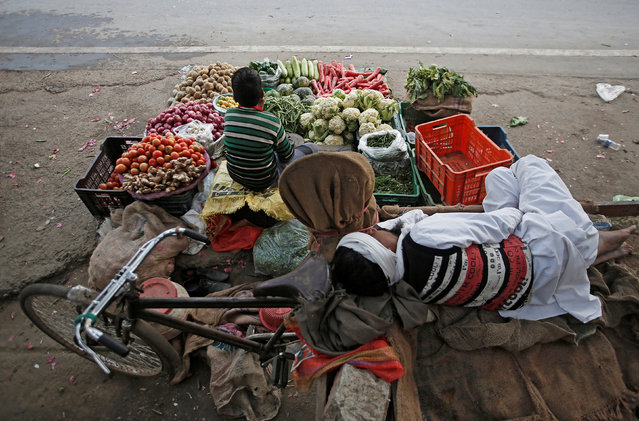
A vendor sleeps as his son waits for customers at their roadside vegetable shop in New Delhi, February 12, 2019. (Photo by Adnan Abidi/Reuters)

A vendor sleeps as his son waits for customers at their roadside vegetable shop in New Delhi, February 12, 2019. (Photo by Adnan Abidi/Reuters)
Details
23 Mar 2019 00:01:00