Promotional staff dressed in outfits of animation characters use a mobile phone at the Global Mobile Internet Conference (GMIC) 2015 in Beijing, China, April 28, 2015. (Photo by Kim Kyung-Hoon/Reuters)
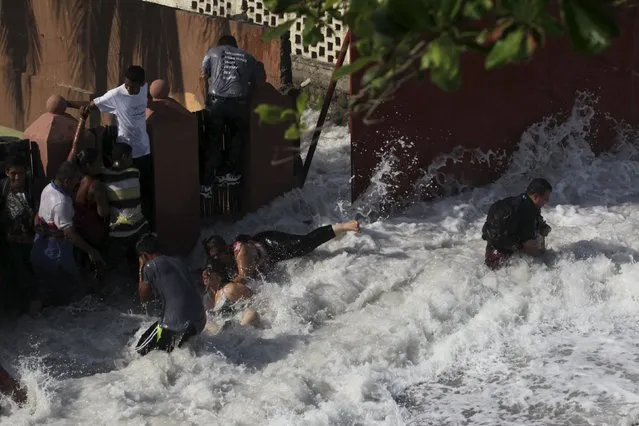
Beachgoers are hit by a wave in La Libertad May 3, 2015. El Salvador emergency authorities declared a green alert along the pacific coats due to a large swell that affected the Salvadoran coast and originated from the extra-tropical storms that formed in New Zealand and the Southern hemisphere, according to El Salvador's ministry of environment and natural resources. (Photo by Jose Cabezas/Reuters)
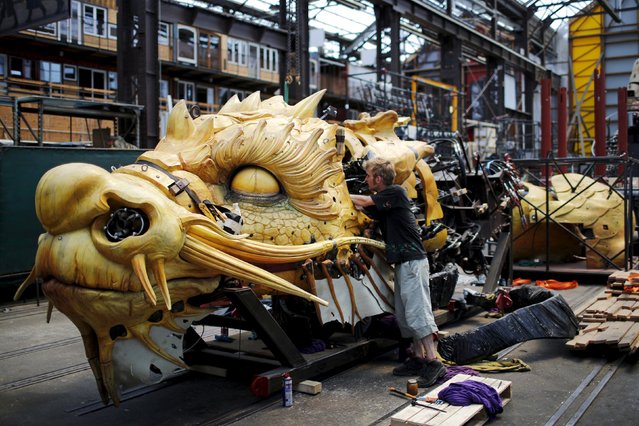
A man works on “Long Ma”, a creation by La Machine production company, during a media visit to “A Journey to Nantes” (Le Voyage a Nantes) art festival in Nantes, France, June 30, 2015. The art festival will run from July 3 to August 30. (Photo by Stephane Mahe/Reuters)
Festival goers having fun at the Balaton Sound music festival in Zamardi next to the Lake of Balaton, 110 km (68 miles) west of Budapest, July 6, 2017. (Photo by Zsolt Furesz)
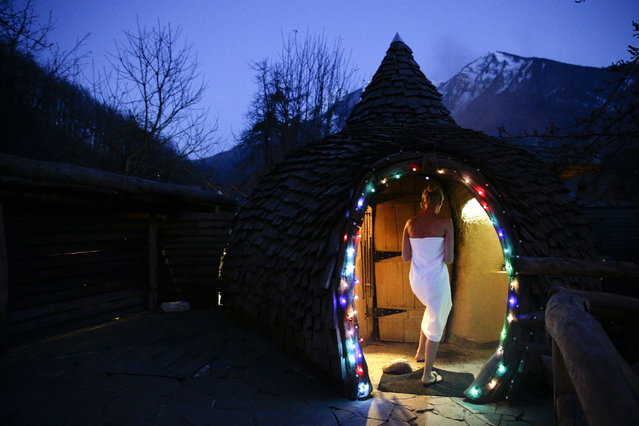
Olga Gharkova enters a aromatherapy room at the British Banya bathhouse, Saturday, February 15, 2014, in Krasnaya Polyana, Russia, just a few miles away from the ski slopes where athletes are competing for Olympic medals. (Photo by Jae C. Hong/Associated Press)
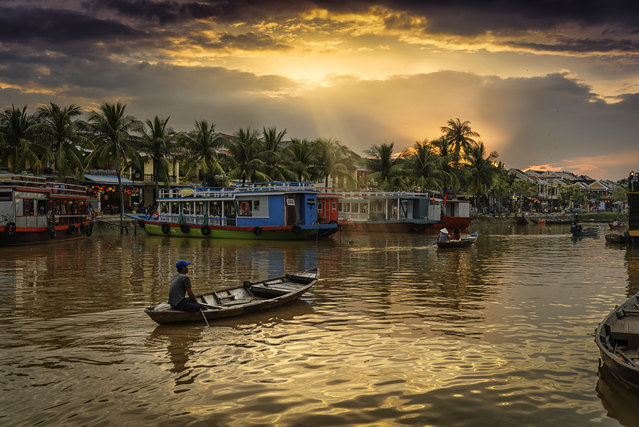
South Asian countries in terms of total contribution of travel and tourism to GDP. #6. Vietnam, Total GDP: USD 202.6 billion (2016). Contribution of Travel and Tourism to GDP: 9.1% . Here: A boat in the Thu Bon River, Hoi An, Vietnam. (Photo by Domingo Leiva/Getty Images)
In advance of Fleet Week performances, U.S. Navy Blue Angels fly above San Francisco with Team Oracle aerobatics pilots Sean D. Tucker and Jessy Panzer on Thursday, October 10, 2019. (Photo by Noah Berger/AP Photo)
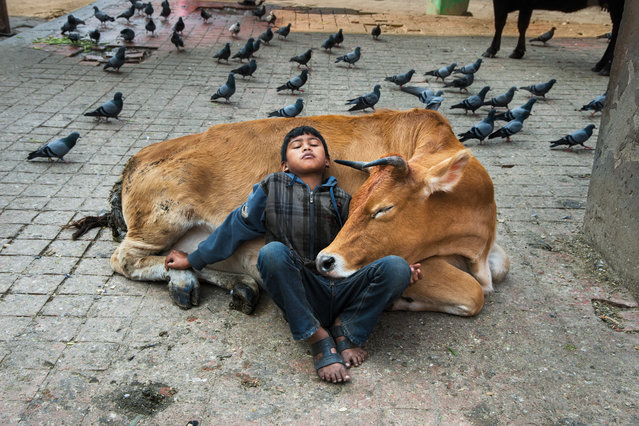
The legendary US photographer’s favourite shots of creatures and how they interact with humans feature in “Animals”, his latest book. Here: A boy rests against a cow, Kathmandu, Nepal, 2013. “Cows have been designated the national animal in Nepal. They roam freely, and are considered sacred by the 80% of Nepalis who are Hindu”. (Photo by Steve McCurry/The Guardian)