Loading...
Done
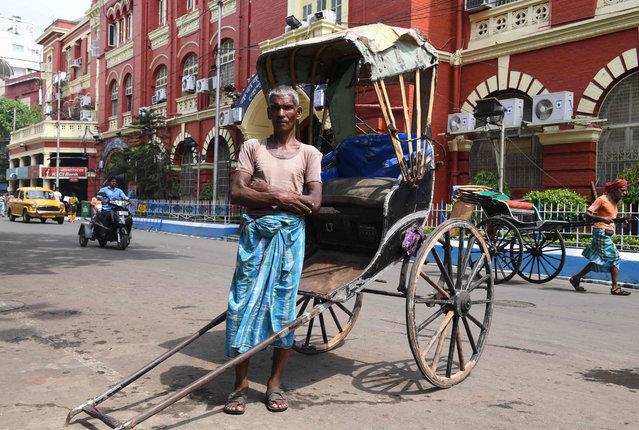
Mohammad Ashgar, 65, an Indian rickshaw puller, poses for a photograph next to his rickshaw in Kolkata on April 21, 2018. A mainstay of 19 th century transportation options, the hand- pulled rickshaw survives in India only in Kolkata after being outlawed elsewhere. The local puller's union puts the number of pullers in the city at 3,000. The union has resisted all previous attempts to ban their livelihood, previously organising mass protests of their members against moves to stamp out the practice. (Photo by Dibyangshu Sarkar/AFP Photo)

Ahead of May Day, AFP' s video and photo teams spoke to men and women around the globe whose jobs are becoming increasingly rare, particularly as technology transforms societies. Here: Mohammad Ashgar, 65, an Indian rickshaw puller, poses for a photograph next to his rickshaw in Kolkata on April 21, 2018. (Photo by Dibyangshu Sarkar/AFP Photo)
Details
02 May 2018 00:01:00
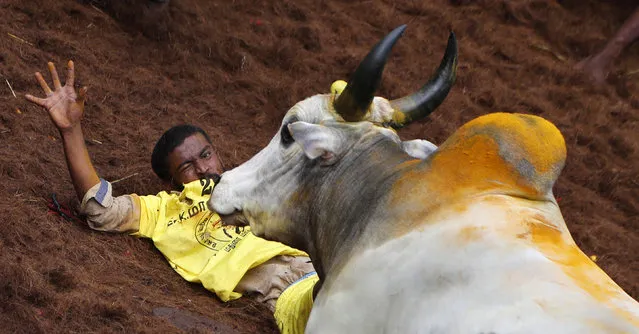
In this Thursday, January 17, 2019, photo, an Indian tamer reacts as a bull charges towards him during a traditional bull-taming festival called Jallikattu, in the village of Allanganallur, near Madurai, Tamil Nadu state, India. (Photo by Aijaz Rahi/AP Photo)

In this Thursday, January 17, 2019, photo, an Indian tamer reacts as a bull charges towards him during a traditional bull-taming festival called Jallikattu, in the village of Allanganallur, near Madurai, Tamil Nadu state, India. Jallikattu involves releasing a bull into a crowd of people who are expected to hang on to the animal's hump for a stipulated distance or hold on to the hump for a minimum of three jumps made by the bull. The sport, performed during the four-day “Pongal” or winter harvest festival, is hugely popular in Tamil Nadu. (Photo by Aijaz Rahi/AP Photo)
Details
21 Jan 2019 00:01:00
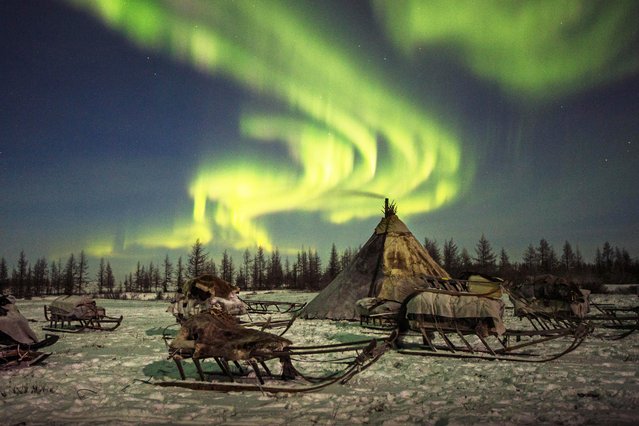
An empty camp is shown beneath a colourful sky in Siberia, December 2016. (Photo by Timothy Allen/Barcroft Productions)

A British photographer has captured life at the “edge of the world”. Timothy Allen, best known for his work on BBC's Human Planet, trekked through the freezing Siberian wilderness for 16 days as he joined part of an 800km migration of reindeer in the Yamal-Nenets region – a name that roughly translates to “edge of the world”. The stunning pictures feature the nomadic Nenets tribe, who drink blood to survive in -45°C temperatures. Timothy's epic journey, which will be revealed in an eight-minute documentary on Animal Planet USA, saw him travel across the bleak terrain of the frozen Ob River with the Nenets people in December last year. Here: An empty camp is shown beneath a colourful sky in Siberia, December 2016. (Photo by Timothy Allen/Barcroft Productions)
Details
19 Sep 2017 07:48:00
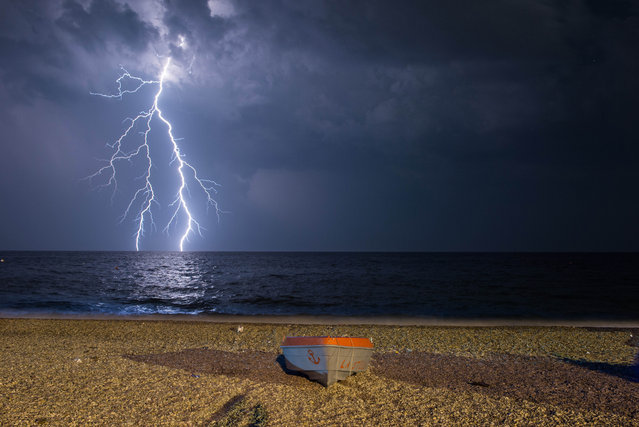
Lightning strikes during a storm over the Ionian Sea in Calabria, Italy on June 27, 2016. (Photo by Alfonso Di Vincenzo/Pacific Press/Rex Features)

Lightning strikes during a storm over the Ionian Sea in Calabria, Italy on June 27, 2016. (Photo by Alfonso Di Vincenzo/Pacific Press/Rex Features)
Details
20 Sep 2016 08:57:00
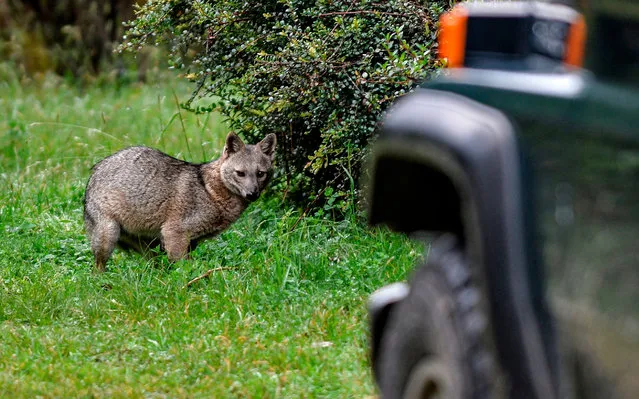
A crab-eating fox (Cerdocyon thous), also known as the forest fox, wood fox, or maikong, is seen in the wild in the municipality of Guasca, some 50 km from Bogota, on May 16, 2020. (Photo by Diana Sánchez/AFP Photo)

A crab-eating fox (Cerdocyon thous), also known as the forest fox, wood fox, or maikong, is seen in the wild in the municipality of Guasca, some 50 km from Bogota, on May 16, 2020. (Photo by Diana Sánchez/AFP Photo)
Details
03 Jun 2020 00:03:00
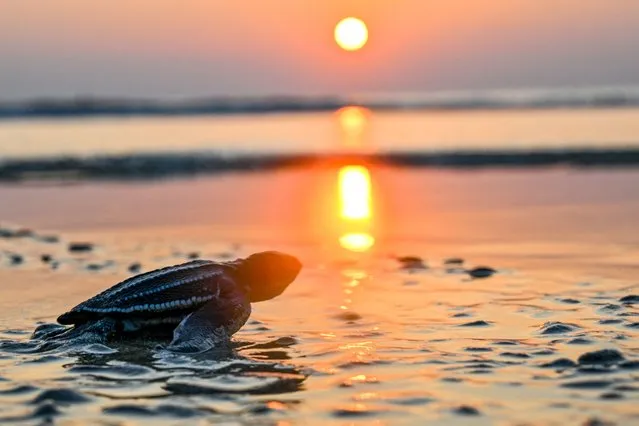
A small Leatherback sea turtle heads towards the sea during the sunset at Lhoknga beach in Aceh province on February 25, 2023. (Photo by Chaideer Mahyuddin/AFP Photo)

A small Leatherback sea turtle heads towards the sea during the sunset at Lhoknga beach in Aceh province on February 25, 2023. (Photo by Chaideer Mahyuddin/AFP Photo)
Details
11 Apr 2023 02:07:00


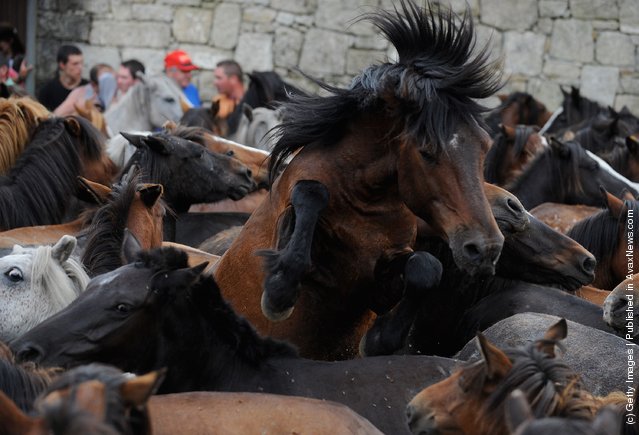
“Rapa das Bestas is the name of an operation that involves cutting the manes of the horses that are performed in the curros (enclosed which retain the horses) held in various locations in Galicia (Spain).

The best known is the Rapa das Bestas of Sabucedo, in the city hall of A Estrada, which lasts three days: the First Saturday, Sunday and Monday in July. In fact, the name given to the celebration (Rapa das Bestas of Sabucedo), while in most places speaking about curros, including curros de Valga, etc”. – Wikipedia

Photo: A wild horse leaps up during the Rapa das Bestas (shearing of the beasts) festival on July 2, 2011 in Sabucedo, Spain. Hundreds of wild horses are rounded up from the mountains and trimmed and marked in the corral. (Photo by Denis Doyle/Getty Images)
Details
03 Jul 2011 12:30:00
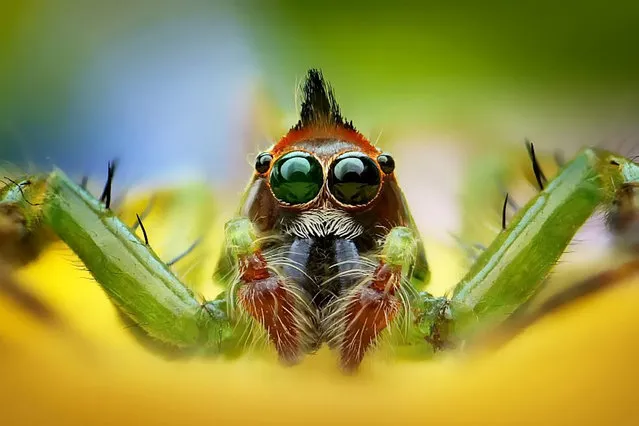
You might feel as if you are being watched when you look at these incredible pictures – revealing the close-up world of a spider's eyes. The intimidating creatures, which look like they should live in a horror film, star menacingly at the camera as every fleck of colour and hair are revealed. But despite their appearance the arachnids are actually jumping spiders, which measure a tiny six millimetres in length. (Photo by SWNS/ABACA Press)

You might feel as if you are being watched when you look at these incredible pictures – revealing the close-up world of a spider's eyes. The intimidating creatures, which look like they should live in a horror film, star menacingly at the camera as every fleck of colour and hair are revealed. But despite their appearance the arachnids are actually jumping spiders, which measure a tiny six millimetres in length. The harmless arachnids, which are capable of jumping up to six times their own height, can be found in grassy meadows and on the walls of houses on sunny days. (Photo by SWNS/ABACA Press)
Details
08 Sep 2014 10:58:00