Loading...
Done
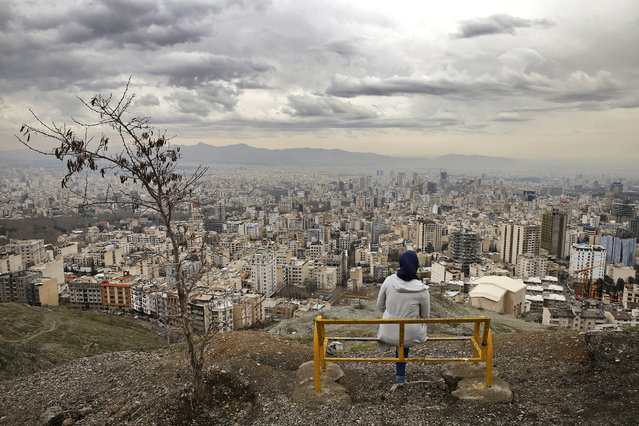
A woman spends her time outdoors to observe the ancient festival of Sizdeh Bedar, an annual public picnic day on the 13th day of the Iranian new year, at the Tochal mountainous area northern Tehran, Iran, Sunday, April, 2, 2017. Sizdeh Bedar, which comes from the Farsi words for “thirteen” and “day out”, is a legacy from Iran's pre-Islamic past that hard-liners in the Islamic Republic never managed to erase from calendars. (Photo by Ebrahim Noroozi/AP Photo)

A woman spends her time outdoors to observe the ancient festival of Sizdeh Bedar, an annual public picnic day on the 13th day of the Iranian new year, at the Tochal mountainous area northern Tehran, Iran, Sunday, April, 2, 2017. Sizdeh Bedar, which comes from the Farsi words for “thirteen” and “day out”, is a legacy from Iran's pre-Islamic past that hard-liners in the Islamic Republic never managed to erase from calendars. (Photo by Ebrahim Noroozi/AP Photo)
Details
21 Apr 2017 07:38:00
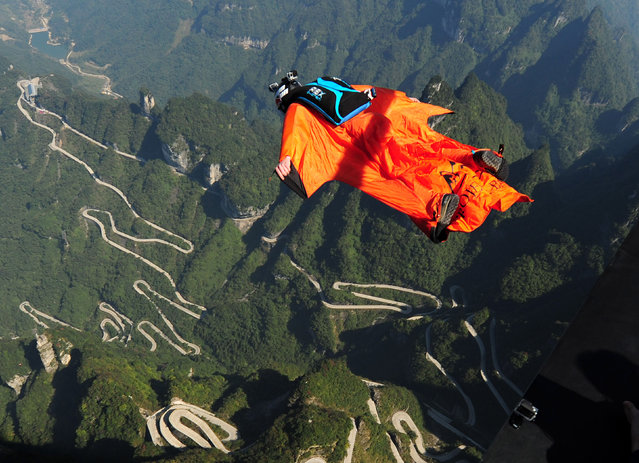
A participant in wingsuit flies above Tianmen Mountain at Zhangjiajie Scenic Spot during the 4th Red Bull WWL China Grand Prix on October 16, 2015 in Zhangjiajie, Hunan Province of China. The 4th Red Bull WWL China Grand Prix will last three days from October 16-18 in Zhangjiajie. (Photo by ChinaFotoPress/Getty Images)

A participant in wingsuit flies above Tianmen Mountain at Zhangjiajie Scenic Spot during the 4th Red Bull WWL China Grand Prix on October 16, 2015 in Zhangjiajie, Hunan Province of China. The 4th Red Bull WWL China Grand Prix will last three days from October 16-18 in Zhangjiajie. (Photo by ChinaFotoPress/Getty Images)
Details
18 Oct 2015 08:09:00
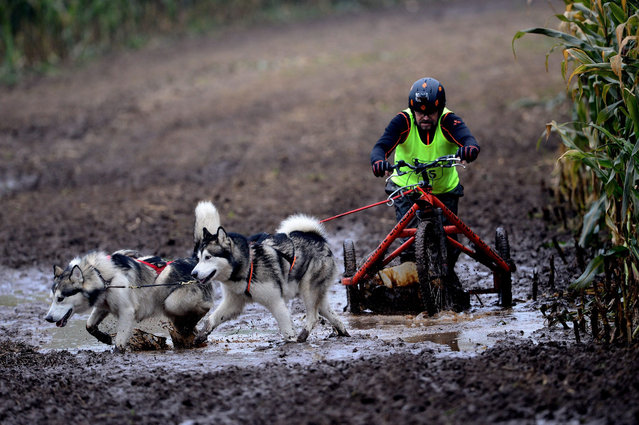
A participant of the sled dogs race in action with the dogs in Stroehen (Lower Saxony), Germany, 18 October 2015. It is the first round of the North German Championship. (Photo by Peter Steffen/EPA)

A participant of the sled dogs race in action with the dogs in Stroehen (Lower Saxony), Germany, 18 October 2015. It is the first round of the North German Championship. (Photo by Peter Steffen/EPA)
Details
21 Oct 2015 08:08:00
The BADGER shot was a 23 kiloton nuclear bomb. Over 2,000 US soldiers were within 3.7 kilometers of the explosion. (Photo by Alamy Stock Photo)

The BADGER shot was a 23 kiloton nuclear bomb. Over 2,000 US soldiers were within 3.7 kilometers of the explosion. (Photo by Alamy Stock Photo)
Details
12 Aug 2017 05:38:00


Workers demonstrate outside the factory of Hua Yang Printing Holdings Co Ltd on October 30, 2007 in Shenzhen of Guangdong Province, China. Over 1,000 workers of the company have blocked the 107 State Highway where the firm is located, to protest against their employer, who owed half a month's salary to the workers. (Photo by China Photos/Getty Images)
Details
17 Jun 2011 11:43:00
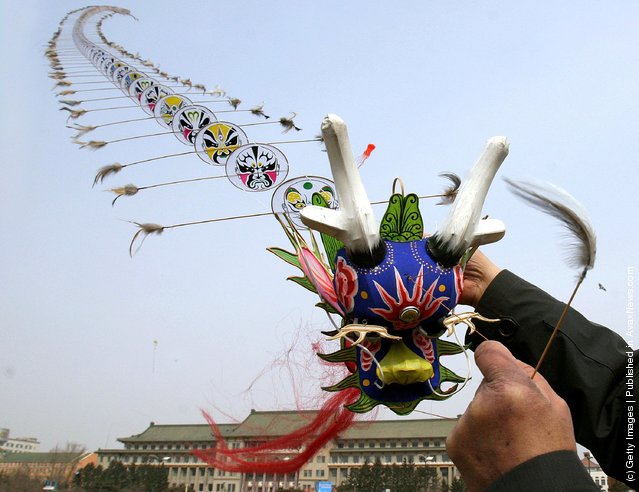
A man flies a dragon-shaped kite at a square on March 31, 2006 in Changchun of Jilin Province, China

A man flies a dragon-shaped kite at a square on March 31, 2006 in Changchun of Jilin Province, China. (Photo by China Photos/Getty Images)
Details
31 Dec 2011 10:29:00
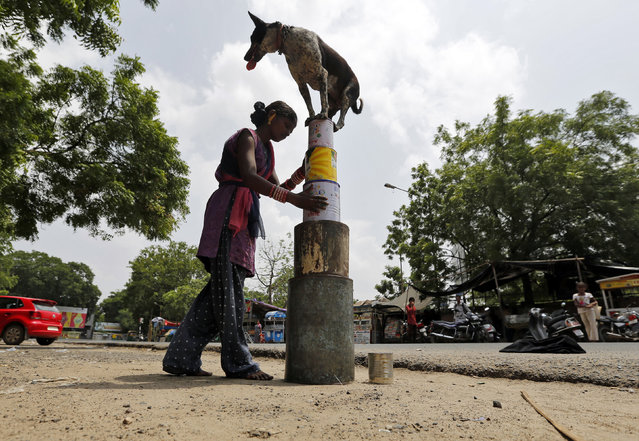
Savita, a street performer, helps her dog to balance on empty tin containers as they perform at a roadside in Ahmedabad September 7, 2014. (Photo by Amit Dave/Reuters)

Savita, a street performer, helps her dog to balance on empty tin containers as they perform at a roadside in Ahmedabad September 7, 2014. (Photo by Amit Dave/Reuters)
Details
31 Mar 2015 13:09:00
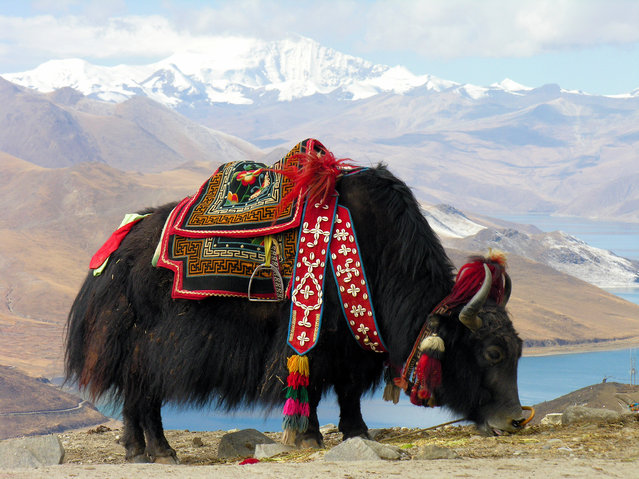
Yak near Yamdrok lake, Tibet. It is a long-haired bovinae found throughout the Himalayan region of south Central Asia, the Tibetan Plateau and as far north as Mongolia and Russia. The Tibetan economy is dominated by subsistence agriculture. Due to limited arable land, the primary occupation of the Tibetan Plateau is raising livestock, such as sheep, cattle, goats, camels, yaks, dzo, and horses. The Tibetan yak is an integral part of Tibetan life. (Photo by Dennis Jarvis)

Yak near Yamdrok lake, Tibet. It is a long-haired bovinae found throughout the Himalayan region of south Central Asia, the Tibetan Plateau and as far north as Mongolia and Russia. The Tibetan economy is dominated by subsistence agriculture. Due to limited arable land, the primary occupation of the Tibetan Plateau is raising livestock, such as sheep, cattle, goats, camels, yaks, dzo, and horses. The Tibetan yak is an integral part of Tibetan life. (Photo by Dennis Jarvis)
Details
10 Jun 2015 10:48:00