Loading...
Done
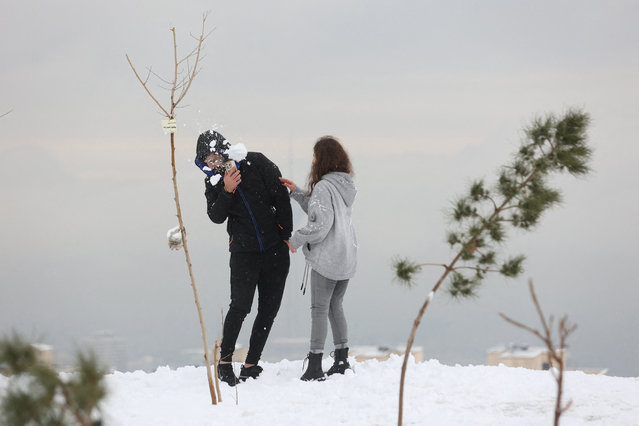
People play with snow during the first snowfall in a park in Tehran, Iran on December 24, 2022. (Photo by Majid Asgaripour/WANA (West Asia News Agency) via Reuters)

People play with snow during the first snowfall in a park in Tehran, Iran on December 24, 2022. (Photo by Majid Asgaripour/WANA (West Asia News Agency) via Reuters)
Details
30 Dec 2022 05:54:00
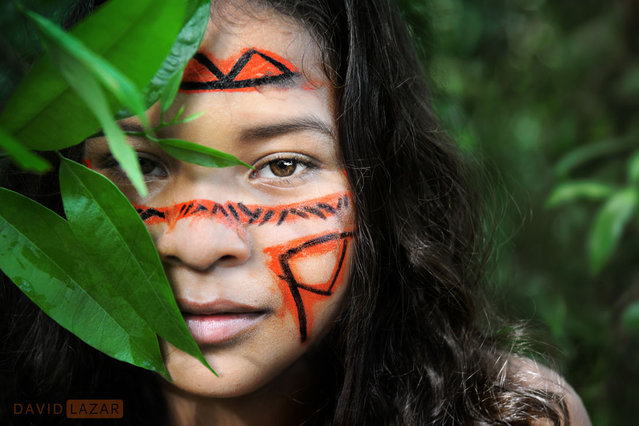
Amazon Tribe By David Lazar (Video)

Photographer David Lazar captured photos of native Dessana tribe, nearly 3,000 miles away from Brazil's capital. Tribe is only accessible by boat from city of Manaus. Surrounded by trees, waterfalls and tropical wildlife, this Amazon tribe is a world away from the beaches of Rio.
Details
27 Oct 2016 21:46:00
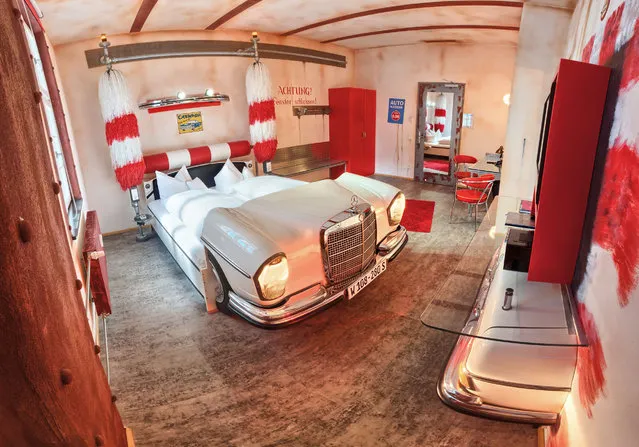
The V8 Hotel In Stuttgart, Germany

The V8 Hotel in Stuttgart is a car-lover’s heaven, it´s a theme hotel with a design clearly inspired by the car world. The Hotel is located in an auto museum called Böblingen’s Meilenwerk in Stuttgart, Germany. The hotel features themed rooms fit for both mechanics and car enthusiasts alike, it has four single rooms, 19 double rooms, tower suite and 10 theme-based rooms designed to impress visitors.
Details
01 Nov 2016 22:19:00
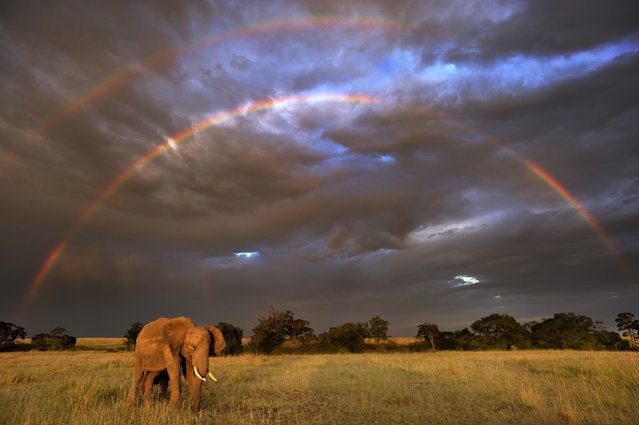
This photo provided by Netflix/naturepl.com and WWF-International shows an African Elephant (Loxodonta africana) in front of double rainbow, in Masai Mara, Kenya, included in the Netflix natural history series, “Our Planet”, in collaboration with Silverback Films and WWF. The eight-part series debuts in 2019. (Photo by Andy Rouse/Naturepl.com/WWF-International/Netflix via AP Photo)

This photo provided by Netflix/naturepl.com and WWF-International shows an African Elephant (Loxodonta africana) in front of double rainbow, in Masai Mara, Kenya, included in the Netflix natural history series, “Our Planet”, in collaboration with Silverback Films and WWF. The eight-part series debuts in 2019. (Photo by Andy Rouse/Naturepl/WWF-International/Netflix via AP Photo)
Details
09 Oct 2015 08:05:00
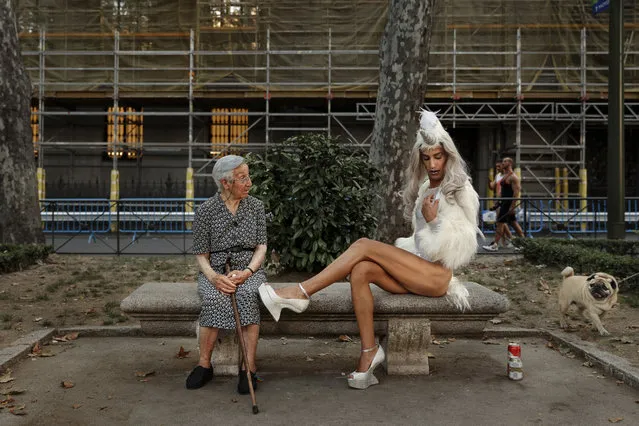
A woman looks across as a gay parade participant poses for pictures during Gay Pride parade in Madrid, Spain, Saturday, July 2, 2016. Hundreds of thousands of people defied high temperatures and relative security concerns and turned out in Madrid to march in Saturday's LGTB Pride parade, one of the biggest in Europe, along the streets of the Spanish capital, just three weeks after members of the gay, lesbian, bisexual and transgender community were tragically victimized in a shooting massacre at a United States nightclub. (Photo by Daniel Ochoa de Olza/AP Photo)

A woman looks across as a gay parade participant poses for pictures during Gay Pride parade in Madrid, Spain, Saturday, July 2, 2016. Hundreds of thousands of people defied high temperatures and relative security concerns and turned out in Madrid to march in Saturday's LGTB Pride parade, one of the biggest in Europe, along the streets of the Spanish capital, just three weeks after members of the gay, lesbian, bisexual and transgender community were tragically victimized in a shooting massacre at a United States nightclub. (Photo by Daniel Ochoa de Olza/AP Photo)
Details
03 Jul 2016 11:20:00
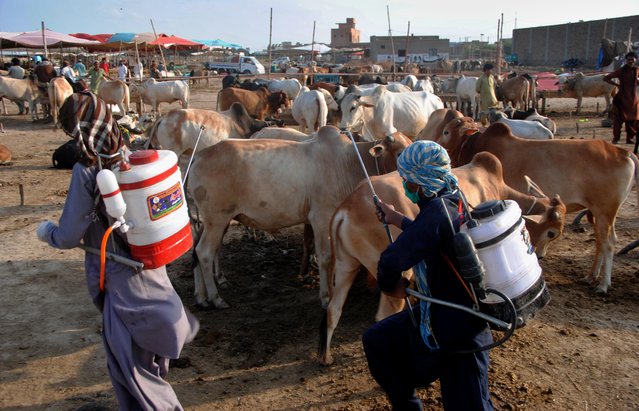
Health workers wearing face masks spray disinfectant liquid on sacrificial animals amid concerns over the spread of the SARS-CoV-2 coronavirus that causes the pandemic COVID-19 disease ahead of the Muslim festival of Eid al-Adha at an animal market in Hyderabad, southern Pakistan, 21 July 2020. Eid al-Adha, also known as the Festival of the Sacrifice, is the second and holiest of the two main Islamic holidays celebrated each year (the other one being Eid al-Fitr). Every year, on the 10th day of the Islamic lunar month of Dhu al-Hijjah, Muslims around the world ritually slaughter a sacrificial animal and split the meat into three parts: one is reserved for the family, another for friends and relatives, and the third is given to the poor and needy. The Saudi Supreme Court has declared that the first day of Eid al-Adha this year falls on 31 July. (Photo by Nadeem Khawar/EPA/EFE)

Health workers wearing face masks spray disinfectant liquid on sacrificial animals amid concerns over the spread of the SARS-CoV-2 coronavirus that causes the pandemic COVID-19 disease ahead of the Muslim festival of Eid al-Adha at an animal market in Hyderabad, southern Pakistan, 21 July 2020. (Photo by Nadeem Khawar/EPA/EFE)
Details
23 Jul 2020 00:07:00
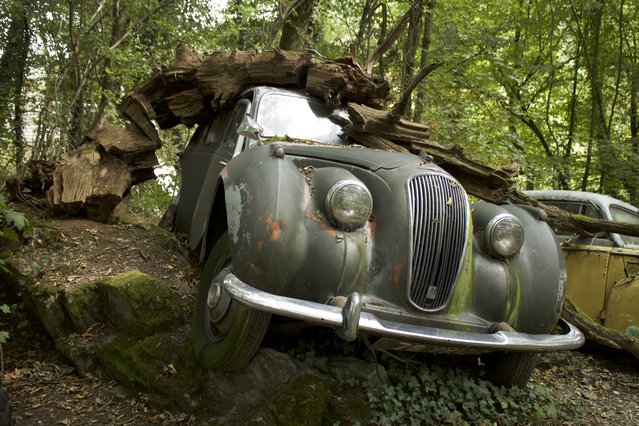
Michael Fröhlich's Jowett Javelin rotting car in his forest sculpture park in Neandertal Germany, September 11, 2016. An eccentric artist has collected fifty vintage cars and left them to rot in a forest – and now they're worth over $1 million. Former racing driver Michael Fröhlich, from Dusseldorf, Germany, has purposely crashed the cars into trees, buried them in mud and parked them on cliff faces in his estate's garden in the middle of the German Neanderthal. His collections includes a Jaguar XK120 worth $170,000, a Porsche 356 racer and a Buick worth $17,000. Perhaps his most interesting collectable is a Rolls Royce, with a purposefully misspelt “Buckingham Palace” – replacing the B with an F – emblazoned on the side with a replica of the Queen Elizabeth at the wheel. (Photo by Christoph Hagen/Barcroft Images)

Michael Fröhlich's Jowett Javelin rotting car in his forest sculpture park in Neandertal Germany, September 11, 2016. An eccentric artist has collected fifty vintage cars and left them to rot in a forest – and now they're worth over $1 million. Former racing driver Michael Fröhlich, from Dusseldorf, Germany, has purposely crashed the cars into trees, buried them in mud and parked them on cliff faces in his estate's garden in the middle of the German Neanderthal. His collections includes a Jaguar XK120 worth $170,000, a Porsche 356 racer and a Buick worth $17,000. (Photo by Christoph Hagen/Barcroft Images)
Details
24 Sep 2016 10:56:00
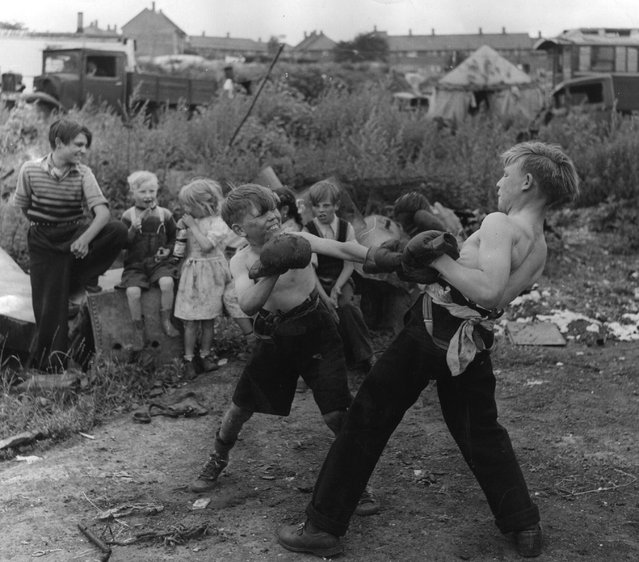
The unromantic gypsies. Children boxing in a gypsy camp in Kent, England on July 1, 1951. Like all boys these gypsy lads like to try their hand at boxing. Encouraged by their friends they fight it out on Corke's Meadow. Few Romanies now live a life of wandering romance. Most are like the three hundred squatters of Corke's Meadow, Kent, which is part of a “gypsy problem” that involves about 100,000 today. Of those about 25,000 can be rightly called gypsies, the rest are Mumpers and Posh-rats and Hobos. Corke's Meadow has both kinds. “Picture Post” cameraman Bert Hardy photographs the Corke's Meadow gypsies in their encampment. (Photo by Hulton-Deutsch Collection/Corbis via Getty Images)

The unromantic gypsies. Children boxing in a gypsy camp in Kent, England on July 1, 1951. Like all boys these gypsy lads like to try their hand at boxing. Encouraged by their friends they fight it out on Corke's Meadow. Few Romanies now live a life of wandering romance. Most are like the three hundred squatters of Corke's Meadow, Kent, which is part of a “gypsy problem” that involves about 100,000 today. Of those about 25,000 can be rightly called gypsies, the rest are Mumpers and Posh-rats and Hobos. Corke's Meadow has both kinds. “Picture Post” cameraman Bert Hardy photographs the Corke's Meadow gypsies in their encampment. (Photo by Hulton-Deutsch Collection/Corbis via Getty Images)
Details
12 Mar 2017 00:01:00