Loading...
Done
Li Yuming, a local farmer who is interested in scientific invention, works on his unfinished miniature submarine “Xiaguang V” on the outskirts of Wuhan, capital of central China's Hubei province August 24, 2007. “Xiaguang V”, which is 3-metre long, 1.2-metre in height, has a maximum diving depth of 20 metres, and can hold two adults and one child at the same time. The submarine will be used for tour after safety test, local media said. (Photo by Reuters/Stringer)

Li Yuming, a local farmer who is interested in scientific invention, works on his unfinished miniature submarine “Xiaguang V” on the outskirts of Wuhan, capital of central China's Hubei province August 24, 2007. “Xiaguang V”, which is 3-metre long, 1.2-metre in height, has a maximum diving depth of 20 metres, and can hold two adults and one child at the same time. The submarine will be used for tour after safety test, local media said. (Photo by Reuters/Stringer)
Details
09 Sep 2013 10:44:00
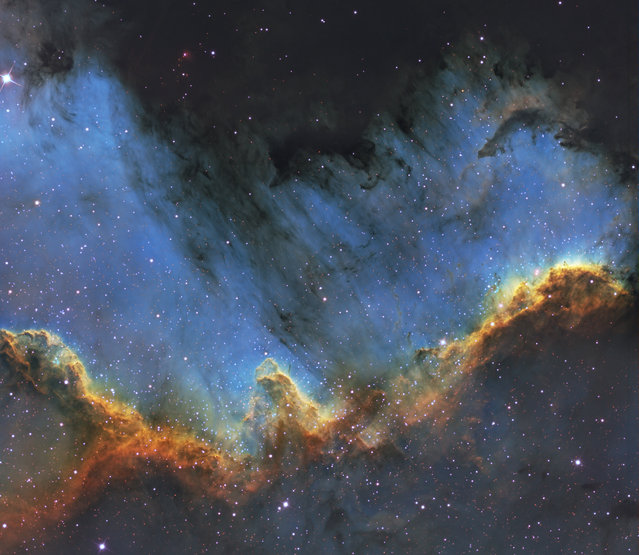
The Cygnus Wall is in the southern  area of NGC7000 also known as the North America Nebula. It is approximately 1800 light years from Earth, and is in the constellation Cygnus. The Wall is an energized shock front and contains the most concentrated star formations in the nebula. The size of the North America Nebula is about 4 full moons. (Bill Snyder)

Amateur astronomer Bill Snyder has been involved with astrophotography since 2007. Photo: The Cygnus Wall is in the southern area of NGC7000 also known as the North America Nebula. It is approximately 1800 light years from Earth, and is in the constellation Cygnus. The Wall is an energized shock front and contains the most concentrated star formations in the nebula. The size of the North America Nebula is about 4 full moons. (Photo and caption by Bill Snyder)
Details
30 Oct 2013 09:15:00
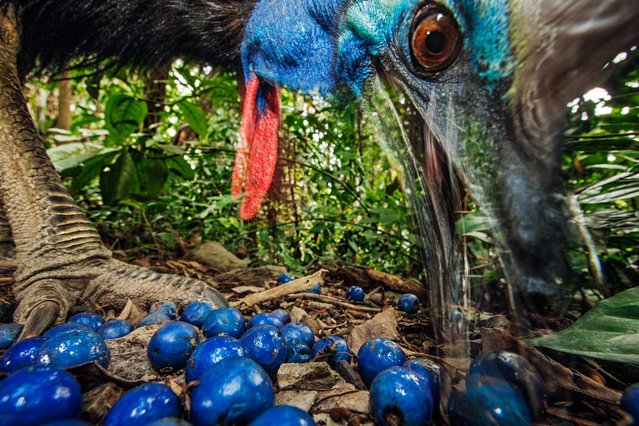
“Cassowaries are large, flightless birds related to emus and (more distantly) to ostriches, rheas, and kiwis”, writes Olivia Judson in the September issue of National Geographic magazine. (Photo by Christian Ziegler/National Geographic)

“Cassowaries are large, flightless birds related to emus and (more distantly) to ostriches, rheas, and kiwis”, writes Olivia Judson in the September issue of National Geographic magazine. How large? People-size: Adult males stand well over five foot five and top 110 pounds. Females are even taller, and can weigh more than 160 pounds. Dangerous when roused, they’re shy and peaceable when left alone. But even birds this big and tough are prey to habitat loss. The dense New Guinea and Australia rain forests where they live have dwindled. Today cassowaries might number 1,500 to 2,000. And because they help shape those same forests – by moving seeds from one place to another – “if they vanish”, Judson writes, “the structure of the forest would gradually change” too. (Photo by Christian Ziegler/National Geographic)
Details
06 Jan 2014 12:21:00
A visitor holds an Israeli-made rifle during the 8th International Land and Naval Defense system exhibition, in New Delhi, India, on February 6, 2014. (Photo by Anindito Mukherjee/Reuters)

A visitor holds an Israeli-made rifle during the 8th International Land and Naval Defense system exhibition, in New Delhi, India, on February 6, 2014. (Photo by Anindito Mukherjee/Reuters)
Details
08 Feb 2014 15:38:00
A member of the mainly Christian “anti-balaka” (anti-machete) militia trains in the Boeing neighbourhood of Bangui, Central African Republic, on February 24, 2014. (Photo by Fred Dufour/AFP Photo)

A member of the mainly Christian “anti-balaka” (anti-machete) militia trains in the Boeing neighbourhood of Bangui, Central African Republic, on February 24, 2014. (Photo by Fred Dufour/AFP Photo)
Details
01 Mar 2014 12:48:00
A Chinese man uses an old film camera to take a picture of relatives near the Forbidden City on March 27, 2014 in Beijing, China. (Photo by Kevin Frayer/Getty Images)

A Chinese man uses an old film camera to take a picture of relatives near the Forbidden City on March 27, 2014 in Beijing, China. (Photo by Kevin Frayer/Getty Images)
Details
29 Mar 2014 14:01:00
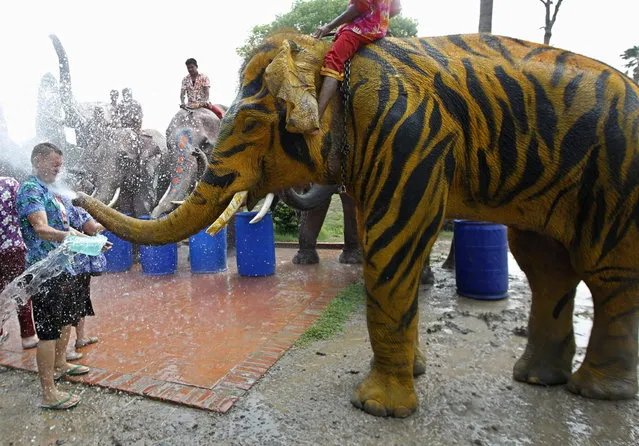
Elephants spray tourists with water in celebration of the Songkran water festival in Thailand's Ayutthaya province, about 80 km (50 miles) north of Bangkok, April 9, 2014. (Photo by Rungroj Yongrit/EFE)

Elephants spray tourists with water in celebration of the Songkran water festival in Thailand's Ayutthaya province, about 80 km (50 miles) north of Bangkok, April 9, 2014. (Photo by Rungroj Yongrit/EFE)
Details
12 Apr 2014 13:30:00
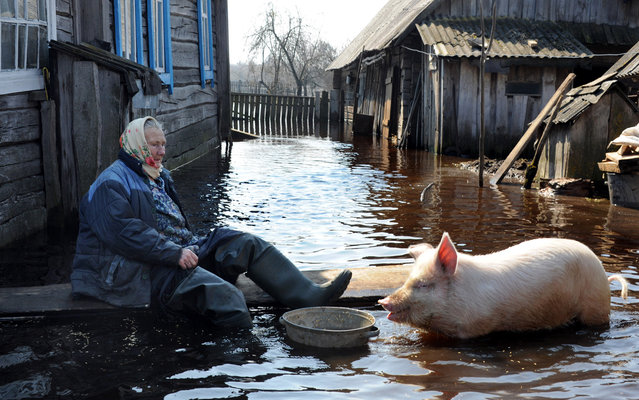
A woman feeds a pig in her yard during spring flood in the Belarus village of Snyadin near Pripyat river, some 300 km south of Minsk, on April 16, 2013. (Photo by Viktor Drachev/AFP Photo)

A woman feeds a pig in her yard during spring flood in the Belarus village of Snyadin near Pripyat river, some 300 km south of Minsk, on April 16, 2013. (Photo by Viktor Drachev/AFP Photo)
Details
20 Apr 2013 12:12:00