Loading...
Done
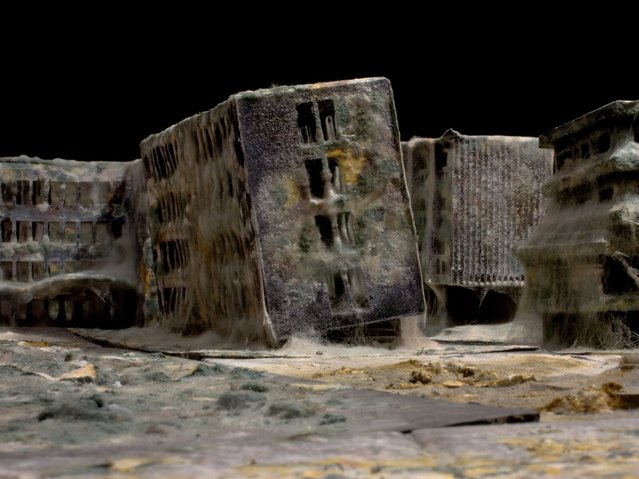
Apocalyptic Metropolises by Daniel Del Nero

Italian artist Daniel Del Nero created this aerily beautiful series of architectural scale models, that he constructed with black paper, and covered with flour and a layer of mold. The effect is that of peering into the distant future, long after the extinction of humanity itself.
Details
15 Nov 2012 09:14:00


A model poses with her arm after it was painted by body artist Guido Daniele into the likeness of a snake at Harrods on Februrary 4, 2008 in London, England. Guido Daniele has painted human hands since 2000. Each work of art takes over three hours to complete. (Photo by Chris Jackson/Getty Images)
Details
10 May 2011 09:28:00
A general view of Edinburgh Castle

A general view of Edinburgh Castle on February 7, 2012 in Edinburgh, Scotland. The castle dominates the city skyline was built on top of an extinct volcano, and has had a human settlement on the castle site since 900BC. (Photo by Jeff J. Mitchell/Getty Images)
Details
08 Feb 2012 10:58:00
Wire Sculptures By Richard Stainthorp

The English artist Richard Stainthorp creates life-size sculptures with metal wire. Its special feature is to capture, accurately, all the energy and fluidity of the human body. A selection of his works is available in the article.
Details
03 Aug 2015 08:24:00
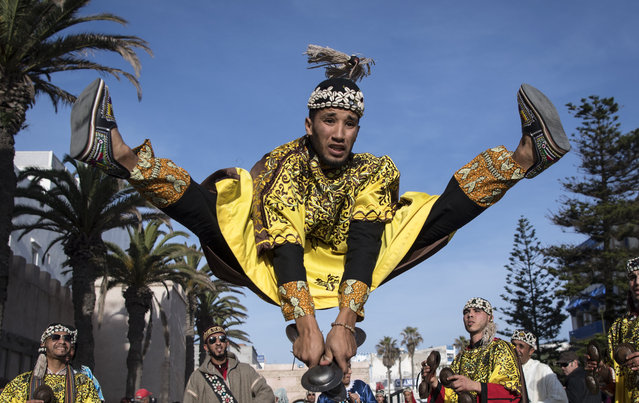
A Gnawa traditional group performs in the city of Essaouira on December 14, 2019, to celebrate the decision of adding the Gnawa culture to UNESCO's list of Intangible Cultural Heritage of Humanity. Gnawa culture, a centuries-old Moroccan practice rooted in music, African rituals and Sufi traditions, was added to UNESCO's list of Intangible Cultural Heritage of Humanity earlier in the week. Gnawa refers to a “set of musical productions, fraternal practices and therapeutic rituals where the secular mixes with the sacred”, according to the nomination submitted by Morocco. Often dressed in colourful outfits, Gnawa musicians play the guenbri, a type of lute with three strings, accompanied by steel castanets called krakebs. (Photo by Fadel Senna/AFP Photo)

A Gnawa traditional group performs in the city of Essaouira on December 14, 2019, to celebrate the decision of adding the Gnawa culture to UNESCO's list of Intangible Cultural Heritage of Humanity. Gnawa culture, a centuries-old Moroccan practice rooted in music, African rituals and Sufi traditions, was added to UNESCO's list of Intangible Cultural Heritage of Humanity earlier in the week. Gnawa refers to a “set of musical productions, fraternal practices and therapeutic rituals where the secular mixes with the sacred”, according to the nomination submitted by Morocco. Often dressed in colourful outfits, Gnawa musicians play the guenbri, a type of lute with three strings, accompanied by steel castanets called krakebs. (Photo by Fadel Senna/AFP Photo)
Details
18 Dec 2019 00:05:00
Zoo Portraits By Yago Partal

Zoo Portraits is amazing and creative project by Yago Partal, talented Barcelona-based graphic artist and photographer, who mixes fashion photography and animals in an excellent series of portraits of animals dressed as humans. via PhotoHab
Details
04 Apr 2013 10:02:00
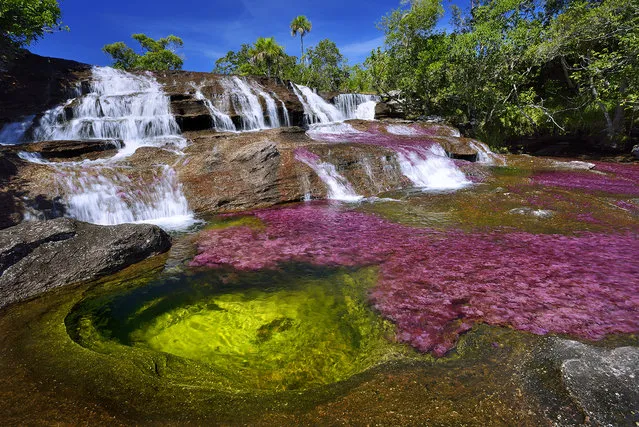
A waterfall is seen at the end of the rainy season, in August, when the water level finally decreases, in the Cano Cristales RIver in the Sierra de la Macarena in Colombia. It has become covered with a bright pink endemic aquatic plant, Macarenia Clavigera. (Photo by Olivier Grunewald)

“El rio mas bonito del Mundo”, the most beautiful river of the world, the “River of five colors”, the “Rainbow River”, or even the “Escaped from Paradise”, are the shimmering appellations that Colombians give to Cano Cristales, a small stream located in the heart of the Macarena National Park, 150 km (93 miles) south of Bogota. Photo: A waterfall is seen at the end of the rainy season, in August, when the water level finally decreases, in the Cano Cristales RIver in the Sierra de la Macarena in Colombia. It has become covered with a bright pink endemic aquatic plant, Macarenia Clavigera. (Photo by Olivier Grunewald)
Details
25 Mar 2014 15:15:00
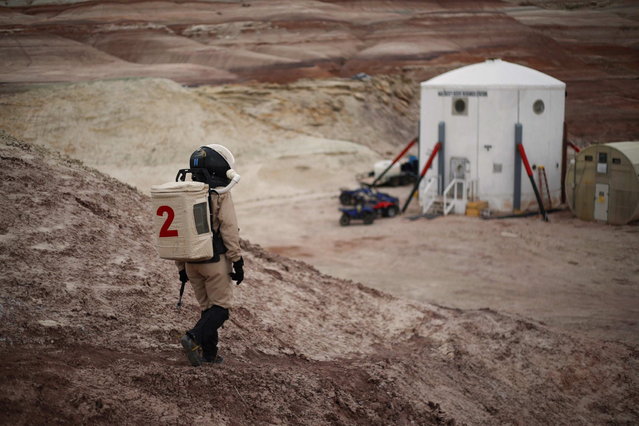
Csilla Orgel, a geologist of Crew 125 EuroMoonMars B mission, makes her way back to the Mars Desert Research Station (MDRS) in the Utah desert March 3, 2013. (Photo by Jim Urquhart/Reuters)

NASA says it could be another 20 years before humans touch down on Mars, but in a sense, the Mars Society has been exploring the red planet for more than a decade – in Utah. Photo: Csilla Orgel, a geologist of Crew 125 EuroMoonMars B mission, makes her way back to the Mars Desert Research Station (MDRS) in the Utah desert March 3, 2013. The MDRS aims to investigate the feasibility of a human exploration of Mars and uses the Utah desert's Mars-like terrain to simulate working conditions on the red planet. Scientists, students and enthusiasts work together developing field tactics and studying the terrain. All outdoor exploration is done wearing simulated spacesuits and carrying air supply packs and crews live together in a small communication base with limited amounts of electricity, food, oxygen and water. Everything needed to survive must be produced, fixed and replaced on site. (Photo by Jim Urquhart/Reuters)
Details
14 Mar 2013 12:11:00