Loading...
Done
An aerial view shows a sinkhole 3.5 km (2 miles) to the east of Solikamsk-2 mine in Perm region, November 20, 2014. Shares in Russia's Uralkali, the world's top potash producer, fell sharply for a second day on Wednesday after a mine accident that could reduce global supplies and push up prices of the crop nutrient worldwide. (Photo by Reuters/Press service of Uralkali company)

An aerial view shows a sinkhole 3.5 km (2 miles) to the east of Solikamsk-2 mine in Perm region, November 20, 2014. Shares in Russia's Uralkali, the world's top potash producer, fell sharply for a second day on Wednesday after a mine accident that could reduce global supplies and push up prices of the crop nutrient worldwide. Uralkali shares have fallen 28 percent since Tuesday when it suspended work at its Solikamsk-2 mine, which accounts for a fifth of the company's output and 3.5 percent of global capacity, following an inflow of water. A sinkhole, stretching 30 by 40 metres (yards), found at an abandoned mine 3.5 km (2 miles) to the east, increased concern about the future of the mine because an inflow of water and the resulting sinkhole in 2006 forced another Uralkali operation to shut permanently. (Photo by Reuters/Press service of Uralkali company)
Details
22 Nov 2014 13:51:00
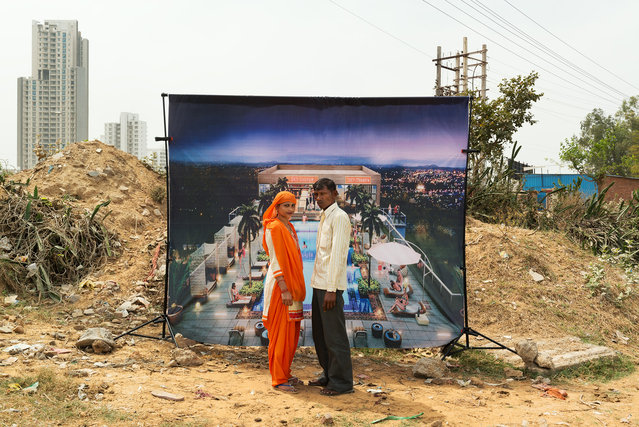
Luxury Living Bhiwadi: “Sky Club on 18th Floor”. Passersby, workers and villagers pose in front of the idealised representations of modern homes. (Photo by Arthur Crestani/The Guardian)

Inspired by traditional Indian travelling photography studios, Arthur Crestani photographed the inhabitants of Gurgaon, a city built almost entirely by private companies. Arthur Crestani’s “Bad City Dreams” contrasts the glossy ideal sold by developers with urban reality. Here: Luxury Living Bhiwadi: “Sky Club on 18th Floor”. (Photo by Arthur Crestani/The Guardian)
Details
16 Mar 2018 00:01:00
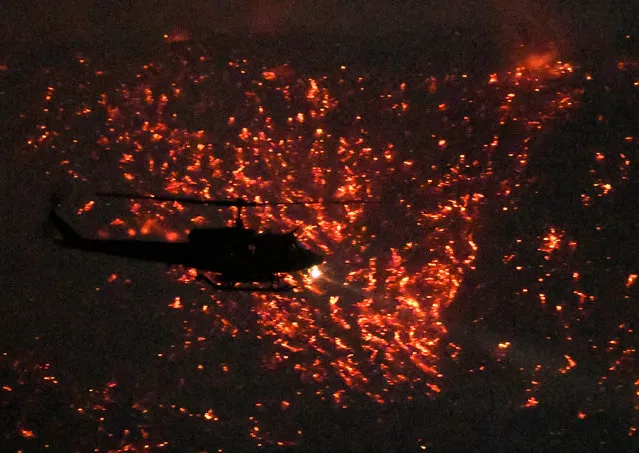
A helicopter is silhouetted by glowing embers as it makes a water drop at the “Old Fire”, which burned in Calabasas, California, U.S., June 4, 2016. (Photo by Gene Blevins/Reuters)

A helicopter is silhouetted by glowing embers as it makes a water drop at the “Old Fire”, which burned in Calabasas, California, U.S., June 4, 2016. (Photo by Gene Blevins/Reuters)
Details
07 Jun 2016 13:17:00
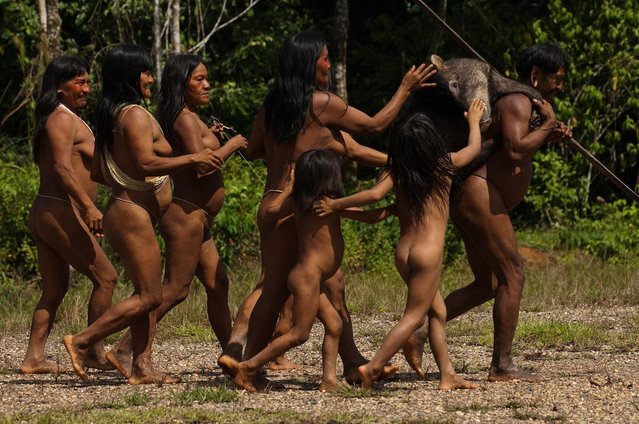
Spectacular images offering insight into the lives of the Huaorani people in the Ecuadorian Amazon have been revealed showing how they use traditional methods to hunt monkeys for food. The stunning pictures were taken by conservation photographer Pete Oxford from Torquay, Devon in the Ecuadorian Amazon. “The Huaorani Indians are a forest people highly in tune with their environment. Many are now totally acculturated since the 1950s by missionaries”, said Pete. “Today they face radical change to their culture to the proximity of oil exploration within their territory and the Yasuni National Park and Biosphere Reserve, they are vastly changed. Some still live very traditionally and for this shoot, through my Huaorani friend, a direct relative of those photographed he wanted to depict them as close to their original culture as possible. They still largely hunt with blow pipes and spears eating a lot of monkeys and peccaries”. The Huaorani are also known as the Waorani, Waodani or the Waos and are native Amerindians. Their lands are located between the Curaray and Napo rivers and speak the Huaorani language. Pete says that during his visit he was welcomed into the group and hopes that ancient cultures can be saved. Here: The tribe were seen celebrating after a hunter returned to camp with a wild pig. (Photo by Pete Oxford/Mediadrumworld.com)

Spectacular images offering insight into the lives of the Huaorani people in the Ecuadorian Amazon have been revealed showing how they use traditional methods to hunt monkeys for food. The stunning pictures were taken by conservation photographer Pete Oxford from Torquay, Devon in the Ecuadorian Amazon. Here: The tribe were seen celebrating after a hunter returned to camp with a wild pig. (Photo by Pete Oxford/Mediadrumworld.com)
Details
20 Jan 2017 07:58:00
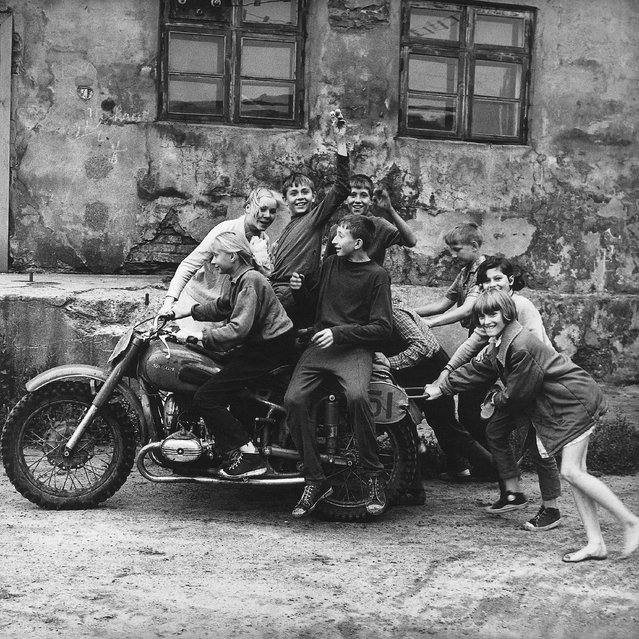
When he started using a camera there were very few documentary photographers working outside the government. Sutkus instead looked to writers and film-makers, and says he drew inspiration from the works of Franz Kafka, Jean-Paul Sartre, Ernest Hemingway and Vladimir Nabokov. Here: The first Lithuanian bikers, 1974. (Photo by Antanas Sutkus)

Rebelling against political propaganda, acclaimed photographer Antanas Sutkus embarked on a life-long journey to capture the everyday scenes around him. Antanas Sutkus, born in 1939, studied journalism at Vilnius University in the late 1950s before becoming disillusioned by the confines of the Soviet-controlled press. He began taking photographs instead, and soon co-founded the Lithuanian Association of Art Photographers. Here: The first Lithuanian bikers, 1974. (Photo by Antanas Sutkus)
Details
11 Apr 2016 10:54:00
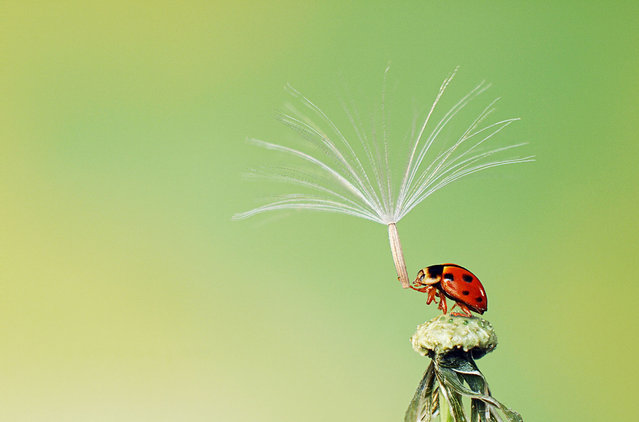
“The Last Pollen Spore Preparing to Leave a Ladybug Trying to Hold On, Because It Didn't Want to Be Alone”. Photo by Hiep Nguyen Hoang (Hanoi, Vietnam). Photographed in Hanoi, Vietnam, April 2012.

“The Last Pollen Spore Preparing to Leave a Ladybug Trying to Hold On, Because It Didn't Want to Be Alone”. Photo by Hiep Nguyen Hoang (Hanoi, Vietnam). Photographed in Hanoi, Vietnam, April 2012.
Details
08 Mar 2013 12:09:00
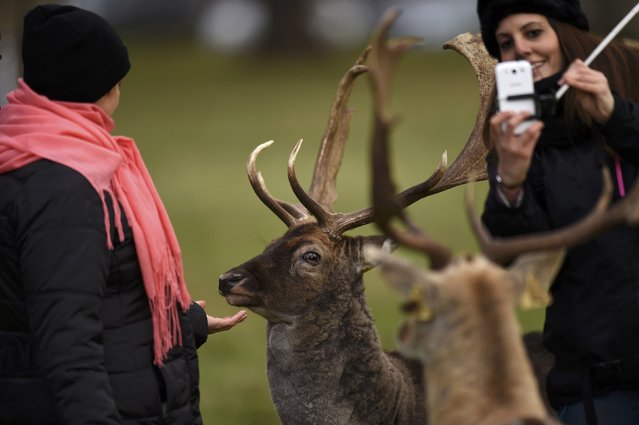
People take pictures of deer in the Phoenix Park in Dublin, Ireland December 5, 2016. (Photo by Clodagh Kilcoyne/Reuters)

People take pictures of deer in the Phoenix Park in Dublin, Ireland December 5, 2016. (Photo by Clodagh Kilcoyne/Reuters)
Details
11 Dec 2016 12:53:00
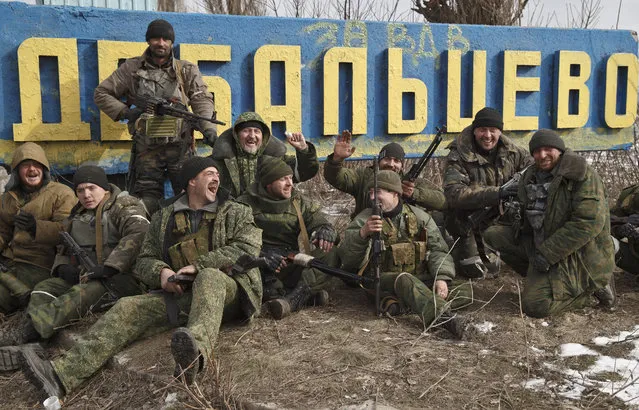
Russia-backed rebels pose by a road sign at the entrance in Debaltseve, Ukraine, Friday, Feb. 20, 2015, after checking the access road into town for mines left behind by retreating Ukrainian government troops. After weeks of relentless fighting, the embattled Ukrainian rail hub of Debaltseve fell Wednesday to Russia-backed separatists, who hoisted a flag in triumph over the town. The Ukrainian president confirmed that he had ordered troops to pull out and the rebels reported taking hundreds of soldiers captive. (AP Photo/Vadim Ghirda)

Russia-backed rebels pose by a road sign at the entrance in Debaltseve, Ukraine, Friday, Feb. 20, 2015, after checking the access road into town for mines left behind by retreating Ukrainian government troops. After weeks of relentless fighting, the embattled Ukrainian rail hub of Debaltseve fell Wednesday to Russia-backed separatists, who hoisted a flag in triumph over the town. The Ukrainian president confirmed that he had ordered troops to pull out and the rebels reported taking hundreds of soldiers captive. (AP Photo/Vadim Ghirda)
Details
02 Mar 2015 01:51:00