Loading...
Done
Kamchatka brown bears at Kurile Lake in Kamchatka peninsula’s volcanic terrain, Russia on August, 2017. Kamchatka brown bears are generally not dangerous to humans, and only 1% of encounters result in attack. (Photo by Igor Ivanko/Anadolu Agency/Getty Images)

Kamchatka brown bears at Kurile Lake in Kamchatka peninsula’s volcanic terrain, Russia on August, 2017. Kamchatka brown bears are generally not dangerous to humans, and only 1% of encounters result in attack. (Photo by Igor Ivanko/Anadolu Agency/Getty Images)
Details
03 Sep 2017 07:17:00
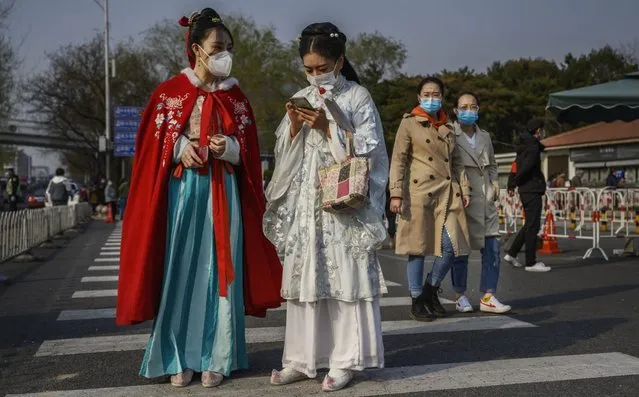
Chinese women wear protective masks as they are dressed in traditional clothing from the Qing Dynasty era outside a park on March 29, 2020 in Beijing, China. A limited section of the iconic tourist site was re-opened to the public this week allowing a smaller number of visitors to reserve tickets online in advance and to enter after passing health screening. With the pandemic hitting hard across the world, China recorded its first day with no new domestic cases of the coronavirus last week, since the government imposed sweeping measures to keep the disease from spreading. For two months, millions of people across China have been restricted in how they move from their homes, while other cities have been locked down in ways that appeared severe at the time but are now being replicated in other countries trying to contain the virus. Officials believe the worst appears to be over in China, though there are concerns of another wave of infections as the government attempts to reboot the worlds second largest economy. In Beijing, it is mandatory to wear masks outdoors, retail stores operate on reduced hours, restaurants employ social distancing among patrons, and tourist attractions at risk of drawing large crowds remain closed. Monitoring and enforcement of virus-related measures and the quarantine of anyone arriving to Beijing is carried out by neighborhood committees and a network of Communist Party volunteers who wear red arm bands. A primary concern for Chinese authorities remains the arrival of flights from Europe and elsewhere, given the exposure of passengers in regions now regarded as hotbeds for transmission. Since January, China has recorded more than 81,000 cases of COVID-19 and at least 3200 deaths, mostly in and around the city of Wuhan, in central Hubei province, where the outbreak first started. (Photo by Kevin Frayer/Getty Images)

Chinese women wear protective masks as they are dressed in traditional clothing from the Qing Dynasty era outside a park on March 29, 2020 in Beijing, China. A limited section of the iconic tourist site was re-opened to the public this week allowing a smaller number of visitors to reserve tickets online in advance and to enter after passing health screening. (Photo by Kevin Frayer/Getty Images)
Details
01 Apr 2020 00:05:00
Focus on two glasses of champagne on floor. Ardent loving couple is sitting on bed and hugging with passion on background. Romantic date concept. (Photo by Olena Yakobchuk/Rex Features/Shutterstock)

Focus on two glasses of champagne on floor. Ardent loving couple is sitting on bed and hugging with passion on background. Romantic date concept. (Photo by Olena Yakobchuk/Rex Features/Shutterstock)
Details
23 Aug 2024 04:04:00
The Intellectual. (Photo by Megan Price)

The Intellectual. (Photo by Megan Price)
Details
09 Aug 2012 11:34:00
Faces In Places Part2

Angry Mop

See also: Faces in Places
Details
25 Oct 2013 11:14:00
First prize. Taken over Bali Barat National Park, Denpasar, Bali. Made with a GoPro Hero 2 camera. (Photo by Capungaero)

First prize. Taken over Bali Barat National Park, Denpasar, Bali. Made with a GoPro Hero 2 camera. (Photo by Capungaero)
Details
18 Jul 2014 11:47:00
“Jumpology”. “Jump”. (Photo by Benoit Paillé)

“Jump”. (Photo by Benoit Paillé)

Details
06 Feb 2013 16:33:00
Passengers wait for a train to depart from the Hankou Railway Station in Wuhan, central China's Hubei province, Friday January 13, 2017. Officials expect that Chinese travelers will make almost 3 billion trips during the holiday travel rush that starts runs through Feb. 21. These trips include intercity flights, trains and local bus rides to villages for China's 1.4 billion people. (Photo by Chinatopix via AP Photo)

Passengers wait for a train to depart from the Hankou Railway Station in Wuhan, central China's Hubei province, Friday January 13, 2017. Officials expect that Chinese travelers will make almost 3 billion trips during the holiday travel rush that starts runs through Feb. 21. These trips include intercity flights, trains and local bus rides to villages for China's 1.4 billion people. (Photo by Chinatopix via AP Photo)
Details
17 Jan 2017 12:09:00