Loading...
Done
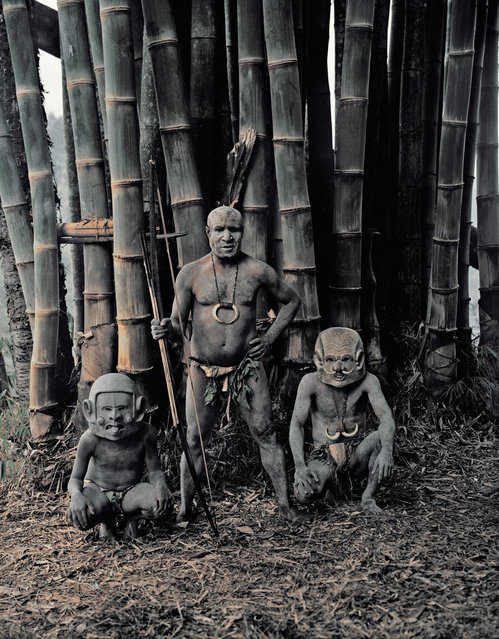
“Asaro from the Eastern Highlands”. The mudmen could not cover their faces with mud because the people of Papua New Guinea thought that the mud from the Asaro river was poisonous. So instead of covering their faces with this alleged poison, they made masks from pebbles that they heated and water from the waterfall, with unusual designs such as long or very short ears either going down to the chin or sticking up at the top, long joined eyebrows attached to the top of the ears, horns and sideways mouths. (Jimmy Nelson)

“Asaro from the Eastern Highlands”. The mudmen could not cover their faces with mud because the people of Papua New Guinea thought that the mud from the Asaro river was poisonous. So instead of covering their faces with this alleged poison, they made masks from pebbles that they heated and water from the waterfall, with unusual designs such as long or very short ears either going down to the chin or sticking up at the top, long joined eyebrows attached to the top of the ears, horns and sideways mouths. (Photo and caption by Jimmy Nelson)
Details
20 Oct 2013 08:54:00
“The Tonight Show” host Jimmy Fallon, center, exits the water during the Chicago Polar Plunge, Sunday, March 2, 2014, in Chicago. Fallon joined Chicago Mayor Rahm Emanuel in the event. (Photo by Andrew A. Nelles/AP Photo)

“The Tonight Show” host Jimmy Fallon, center, exits the water during the Chicago Polar Plunge, Sunday, March 2, 2014, in Chicago. Fallon joined Chicago Mayor Rahm Emanuel in the event. (Photo by Andrew A. Nelles/AP Photo)
Details
08 Mar 2014 11:06:00
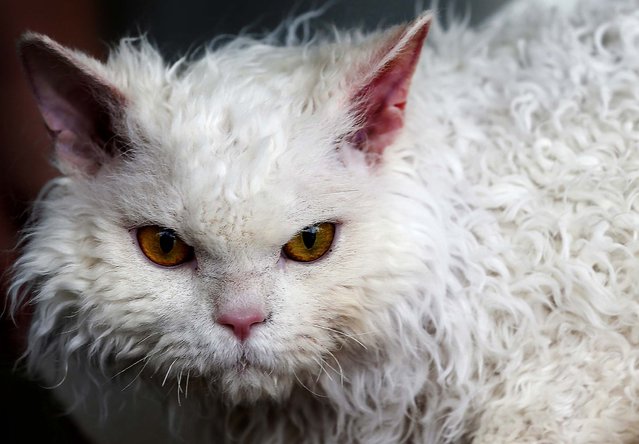
A Selkirk Rex cat is one of more than 400 breeds of cats being presented at the World Cat Federation two-day show in Dortmund, Germany, on April 21, 2013. (Photo by Frank Augstein/Associated Press)

A Selkirk Rex cat is one of more than 400 breeds of cats being presented at the World Cat Federation two-day show in Dortmund, Germany, on April 21, 2013. (Photo by Frank Augstein/Associated Press)
Details
27 Apr 2013 14:58:00
A Tibetan mastiff dog is displayed for sale at a mastiff show in Baoding, Hebei province, south of Beijing on March 9, 2013. Fetching prices up to around 750,000 USD, mastiffs have become a prized status-symbol amongst China's wealthy, with rich buyers across the country sending prices skyrocketing. Owners say the mastiffs, descendents of dogs used for hunting by nomadic tribes in central Asia and Tibet are fiercely loyal and protective. (Photo by Ed Jones/AFP Photo)

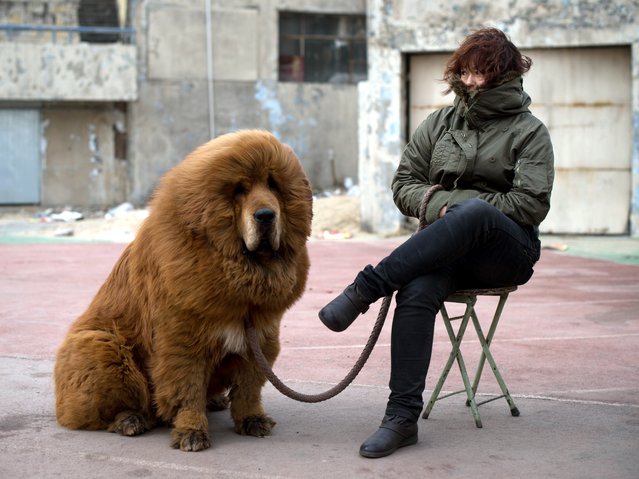
A Tibetan mastiff dog is displayed for sale at a mastiff show in Baoding, Hebei province, south of Beijing on March 9, 2013. Fetching prices up to around 750,000 USD, mastiffs have become a prized status-symbol amongst China's wealthy, with rich buyers across the country sending prices skyrocketing. Owners say the mastiffs, descendents of dogs used for hunting by nomadic tribes in central Asia and Tibet are fiercely loyal and protective. Breeders still travel to the Himalayan plateau to collect young puppies, although many are unable to adjust to the low altitudes and die during the journey. (Photo by Ed Jones/AFP Photo)
Details
02 May 2014 09:40:00
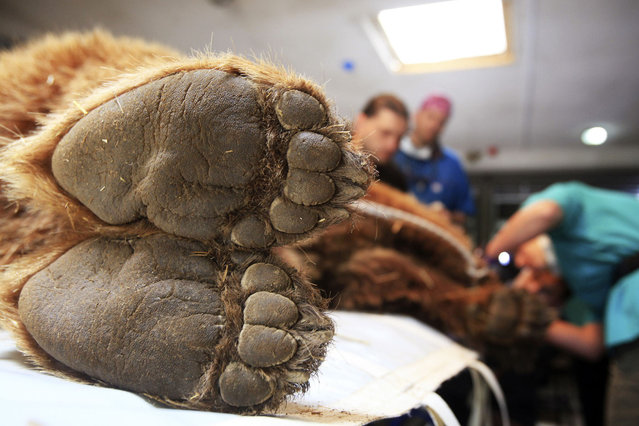
A brown bear is checked by foreign veterinaries and local staff members at the Four Paws Bear Sanctuary in Pristina, on May 9, 2014. (Photo by Hazir Reka/Reuters)

A brown bear is checked by foreign veterinaries and local staff members at the Four Paws Bear Sanctuary in Pristina, on May 9, 2014. (Photo by Hazir Reka/Reuters)
Details
10 May 2014 15:00:00
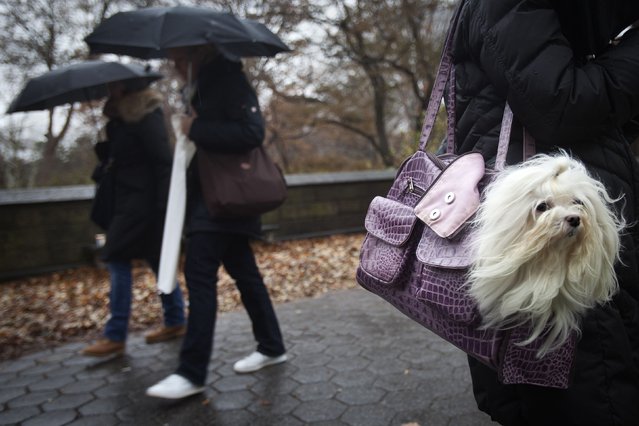
Emma the Maltese's fur blows in the wind as she rides in her owner's purse on 5th Avenue at Central Park in New York December 2, 2014. (Photo by Carlo Allegri/Reuters)

Emma the Maltese's fur blows in the wind as she rides in her owner's purse on 5th Avenue at Central Park in New York December 2, 2014. (Photo by Carlo Allegri/Reuters)
Details
06 Dec 2014 13:07:00
A boat is stranded on Poyang Lake in Lushan City, China during low-water season on November 3, 2016. (Photo by  Xinhua/Barcroft Images)

A boat is stranded on Poyang Lake in Lushan City, China during low-water season on November 3, 2016. (Photo by Xinhua/Barcroft Images)
Details
04 Nov 2016 12:14:00
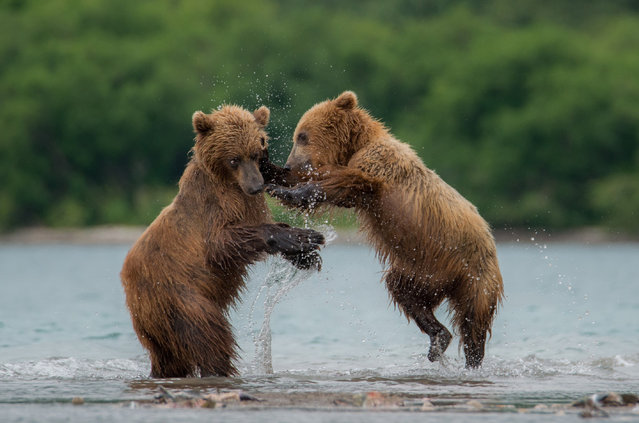
Kamchatka brown bears at Kurile Lake in Kamchatka peninsula’s volcanic terrain, Russia on August, 2017. Kamchatka brown bears are generally not dangerous to humans, and only 1% of encounters result in attack. (Photo by Igor Ivanko/Anadolu Agency/Getty Images)

Kamchatka brown bears at Kurile Lake in Kamchatka peninsula’s volcanic terrain, Russia on August, 2017. Kamchatka brown bears are generally not dangerous to humans, and only 1% of encounters result in attack. (Photo by Igor Ivanko/Anadolu Agency/Getty Images)
Details
03 Sep 2017 07:17:00