Loading...
Done
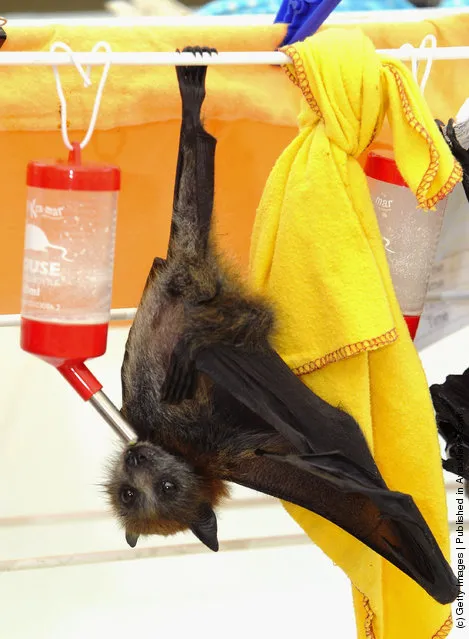
Baby Flying Foxes

A Baby Flying Fox (Pteropus) hangs from a clothes line at a temporary bat rehabilitation centre on December 3, 2008 on the Gold Coast, Australia. (Photo by David Hardenberg/Getty Images)
Details
26 Oct 2011 12:44:00
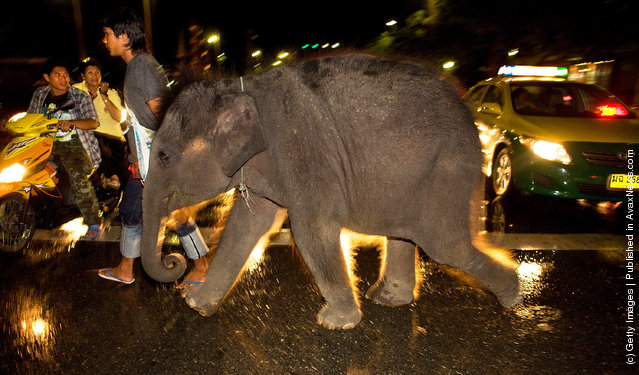
Urban Elephants Roam The Streets of Bangkok

A mahout (elephant driver) walks a baby elephant across the city streets at night September 27, 2008 in Bangkok, Thailand. (Photo Paula Bronstein/Getty Images)
Details
12 Oct 2011 12:19:00
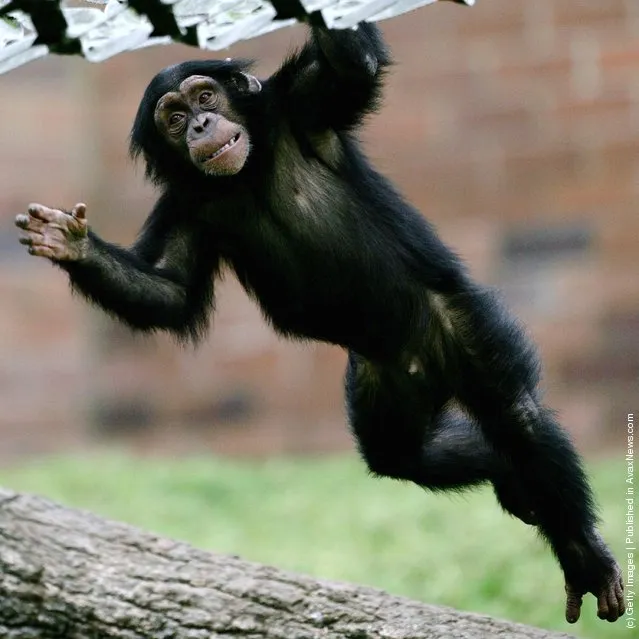
A baby Chimpanzee plays in its enclosure at Taronga Zoo

A baby Chimpanzee plays in its enclosure at Taronga Zoo July 14, 2006 in Sydney, Australia. (Photo by Ian Waldie/Getty Images)
Details
08 Oct 2011 13:22:00
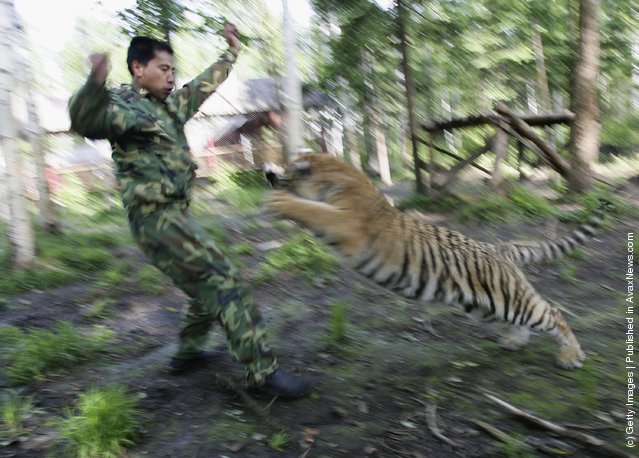
A feeder trains a Siberian tiger cub

A feeder trains a Siberian tiger cub at Erdaohe Tiger Park July 2, 2006 in Antu County of Yanbian Chaoxian Autonomous Prefecture, Jilin Province, China. About 15 artificially-fed Siberian tigers from Harbin Siberian Tiger Park are being trained to develop their ability to live in the wild. The wild Siberian tiger is listed as one of the most endangered species in the world, with its existing number estimated at around 400 worldwide, mainly in the northeastern part of China and the Far East of Russia. Reportedly there are more than 1,300 Siberian tigers which have been raised in China. (Photo by China Photos/Getty Images)
Details
01 Oct 2011 12:23:00
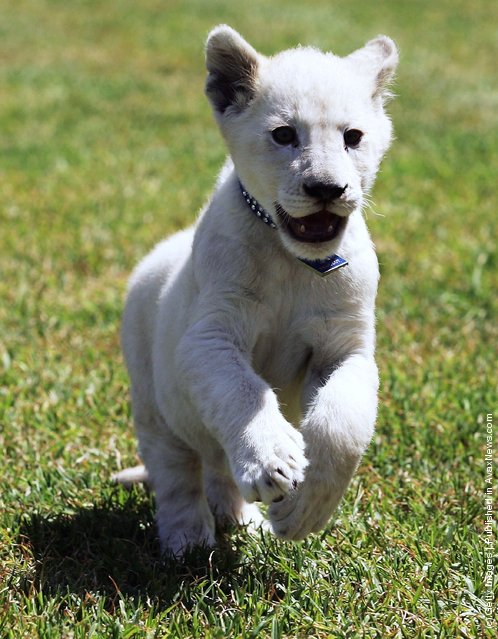
White Lion Cubs

“The white lion is not a distinct subspecies, but a special morph with a genetic condition, leucism, that causes paler colouration akin to that of the white tiger; the condition is similar to melanism, which causes black panthers”. – Wikipedia

Photo: One of two rare white lion cubs from Mogo Zoo on New South Wales South Coast is seen at a photo call at Lavender Green, Luna Park on November 23, 2006 in Sydney, Australia. (Photo by Matt King/Getty Images)
Details
26 Sep 2011 12:01:00
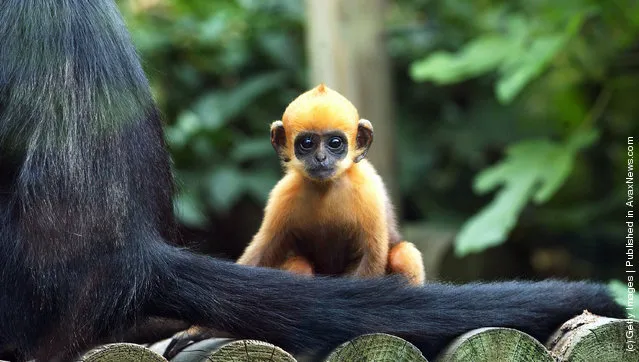
Baby Francois' Langur

“Francois' langur is one of several species of leaf monkeys. Over 50% of its diet is made up of young leaves. It will also consume fruits (17.2%), seeds, flowers, stems, roots, bark and occasionally minerals and insects off of rock surfaces and cliffs. This langur consumes its favorite food, young leaves, at the highest rate during the dry season, April through September, also known as the young leaf-lean period”. – Wikipedia

Photo: An endangered baby Francois' Langur monkey called Laa Laa settles in following her July 6 birth at London Zoo, Regent's Park on August 5, 2004 in London. The bright ginger youngster was born to glossy black parents Max and Shaneka and has the typical orange baby coat which is in stark contrast against the black of her parent's and older brother Grub's fur. (Photo by Steve Finn/Getty Images)
Details
22 Sep 2011 11:28:00
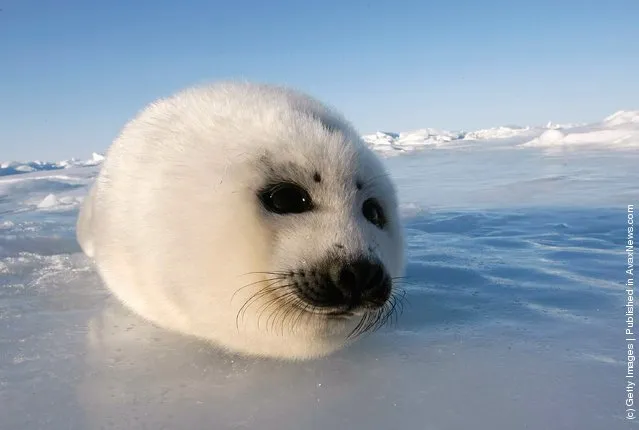
A harp seal pup

“The harp seal or saddleback seal is a species of earless seal native to the northernmost Atlantic Ocean and adjacent parts of the Arctic Ocean. Newborn pups weigh around 11 kilograms (24 lb) and are 80–85 centimetres (31–33 in) long. After birth, the mother only feeds that pup. During the 12 day nursing period, the mother does not eat, losing up to 3 kilograms (7 lb) per day. Harp seal milk contains up to 48% fat, so pups gain over 2.2 kilograms (4.9 lb) per day. During this time, the juvenile's “greycoat” grows in beneath the white neonatal coat, and it weighs 80 pounds (36 kg)”. – Wikipedia

Photo: A harp seal pup lies on an ice floe in the Gulf of Saint Lawrence March 24, 2008 in Charlottetown, Canada. (Photo by Joe Raedle/Getty Images)
Details
19 Sep 2011 15:49:00
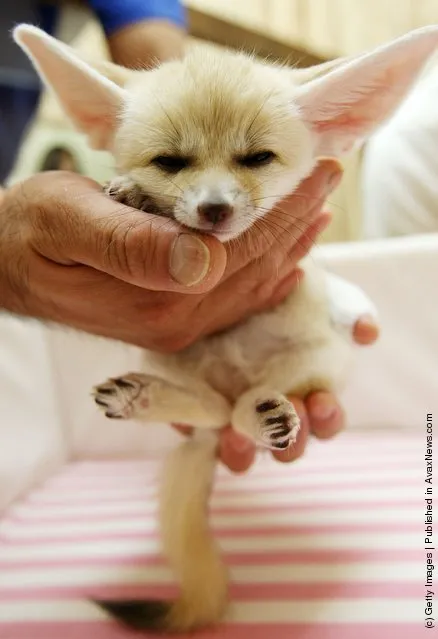
Baby Fennec Fox

“The fennec fox is a small nocturnal fox found in the Sahara of North Africa. Its most distinctive feature is unusually large ears. The name “fennec” comes from the Arabic word for fox, and the species name zerda has a Greek origin that refers to its habitat. The fennec is the smallest species of canid in the world; coat, ears and kidney functions have adapted to a high-temperature, low-water, desert environment. In addition, its hearing is sensitive enough to hear prey moving underground”. – Wikipedia

Photo: A Baby Fennec is seen at Sunshine International Aquarium on June 24, 2009 in Tokyo, Japan. The small nocturnal fox babies were born on May 17 2009. (Photo by Junko Kimura/Getty Images)
Details
16 Sep 2011 12:02:00