Loading...
Done
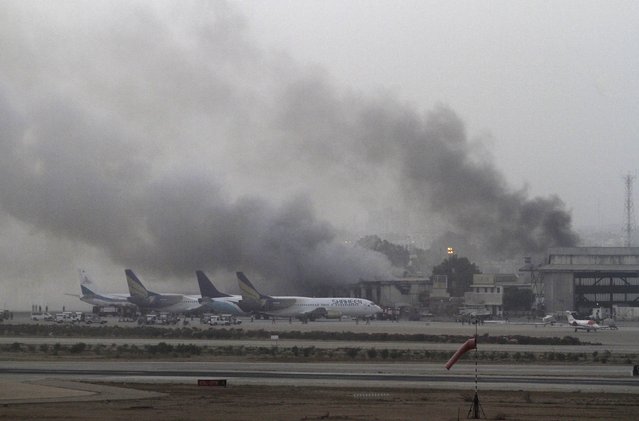
Smoke billows from Jinnah International Airport in Karachi, Pakistan, June 9, 2014. REUTERS/Athar Hussain

Smoke billows from Jinnah International Airport in Karachi, Pakistan, June 9, 2014. (Photo by Athar Hussain/Reuters)
Details
11 Jun 2014 10:06:00
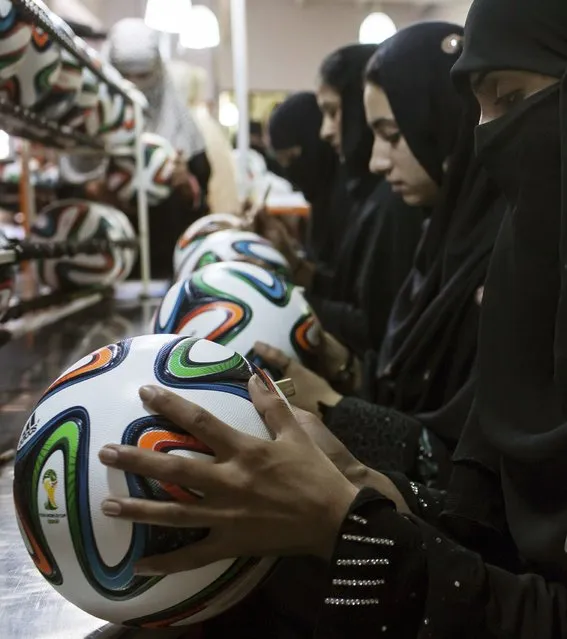
Employees conduct a final check to fix any cavities in the seams of balls inside the soccer ball factory that produces official match balls for the 2014 World Cup in Brazil, in Sialkot, Punjab province May 16, 2014. (Photo by Sara Farid/Reuters)

Employees conduct a final check to fix any cavities in the seams of balls inside the soccer ball factory that produces official match balls for the 2014 World Cup in Brazil, in Sialkot, Punjab province May 16, 2014. It was when he felt the roar of the crowd at the 2006 World Cup in Germany that Pakistani factory owner Khawaja Akhtar first dreamt up a goal of his own: to manufacture the ball for the biggest soccer tournament on the planet. Last year he finally got his chance – but only 33 days to make it happen. (Photo by Sara Farid/Reuters)
Details
26 May 2014 13:59:00
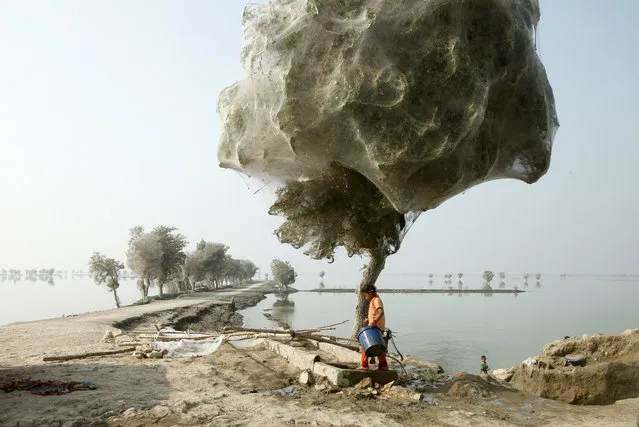
Spiderweb Cocooned Trees In Pakistan

An unexpected side-effect of the flooding in parts of Pakistan has been that millions of spiders climbed up into the trees to escape the rising flood waters. Because of the scale of the flooding and the fact that the water has taken so long to recede, many trees have become cocooned in spiders’ webs.
Details
15 May 2014 11:22:00
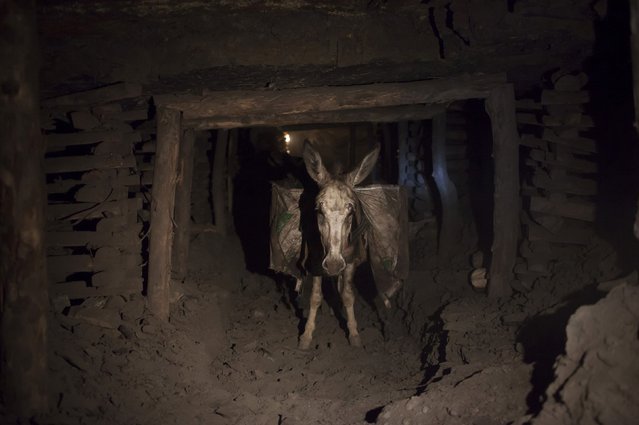
A donkey carrying sacks of coal walks through the narrow tunnels of a coal mine, in Choa Saidan Shah in Punjab province April 29, 2014. (Photo by Sara Farid/Reuters)

A donkey carrying sacks of coal walks through the narrow tunnels of a coal mine, in Choa Saidan Shah in Punjab province April 29, 2014. Coal miners in Chao Saidan Shah use donkeys to transport coal from the depths of the mines to the surface. (Photo by Sara Farid/Reuters)
Details
11 May 2014 12:03:00
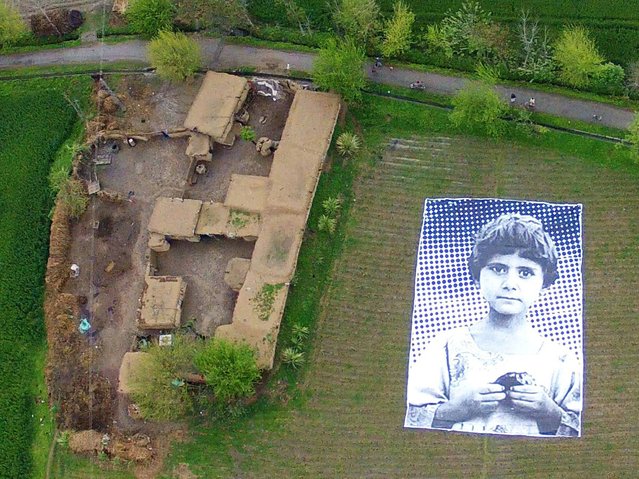
In this undated handout photograph from the “Inside Out Project”, a poster bearing the image of a Pakistani girl whose parents, lawyers say, were killed in a drone strike, lies in a field at an undisclosed location in the northwestern Khyber-Pakhtunkhwa province. (Photo by AFP Photo)

In this undated handout photograph from the “Inside Out Project”, a poster bearing the image of a Pakistani girl whose parents, lawyers say, were killed in a drone strike, lies in a field at an undisclosed location in the northwestern Khyber-Pakhtunkhwa province. A group of artists in Pakistan are hoping to generate “empathy” among US drone operators by placing giant posters of children in the country's troubled tribal regions. (Photo by AFP Photo)
Details
08 Apr 2014 10:39:00
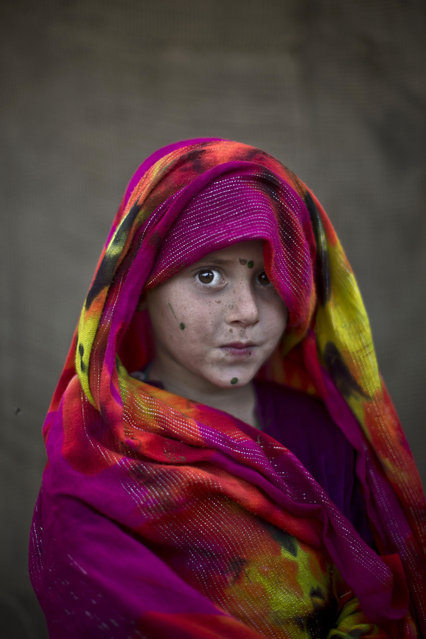
In this Friday, January 24, 2014 photo, Afghan refugee girl, Robina Haseeb, 5, poses for a picture, while playing with other children in a slum on the outskirts of Islamabad, Pakistan. (Photo by Muhammed Muheisen/AP Photo)

In this Friday, January 24, 2014 photo, Afghan refugee girl, Robina Haseeb, 5, poses for a picture, while playing with other children in a slum on the outskirts of Islamabad, Pakistan. (Photo by Muhammed Muheisen/AP Photo)
Details
04 Apr 2014 10:34:00
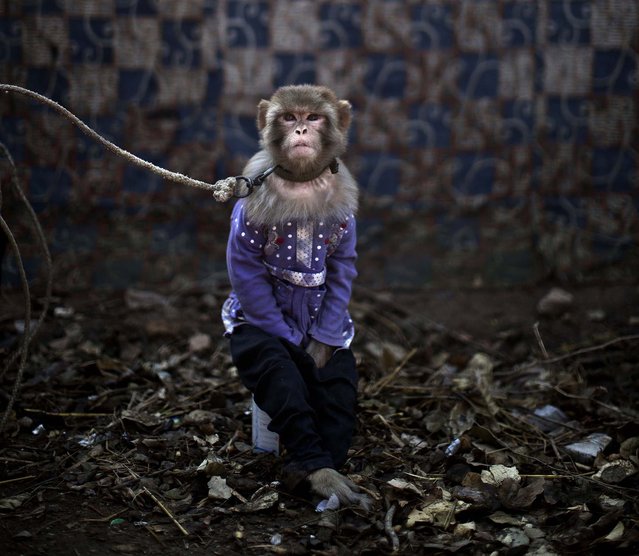
In this Tuesday, February 11, 2014, photo, a trained monkey, that makes a living for her Pakistani owner by performing to a crowd in public and private places, sits held by a leash, in Rawalpindi, Pakistan. For Pakistanis who raise and train the monkeys they are an important source of income in an impoverished country, and they form a strong bond with the animals. The monkeys are usually captured in the wild when they are babies and then trained. A trained monkey can fetch 20,000 to 30,000 rupees ($190 to $285). (Photo by Muhammed Muheisen/Associated Press)

In this Tuesday, February 11, 2014, photo, a trained monkey, that makes a living for her Pakistani owner by performing to a crowd in public and private places, sits held by a leash, in Rawalpindi, Pakistan. For Pakistanis who raise and train the monkeys they are an important source of income in an impoverished country, and they form a strong bond with the animals. The monkeys are usually captured in the wild when they are babies and then trained. A trained monkey can fetch 20,000 to 30,000 rupees ($190 to $285). (Photo by Muhammed Muheisen/Associated Press)
Details
23 Feb 2014 09:50:00
In this December 23, 2013 photo, Indian army soldiers patrol near one of their forward post at the Line of Control (LOC), that divides Kashmir between India and Pakistan, at Krishna Ghati (KG Sector) in Poonch, 290 kilometers (180 miles) from Jammu, India. (Photo by Channi Anand/AP Photo)

In this December 23, 2013 photo, Indian army soldiers patrol near one of their forward post at the Line of Control (LOC), that divides Kashmir between India and Pakistan, at Krishna Ghati (KG Sector) in Poonch, 290 kilometers (180 miles) from Jammu, India. The military commanders of longtime rivals India and Pakistan met on Tuesday in a bid to stop frequent cross-border attacks in disputed Kashmir which escalated tensions in the region in recent months. (Photo by Channi Anand/AP Photo)
Details
29 Dec 2013 08:18:00