Loading...
Done
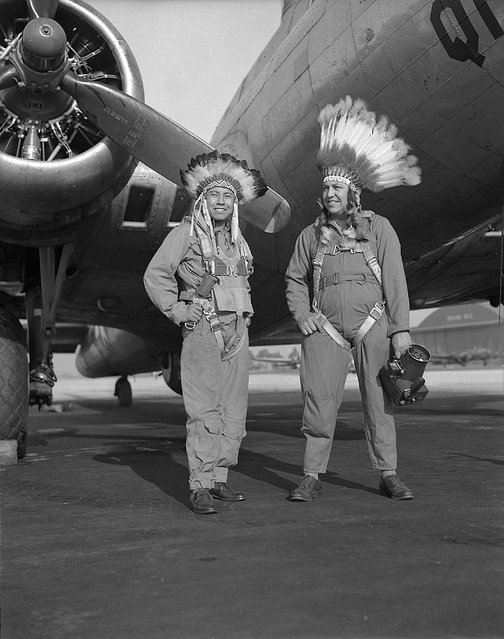
Gus Palmer (Kiowa, at left), side gunner, and Horace Poolaw (Kiowa), aerial photographer, in front of a B-17 Flying Fortress. MacDill Field, Tampa, Florida, ca. 1944. (Photo and caption by 2014 Estate of Horace Poolaw)

Gus Palmer (Kiowa, at left), side gunner, and Horace Poolaw (Kiowa), aerial photographer, in front of a B-17 Flying Fortress. MacDill Field, Tampa, Florida, ca. 1944. (Photo and caption by 2014 Estate of Horace Poolaw)
Details
03 Sep 2014 10:38:00
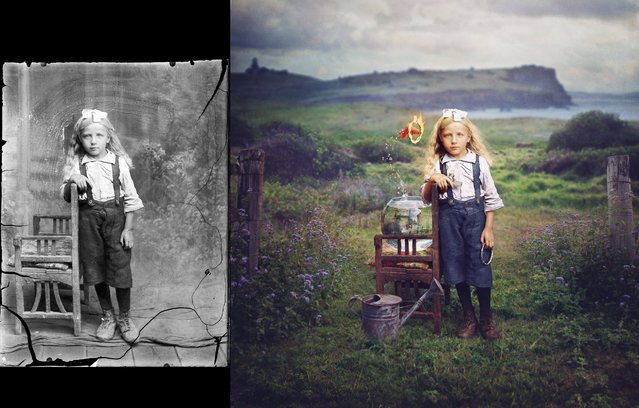
The Costica photo on the left inspired Australia-based photographer Jane Long to create her version, titled “Innocence”. (Photo by Costica Acsinte Archive/Jane Long)

The “Dancing With Costica” series began when Australia-based photographer Jane Long decided to brush up on her retouching skills. After finding the Costica Acsinte Archive on Flickr, she became fascinated with the images and their subjects, wanting to bring them to life and give them a story. Here: the Costica photo on the left inspired Jane Long to create her version, titled “Innocence”. (Photo by Costica Acsinte Archive/Jane Long)
Details
01 Sep 2014 09:48:00
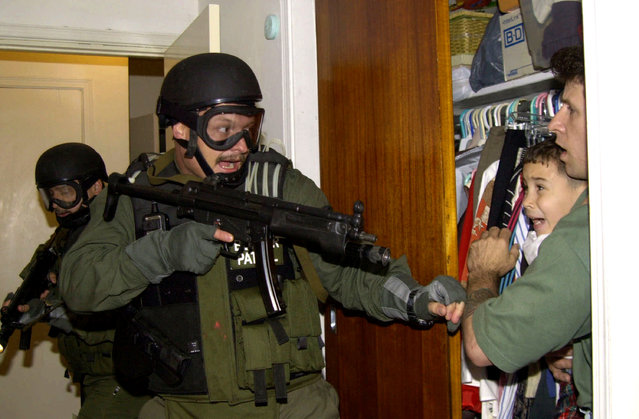
In this third of seven sequential photos, Elian Gonzalez is held in a closet by Donato Dalrymple, one of the two men who rescued the boy from the ocean, right, as government officials search the home of Lazaro Gonzalez for the young boy, early morning, April 22, 2000, in Miami, Florida. Armed federal agents seized Elian Gonzalez from the home of his Miami relatives before dawn, firing tear gas into an angry crowd as they left the scene with the weeping 6-year-old boy. This photo won the Prize in 2001. (Photo by Alan Diaz/AP Photo)

In this third of seven sequential photos, Elian Gonzalez is held in a closet by Donato Dalrymple, one of the two men who rescued the boy from the ocean, right, as government officials search the home of Lazaro Gonzalez for the young boy, early morning, April 22, 2000, in Miami, Florida. Armed federal agents seized Elian Gonzalez from the home of his Miami relatives before dawn, firing tear gas into an angry crowd as they left the scene with the weeping 6-year-old boy. This photo won the Prize in 2001. (Photo by Alan Diaz/AP Photo)
Details
22 Aug 2014 12:18:00
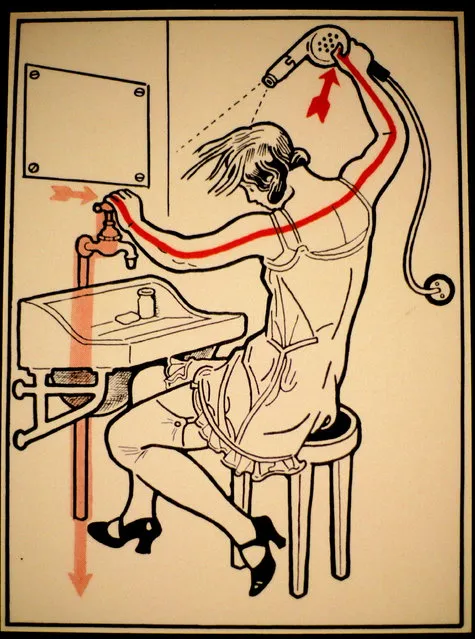
The book “Elektroschutz in 132 Bildern” (Electrical Protection in 132 Pictures) was published in Vienna in the early 1900s by a Viennese physician named Stefan Jellinek (1878-1968, a founder of the Electro-Pathological Museum). The pictures are nice and direct and unambiguous; they teach, graphically, that the surest way to kill yourself with electricity is to form a complete path from source (usually the bright red arrow) to ground (the screened back, pink arrow). Arrowheads provide the path for current flow. (Photo by The Vienna Technical Museum)

The book “Elektroschutz in 132 Bildern” (Electrical Protection in 132 Pictures) was published in Vienna in the early 1900s by a Viennese physician named Stefan Jellinek (1878-1968, a founder of the Electro-Pathological Museum). The pictures are nice and direct and unambiguous; they teach, graphically, that the surest way to kill yourself with electricity is to form a complete path from source (usually the bright red arrow) to ground (the screened back, pink arrow). Arrowheads provide the path for current flow. (Photo by The Vienna Technical Museum)
Details
11 Aug 2014 11:10:00
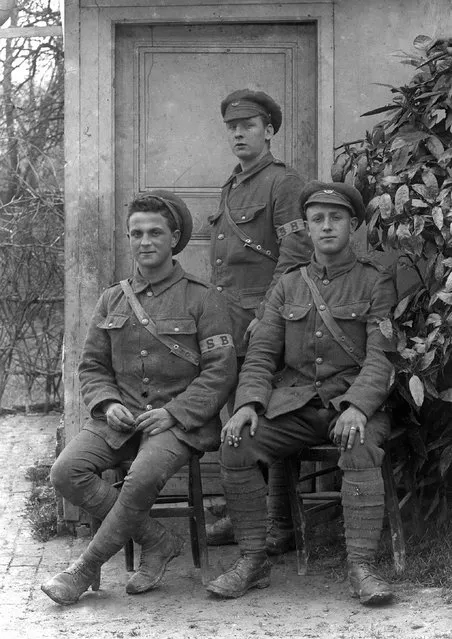
These images, scanned from old glass negatives which had surfaced in northern France, were believed to have been taken by a local amateur photographer in 1916. They showed British and a few Australian soldiers, in formal or informal poses, during or just before the most murderous battle in the history of the British Empire – Battle of the Somme. Who are these British and British Empire soldiers? The identity of the soldiers is, and may always remain, a mystery. (Property of Bernard Gardin/Dominique Zanardi/Joel Scribe/The Independent Magazine)

These images, scanned from old glass negatives which had surfaced in northern France, were believed to have been taken by a local amateur photographer in 1916. They showed British and a few Australian soldiers, in formal or informal poses, during or just before the most murderous battle in the history of the British Empire – Battle of the Somme. Who are these British and British Empire soldiers? The identity of the soldiers is, and may always remain, a mystery... (Property of Bernard Gardin/Dominique Zanardi/Joel Scribe/The Independent Magazine)
Details
04 Aug 2014 14:06:00
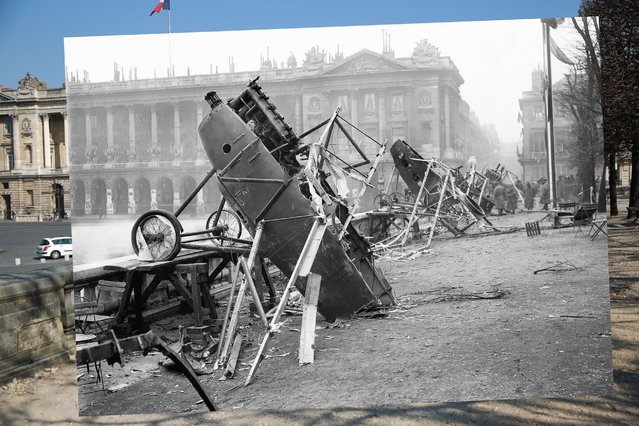
Cars are parked near Place de la Concorde on March 12, 2014 in Paris, France. Inset: World War I, German airplanes at Place de la Concorde in Paris, wrecked by celebrating crowds on the day of the restoration of Alsace-Lorraine, November 18, 1918. (Photo by Peter Macdiarmid/Getty Images)

Cars are parked near Place de la Concorde on March 12, 2014 in Paris, France. Inset: World War I, German airplanes at Place de la Concorde in Paris, wrecked by celebrating crowds on the day of the restoration of Alsace-Lorraine, November 18, 1918. (Photo by Peter Macdiarmid/Getty Images)
Details
01 Aug 2014 12:30:00
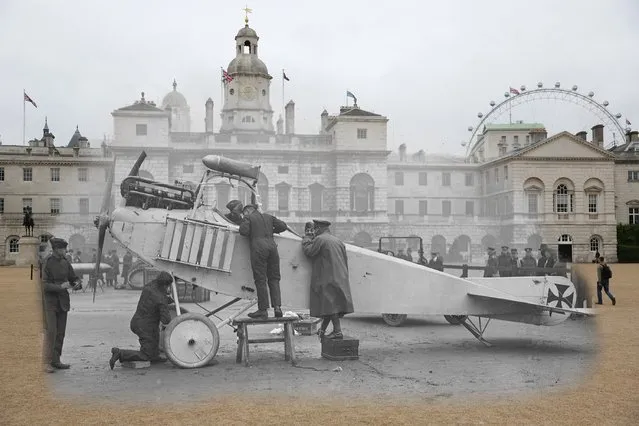
British soldiers inspect a captured German place in the Horseguards' Parade, London during World War I in November 1914, with the London Eye in the background as a reminder of just how much has changed in the last 100 years. (Photo by Peter Macdiarmid/Getty Images)

British soldiers inspect a captured German place in the Horseguards' Parade, London during World War I in November 1914, with the London Eye in the background as a reminder of just how much has changed in the last 100 years. (Photo by Peter Macdiarmid/Getty Images)
Details
29 Jul 2014 12:09:00
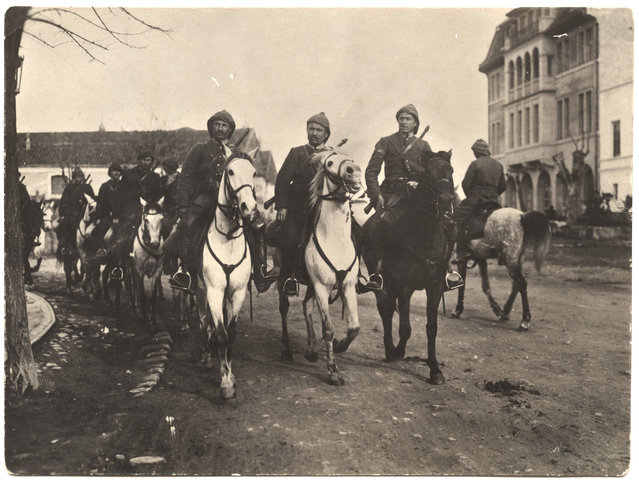
Turkish army, including cavalry, infantry and artillery. (Photo by Dr. P.A. Smithe/National World War I Museum, Kansas City, Mo.)

Dr. P.A. Smithe was sent by the American Red Cross as a doctor and surgeon to work at a hospital in Vienna. He sailed to Europe in December 1915 and returned home in August 1916, according to his daughter, who donated his images to the National World War I Museum. Photo: Turkish army, including cavalry, infantry and artillery. (Photo by Dr. P.A. Smithe/National World War I Museum, Kansas City, Mo.)
Details
29 Jul 2014 11:53:00