Loading...
Done
While the lido was described as bringing “modernism to the masses” on the British coast it was just the latest example of a trend that had been developing since Victorian times – transforming seaside towns into resorts for leisure and entertainment. In the latter half of the nineteenth century, the fashion was for local authorities to build great piers stretching from the promenade out into the sea

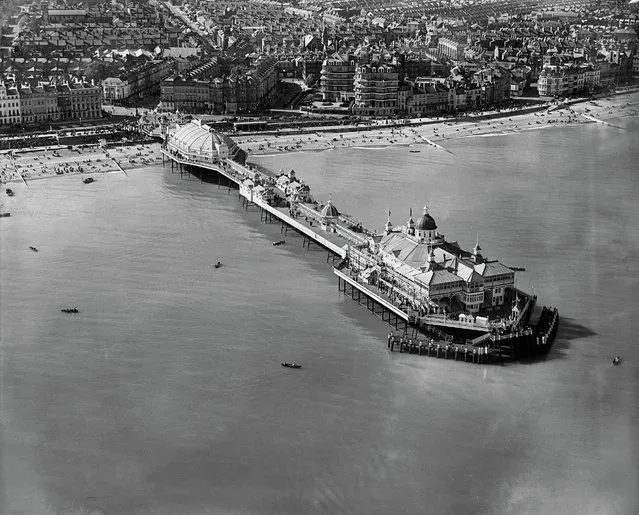
While the lido was described as bringing “modernism to the masses” on the British coast it was just the latest example of a trend that had been developing since Victorian times – transforming seaside towns into resorts for leisure and entertainment. In the latter half of the nineteenth century, the fashion was for local authorities to build great piers stretching from the promenade out into the sea. The Eastbourne Pier, pictured here in May 1931, was erected between 1866 and 1870 to an ingenious design by Eugenius Birch, which saw the structure sitting on special cups allowing the supporting struts to “move” in bad weather. Arranged on the pier's 1,000-foot length were kiosks, a theatre, a ballroom and a camera obscura. 1931. (Photo by Aerofilms Collection via “A History of Britain From Above”)
Details
25 Feb 2014 12:59:00
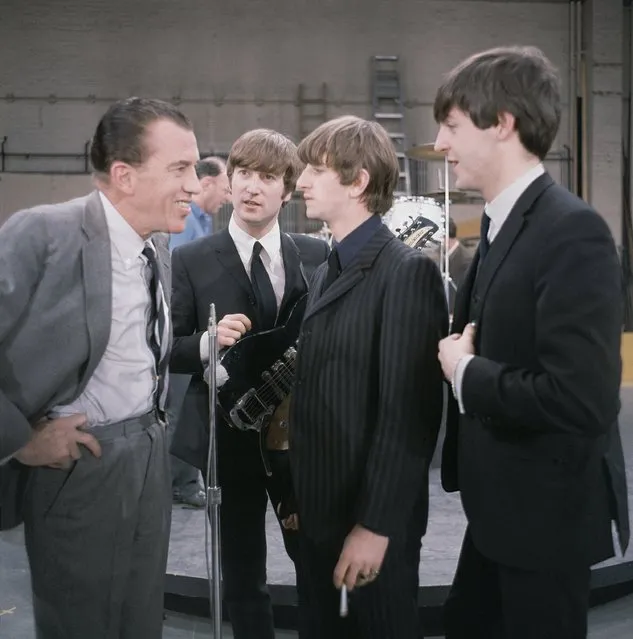
The British rock and roll group the Beatles talk to Ed Sullivan at CBS Studio 50 before their live television appearance on “The Ed Sullivan Show” in New York, February 10, 1964. From left to right are, Sullivan, John Lennon, Ringo Starr, holding a cigarette, and Paul McCartney. (Photo by AP Photo)

The British rock and roll group the Beatles talk to Ed Sullivan at CBS Studio 50 before their live television appearance on “The Ed Sullivan Show” in New York, February 10, 1964. From left to right are, Sullivan, John Lennon, Ringo Starr, holding a cigarette, and Paul McCartney. (Photo by AP Photo)
Details
09 Feb 2014 10:47:00
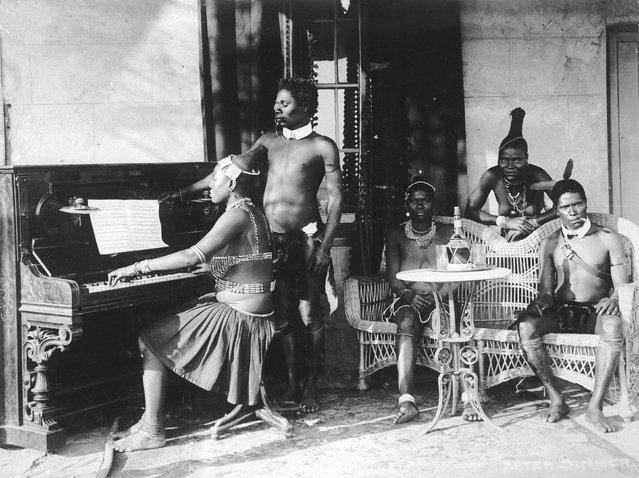
circa 1925:  A Zulu woman playing the piano while a group of others sit and listen.  (Photo by General Photographic Agency/Getty Images)

“The Zulu are the largest South African ethnic group, with an estimated 10–11 million people living mainly in the province of KwaZulu-Natal. Small numbers also live in Zimbabwe, Zambia, and Mozambique. Their language, Zulu, is a Bantu language; more specifically, part of the Nguni subgroup. The Zulu Kingdom played a major role in South African history during the 19th and 20th centuries. Under apartheid, Zulu people were classed as third-class citizens and suffered from state-sanctioned discrimination. They remain today the most numerous ethnic group in South Africa, and now have equal rights along with all other citizens”. – Wikipedia.

Photo: A Zulu woman playing the piano while a group of others sit and listen (to put it briefly, Englishmen scoff over Zulu). South Africa, circa 1925. (Photo by General Photographic Agency)

Details
03 Feb 2014 09:40:00
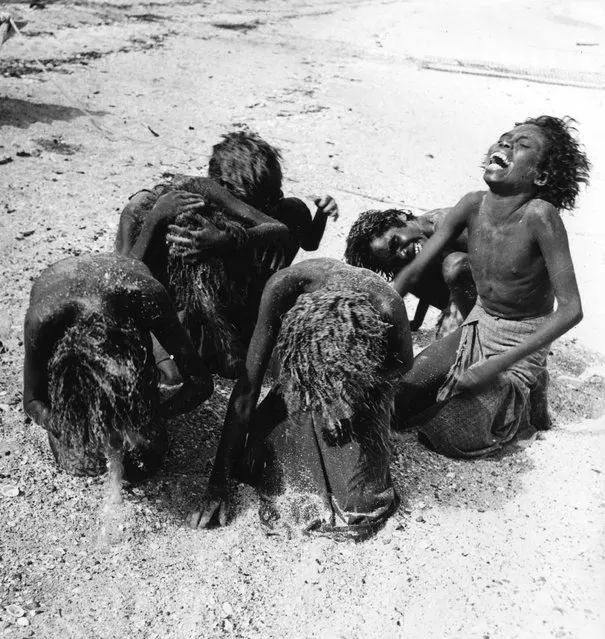
1st January 1950:  Aboriginal women washing their hair with sand at Arnhem land in the Northern Territory of Australia.  (Photo by Three Lions/Getty Images)

“Australian Aborigines are those people regarded as indigenous to the Australian continent. In the High Court of Australia, Australian Aborigines have been specifically identified as a group of people who share, in common, biological ancestry back to the original occupants of the continent”. – Wikipedia

Photo: Aboriginal women washing their hair with sand at Arnhem land in the Northern Territory of Australia. 1st January 1950. (Photo by Three Lions)
Details
02 Feb 2014 07:29:00
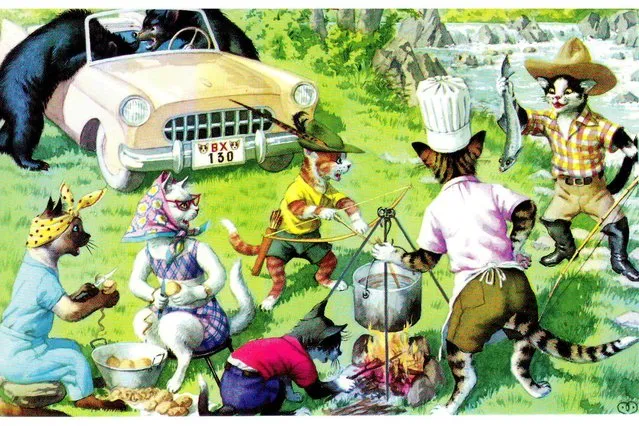
Dressed Cats By  Alfred Mainzer

From the 1940s through the 1960s, the Alfred Mainzer Company of Long Island City, NY published a series of linen and photochrome humorous cat postcards illustrated by Eugen Hartung (or Hurtong) (1897–1973), sometimes referred to as “Mainzer Cats”. These postcards normally illustrate settings that are filled with action, often with a minor disaster just about to occur. While the dressed cats were by far the most popular and most plentiful cards, Hartung also painted other dressed animals – primarily mice, dogs, and hedgehogs.
Details
31 Jan 2014 13:57:00


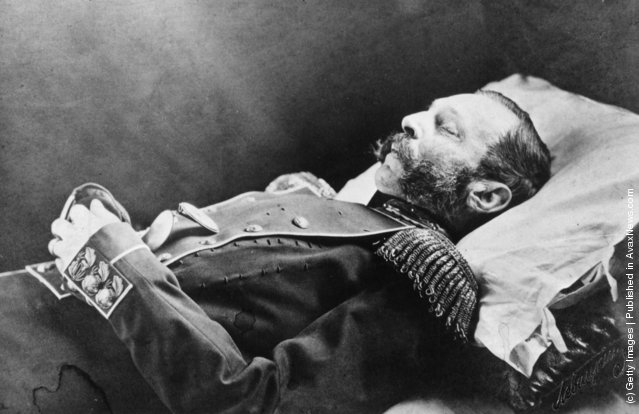
Tsar Alexander II (1818–1881) known as “The Liberator” lying in state. He was mortally wounded by an assassination attack in St Petersburg. (Photo by Hulton Archive/Getty Images). March 1881
Details
31 Jan 2014 10:19:00
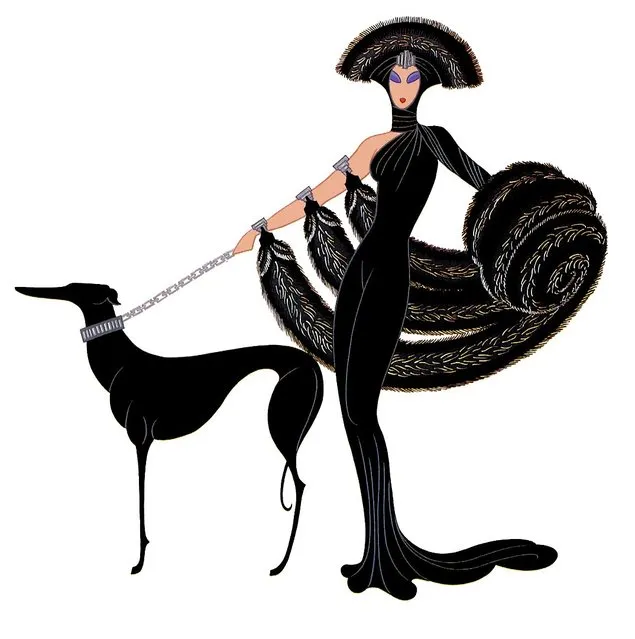
Romain de Tirtoff (Erte) – Symphony In Black

“Romain de Tirtoff (23 November 1892 – 21 April 1990) was a Russian-born French artist and designer known by the pseudonym Erté, the French pronunciation of his initials, R.T. He was a diversely talented 20th-century artist and designer who flourished in an array of fields, including fashion, jewellery, graphic arts, costume and set design for film, theatre, and opera, and interior decor”. – Wikipedia. Photo: Romain de Tirtoff (Erte) – “Symphony In Black” (please click to enlarge).
Details
29 Jan 2014 13:34:00


March of the Soviet Artillery (1943): Video – circa 1936-1947


Details
17 Jan 2014 15:02:00