Loading...
Done
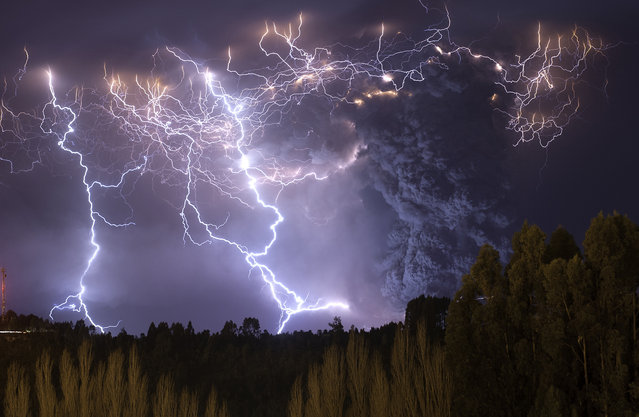
The eruption of Cordon Caulle began on June 4, 2011, located in the Region of Los Rios in Chile. For about 12 months, people and animals became accustomed to living with the daily fall of ash, which also caused problems in the air traffic in South America. The explosions and lightning during first days of the eruption could be seen from hundreds of miles around. This photograph was taken on the second night of eruption from the town of Lago Ranco. (Photo and caption by Francisco Negroni/National Geographic Traveler Photo Contest)

The eruption of Cordon Caulle began on June 4, 2011, located in the Region of Los Rios in Chile. For about 12 months, people and animals became accustomed to living with the daily fall of ash, which also caused problems in the air traffic in South America. The explosions and lightning during first days of the eruption could be seen from hundreds of miles around. This photograph was taken on the second night of eruption from the town of Lago Ranco. (Photo and caption by Francisco Negroni/National Geographic Traveler Photo Contest)

ATTENTION! All pictures are presented in high resolution. To see Hi-Res images – just TWICE click on any picture. In other words, click small picture – opens the BIG picture. Click BIG picture – opens VERY BIG picture.
Details
23 Jun 2013 11:24:00
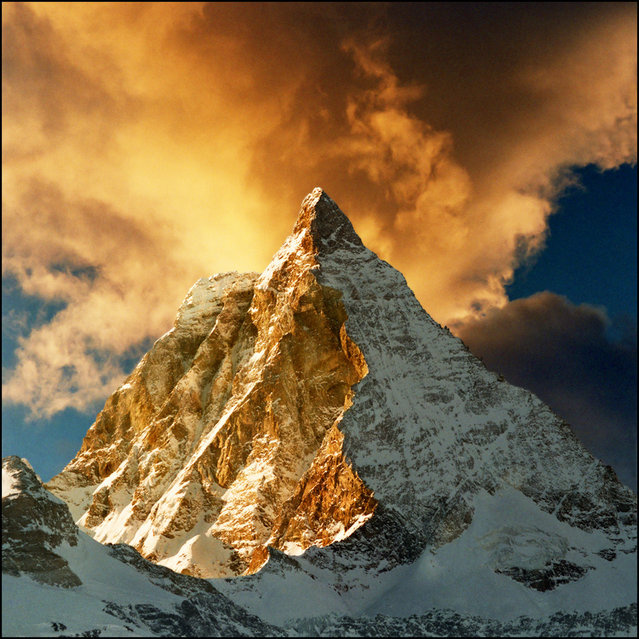
Amazing Photo By Katarina Stefanovic

Katarina Stefanović is a passionate landscape photographer based in Belgrade, Serbia.
Details
23 Jun 2013 07:10:00
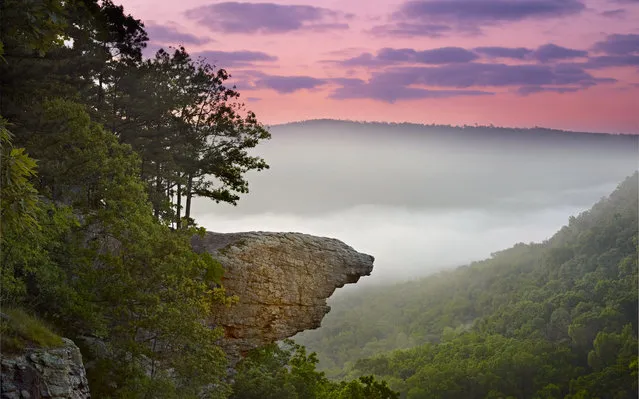
Hawksbill Crag In The Ozark National Forest

The Hawksbill Crag, also known as Whitaker Point, is located along the northern edge of the Upper Buffalo Wilderness in the Ozark National Forest, just south of the Buffalo National River. It is easily one of the most photograped and recognizable features in Arkansas, and is often seen on publications depicting the outdoors in Arkansas. The hike to it is an easy 3.0 mile round trip, and offers scenic vistas, huge boulders, beautiful waterfalls and colorful wildflowers.
Details
21 Jun 2013 11:43:00
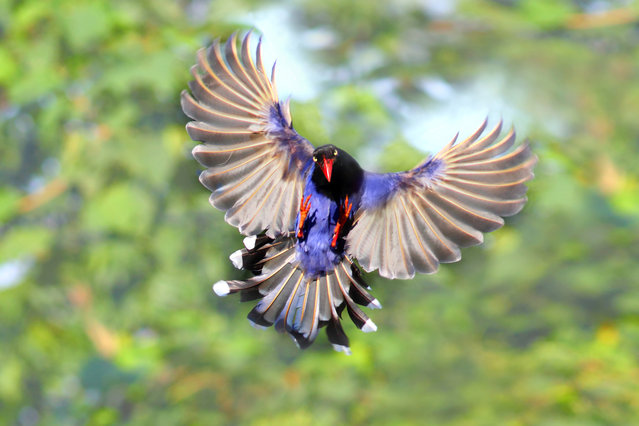
Taiwan Blue Magpie

The Taiwan Blue Magpie (Urocissa caerulea), also called the Taiwan Magpie or Formosan Blue Magpie, is a member of the Crow family. It is an endemic species living in the mountains of Taiwan at elevations of 300 to 1200m.
Details
19 Jun 2013 10:08:00
Orphaned Baby Owls Get New Home

Two orphaned baby burrowing owls, nicknamed Linford and Christie, have moved into the home of their keeper Jimmy Robinson. The owlets were hatched in an incubator at Longleat Safari Park, Wiltshire, and are now being hand-reared by Jimmy.
Details
14 Jun 2013 10:30:00
Lenticular clouds hover of the mountains of the Kamchatka Peninsula in Russia. (Photo by Denis Budkov/Caters News)

“These eerie formations in the sky may look like alien ships. But as the Daily Mail points out, they’re actually a natural occurrence called lenticular clouds”. – Claudine Zap. Photo: Lenticular clouds hover of the mountains of the Kamchatka Peninsula in Russia. (Photos by Denis Budkov/Caters News)
Details
11 Jun 2013 09:26:00
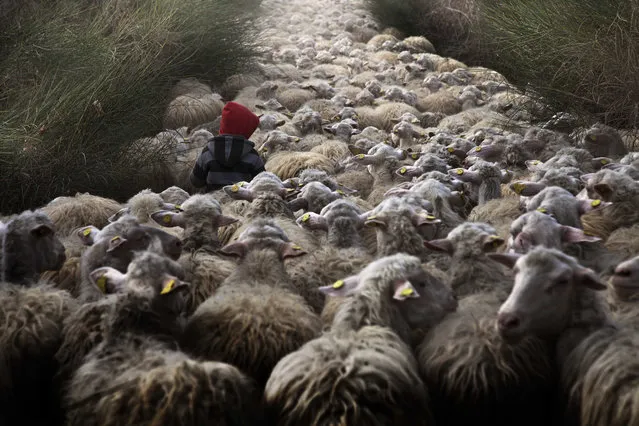
Daily Life in Radicondoli by photographer Marco Sgarbi

“Radicondoli is a comune in the Province of Siena in the Italian region Tuscany, located about 60 km southwest of Florence and about 25 km southwest of Siena”. – Wikipedia. (Photo by Marco Sgarbi)


See also:Part 1
Details
09 Jun 2013 09:56:00
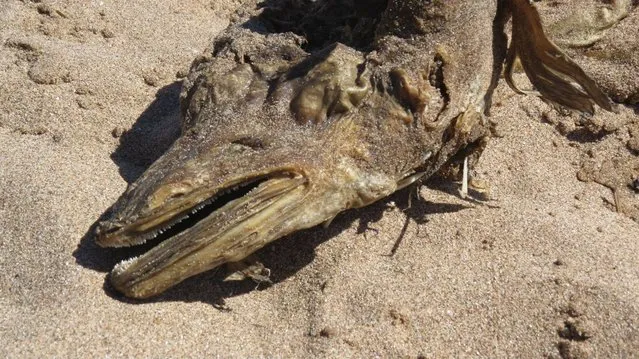
A mysterious sea creature with some frighteningly sharp teeth washed up on a beach in England last week, where David Mackland snapped these photos. A Grind TV story reports that Mackland estimated the creature to be about 4-5 feet in length. (Photo by David Mackland/OurCarnoustie)

A mysterious sea creature with some frighteningly sharp teeth washed up on a beach in England last week, where David Mackland snapped these photos. A Grind TV story reports that Mackland estimated the creature to be about 4-5 feet in length. (Photo by David Mackland/OurCarnoustie)
Details
06 Jun 2013 10:15:00