Loading...
Done
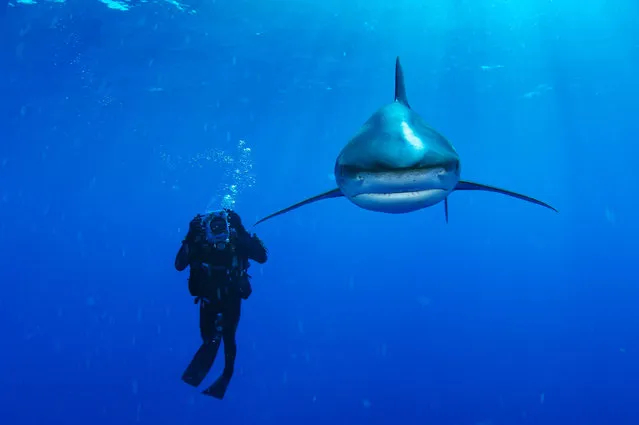
This Bahamian oceanic whitetip shark, known for the distinctive coloring on its white-tipped, rounded extremities, is part of a globally threatened species due to overfishing demands, primarily for its fins. (Photo by Brian Skerry)

Brian Skerry can be called many things – explorer, journalist, conservation advocate – but he is first and foremost a photographer. His journeys to capture amazing underwater photographs have taken him across the world’s oceans. Photo: This Bahamian oceanic whitetip shark, known for the distinctive coloring on its white-tipped, rounded extremities, is part of a globally threatened species due to overfishing demands, primarily for its fins. (Photo by Brian Skerry)
Details
08 Sep 2013 07:26:00
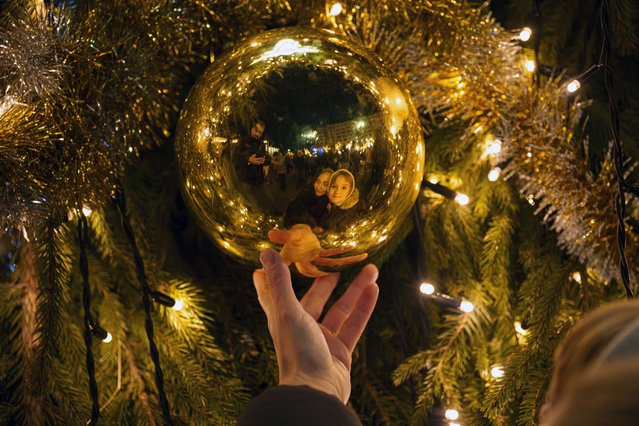
People take pictures of their reflections in the decorations of a Christmas tree, at a Christmas fair in Bucharest, Romania, Saturday, December 14, 2024. (Photo by Andreea Alexandru/AP Photo)

People take pictures of their reflections in the decorations of a Christmas tree, at a Christmas fair in Bucharest, Romania, Saturday, December 14, 2024. (Photo by Andreea Alexandru/AP Photo)
Details
29 Jan 2025 03:33:00
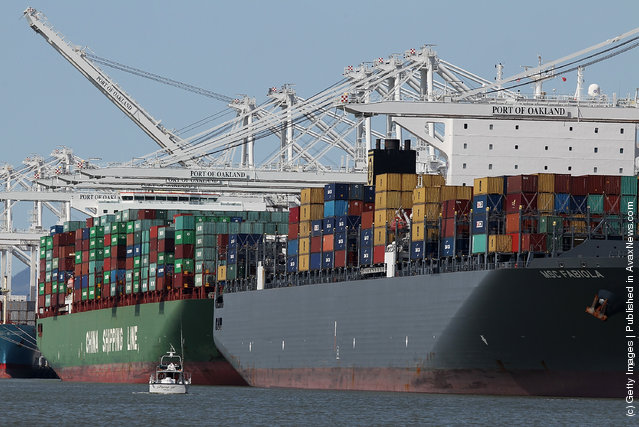
The container ship MSC Fabiola (R) is seen docked at the Port of Oakland on March 22, 2012, in Oakland, California

“MSC Fabiola is a container ship owned by Mediterranean Shipping Company (MSC), the largest such vessel ever to dock in North America. In March 2012 the ship shifted from its initial Asia-to-Europe service to begin trans-Pacific service. On March 19, 2012, Fabiola docked at the Port of Long Beach, breaking earlier records for the largest container ship at a US port, and at any North American port”. – Wikipedia

Photo: The container ship MSC Fabiola (R) is seen docked at the Port of Oakland on March 22, 2012, in Oakland, California. The MSC Fabiola is the largest container ship ever to dock at any seaport in North America with an overall length of nearly one quarter mile long. (Photo by Justin Sullivan/Getty Images)
Details
23 Mar 2012 11:18:00
A man stands by an installation depicting “2019” in the Red Square in Moscow, Russia on December 17, 2018. (Photo by Maxim Shemetov/Reuters)

A man stands by an installation depicting “2019” in the Red Square in Moscow, Russia on December 17, 2018. (Photo by Maxim Shemetov/Reuters)
Details
31 Dec 2018 00:03:00
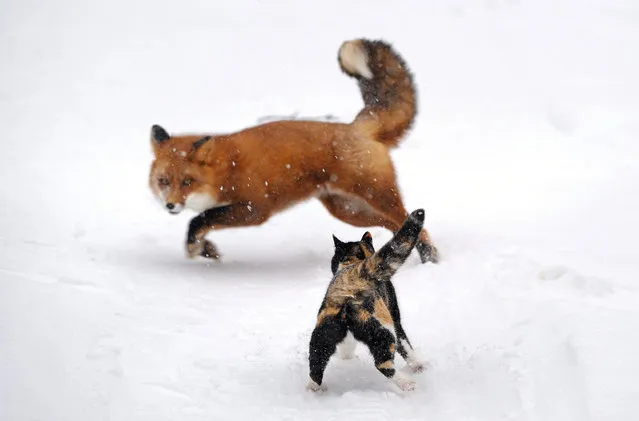
Respect, Kronotsky nature reserve, Russia. The photographer’s cat, Ryska – her name means little lynx in Russian – stands outside their cabin and with aggressive posturing warns off a fox. In winter, foxes would regularly visit the cabin searching for food. If one peered in at the window, possible when the snow was deep, Ryska would sit on the other side, fur raised, and growl. When outside, she would hold her ground. The foxes were not always frightened and so encounters could be a sort of dance. (Photo by Igor Shpilenok/Unforgettable Behaviour/NHM)

Respect, Kronotsky nature reserve, Russia. The photographer’s cat, Ryska – her name means little lynx in Russian – stands outside their cabin and with aggressive posturing warns off a fox. In winter, foxes would regularly visit the cabin searching for food. If one peered in at the window, possible when the snow was deep, Ryska would sit on the other side, fur raised, and growl. When outside, she would hold her ground. The foxes were not always frightened and so encounters could be a sort of dance. (Photo by Igor Shpilenok/Unforgettable Behaviour/NHM)
Details
08 Apr 2017 09:14:00
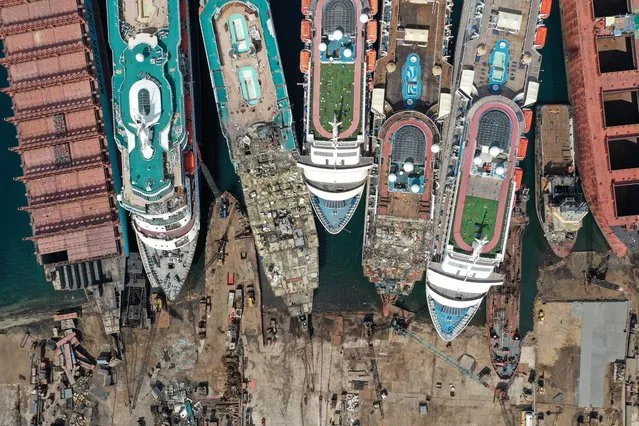
A drone image shows decommissioned cruise ships being dismantled  for scrap metal sales after the COVID-19 pandemic all but destroyed the industryat Aliaga ship-breaking yard in the Aegean port city of Izmir, western Turkey, October 2, 2020. (Photo by Umit Bektas/Reuters)

A drone image shows decommissioned cruise ships being dismantled for scrap metal sales after the COVID-19 pandemic all but destroyed the industryat Aliaga ship-breaking yard in the Aegean port city of Izmir, western Turkey, October 2, 2020. (Photo by Umit Bektas/Reuters)
Details
09 Oct 2020 00:03:00
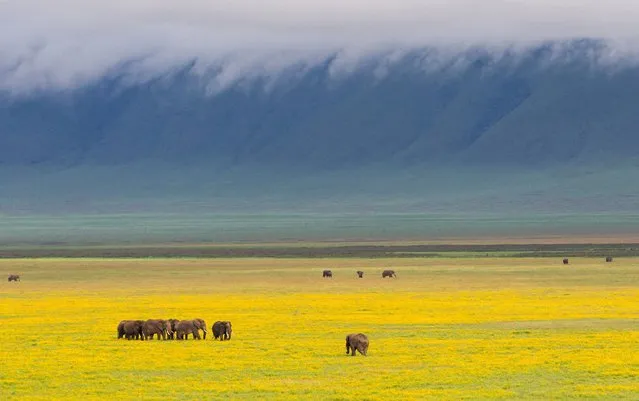
Ngorongoro Crater (Tanzania). At 610m deep and 260 sq km, this is the largest unflooded caldera in the world. A blue-green vision from above it's a haven for engangered wildlife and Maasai livestock. The crater was formed three million years ago when a giant volcano, which could have been as high as Kilimanjaro, exploded and collapsed. The caldera formed the concentric fractures in the crust cracked down to a magma reservoir deep underground. (Photo by John Bryant/Getty Images)

Ngorongoro Crater (Tanzania). At 610m deep and 260 sq km, this is the largest unflooded caldera in the world. A blue-green vision from above it's a haven for engangered wildlife and Maasai livestock. The crater was formed three million years ago when a giant volcano, which could have been as high as Kilimanjaro, exploded and collapsed. The caldera formed the concentric fractures in the crust cracked down to a magma reservoir deep underground. (Photo by John Bryant/Getty Images)
Details
28 Mar 2014 08:08:00
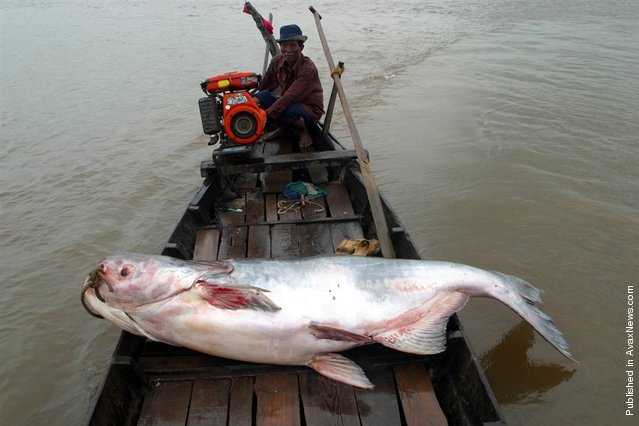
Among the fish populations that could be harmed by the Xayaburi dam in Laos is the critically endangered Mekong giant catfish, considered by the Guinness Book of World Records to be the world’s largest freshwater fish. The fish, which grows to 650 pounds and about 10 feet long, is only found in the Mekong River. It is migratory, moving between downstream habitats in Cambodia upstream to northern Thailand and Laos each year to spawn. Some experts fear the Xayaburi dam could block the migration and drive the giant catfish to extinction

Among the fish populations that could be harmed by the Xayaburi dam in Laos is the critically endangered Mekong giant catfish, considered by the Guinness Book of World Records to be the world’s largest freshwater fish. The fish, which grows to 650 pounds and about 10 feet long, is only found in the Mekong River. It is migratory, moving between downstream habitats in Cambodia upstream to northern Thailand and Laos each year to spawn. Some experts fear the Xayaburi dam could block the migration and drive the giant catfish to extinction. (Photo by Courtesy of Zeb Hogan/University of Nevada, Reno)
Details
20 Apr 2012 13:10:00