Loading...
Done
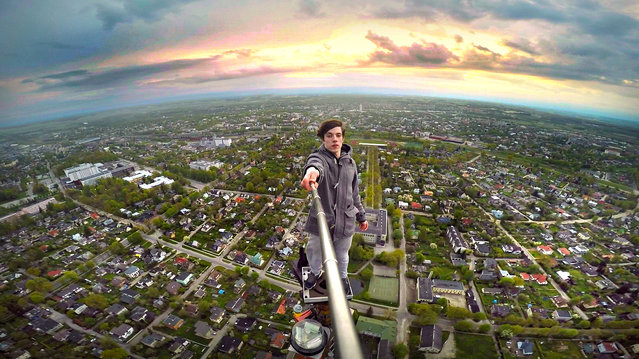
Ervin Punkar using a selfie stick to take a photo from the very top of the 600ft TV tower in Tartu, Estonia. (Photo by Ervin Punkar/Caters News Agency)

The adventurous explorers have snapped themselves in shark-infested waters, at the side of an active volcano, atop a Hong Kong skyscraper surrounded by toxic smog, and even perched on the top of iconic Rio statue of Christ the Redeemer. Here: Ervin Punkar using a selfie stick to take a photo from the very top of the 600ft TV tower in Tartu, Estonia. (Photo by Ervin Punkar/Caters News Agency)
Details
28 Sep 2018 00:05:00
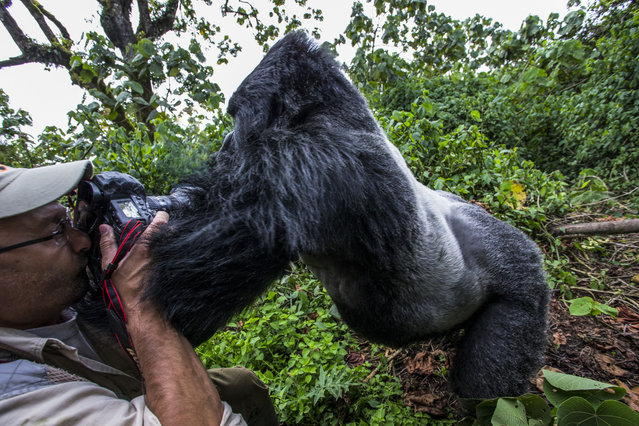
Christophe Vasselin gets pushed over by a gorilla. (Photo by Christophe Vasselin/Caters News Agency)

The snaps show photographers from around the world, who are willing to do just about anything for the perfect picture – whether that be tussling with a seal or withstanding a sharp shove from an angry gorilla. Other brave snappers can be seen getting up close and personal with leopards and great white sharks as they persist in getting the ultimate wildlife shot. Here: Christophe Vasselin gets pushed over by a gorilla. (Photo by Christophe Vasselin/Caters News Agency)
Details
30 Nov 2018 00:03:00


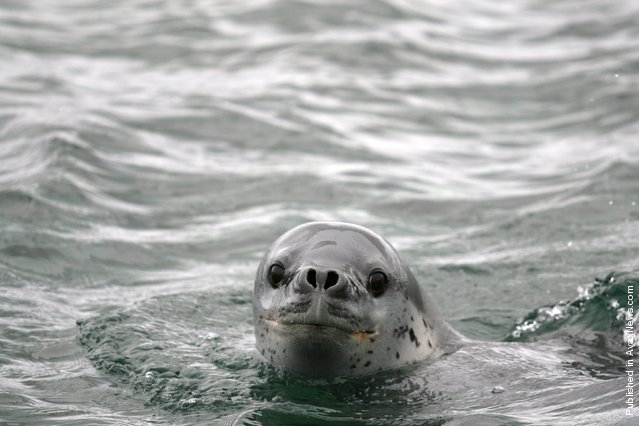
“The leopard seal (Hydrurga leptonyx), also referred to as the sea leopard, is the second largest species of seal in the Antarctic (after the southern elephant seal). It is most common in the southern hemisphere along the coast of Antarctica and on most sub-Antarctic islands, but can also be found on the coasts of southern Australia, Tasmania, South Africa, New Zealand, Lord Howe Island, Tierra del Fuego, the Cook Islands, and the Atlantic coast of South America. It can live twenty-six years, possibly more. Orcas and large sharks are the only natural predators of leopard seals”. – Wikipedia

Photo by: Gilad Rom; Source: Flickr
Details
13 Nov 2011 11:24:00
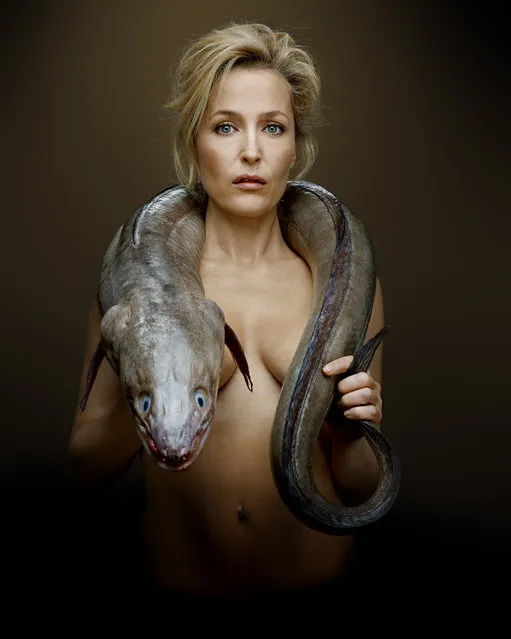
“Fish Love” Project by Photographer Denis Rouvre. Gillian Anderson. (Photo by Denis Rouvre)

The photo project was done for the organization Fishlove and included some other U.K.-based celebrities posing in the buff with critters ranging from bass fish to sharks. Its goal is to raise awareness of how overfishing is destroying the oceans. The release of Gillian's nearly nude pic, which was snapped by French portrait photographer Denis Rouvre, is timed with a European Parliament vote on banning destructive forms of deep-sea fishing in the Northeast Atlantic. The Fishlove organization is trying to rally voters to sign a petition ending deep-sea trawling – which, according to scientists, is negatively impacting the fish population and their habits – and Gillian solicited signatures in a Twitter post. Photo: “Fish Love” Project by Photographer Denis Rouvre. Gillian Anderson. (Photo by Denis Rouvre)
Details
04 Dec 2013 20:33:00
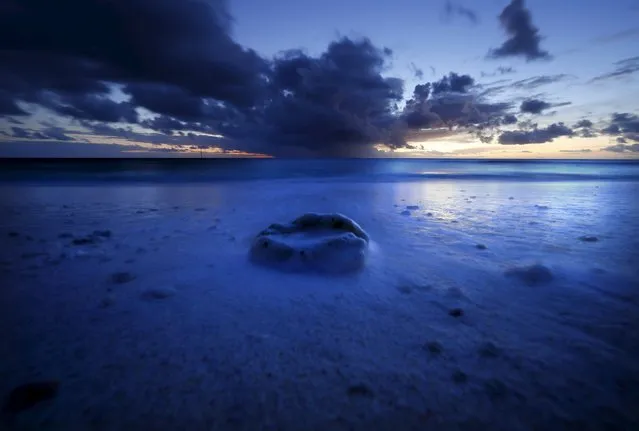
A reef shell lies on a beach as the sun sets on Lady Elliot Island located north-east of the town of Bundaberg in Queensland, Australia, June 10, 2015. (Photo by David Gray/Reuters)

A reef shell lies on a beach as the sun sets on Lady Elliot Island located north-east of the town of Bundaberg in Queensland, Australia, June 10, 2015. UNESCO World Heritage delegates recently snorkelled on Australia’s Great Barrier Reef, thousands of coral reefs, which stretch over 2,000 km off the northeast coast. Surrounded by manta rays, dolphins and reef sharks, their mission was to check the health of the world's largest living ecosystem, which brings in billions of dollars a year in tourism. Some coral has been badly damaged and animal species, including dugong and large green turtles, are threatened. UNESCO will say on Wednesday whether it will place the reef on a list of endangered World Heritage sites, a move the Australian government wants to avoid at all costs, having lobbied hard overseas. Earlier this year, UNESCO said the reef's outlook was “poor”. (Photo by David Gray/Reuters)

Details
30 Jun 2015 12:21:00
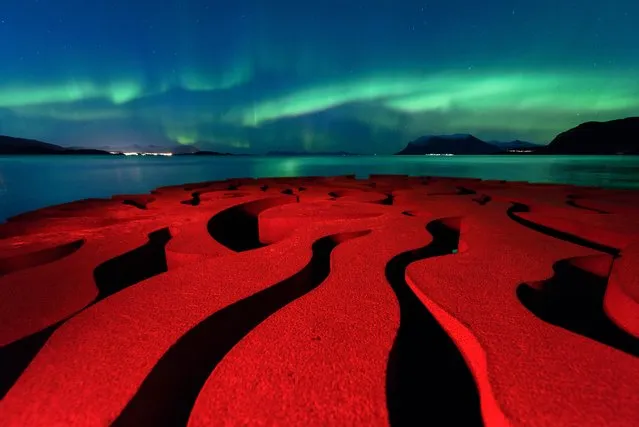
“Seven Magic Points”. The rusty red swirls of the circular, iron sculpture Seven Magic Points in Brattebergan, Norway mirror the rippling aurora above. (Photo by Rune Engebø/Royal Observatory Greenwich’s Astronomy Photographer of the Year 2016/National Maritime Museum)

Gorgeous galaxies and stunning stars make up this selection of pictures from the shortlisted entries for this year’s Insight Astronomy Photographer of the Year award. The winners will be announced on 15 September, and an exhibition of the winning images will be will be displayed in a free exhibition at the Royal Observatory Greenwich’s Astronomy Centre from 17 September. Here: “Seven Magic Points”. The rusty red swirls of the circular, iron sculpture Seven Magic Points in Brattebergan, Norway mirror the rippling aurora above. (Photo by Rune Engebø/Royal Observatory Greenwich’s Astronomy Photographer of the Year 2016/National Maritime Museum)
Details
28 Jul 2016 13:51:00
A man walks into the The Life Tabernacle megachurch as local residents attend Sunday service challenging state orders against assembling in large groups to prevent the spread of coronavirus disease (COVID-19) in Baton Rouge, Louisiana U.S., April 5, 2020. (Photo by Carlos Barria/Reuters)

A man walks into the The Life Tabernacle megachurch as local residents attend Sunday service challenging state orders against assembling in large groups to prevent the spread of coronavirus disease (COVID-19) in Baton Rouge, Louisiana U.S., April 5, 2020. (Photo by Carlos Barria/Reuters)
Details
10 Apr 2020 00:01:00
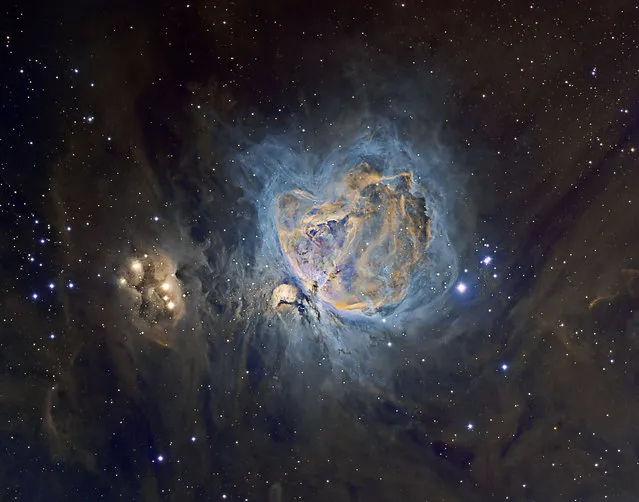
M42 Subtle V1 cropped. One of the most well-known astronomical objects in our universe is the Orion Nebula and this image depicts the wider region of the Orion Molecular Cloud Complex that is its home. This complex also includes another popular target for astrophotographers, the Horsehead Nebula, as well as Barnard’s Loop and the Running Man Nebula, which can be seen to the left of this photograph. (Photo by Patrick Gilliland)

M42 Subtle V1 cropped. One of the most well-known astronomical objects in our universe is the Orion Nebula and this image depicts the wider region of the Orion Molecular Cloud Complex that is its home. This complex also includes another popular target for astrophotographers, the Horsehead Nebula, as well as Barnard’s Loop and the Running Man Nebula, which can be seen to the left of this photograph. (Photo by Patrick Gilliland)
Details
17 Nov 2015 08:05:00