Loading...
Done
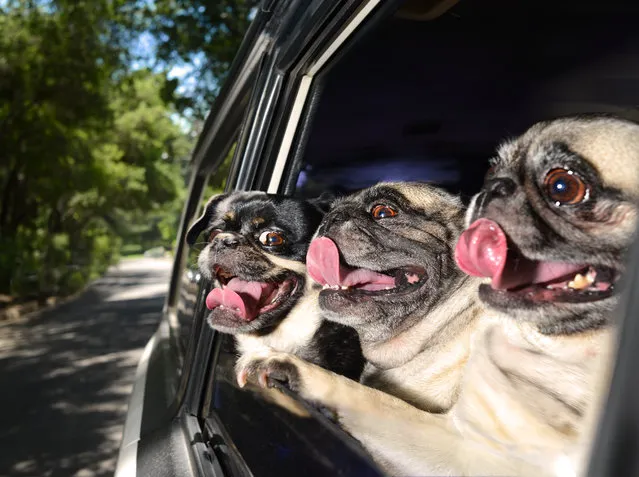
Three pugs peer out from a car window in Los Angeles, California. A wacky photographer has come up with an unusual pet project – snapping ecstatic dogs as they hang their heads out of car windows. Lara Jo Regan, 48, embarked on the odd task for her new 2014 calendar “Dogs In Cars”. The unusual shoot, which took place in Los Angeles, California, aimed to explore the joy experienced by pugs and huskies when a breeze hits their faces. (Photo by Lara Jo Regan/Barcroft Media)

Three pugs peer out from a car window in Los Angeles, California. A wacky photographer has come up with an unusual pet project – snapping ecstatic dogs as they hang their heads out of car windows. Lara Jo Regan, 48, embarked on the odd task for her new 2014 calendar “Dogs In Cars”. The unusual shoot, which took place in Los Angeles, California, aimed to explore the joy experienced by pugs and huskies when a breeze hits their faces. (Photo by Lara Jo Regan/Barcroft Media)
Details
13 Apr 2014 08:12:00
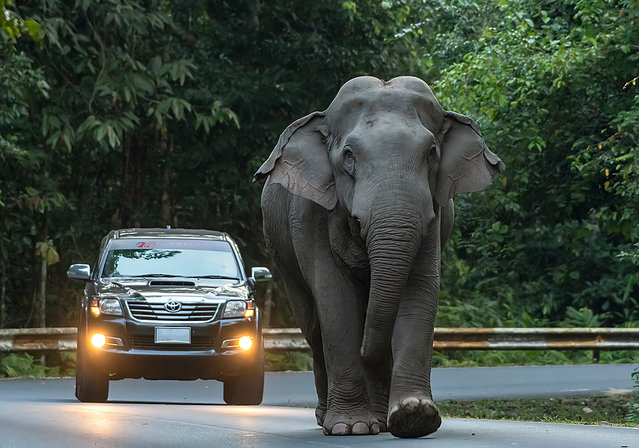
An Asian elephant called “Plai Deaw” goes for a walk on a mountain road in Nakhon Nayok, Thailand on July 11, 2022. The bull has become well known in the area for his taste for venturing out from the deep forest and emerging among cars and village homes. Thailand has an estimated 2,000 Asian elephants living in the wild but there is often conflict when they come into contact with humans on roads and in villages. A similar number of elephants are kept captive where they work in zoos and are hired out for religious festivals and weddings. (Photo by Mongkol Pitakmoo/ViralPress)

An Asian elephant called “Plai Deaw” goes for a walk on a mountain road in Nakhon Nayok, Thailand on July 11, 2022. The bull has become well known in the area for his taste for venturing out from the deep forest and emerging among cars and village homes. Thailand has an estimated 2,000 Asian elephants living in the wild but there is often conflict when they come into contact with humans on roads and in villages. A similar number of elephants are kept captive where they work in zoos and are hired out for religious festivals and weddings. (Photo by Mongkol Pitakmoo/ViralPress)
Details
04 Aug 2022 04:55:00
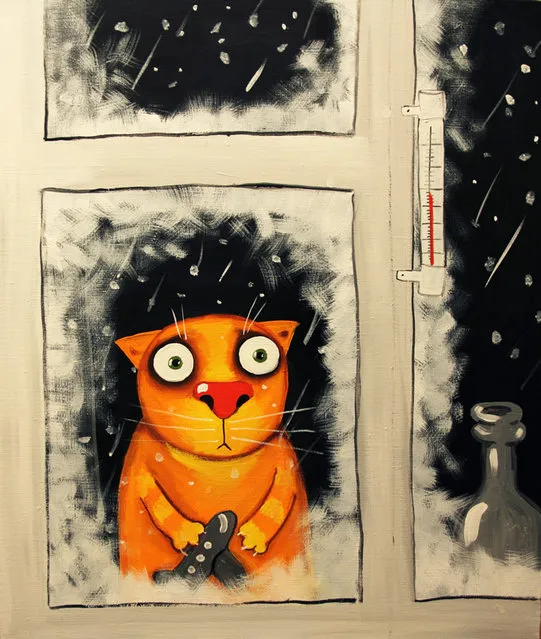
“Grandfather Frost did not come”. (Photo by Vasya Lozhkin)

HAPPY NEW YEAR!
“Grandfather Frost did not come”. (Photo by Alex Kudelin aka Vasya Lozhkin)
“Grandfather Frost is a fictional character who in some Slavic cultures plays a role similar to that of Santa Claus”. – Wikipedia
Details
31 Dec 2014 15:03:00
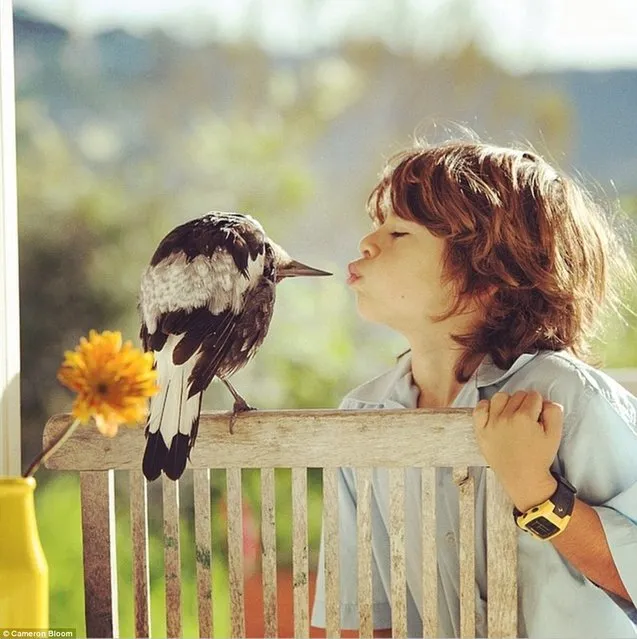
Penguin the Magpie: The Bird That Became A Bloom

The stories of a unique bond between a child and their pet are as timeless as they come, but rarely does the pet have wings. Such is the case with photographer Cameron Bloom whose son Noah happened upon a baby magpie in 2013 when the family was out walking near their home in Newport, Australia. After consulting with a veterinarian, the family learned to raise the orphaned bird, who they affectionately named Penguin.
Details
17 Sep 2015 10:38:00
Concept Art and Behind-the-Scenes

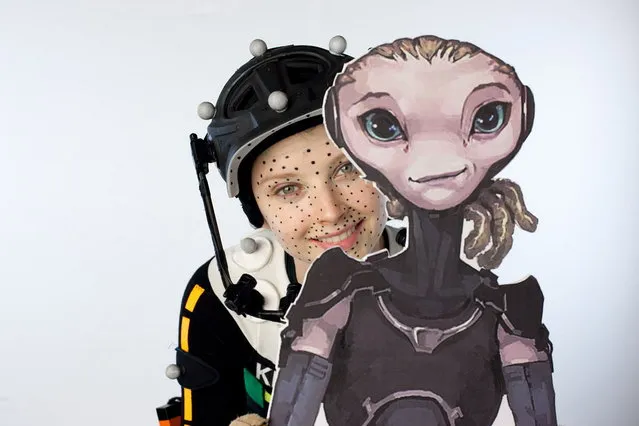
Check out these behind-the-scenes images and concept art from upcoming animated film Mars Needs Moms.
Based on the 2007 children’s book by Berkeley Breathed (best known for his long-running comic strip “Bloom County”), the story features a young boy who must come to his mother’s rescue when she’s kidnapped by martians.
Details
11 Jan 2013 15:36:00
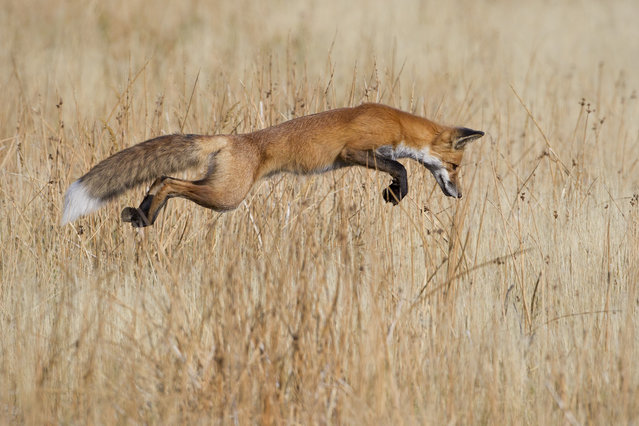
Canada: “Lucky pounce”. (Photo by Connor Stefanison/Wildlife Photographer of the Year 2013)

The winners of The London’s Natural History Museum's prestigious Wildlife Photographer of the Year for 2013 have finally been unveiled. Selected from almost 43,000 entries from 96 countries, the winners offer a glimpse of the stunning array of natural beauty on our planet. Photo: Canada: “Lucky pounce”. “Anticipating the pounce – that was the hardest part”, says Connor, who had come to Yellowstone National Park, Wyoming, USA, in search of wildlife as much as the spectacular landscape. He had found this fox, his first ever, on his last day in the park. It was so absorbed in hunting that Connor had plenty of time to get out of the car and settle behind a rock. It quartered the grassland, back and forth, and then started staring intently at a patch of ground, giving Connor just enough warning of the action to come. When it sprung up, Connor got his shot. And when it landed, the fox got his mouse. (Photo by Connor Stefanison/Wildlife Photographer of the Year 2013)
Details
17 Oct 2013 08:12:00
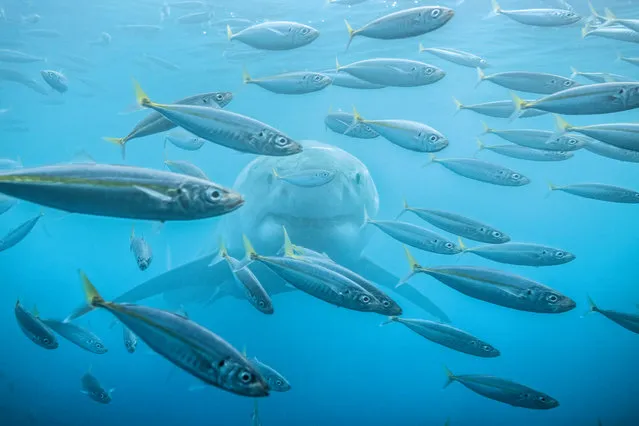
Under Exposed: Pekka Tuuri (Finland) – Great white shark, Isla Guadalupe, Mexico. Isla Guadalupe is the world capital when it comes to observing great white sharks, but cage diving seriously limits the possibilities to take ‘fresh’ pictures. When I took this, the water close to the surface was quite milky, making photography very challenging. From out of the ‘mist’, I saw this great white shark lurking behind a school of fusiliers. I quickly focused on the shark and set a wide aperture to get focus blur on the fish, along with a fast shutter to avoid excessive motion blur. (Photo by Pekka Tuuri/The Outdoor Photographer of the Year/The Guardian)

Under Exposed: Pekka Tuuri (Finland) – Great white shark, Isla Guadalupe, Mexico. “Isla Guadalupe is the world capital when it comes to observing great white sharks, but cage diving seriously limits the possibilities to take ‘fresh’ pictures. When I took this, the water close to the surface was quite milky, making photography very challenging. From out of the “mist”, I saw this great white shark lurking behind a school of fusiliers. I quickly focused on the shark and set a wide aperture to get focus blur on the fish, along with a fast shutter to avoid excessive motion blur”. (Photo by Pekka Tuuri/The Outdoor Photographer of the Year/The Guardian)
Details
25 Jan 2018 07:37:00
On August 31, 2012, a long filament of solar material that had been hovering in the sun's atmosphere, the corona, erupted out into space at 4:36 p.m. EDT. The coronal mass ejection, or CME, traveled at over 900 miles per second. The CME did not travel directly toward Earth, but did connect with Earth's magnetic environment, or magnetosphere, causing aurora to appear on the night of Monday, September 3. (Photo by NASA/GSFC/SDO)

On August 31, 2012, a long filament of solar material that had been hovering in the sun's atmosphere, the corona, erupted out into space at 4:36 p.m. EDT. The coronal mass ejection, or CME, traveled at over 900 miles per second. The CME did not travel directly toward Earth, but did connect with Earth's magnetic environment, or magnetosphere, causing aurora to appear on the night of Monday, September 3. (Photo by NASA/GSFC/SDO via The Atlantic)
Details
14 Sep 2012 09:01:00