Loading...
Done
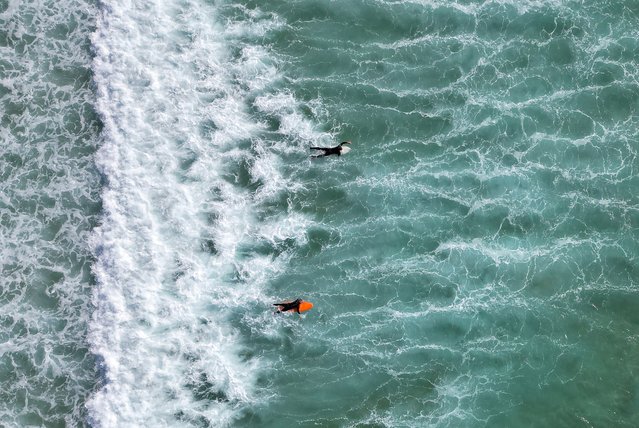
A drone view shows people surfing during spring sunshine, as the warm weather is set to continue into the weekend, at Fistral Beach, Newquay, south west Britain, on May 9, 2024. (Photo by Toby Melville/Reuters)

A drone view shows people surfing during spring sunshine, as the warm weather is set to continue into the weekend, at Fistral Beach, Newquay, south west Britain, on May 9, 2024. (Photo by Toby Melville/Reuters)
Details
12 Jun 2024 03:44:00
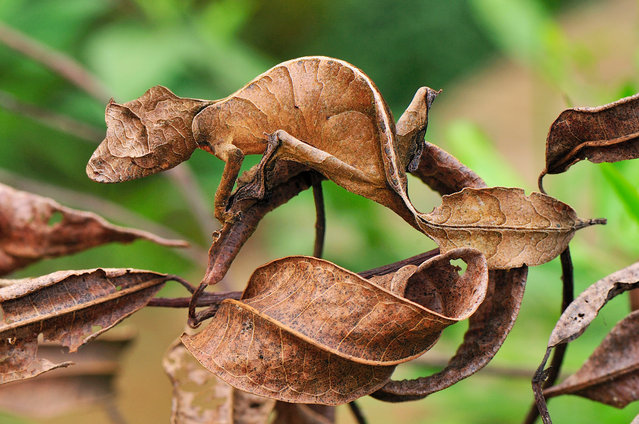
Is it a leaf? Is it tree bark? No, it’s the Satanic leaf-tailed gecko. Cleverly disguised as a rotting leaf, Madagascar’s camouflage king has red eyes, pointy horns and a taste for night hunting: it’s nature’s most devilish deceiver. (Photo by Thomas Marent/ARDEA)

Is it a leaf? Is it tree bark? No, it’s the Satanic leaf-tailed gecko. Cleverly disguised as a rotting leaf, Madagascar’s camouflage king has red eyes, pointy horns and a taste for night hunting: it’s nature’s most devilish deceiver. The twisted body and veiny skin echo the detail of a dry leaf, which ensures the gecko blends in with its forest home. The mottled tail appears to have sections missing, as though it has withered over time. This mini-monster epitomises survival of the fittest, having adapted gradually to become today’s extraordinary leaf impersonator. (Photo by Thomas Marent/ARDEA)
Details
20 Nov 2015 08:03:00
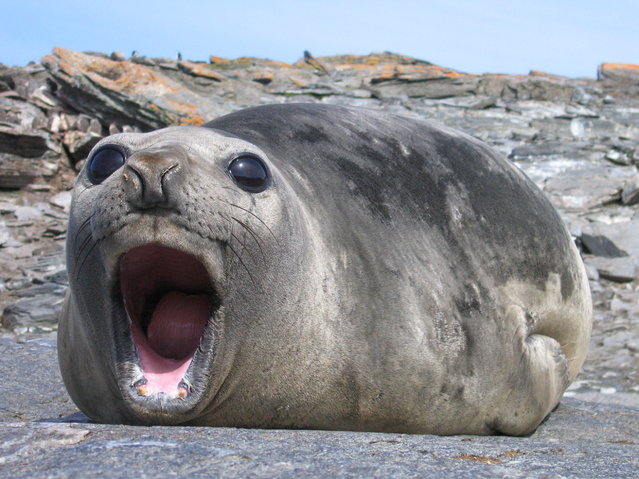
Weddell seal numbers in 2025 have declined sharply on Signy Island, part of the South Orkney Islands in the Southern Ocean, where British Antarctic Survey researchers have tracked seal populations for nearly 50 years to understand the impact of melting sea ice. (Photo by Michael Dunn/The Times)

Weddell seal numbers in 2025 have declined sharply on Signy Island, part of the South Orkney Islands in the Southern Ocean, where British Antarctic Survey researchers have tracked seal populations for nearly 50 years to understand the impact of melting sea ice. (Photo by Michael Dunn/The Times)
Details
06 Jul 2025 03:34:00
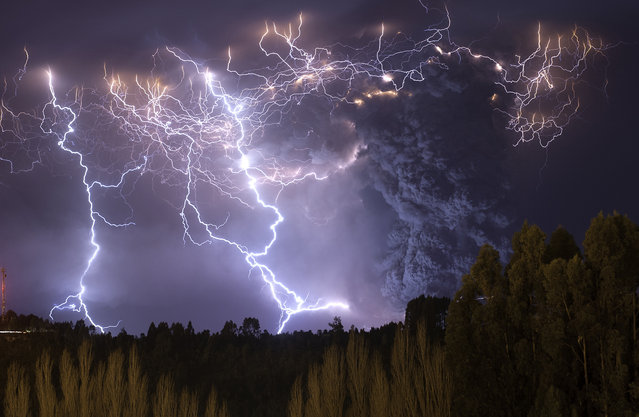
The eruption of Cordon Caulle began on June 4, 2011, located in the Region of Los Rios in Chile. For about 12 months, people and animals became accustomed to living with the daily fall of ash, which also caused problems in the air traffic in South America. The explosions and lightning during first days of the eruption could be seen from hundreds of miles around. This photograph was taken on the second night of eruption from the town of Lago Ranco. (Photo and caption by Francisco Negroni/National Geographic Traveler Photo Contest)

The eruption of Cordon Caulle began on June 4, 2011, located in the Region of Los Rios in Chile. For about 12 months, people and animals became accustomed to living with the daily fall of ash, which also caused problems in the air traffic in South America. The explosions and lightning during first days of the eruption could be seen from hundreds of miles around. This photograph was taken on the second night of eruption from the town of Lago Ranco. (Photo and caption by Francisco Negroni/National Geographic Traveler Photo Contest)

ATTENTION! All pictures are presented in high resolution. To see Hi-Res images – just TWICE click on any picture. In other words, click small picture – opens the BIG picture. Click BIG picture – opens VERY BIG picture.
Details
23 Jun 2013 11:24:00
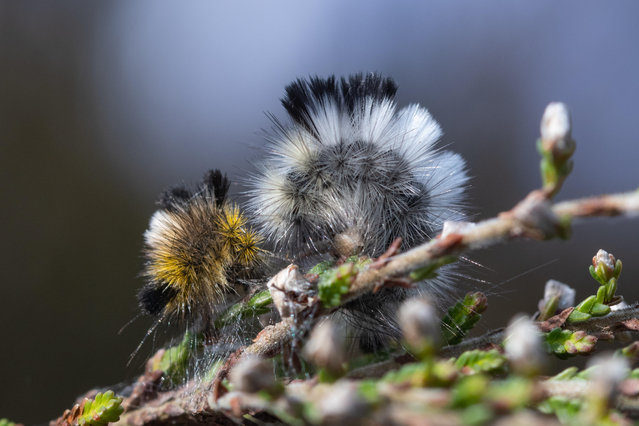
A pale tussock moth (Calliteara pudibunda) larva or caterpillar just after moulting on heather on Hankley Common, Surrey, England on April 30, 2019. (Photo by Gillian Pullinger/Alamy Stock Photo)

A pale tussock moth (Calliteara pudibunda) larva or caterpillar just after moulting on heather on Hankley Common, Surrey, England on April 30, 2019. (Photo by Gillian Pullinger/Alamy Stock Photo)
Details
08 Dec 2019 00:03:00
Lovot companion robots by Groove X wander in front their booth at CES Unveiled during the 2020 CES in Las Vegas, Nevada, January 5, 2020. (Photo by Steve Marcus/Reuters)

Lovot companion robots by Groove X wander in front their booth at CES Unveiled during the 2020 CES in Las Vegas, Nevada, January 5, 2020. (Photo by Steve Marcus/Reuters)
Details
10 Jan 2020 00:01:00
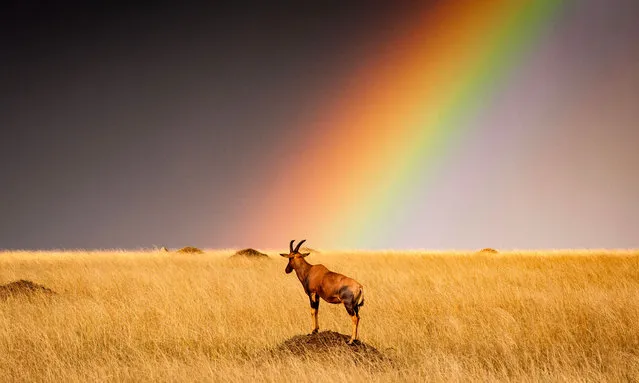
Early morning storms over the Masai Mara National Reserve, Kenya on August 26, 2016. (Photo by Action Press/Rex Features/Shutterstock)

Early morning storms over the Masai Mara National Reserve, Kenya on August 26, 2016. (Photo by Action Press/Rex Features/Shutterstock)
Details
03 Sep 2016 09:34:00
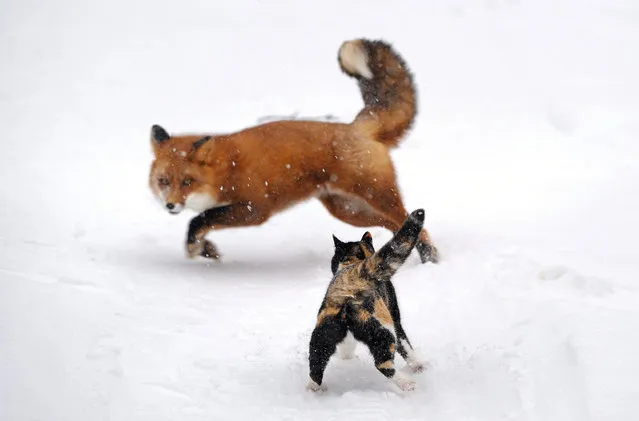
Respect, Kronotsky nature reserve, Russia. The photographer’s cat, Ryska – her name means little lynx in Russian – stands outside their cabin and with aggressive posturing warns off a fox. In winter, foxes would regularly visit the cabin searching for food. If one peered in at the window, possible when the snow was deep, Ryska would sit on the other side, fur raised, and growl. When outside, she would hold her ground. The foxes were not always frightened and so encounters could be a sort of dance. (Photo by Igor Shpilenok/Unforgettable Behaviour/NHM)

Respect, Kronotsky nature reserve, Russia. The photographer’s cat, Ryska – her name means little lynx in Russian – stands outside their cabin and with aggressive posturing warns off a fox. In winter, foxes would regularly visit the cabin searching for food. If one peered in at the window, possible when the snow was deep, Ryska would sit on the other side, fur raised, and growl. When outside, she would hold her ground. The foxes were not always frightened and so encounters could be a sort of dance. (Photo by Igor Shpilenok/Unforgettable Behaviour/NHM)
Details
08 Apr 2017 09:14:00