Uzbekistan's Javokhir Sindarov in action against Hans Niemann of the U.S. during the Diving Chess Competition in Cape Town, South Africa, on December 4, 2025. (Photo by Esa Alexander/Reuters)
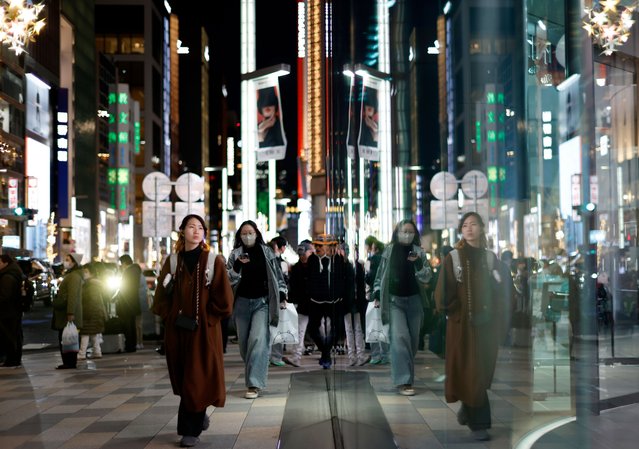
People walk through Ginza’s shopping district in Tokyo, Japan, 15 December 2025. Japan’s economic focus is on the upcoming Bank of Japan (BOJ) meeting where the central bank is expected to raise its policy rate to combat inflation. The BOJ signaled a rate hike bar is cleared with the wage momentum still intact. (Photo by Franck Robichon/EPA)
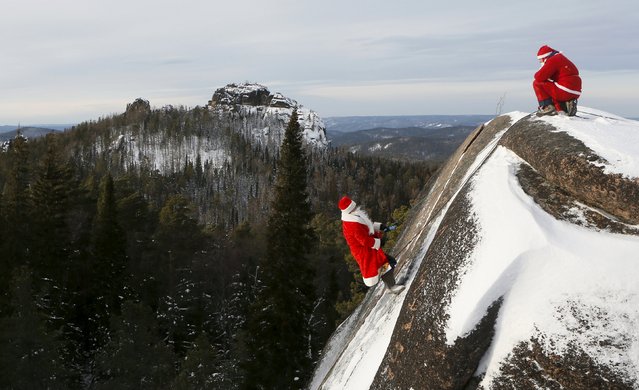
A member of the “Sibspas” Siberian search and rescue group dressed as Santa Claus (R), waits for his team mate, dressed as Father Frost, the Russian equivalent of Santa Claus, as he climbs the rock named “The Fourth Stolb” (the Fourth Pillar) at the Stolby national nature reserve during a training session of the Russian Emergencies Ministry, outside the Siberian city of Krasnoyarsk, Russia December 15, 2015. (Photo by Ilya Naymushin/Reuters)
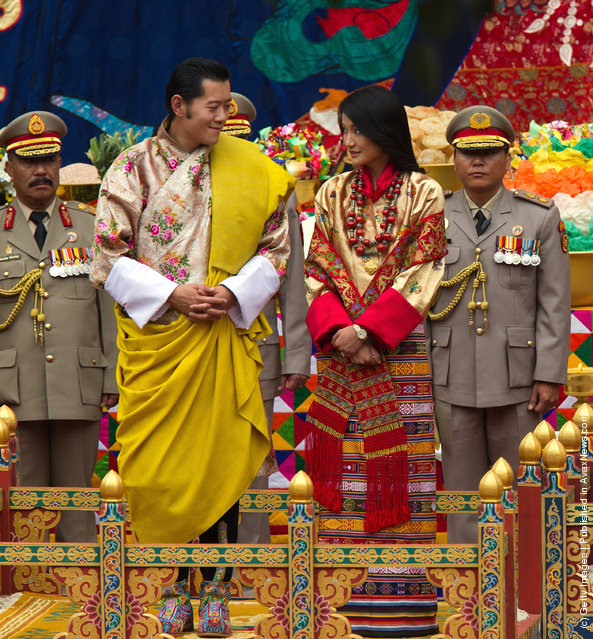
His majesty King Jigme Khesar Namgyel Wangchuck (L), 31, smiles at his bride during the purification marriage ceremony to Queen Jetsun Pema, 21, in the historical Punakha Dzong on October 13, 2011 in Punakha, Bhutan. The Dzong is the same venue that hosted the King's historic coronation ceremony in 2008. The Oxford-educated king is popular in the country and the ceremony will be followed by celebration in the capital and countryside. (Photo by Paula Bronstein/Getty Images)
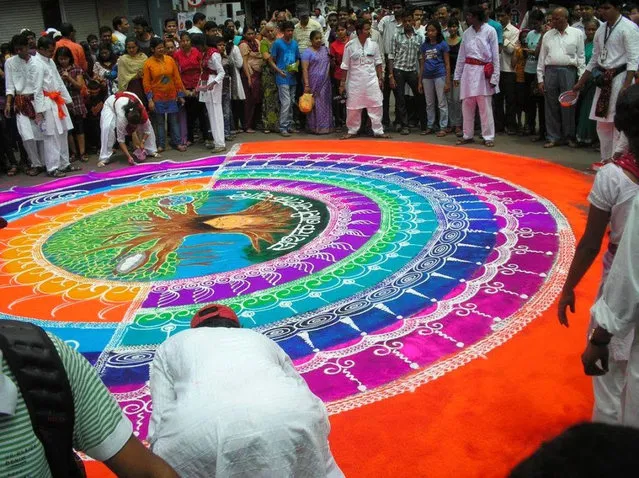
Rangoli, also known as kolam or Muggu, is a folk art from India in which patterns are created on the floor in living rooms or courtyards using materials such as colored rice, dry flour, colored sand or flower petals. It is usually made during Diwali, Onam, Pongal and other Indian festivals. They are meant to be sacred welcoming areas for the Hindu deities. The ancient symbols have been passed down through the ages, from each generation to the next, keeping both the art form and the tradition alive. Similar practices are followed in different Indian states: in Tamil Nadu, there is Kolam in Tamil Nadu; Mandana in Rajasthan; Chaookpurna in Chhattisgarh; Alpana in West Bengal; Aripana in Bihar; Chowk pujan in Uttar Pradesh; Muggu in Andhra Pradesh and others.
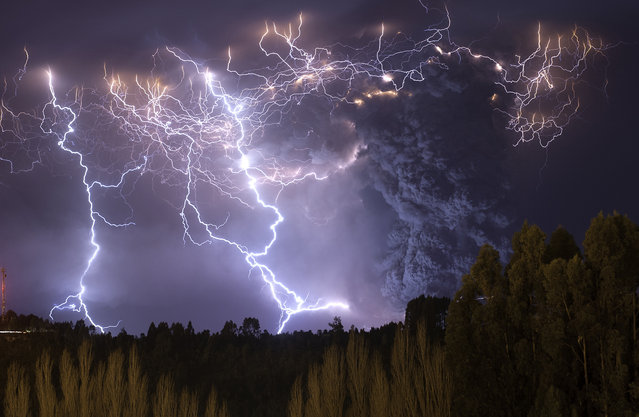
The eruption of Cordon Caulle began on June 4, 2011, located in the Region of Los Rios in Chile. For about 12 months, people and animals became accustomed to living with the daily fall of ash, which also caused problems in the air traffic in South America. The explosions and lightning during first days of the eruption could be seen from hundreds of miles around. This photograph was taken on the second night of eruption from the town of Lago Ranco. (Photo and caption by Francisco Negroni/National Geographic Traveler Photo Contest)
ATTENTION! All pictures are presented in high resolution. To see Hi-Res images – just TWICE click on any picture. In other words, click small picture – opens the BIG picture. Click BIG picture – opens VERY BIG picture.
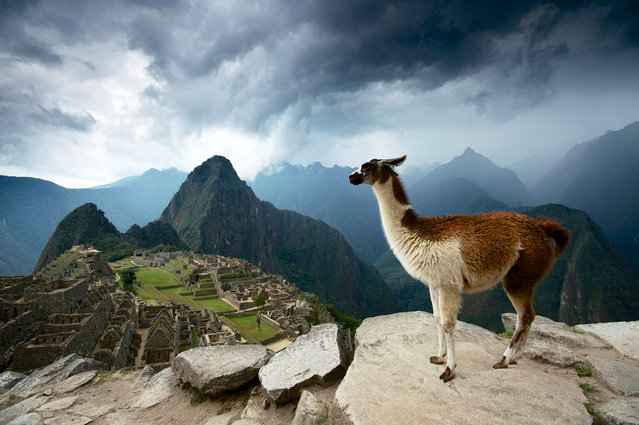
Machu Picchu, Peru. A llama’s-eye view of the legendary Inca settlement at Machu Picchu, isolated high in the Peruvian Andes. (Photo by Jim Turner/National Geographic)
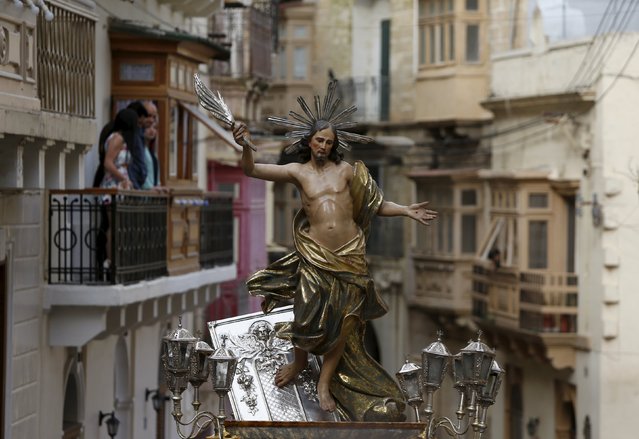
A statue of the Risen Christ is carried during an Easter Sunday procession in Cospicua, outside Valletta, Malta April 5, 2015. (Photo by Darrin Zammit Lupi/Reuters)