Loading...
Done
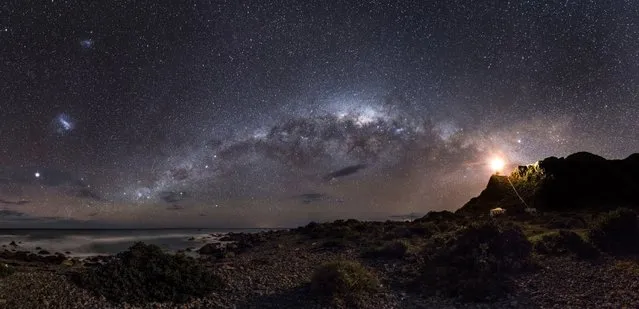
Astronomy Photographer Of The Year 2013 Part2

The Royal Observatory just announced its Astronomy Photographer Of The Year 2013 winners. Australian photographer Mark Gee was chosen among a thousand amateur and professional photographers around the globe to win the top title. His work is part of an exhibition of the winning photographers, which opened on Sept. 19 at the Royal Observatory Greenwich. The Royal Observatory shared with us the winners and notable mentions of the competition. Their descriptions of the prizewinners can be found below the images.
Details
05 Oct 2013 12:23:00


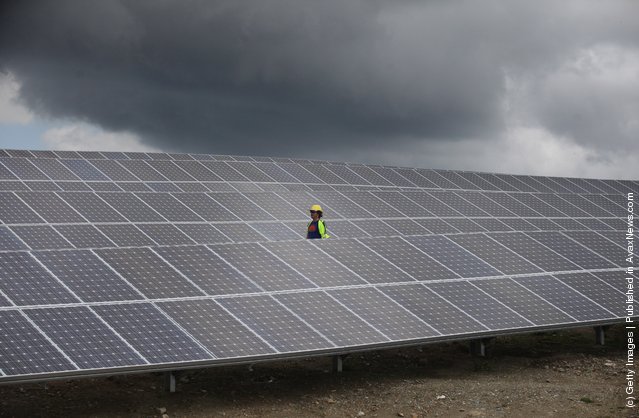
Jason Arnold, project manager from solarcentury walks between lines of solar panels erected at Weighbridge, Wheal Jane, Baldhu on July 7, 2011 near Truro, England. A ceremony was held today to mark the connection of the 1.4kw solar farm, which on a 6.2 acre plot is the first in the South West and biggest in the UK to date, using 5,680 panels. (Photo by Matt Cardy/Getty Images)
Details
08 Jul 2011 10:01:00
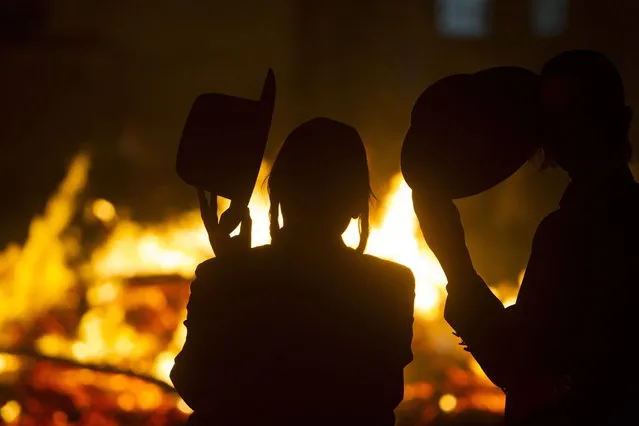
Ultra Orthodox Jewish men watch a bonfire during the Jewish holiday of Lag Ba-Omer in Jerusalem's Mea Shearim neighbourhood April 27, 2013. Israelis celebrate the Jewish holiday of Lag Ba-Omer, which marks the end of a plague in the Middle Ages that killed thousands of disciples of a revered rabbi in the holy land, by lighting bonfires across the country. (Photo by Ronen Zvulun/Reuters)

Ultra Orthodox Jewish men watch a bonfire during the Jewish holiday of Lag Ba-Omer in Jerusalem's Mea Shearim neighbourhood April 27, 2013. Israelis celebrate the Jewish holiday of Lag Ba-Omer, which marks the end of a plague in the Middle Ages that killed thousands of disciples of a revered rabbi in the holy land, by lighting bonfires across the country. (Photo by Ronen Zvulun/Reuters)
Details
28 Apr 2013 10:44:00
A woman poses as she has her picture taken amid 1600 panda bear sculptures in Berlin August 5, 2013. Marking the 50th anniversary of its existence, on Monday the German branch of the World Wide Fund for Nature  (WWF) environmental conservation organisation placed 1600 panda bear sculptures on front of Berlin's main train station to draw attention to the plight of the endangered species that serves as the NGO's mascot. There are currently 1600 panda bears alive in the wild, the organisation said in a press release. (Photo by Thomas Peter/Reuters)

A woman poses as she has her picture taken amid 1600 panda bear sculptures in Berlin August 5, 2013. Marking the 50th anniversary of its existence, on Monday the German branch of the World Wide Fund for Nature (WWF) environmental conservation organisation placed 1600 panda bear sculptures on front of Berlin's main train station to draw attention to the plight of the endangered species that serves as the NGO's mascot. There are currently 1600 panda bears alive in the wild, the organisation said in a press release. (Photo by Thomas Peter/Reuters)
Details
06 Aug 2013 08:28:00
Vancouver B.C. April 20, 2014  Big Day to celebrate as thousand gathered in front of Vancouver Art Gallery to take part in the 420 Marijuana smoke in here  in Vancouver on April 20, 2014. Here lots of free “joints” ready for the big moment. (Photo by Mark van Manen/PNG Staff  Photographer/Ian Austin Province News/Vancouver Sun News & Web  stories)

Vancouver B.C. April 20, 2014 Big Day to celebrate as thousand gathered in front of Vancouver Art Gallery to take part in the 420 Marijuana smoke in here in Vancouver on April 20, 2014. Here lots of free “joints” ready for the big moment. (Photo by Mark van Manen/PNG Staff Photographer/Ian Austin Province News/Vancouver Sun News & Web stories)
Details
22 Apr 2014 08:44:00
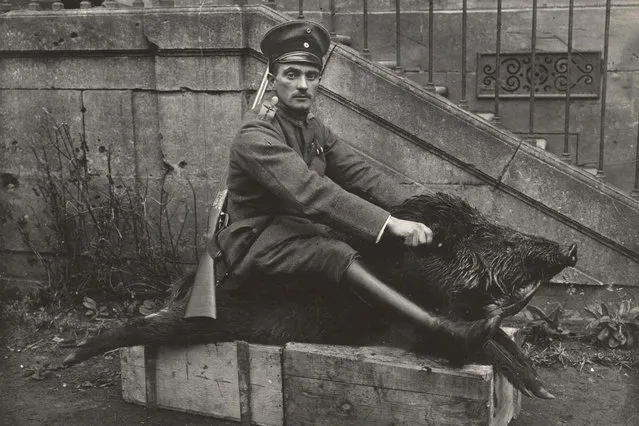
A German Air Force Officer sits astride a dead boar outside a house where he is stationed near the Western Front, in this 1918 handout picture. This picture is part of a previously unpublished set of World War One (WWI) images from a private collection. The pictures offer an unusual view of varied and contrasting aspects of the conflict, from high tech artillery to mobile pigeon lofts, and from officers partying in their headquarters to the grim reality of life and death in the trenches. The year 2014 marks the centenary of the start of the war. (Photo by Reuters/Archive of Modern Conflict London)

A German Air Force Officer sits astride a dead boar outside a house where he is stationed near the Western Front, in this 1918 handout picture. This picture is part of a previously unpublished set of World War One (WWI) images from a private collection. The pictures offer an unusual view of varied and contrasting aspects of the conflict, from high tech artillery to mobile pigeon lofts, and from officers partying in their headquarters to the grim reality of life and death in the trenches. The year 2014 marks the centenary of the start of the war. (Photo by Reuters/Archive of Modern Conflict London)
Details
26 Jun 2014 12:13:00
United States Coast Guard Academy Cadets Second Class Aurimas Juodka, left, and Sheila Bertrand get in the face of “swab” Kevin Lennox as Bravo Company finishes at the barber shop and mailroom during R-Day, the reporting-in day that marks the beginning of the 7-week “Swab Summer” for the class of 2018 Monday, June 30, 2014, in New London, Conn. (Photo by Sean D. Elliot/AP Photo/The Day)

United States Coast Guard Academy Cadets Second Class Aurimas Juodka, left, and Sheila Bertrand get in the face of “swab” Kevin Lennox as Bravo Company finishes at the barber shop and mailroom during R-Day, the reporting-in day that marks the beginning of the 7-week “Swab Summer” for the class of 2018 Monday, June 30, 2014, in New London, Conn. About 250 prospective cadets, Swabs, start the program designed to indoctrinate them to the military life of the academy and at the end will be accepted into the corps of cadets. (Photo by Sean D. Elliot/AP Photo/The Day)
Details
05 Jul 2014 12:20:00
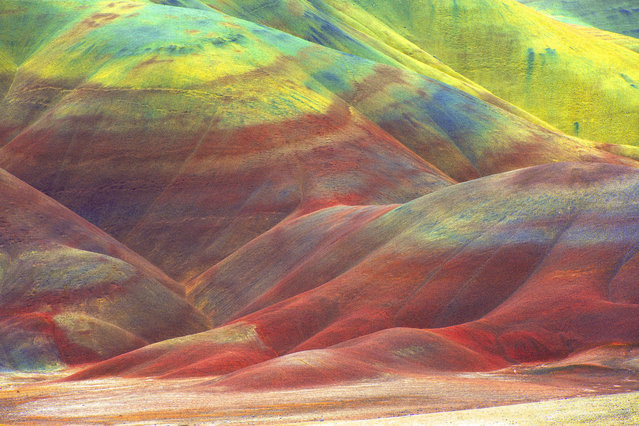
Layers of breathtaking colour streak the rolling hills of this vast desert, making the landscape appear as though it has been tie-dyed. The natural phenomenon, nicknamed the “Painted Desert”, was formed when the area was once a river floodplain. (Photo by Mark Brodkin/Solent News/SIPA Press)

Layers of breathtaking colour streak the rolling hills of this vast desert, making the landscape appear as though it has been tie-dyed. The natural phenomenon, nicknamed the “Painted Desert”, was formed when the area was once a river floodplain. Each colour corresponds to a different underground geological feature – rocks which have seemingly dyed the layers of earth above. Formed from volcanic activity, the hills at the John Day Fossil Beds National Monument in East Central Oregon, USA, are almost bursting with colour. Pictured: The colourful hills at the John Day Fossil Beds National Monument in East Central Oregon, USA. (Photo by Mark Brodkin/Solent News/SIPA Press)
Details
30 Jul 2014 11:00:00